My Bearded Dragon Won’t Eat Greens — 9 Tricks That Work
Your dragon inhales dubias like a tiny vacuum cleaner, then looks at a bowl of fresh collard greens like you’ve insulted its ancestors. Welcome to the most common feeding frustration in bearded dragon keeping: the vegetable strike. It’s so widespread that whole product lines (bee pollen, salad dressings for reptiles) exist solely to solve it.
Here’s the reassuring part: most green-refusal is behavioral, not medical — and it’s fixable with presentation tricks, bribery, and routine. But “most” isn’t “all,” so this guide starts where it must: ruling out health issues. Then the nine tricks that actually work, organized from simplest to most involved, plus what never to do and when pickiness means a vet visit. Take the diagnosis quiz below to find your likely cause and your top three tricks to try first.
Why Dragons Snub Greens
Three overlapping reasons. Instinct: wild juveniles eat mostly insects — movement triggers the feeding response, and a still pile of leaves doesn’t register as food to a young predator’s brain. Age: the insect-to-vegetable ratio shifts naturally as dragons mature; babies run ~80% insects, adults should run ~80% greens, and the transition is gradual. Habit: dragons are creatures of routine. A dragon raised on insects with greens as an afterthought learns that salad is decoration.
None of these are permanent. But the fix has to match the cause — which is why the quiz above comes first.
Rule Out Health Issues First
Before any trick: if green-refusal arrived suddenly alongside lethargy, hiding, weight loss, runny stool, or skipped basking, that’s not pickiness — that’s a symptom. Parasites, impaction, respiratory infections, and mouth issues all suppress appetite, and no salad presentation fixes a health problem. Our not-eating guide covers the full diagnostic walkthrough. When in doubt, a reptile vet visit with a fecal test is the fastest way to separate “picky” from “sick.”
Tricks 1–3: Presentation
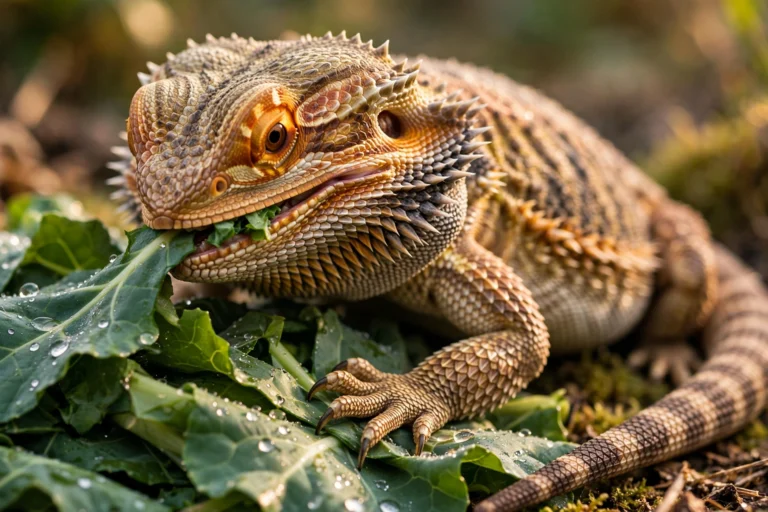
1. Chop it finer. Big leaf pieces get ignored; finely chopped or shredded greens get accidentally eaten while investigating. Think confetti, not salad bar. For babies, mince almost to a pulp.
2. Add movement. Wiggle a leaf with tongs, or drop a live insect into the salad bowl so the whole pile rustles. Movement flips the predator switch — many dragons start eating the greens the insect disturbed.
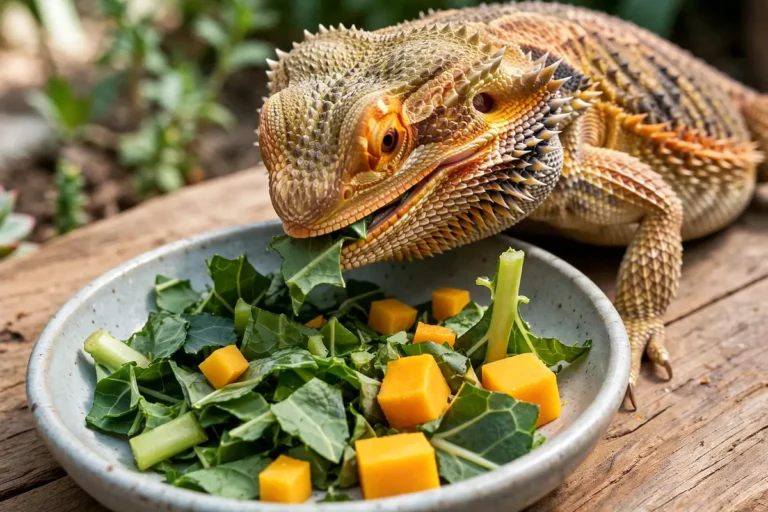
3. Mix colors. A monochrome green pile is boring. Add orange butternut squash, red bell pepper slivers, yellow squash — dragons see color well, and a varied bowl gets investigated more than a green blob. (Keep fruit minimal; color from vegetables, not sugar.)
Tricks 4–6: Bribery
4. Bee pollen. The single most-recommended trick in the hobby for a reason: a pinch of bee pollen granules over the salad, and a shocking number of dragons dive in. It’s the smell — floral, strong, interesting. Available at health food stores; a jar lasts months.
5. Worms on top. Place 2–3 black soldier fly larvae or small dubias on the salad. The dragon lunges for the insect and gets a mouthful of greens as collateral. Over weeks, the association builds: salad bowl = good things happen.
6. Hand feeding. Offer individual leaves from your fingers. The personal interaction plus movement often succeeds where the bowl failed — and it doubles as bonding time. Dangle, don’t shove.
Tricks 7–9: Routine
7. Morning salads, insects later. Offer fresh salad first thing in the morning when the dragon is hungriest after the night fast. Insects come in the afternoon. A hungry morning dragon investigates greens far more seriously than a dragon that already ate 30 dubias.
8. Hunger windows. For healthy adults (never babies), one insect-free day per week with salad always available teaches that greens are food too. This is a scheduled routine, not starvation — and it works.
9. Relentless consistency. Offer fresh salad every single day whether it’s touched or not, and remove the wilted remains each evening. Dragons sometimes take weeks to try something new. The keepers who win the green war are the ones who didn’t stop offering on day 12.
What NOT to Do
- Don’t starve them out. Covered above — dangerous for juveniles, stressful for everyone.
- Don’t switch to fruit-only. “At least he’s eating something” leads to sugar-heavy diets, diarrhea, and worse nutrition than the standoff. Fruit is a treat, not a vegetable substitute.
- Don’t blend greens into insect smoothies. It teaches nothing and the texture puts many dragons off both foods.
- Don’t give up after a week. Behavioral change in reptiles is measured in weeks, not days.
Juvenile vs Adult Expectations
| Age | Realistic green target | Your job |
|---|---|---|
| 0–6 months | Nibbles count as success | Offer daily, mince fine, don’t stress |
| 6–12 months | Increasing interest | Morning salads, start bribery tricks |
| 12+ months | 75–80% of diet | Full routine: salad-first, hunger windows |
The Best Greens to Start With
Not all greens are equal in a picky eater’s eyes. If you’re starting the retraining program, lead with the most palatable options — the ones keepers report the highest success rates with:
- Mustard greens — the #1 keeper favorite; slightly peppery, and dragons seem to prefer the flavor over blander greens.
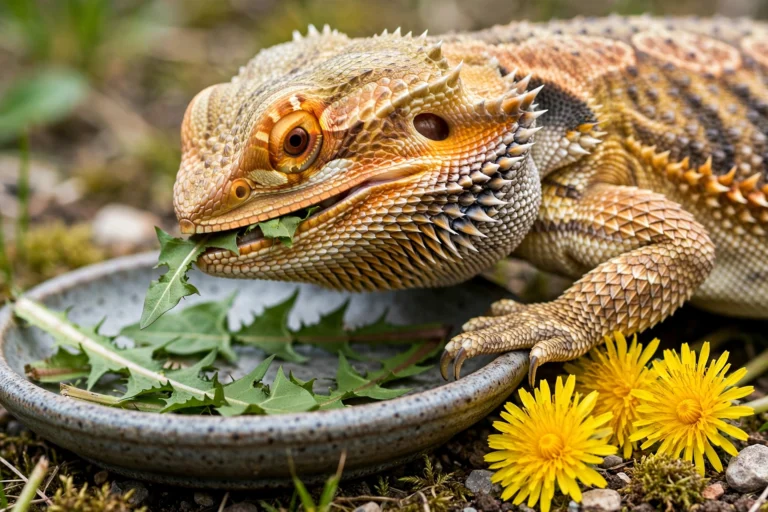
- Dandelion greens — nutritious and widely loved; pick from pesticide-free areas or buy organic.
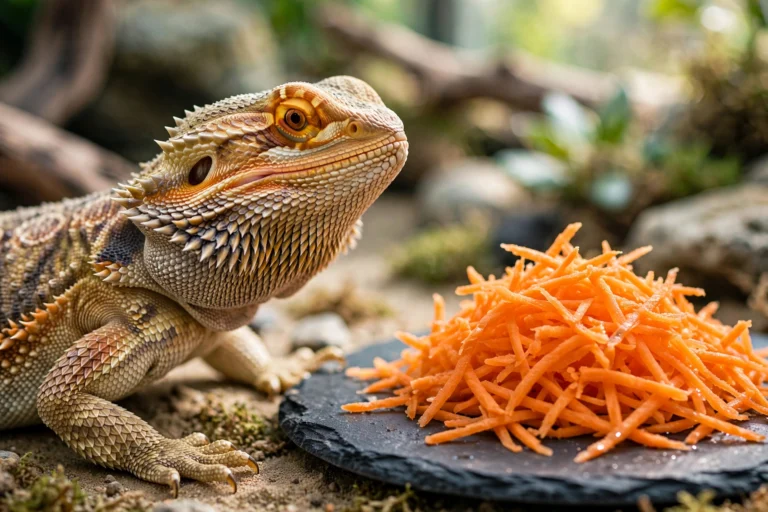
- Butternut squash (grated) — technically a vegetable, but its sweetness and bright color make it a gateway food.
- Bell pepper (finely diced) — color and crunch; red and yellow pieces get investigated first.
- Endive and escarole — mild, hydrating, and a nice texture contrast.
Rotate 3–4 of these as your base, then expand into collards, turnip greens, and kale once the habit forms. The full reference — 47 foods with nutrition notes — is our safe foods list.
When to Call the Vet
Call a reptile vet if green-refusal comes with any of these: sudden appetite loss (not gradual pickiness), weight loss, lethargy or hiding, diarrhea or bloody stool, swollen jaw or limbs, or refusal of insects too (a dragon refusing everything is sick until proven otherwise). Bring a fresh fecal sample — parasites are the most common medical cause of appetite changes, and a fecal test is cheap, fast, and definitive. Our safe foods list is the companion reference for what to offer once the vet gives the all-clear.