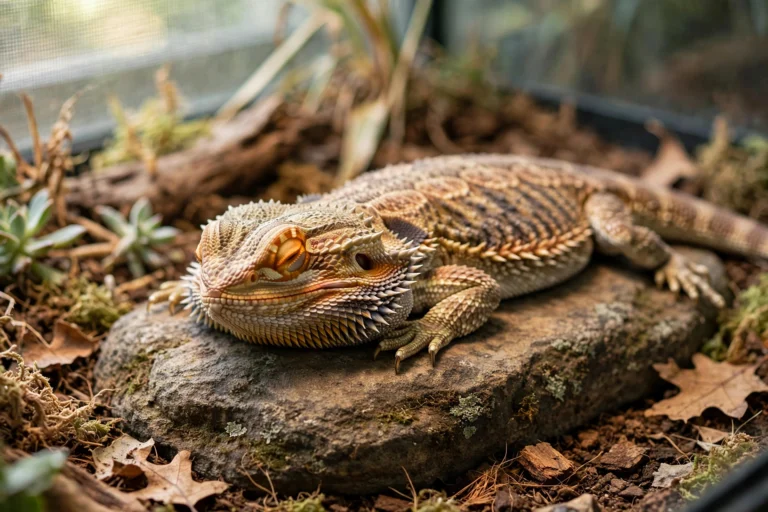
Is Your Bearded Dragon Overweight? A Visual Guide
“Chonky” is a compliment on the internet and a health problem in a terrarium. Overweight bearded dragons are one of the most common sights in captivity — and one of the least recognized, because owners see their dragon every day and the weight creeps on gradually. Excess fat strains the liver, shortens lifespan, and makes every other health problem worse.
The fix starts with an honest assessment. Below is an interactive 5-point body condition scale: tap through the levels, compare what you see and feel at each checkpoint, and find your dragon’s score. Then read the full guide — the five fat-deposit checkpoints, why dragons gain weight, healthy ranges, and the gradual, vet-safe correction plan.
The 5 Fat-Deposit Checkpoints
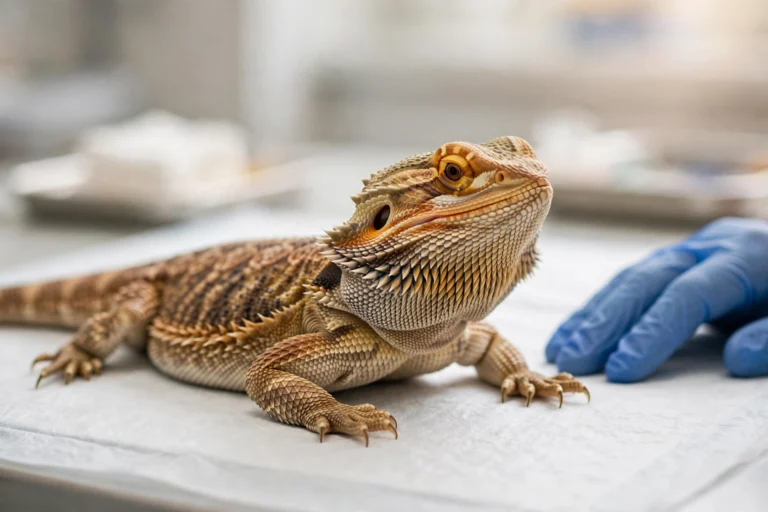
Score a bearded dragon the way reptile vets do: by looking and feeling at five specific places, not by the bathroom scale alone. Run through all five — one checkpoint can mislead, but five rarely do.
1. Tail base. The single best checkpoint. Run your thumb and forefinger gently around the tail just behind the vent. At ideal condition it feels rounded and full, like a plump grape. A thin, bony tail base with visible vertebrae means underweight; a tail base so thick the scales look stretched means overweight.
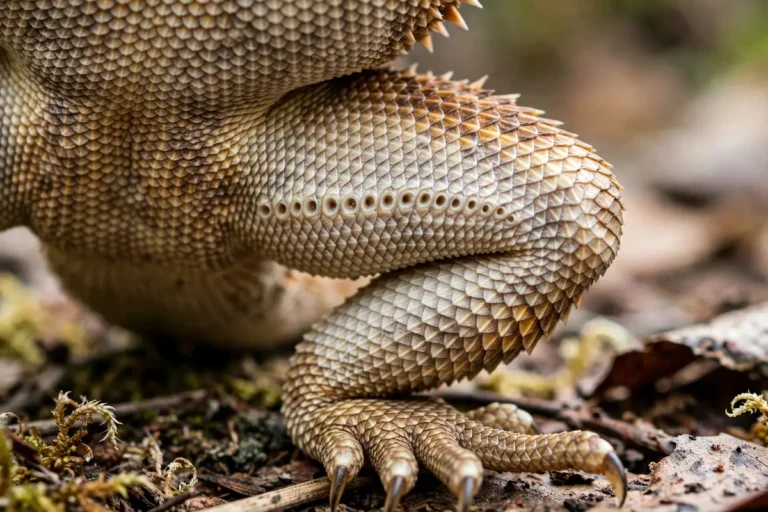
2. Belly. Watch the dragon walk. At ideal condition the belly clears the ground or brushes it lightly. A belly that drags, swings side to side, or folds over itself when the dragon sits indicates excess fat.
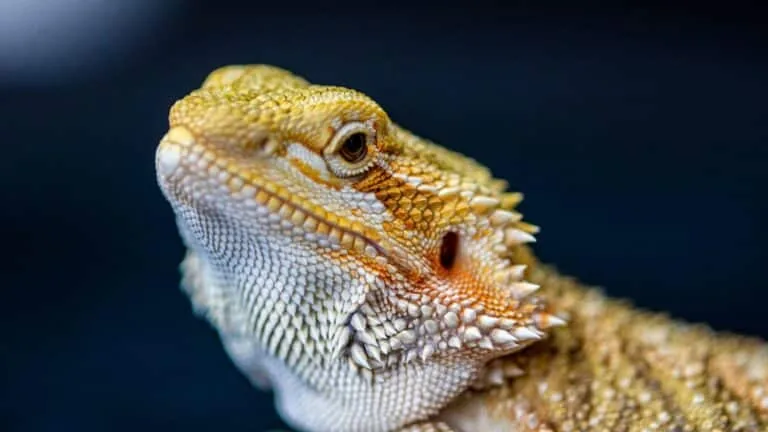
3. Jowls. Bearded dragons store fat in their cheeks. Full, rounded jowls are normal — especially in males — but jowls that bulge outward past the jawline and wobble when the dragon moves signal overweight.
4. Head fat pads. Feel the top of the head behind the eyes. Gentle, rounded pads are ideal. Deeply sunken pads suggest underweight or dehydration; heavily domed, puffy pads suggest excess fat.
5. Armpits and hips. Look where the legs meet the body. Rolls or bulges of fat tucked into the armpits and around the hips — sometimes called “fat pockets” — are a classic overweight marker. Lean dragons show clean leg-body junctions.
Bearded dragons store fat in their tails and abdomen the way some mammals store it in hips and waist — and like us, they develop fatty liver disease when the deposits grow excessive. An overweight dragon’s liver is working overtime long before any outward symptom appears.
Why Bearded Dragons Get Overweight
Weight gain in captivity has three usual drivers, and most overweight dragons have at least two. The pattern is almost always gradual — a few extra grams a month that compound over a year — which is why monthly weigh-ins catch what daily observation misses.
Too many insects, too often, for too long. Juveniles need daily insects to fuel growth — but adults do not. An adult fed like a juvenile, with daily piles of dubia roaches deep into its second and third year, will outgrow its frame. The feeding schedule by age shows exactly when and how insect frequency should step down.
Fatty feeders as staples. Not all insects are equal. Waxworms, butterworms, and frequent hornworms are the candy bars of the feeder world — fine as occasional treats, disastrous as dietary foundations. Lean staples like dubia roaches, black soldier fly larvae, and crickets deliver protein without the fat load. Compare them in our feeder insect guide.
Too little movement. A dragon in a bare, small enclosure with nothing to climb, chase, or explore burns a fraction of the calories of an enriched one. Inactivity and overfeeding compound each other: the classic overweight dragon is both overfed and under-exercised.
Myth: A fat bearded dragon is a healthy bearded dragon — you can never overfeed a reptile. Reality: Wild dragons face feast and famine; captive dragons face feast and feast. Obesity is among the most common preventable conditions reptile vets see, and it shortens lives by straining the liver, heart, and joints.
Healthy Weight Ranges
Raw grams are a rough guide, not a verdict — length, sex, and frame matter as much as the scale number. As approximate adult ranges: males typically land around 400–600g and females around 350–450g at 18–24 inches. A 500g dragon at 22 inches can be ideal; a 500g dragon at 17 inches is likely overweight. Track your dragon against the growth chart for its age and sex, and weigh monthly on a kitchen scale — trends beat single readings. A steady climb month after month in an adult is the early warning, long before the mirror shows it.
One caution: sudden weight gain is different from gradual gain. A female ballooning in weeks may be developing eggs — even unmated females lay infertile clutches — and that needs a vet’s assessment, not a diet. Rapid loss is equally suspicious: parasites and organ disease strip weight fast. Gradual gain over months is the dietary pattern this guide addresses; sudden change in either direction is a medical sign.
The Safe Weight-Loss Plan
Reptile weight loss must be gradual — crash dieting a bearded dragon causes its own problems, including muscle wasting and hepatic lipidosis paradoxically worsening. Aim for slow, steady change over months, not weeks.
Shift the ratio toward greens. Adults should eat mostly vegetables — roughly 70–80% greens and 20–30% insects. If your adult is still eating like a juvenile, this single change does most of the work. Build the plate from the safe foods list, leaning on low-oxalate staples like collards, mustard greens, and dandelion greens.
Swap fatty feeders for lean staples. Retire waxworms and butterworms to rare-treat status. Base insect meals on dubia roaches, black soldier fly larvae, or crickets, and cut insect meals to two or three times a week for adults — the feeding schedule has the exact cadence.
Add movement. Scatter greens so the dragon forages, offer supervised exploration time outside the tank, add climbing branches, and try target-training with a favorite treat. An enriched dragon can double its daily activity without any “exercise program.”
Weigh monthly, adjust quarterly. Log the weight on the first of each month. A loss of a few percent per month in an overweight adult is the right pace. If weight stalls for three months despite the changes, or climbs, loop in a reptile vet — thyroid and liver issues can resist dietary fixes.
When Weight Needs a Vet, Not a Diet
Handle two situations with professional help, not home adjustments. Scores of 1 or 5 on the scale above — emaciation and extreme obesity both deserve a vet’s assessment before any feeding change, because underlying disease (parasites, organ disease, egg binding) may be driving the number. And sudden weight change in either direction — rapid gain (possible eggs or fluid) or rapid loss (possible illness) — is a medical sign, not a husbandry project. Bring your monthly weight log; it is the most useful diagnostic data you own.