Why Does My Bearded Dragon Close One Eye?
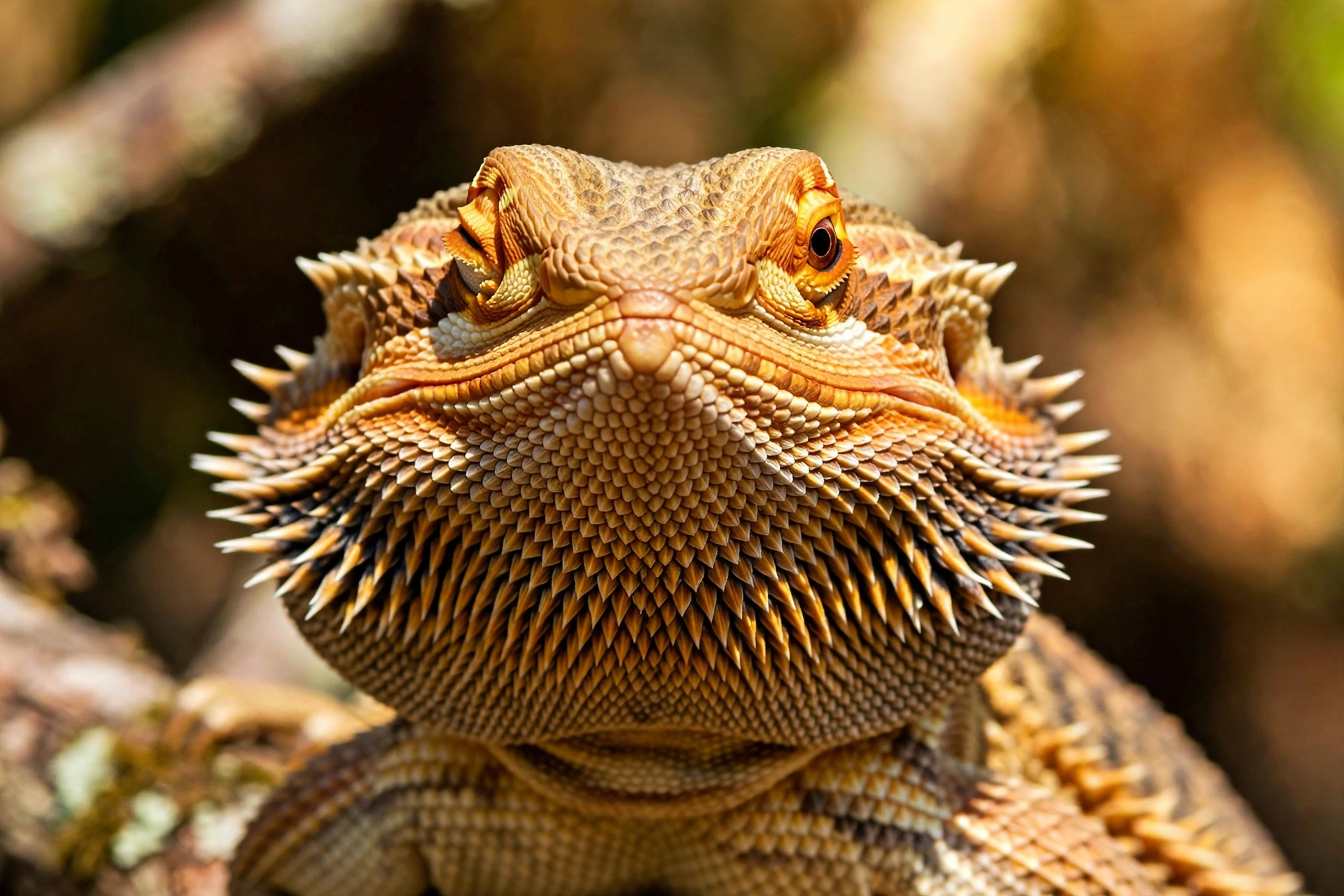
You glance at the tank and there it is: one eyelid slid shut while the other eye stays bright, round, and fixed on you. Your bearded dragon looks half-asleep on one side and fully awake on the other. Is this a wink, a nap, or a warning? Most of the time the answer is reassuring — but the pattern matters more than the moment.
Decode it: what is the eye doing?
Tap the scenario that matches what you are seeing. Each one carries the most likely explanations, what to do next, and the cues that mean it is time to stop guessing and call a reptile vet. This is a triage helper, not a diagnosis — only a vet can say what is actually wrong with an eye.
The harmless explanation: the basking doze
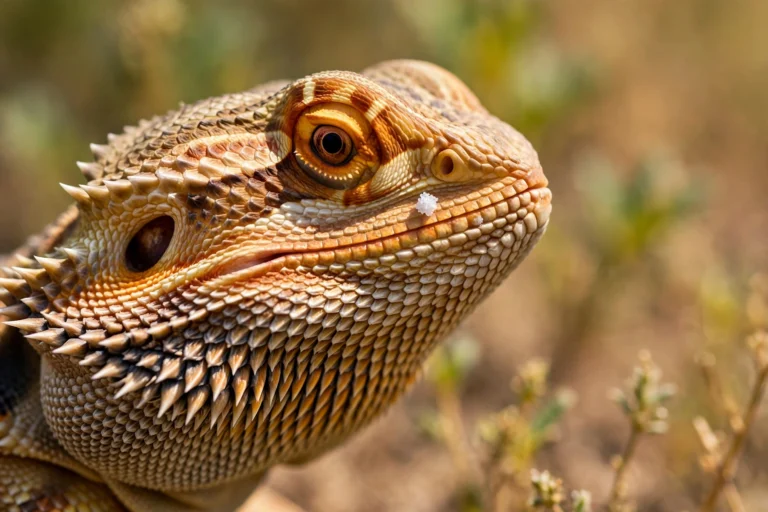
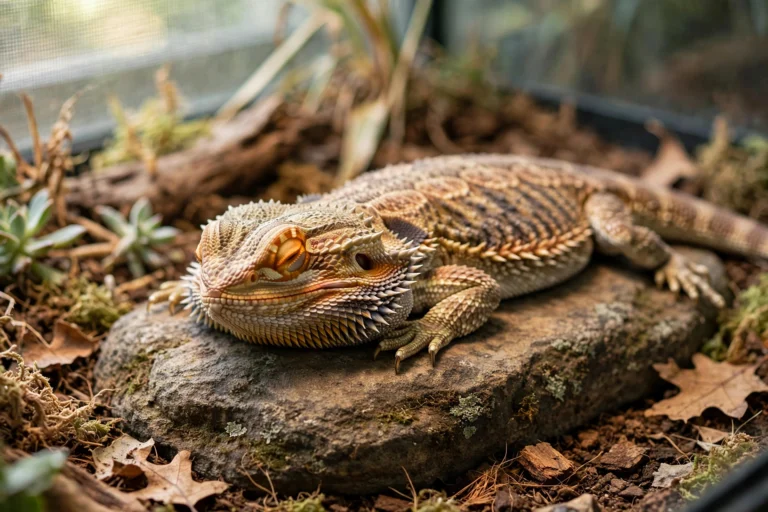
The single most common reason a bearded dragon closes one eye is also the least alarming. Under the basking lamp, many dragons relax into a half-doze with one eyelid lowered, sometimes while gaping to regulate their temperature. It looks like a wink. It behaves like one, too — the eye opens fully when the dragon becomes alert, moves off the hot spot, or spots food.
Think of it the way you would squint one eye against bright sun while the other stays on the view. Bright light plus deep relaxation is a perfectly normal combination, and short one-eyed sessions under the lamp are something most keepers see weekly. What separates the harmless version from a problem is the pattern: it comes and goes, it follows the basking routine, and the eye itself looks normal — no swelling, no crust, no cloudiness.
Eye trouble: shed, debris, scratches, and mites
When the closed eye is not following the basking routine, look at the eye itself. The head is where bearded dragons shed most awkwardly, and a thin flake of Bearded Dragon Shedding Guide retained shed along the eyelid can hold the lid shut or make opening it uncomfortable. A warm, shallow soak usually lets stuck shed release on its own within a day or two — never pull at skin near the eye, since tearing it invites infection.
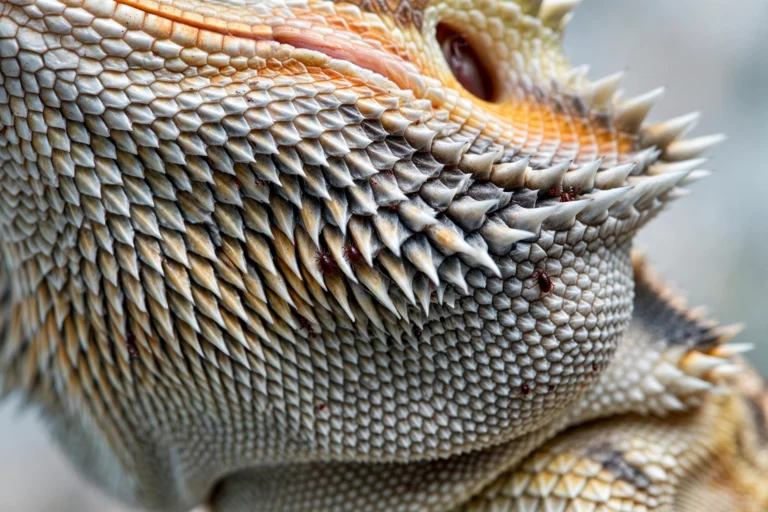
Debris is the next suspect. A speck of substrate, a grain of sand, or a bit of shed can lodge under the lid and irritate the eye until the dragon keeps it shut. Sand-type substrates are repeat offenders here: reptile veterinarians note they can cause corneal ulcers in the eyes, another reason many keepers have moved to solid substrates. Tiny parasites are worth checking for, too — reptile mites show up as brown, black, or red moving dots on the skin, sometimes with white egg specks nearby, and they can cluster around the eyes.
A scratched cornea is the painful one. It can follow a tankmate nip, a sharp decor edge, or a frantic glass-surfing episode, and the eye typically stays closed with a cloudy or watery look. Injuries and infections produce overlapping signs — discharge, swelling, cloudiness — and home detective work cannot reliably separate them. That is what our squinting guide covers in more depth, and it is also where the do-it-yourself approach should stop.
The lighting connection: when the bulb is the problem
Eyes are the canary in the coal mine for bad lighting. A UVB source hung too close, a compact or coil UVB bulb with uneven output, or an aging tube past its effective life can all irritate a dragon's eyes — and the first sign is often persistent squinting or one-sided eye closure. Too much UVB can cause photokeratitis, essentially a sunburn of the cornea, which is painful enough to keep the eyes shut most of the time.
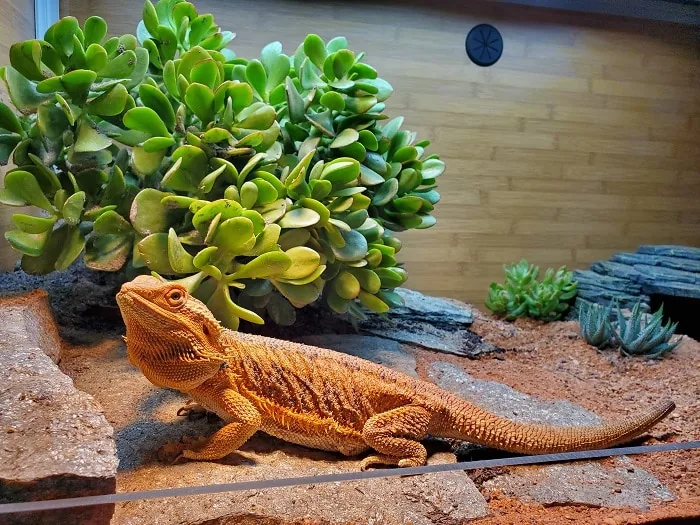
Distance is the variable most keepers get wrong. Keeper communities commonly run a linear T5 10.0 tube roughly 12 to 15 inches above the basking spot, keep older T8 tubes closer at about 6 to 8 inches, and hang powerful mercury vapor bulbs 12 to 24 inches away depending on wattage. A basking platform that lets the dragon climb to within a few inches of any of these is a setup flaw, not a bold dragon. Our full UVB and eye health guide walks through matching bulb type, distance, and tank size.
Check three things: the bulb's distance from the basking spot against the manufacturer's guidance, the bulb's age (UVB output fades long before visible light does, so a dated sticker on the fixture pays off), and whether the dragon can escape the light — a proper gradient with shaded hides matters as much as the bulb itself. If the squinting started within days of a bulb change, the new bulb is suspect number one.
When to call the reptile vet
Some patterns should not wait out a "let's see" period. Book a reptile vet visit — and frame it as an eye exam when you call — if you see any of these:
- Discharge, crusting, swelling, or cloudiness in or around the eye
- The eye stays closed for more than a day or two with no shed to explain it
- Both eyes are affected, or the dragon seems unable to open the eye at all
- Eye trouble paired with lethargy, appetite loss, weight loss, or breathing changes
- A known injury — a bite, a scratch, or a collision — near the eye
Note that a respiratory infection can show up around the eyes and nostrils too, which is why eye signs plus mucus or labored breathing should be treated as urgent rather than filed under "eye problem." Related eye symptoms like bulging have their own decoder if swelling is what you are seeing.
Five quick checks you can do today
- Pattern test. Does the eye open normally away from the basking spot? Normal there means the lamp routine is the likely story.
- Shed check. Look closely at the eyelid margins for pale, flaky retained shed — especially in the week after a head shed.
- Mite scan. Part the scales gently around the eye and jawline and look for tiny dark moving dots or white specks.
- Bulb audit. Measure the distance from the basking spot to the UVB source and compare it with the maker's guidance; check the bulb's install date.
- Pairing check. Any lethargy, appetite drop, discharge, or breathing noise alongside the closed eye moves the timeline from "monitor" to "call the vet."
What to Read Next
Still one-eyed after a day or two? Persistent eye closure is one of those signs where an exam beats a guess every time. Find a reptile vet near you and mention the eye specifically when you book — it helps the clinic triage you correctly.