How to Feed Butternut Squash to Bearded Dragons
You buy a butternut squash with the best of intentions. Then it sits on your counter for a week, rock-hard and faintly accusing, while one website tells you to feed it raw, another says never feed it raw, and a forum thread from 2019 argues about it in circles. Here is the short version that ends the debate: yes, bearded dragons can eat butternut squash, it is one of the better vegetables you can offer, and the raw-versus-cooked argument has a clear answer once you know your dragon’s age. This guide ranks every prep method, gives you exact portions, and settles how often squash belongs in the bowl.
The short answer: yes, and it is a genuinely good one
Butternut squash earns its place with a nutrition profile most feeder vegetables cannot match. Its headline nutrient is beta-carotene, the plant pigment behind that deep orange flesh, which the body converts into vitamin A for eye health, immune function, and healthy skin. Because it arrives as beta-carotene rather than preformed vitamin A, the body converts only what it needs, so there is no vitamin A overdose risk from squash the way there can be from synthetic supplements.
The calcium-to-phosphorus ratio is favorable too: about 48 mg of calcium to 33 mg of phosphorus per 100 grams, roughly 1.45 to 1, comfortably above the 1-to-1 minimum reptile keepers aim for. Add about 2 grams of fiber per 100 grams, modest sugar levels for a sweet-tasting vegetable, and a water content near 88 percent, and you have a side vegetable that quietly supports hydration and digestion at the same time. That fiber that helps prevent constipation is one reason squash shows up in so many experienced keepers’ rotations.
Per 100 g of raw butternut squash: roughly 10,630 IU of vitamin A activity (as beta-carotene), 48 mg calcium to 33 mg phosphorus (a 1.45:1 ratio), and about 88% water. Compare that with iceberg lettuce, which is mostly water and almost no nutrition, and you see why orange vegetables punch above their weight.
Four ways to serve it, ranked
Every prep method below is safe. They differ in nutrition retained, ease of eating, and effort. Pick your method in the picker to see the full verdict for each, including who it suits best.
How to prep it, step by step
Whichever method the picker sent you home with, the prep starts the same way. A few minutes here prevents the two real hazards of squash: the inedible skin and the seeds.
- Wash and scrub the outside. Squash skin can carry pesticide residue and field dirt. A firm rinse under running water with a vegetable brush is enough.
- Peel it completely. Butternut skin is thick, waxy, and effectively indigestible for a bearded dragon. A standard vegetable peeler works; the skin should come off in ribbons.
- Halve it and scoop out every seed and string. Seeds are a choking hazard and can contribute to impaction. Scoop the cavity clean with a spoon.
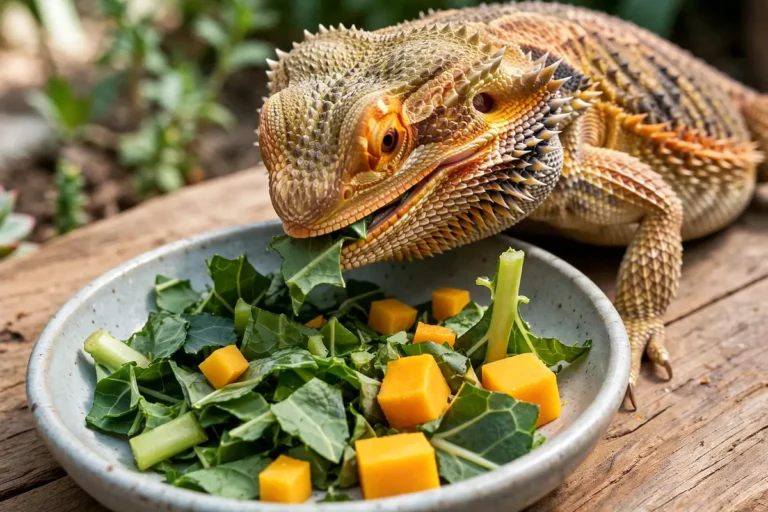
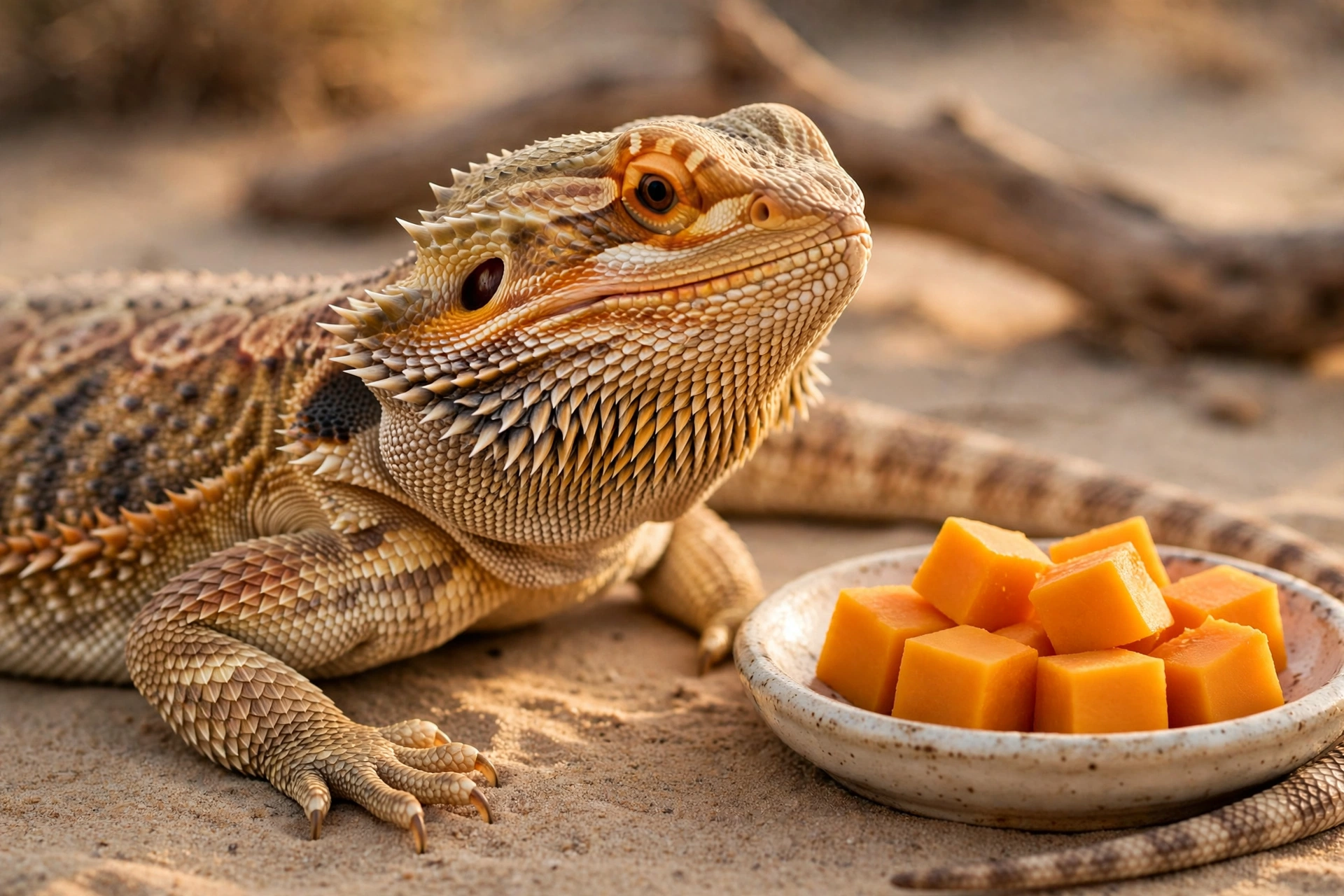
- Cut to a safe size. The keeper’s rule: no piece wider than the space between your dragon’s eyes. For babies and small juveniles, skip chunks entirely and grate the flesh on a box grater instead.
- If cooking, keep it plain and brief. Steam cubes for 5 to 8 minutes until just fork-tender, or bake halved squash cut-side down at 400°F until soft. No oil, no butter, no salt, no seasoning of any kind. Then let it cool completely, lukewarm or room temperature, before it goes anywhere near the tank.
“Never feed butternut squash raw.” False. Raw is nutritionally the best way to serve it, and the warning comes from confusing “hard to chew” with “unsafe.” Peeled, seeded, and cut small, or grated, raw squash is perfectly safe. Light steaming is a fine compromise for dragons that struggle with raw texture, not a requirement.
Portion guide: how much per age
Squash is a side vegetable, so portions stay modest. These are starting points from experienced keepers: begin at the low end, watch droppings for a day or two, and adjust. Loose stool means you served too much or introduced it too fast.
- Babies (under 4 months): a pinch of grated squash or 1 to 2 tiny cubes, twice a week. Insects are still the main event at this age, so squash is a garnish, not a meal.
- Juveniles (4 to 12 months): several small cubes or a tablespoon of grated squash, 2 to 3 times per week, mixed into the daily salad.
- Adults (12 months and up): 1 to 3 bite-size cubes, 2 to 3 times per week as part of a varied salad. Adults eating mostly greens can handle squash as a regular rotation vegetable.
Mix grated squash through the greens rather than serving it in a separate pile. The shreds cling to leaves, so a dragon aiming for its favorite green gets squash in every bite, which is the easiest way to broaden a picky eater’s diet. That trick is a staple of good salad building.
That deep orange color is the nutrition. Beta-carotene is the pigment, so the more vividly orange the flesh, the richer the squash. Pale, washed-out flesh from an underripe squash carries noticeably less of it, which is one more reason to pick a fully ripe one: hard skin, even tan color, no green patches.
How often: a side vegetable, not a staple
One to three times per week is the sweet spot, always as part of a varied diet. Squash is nutritious, but no single vegetable covers everything, and staple greens like collards bring the calcium density that squash cannot match on its own. Think of squash as the colorful supporting act: it adds vitamin A, hydration, and flavor variety while the leafy greens do the heavy lifting.
Where squash fits in the feeding schedule is alongside the daily salad for juveniles and adults, rotated with other orange vegetables like bell peppers, carrots, and occasional fruit. If you are still mapping out the full menu, the What Can Bearded Dragons Eat? 47 Safe Foods list is the fastest way to plan a rotation that never gets boring.
Five mistakes to avoid
- Feeding the skin. It looks harmless and is not. Butternut rind is too tough to digest and can cause gut irritation. Always peel.
- Leaving the seeds in. Seeds are the one genuinely dangerous part of the squash for a bearded dragon: a choking risk for small dragons and an impaction risk if swallowed whole. Scoop the cavity completely clean.
- Seasoning it “for flavor.” Butter, oil, salt, cinnamon, brown sugar: all meant for human plates, all wrong for a reptile gut. Plain is the only recipe.
- Cutting chunks too big. An excited dragon lunges and gulps. Oversized cubes are the most common cause of squash-related choking scares, and the fix is free: cut smaller or grate.
- Making squash the whole salad. A bowl of pure squash crowds out the calcium-rich greens that should anchor every salad. Squash should be a colorful fraction of the bowl, roughly a quarter or less.
Put it in rotation: squash works best as part of a planned weekly mix, not a random add-on. Our weekly salad planner shows how to rotate squash with staple greens, other vegetables, and occasional fruit so every bowl stays balanced.