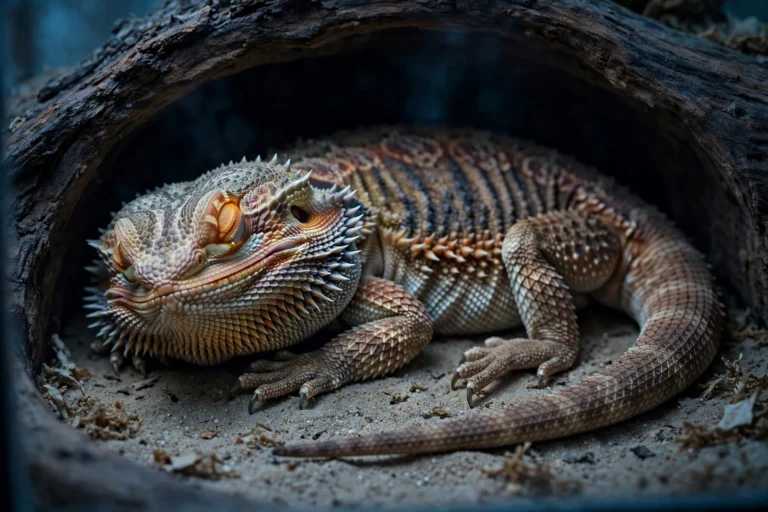
Do Baby Bearded Dragons Brumate?
Your five-month-old bearded dragon used to demolish a dozen crickets before breakfast. This week, she naps in her hide all day and leaves the salad untouched. The first thing that pops into your head: is she brumating? It is a fair question — and getting it wrong is one of the costliest mistakes a new keeper can make.
The short answer: no, babies do not brumate
Bearded dragons under a year old do not go into true brumation. That is not a suggestion — it is one of the firmest rules in reptile keeping. A lethargic, off-food baby is dealing with something else: wrong temperatures, a dying UVB bulb, parasites, relocation stress, or genuine illness. Every one of those is fixable, but only if you look for them instead of filing the behavior under “winter sleep.”
The full picture lives in our brumation guide, but here is the part that concerns your young dragon: brumation is a months-long fast powered by stored body fat. A baby is a growth machine, not a fat-storage machine. It needs daily protein and calcium to build bone and muscle, and it simply has not banked enough reserves to idle for weeks.
The age gate for brumation is one of the firmest rules in the hobby: 12 months minimum, 18 months or older preferred. Below that line, lethargy and appetite loss are treated as a health or husbandry problem first — not dormancy.
Why young dragons cannot safely brumate
Three things make brumation dangerous for a growing dragon:
No fuel reserves. Adult dragons brumate on fat pads built up over a year or more of steady eating. Babies and juveniles burn nearly everything they eat on growth — there is no surplus to draw on. A months-long fast on an empty tank means the body starts spending tissue it cannot spare.
Growth does not pause politely. The first year is when a dragon builds its skeleton, organs, and immune system. Skipping weeks of nutrition during that window can mean stunted growth or metabolic bone disease that shows up months later, long after the “brumation” is forgotten.
A suppressed immune system hides problems. During dormancy, a reptile’s immune response slows dramatically. A parasite load that a growing dragon’s body was managing just fine can explode during brumation. This is why even adults get a parasite check before brumation — and why a young dragon with an unknown parasite status is the worst possible candidate.
Hatchlings (0 to 3 months): full speed ahead
A hatchling slowing down is never brumation. At this age your dragon should be eating two to three times a day, basking hard, and growing visibly week to week. If a hatchling goes quiet and stops eating, run the basics immediately: basking surface at 100–110°F, a fresh linear UVB tube (not a coil), and feeders no wider than the space between its eyes.
Our growth chart shows what normal weight gain looks like at each age — it is the fastest way to tell whether your hatchling is on track or falling behind. Remember: a baby under four months that has not eaten for 48 hours needs a reptile vet, not a wait-and-see.
A healthy baby bearded dragon can double its weight in its first few months — growing from around 4 grams at hatching to 40–60 grams by three months. That growth rate is exactly why even a two-week fast at this age is a crisis, not a nap.
Babies (3 to 8 months): the growth engine
This is the age when owners most often mistake a problem for brumation, because babies this age do have occasional off days. A shed cycle, a stressful week, or a few too-cool days can all cause a temporary appetite dip. The difference: a baby with a husbandry issue bounces back within days once you fix the cause. A baby in “brumation” would not — because it is not brumating.
Keep the feeding schedule for juveniles running at full strength through the winter: daily insects, fresh greens offered every morning, calcium dusting on schedule. If your baby is drowsy despite correct heat and light, do not adjust the season — investigate the dragon. Check the basking temp with a probe thermometer (stick-on dials lie), confirm the UVB tube is under a year old, and look at the droppings: runny, foul-smelling stool points at parasites, which need a fecal test at a reptile vet.
Juveniles (8 to 12 months): the gray zone
This is the only age bracket where the question gets genuinely tricky. Some juveniles approaching their first birthday do start to slow down in winter — sleeping more, eating a little less — even under good care. Their bodies are winding down growth and starting to store fat, and seasonal cues can leak through no matter how steady you keep the tank.
Here is how to handle it: do not call it brumation, and do not manage it like one. The safest play is the keep-up protocol — hold the light cycle at 12–14 hours, keep basking and cool-end temperatures at full normal values, and keep offering food on the regular schedule. Many juveniles ride out the winter this way with nothing worse than a lazy few weeks.
If your 10- or 11-month-old insists on sleeping despite perfect conditions, get a pre-brumation vet check before you allow anything resembling dormancy: a fecal test, a weigh-in, and an honest body-condition assessment. Some keepers allow a shortened slowdown of two to four weeks for sturdy near-yearlings — but that is a decision made with a vet, not a forum thread.
“My friend’s 9-month-old brumated and was fine, so babies can do it.” One juvenile surviving a winter slowdown proves that one juvenile survived — not that it is safe or advisable. Survivor anecdotes never include the juveniles that came out stunted, sick, or not at all. The 12-month rule exists because the cost of being wrong is a damaged growing animal. Do not gamble growth on an anecdote.
Adults (12 months and up): when brumation enters the chat
Once your dragon crosses the one-year mark with good body condition, brumation becomes a legitimate seasonal option — not a requirement, just an option. Many healthy adults skip it entirely under steady indoor lighting, and that is completely fine. If yours does wind down, the preparation matters more than the sleep: vet check, clear gut, weekly weigh-ins, water available.
Not sure whether your dragon is actually ready? Run the checker below. It weighs the three things that matter — age, body condition, and health status — and tells you which path fits your animal.
Your young dragon is already slowing down — what to do now
Do not try to “wake” a baby out of a slowdown with handling or cold baths, and do not try to force it deeper either. Work the checklist instead:
Verify heat first. Measure the basking surface with a probe thermometer or temp gun. Anything under 100°F and digestion grinds to a halt — the dragon looks “sleepy” when it is actually just too cold to function.
Audit the UVB. A linear T5 HO tube older than 12 months (or any coil bulb) may be glowing while producing almost no UVB. Gradual appetite loss over weeks plus lethargy is the classic signature.
Look at the poop. Parasites are the most common medical cause of a “brumation-like” slowdown in dragons under a year. Runny, extra-smelly, or bloody stool — or steady weight loss — means a fecal test at a reptile vet, full stop.
Rule out illness properly. If heat, light, and droppings all check out and the dragon is still lethargic, use our brumation vs illness comparison to sort the signs — and book the vet. Under a year old, “probably brumation” is never the working diagnosis.
Just brought your dragon home? Run through the new-dragon health checklist — twelve checks that catch the problems most often mistaken for brumation in young dragons.