How to Care for a Bearded Dragon Laying Eggs
Here is a sentence that surprises most new keepers: your female bearded dragon can lay eggs even if she has never met a male. Unmated females routinely produce infertile clutches — the reptile equivalent of a chicken laying unfertilized eggs. It is normal, it is common, and it still catches owners completely off guard when their “definitely not pregnant” dragon starts excavating the enclosure like a tiny bulldozer.
This guide covers why it happens, the signs she is getting ready, how to build a proper lay box, and — critically — how to tell a normal laying cycle from an emergency that needs a reptile vet. Start with the decision helper below if you are unsure what you are looking at.
Why She Lays Eggs With No Male Around
Female bearded dragons ovulate on their own cycle, male or no male. When follicles mature without mating, the eggs are simply infertile — they will never hatch, but her body still needs to lay them. Think of a backyard hen: unfertilized eggs, laid on schedule, no rooster required. Most females lay their first clutch as young adults, and some lay one or more clutches every year.
One exception: with an adult female of unknown history, fertile eggs are possible even with no male in your home — she may have been housed with a male before you got her. If eggs ever develop veins when candled, that is why. The questions to ask a bearded dragon breeder are worth reviewing even after purchase, since breeding history changes how you handle a clutch.
Claim: “A female can’t lay eggs without a male.” Verdict: false. Unmated females routinely lay infertile clutches. No male, no mating, no problem — but she still needs a lay box, because holding eggs too long can lead to egg-binding.
The Signs She Is Getting Ready
Gravid behavior follows a fairly predictable arc. Early on, many females eat more than usual as the follicles develop — then appetite falls off, sometimes to nearly nothing, in the one to two weeks before laying. Her abdomen widens noticeably; viewed from above she looks pear-shaped, and with gentle handling you may feel the individual eggs as small, firm lumps along her sides. (Be very gentle — rough palpation can damage eggs.) Some females darken in color or show stress marks during this period.
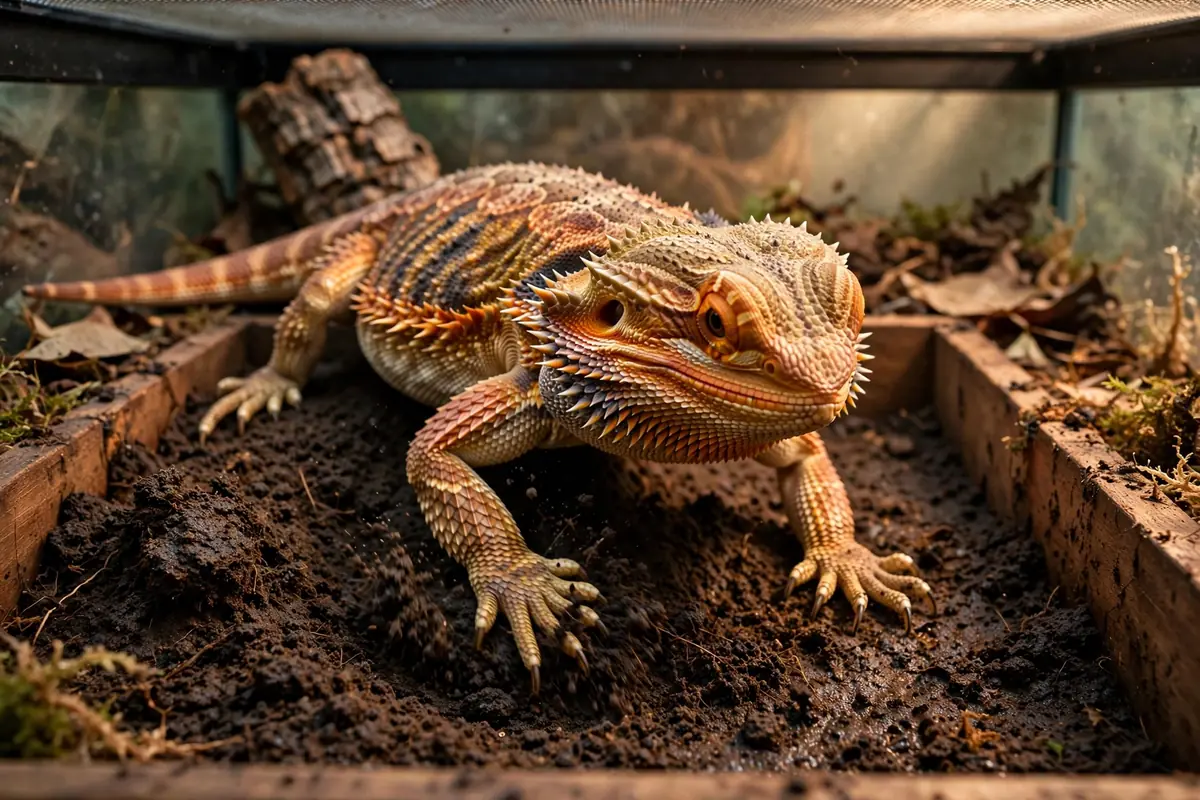
The most reliable signal is restless digging: persistent scratching at the substrate, the enclosure corners, and the glass, often paired with pacing. A female approaching her laying date is searching for a nesting site, and this frantic digging usually means eggs are one to two weeks away. She may also become more defensive about her space — hormonal, temporary, and best handled with minimal handling. If you are still unsure of her sex, our male vs female bearded dragon guide covers the physical differences.
Frantic, persistent digging is the single most reliable sign that laying is imminent — usually within one to two weeks. A female doing this without a lay box available is not being difficult; she is telling you exactly what she needs.
During and After Laying
Once she starts, give her privacy and time. Laying a full clutch can take several hours, sometimes stretching across more than one session — hovering or handling her mid-process can interrupt it. A normal clutch can range from a dozen to several dozen eggs; count is highly individual, so do not worry about the number. Infertile eggs can simply be removed and discarded once she has finished and left the lay box.
Afterward, she will be tired and depleted: egg production is enormously calcium-intensive. Offer water first, then her normal foods, and let her bask and rest — her appetite usually rebounds within a few days. A short lukewarm soak (see how often to bathe a bearded dragon) helps her rehydrate. If she stays lethargic, refuses all food for more than a few days, or looks noticeably thin, have a reptile vet check her.
When It Becomes a Vet Visit
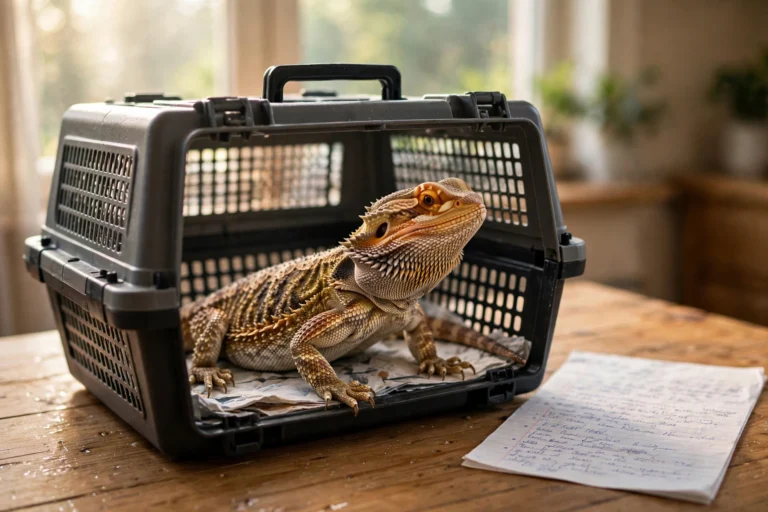
Most laying cycles complete without drama. But egg-binding (dystocia) — where a female cannot pass her eggs — is a genuine emergency that can become fatal. Contact a reptile veterinarian promptly if she strains repeatedly without producing eggs, becomes markedly lethargic or weak, develops a swollen or hard abdomen that does not resolve, or digs frantically for many days with nothing laid. Young females bred or cycling too early are at higher risk, as are females with low calcium intake — which is another reason supplementation is non-negotiable.
Do not attempt home remedies for suspected egg-binding: warm soaks and massage cannot fix an obstructed egg, and delay is the real danger. A reptile vet can confirm what is happening (often with imaging) and intervene. When you call, describe the timeline — when the digging started, when she last ate — so the clinic can triage correctly.