Male vs Female Bearded Dragon: Which Should You Get?
Should you get a male or female bearded dragon? New owners agonize over this — and the honest answer is less dramatic than the forums suggest. Individual personality varies far more than sex does. Still, there are real differences: size, breeding-season behavior, and the egg-laying question that surprises every first-time female owner. Take the 5-question picker below, then read the full breakdown of how to tell them apart and what each sex is actually like to live with.
âš–ï¸ Which Sex Suits You?
Answer 5 quick questions for a personalized recommendation — with the honest caveat built in.
1 · How important is size to you?
I want the biggest dragon possible
Size doesn’t matter much to me
I’d prefer a slightly smaller, lighter dragon
2 · How do you feel about spring breeding-season intensity?
Restlessness and head-bobbing sounds entertaining
I’d rather have calmer behavior year-round
No strong preference
3 · Egg laying: a female may lay infertile clutches.
I’m prepared — extra calcium, lay box, the works
I’d rather skip egg-laying entirely
I hadn’t thought about it until now
4 · Display behavior (head-bobbing, black beards)?
Part of the fun — bring it on
I prefer a more low-key dragon
Either is fine
5 · Your ideal handling vibe?
An active, bold explorer
A calm lap-sitter
I’ll pick based on the individual dragon
Get my recommendation
Can you even tell? Sexing babies is unreliable
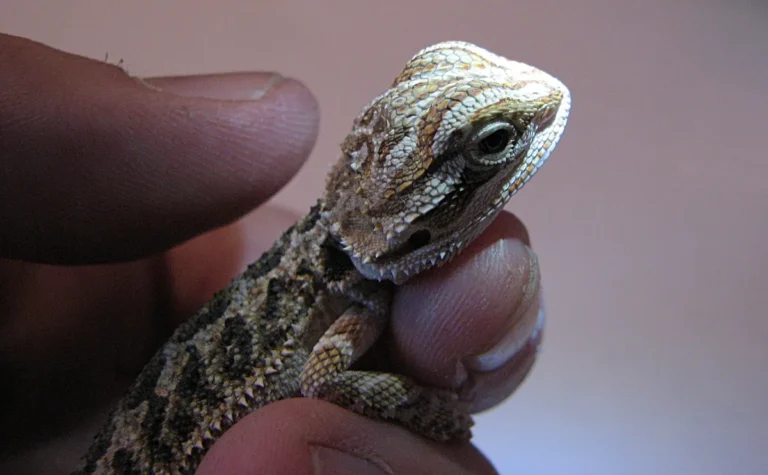
Here’s the first thing to know: sexing a baby bearded dragon is educated guesswork. The physical differences are subtle until about 6 months of age, and even experienced breeders get it wrong sometimes. If you’re buying an 8-week-old baby, treat any sex label as provisional — breeders who guarantee the sex of a tiny baby are overstating their certainty.
Practical upshot: if the sex genuinely matters to you (for example, you want to avoid egg-laying entirely), buy an older juvenile — 5–6+ months — where sexing is reliable. If you’re buying a baby, choose the healthiest, most alert individual and let the sex be a surprise.
How to tell male from female
The reliable method is the tail lift: gently lift the tail to about 90 degrees and look at the base from the side.
Male: two distinct hemipenal bulges — one on each side of the tail base — with a dip in the middle. Males also tend to have larger, more prominent femoral pores (the waxy dots along the inner thighs).
Female: a single central bulge (or a flatter profile) at the tail base, with smaller, less obvious femoral pores.
Important caveats: femoral pores exist in both sexes, so “has pores” doesn’t mean male — it’s the size and prominence that differ. And probing (inserting a probe into the vent) is a job for a vet, not an owner. For babies under a few months, even the tail-lift method is low-confidence — which is why older juveniles are the safer buy when sex matters.
💡 Did you know
Unlike many reptiles (sea turtles, some geckos), bearded dragon sex is set by the ZW chromosome system. No home incubator tweak reliably produces more males or females — any breeder selling temperature-sexed beardies is misleading you. (At lab-extreme temperatures above ~32°C/90°F, research has shown ZZ males can develop as females, but this is not something a breeder is doing on purpose.)
Size differences
Males are bigger — that’s the most consistent sex difference. Adult males typically reach 18–24 inches and 450–600+ grams, with broader heads and thicker tail bases. Females usually land at 16–20 inches and 350–500 grams, with narrower heads and a somewhat sleeker build.
Does it matter in practice? Slightly: a large male needs the same 120-gallon minimum as a female (tank size doesn’t shrink for girls), but everything scales — more food, bigger basking area, a sturdier presence on your lap. If you specifically want the most impressive-looking animal, males win. If you’d prefer a slightly more manageable size, females have the edge. Neither is “better” — it’s preference.
Temperament: the honest truth
Broad tendencies exist: males are often bolder, more active, and more display-prone; females are often calmer and more consistent day to day. But these are averages across populations, and the overlap is enormous. Plenty of females are feisty explorers; plenty of males are couch potatoes.
The temperament factors that actually predict your experience: how the baby was raised (handled regularly vs. left alone), its individual boldness (watch it in the enclosure — curious and alert beats skittish), and your own handling consistency. A well-socialized female beats a neglected male every time, and vice versa. When choosing between specific animals, judge the individual in front of you — not the sex on the label.
🔠Myth vs reality
Myth: “Males are aggressive and females are sweet.” Reality: Both sexes can be docile, both can be grumpy, and most land somewhere in the middle. Sex-linked aggression in bearded dragons is mostly a breeding-season phenomenon (males), not a personality trait. Judge the dragon, not the stereotype.
Breeding-season behaviors
Spring changes males noticeably: restlessness, near-constant head-bobbing, black beards at nothing, glass surfing, and appetite dips — all driven by hormones, all temporary. It can be alarming the first time (“why is he suddenly crazy?”), but it’s normal seasonal behavior that fades in a few weeks.
Females have their own season: some become receptive and restless; unmated females may develop and lay infertile clutches (more below). Neither sex is “easier” in spring — they’re just different kinds of eventful. If seasonal weirdness would stress you out, it’s worth knowing before you choose.
Can males and females live together?
No — don’t cohabit bearded dragons, regardless of sex combination. Male-female pairs lead to breeding (wanted or not), and males will relentlessly pursue females, causing chronic stress and overbreeding injuries. Male-male pairs fight, sometimes lethally. Female-female pairs are merely the least bad option — still not recommended, as dominance bullying over basking spots and food is common.
Bearded dragons are solitary by nature and do not get lonely. One dragon per enclosure is the rule, full stop. If you want two dragons, you need two complete setups — which doubles the cost and the work, so factor that into your plans honestly.
Egg laying in unmated females
The surprise every new female owner gets: unmated females can and do lay infertile clutches, typically starting around 18 months to 2 years of age. Signs include restlessness, digging behavior, appetite changes, and a visibly lumpy belly. Provide a lay box — a container of damp play sand or soil deep enough to dig in — and increase calcium supplementation during the laying period, since egg production drains calcium reserves.
Most clutches pass without incident. But if a female strains repeatedly without producing eggs, becomes lethargic, or stops eating for an extended period, that’s egg-binding (dystocia) — a veterinary emergency, not a wait-and-see situation. See a reptile vet promptly. This is the one genuine care overhead that comes with females, and it’s the main reason some owners prefer males.
📊 Stat
A single infertile clutch can contain 15–30+ eggs, and a female may lay multiple clutches per season. That’s a serious calcium investment per egg — which is why laying females need stepped-up supplementation and why egg-binding is treated as an emergency, not an inconvenience.
Which should you get?
Take the picker at the top for a personalized steer, then apply the tiebreaker that matters most: meet the actual animals. Handle a few dragons, watch how they react — alert, curious, and calm in the hand beats any sex-based prediction. The best dragon for you is the healthy individual whose personality clicks with yours, whether the tail lift says male or female.
And whichever you choose, start with the fundamentals: assess the animal with how to pick a healthy bearded dragon, vet the seller with our guide on buying without getting burned, and if morphs are on your mind, read the morphs guide so you know exactly what you’re looking at.
What to read next
How to Pick a Healthy Bearded Dragon — the individual matters more than the sex.
Where to Buy a Bearded Dragon Without Getting Burned — find a seller worth buying from.
11 Bearded Dragon Morphs, Explained in Plain English — genetics, minus the confusion.