How Do You Find a Reptile Vet for Your Bearded Dragon?
What happens when your bearded dragon stops eating on a Saturday night — and the only vet clinic still open tells you, “Sorry, we don’t see reptiles”? Who do you call when the nearest exotic practice is an hour away and you’ve never set foot in it? And how do you know, once you’re finally sitting in the exam room, whether the person holding your dragon actually knows what they’re doing?
These are questions most new keepers never think to ask until the answers are urgent. Bearded dragons hide illness well, and by the time something looks wrong, the clock is already ticking. Having a reptile vet lined up before you need one is one of the highest-leverage moves in reptile keeping — right up there with proper UVB and a good basking spot. This guide walks you through the whole process: finding a qualified reptile veterinarian, booking and affording the first visit, knowing what a good exam looks like, and spotting the clinics to avoid.
Before the Visit: Finding the Right Vet
Where do you actually look?
Start with the directories built for this exact purpose. The Association of Reptilian and Amphibian Veterinarians (ARAV) runs a “Find a Vet” search of its active members — veterinarians who have declared an interest and experience in treating reptiles. If you want board-certified expertise, the American Board of Veterinary Practitioners (ABVP) lists diplomates in reptile and amphibian practice. Both are worth checking before you trust a generic “exotic pets welcome” line on a clinic website.
Beyond directories, the reptile community is a strong filter. Local herpetological societies, bearded dragon owner groups, and reptile expos are full of keepers who will tell you — bluntly — which vets they’d trust with their own animals and which they’d never visit again. When you call a promising clinic, ask directly: how many bearded dragons does the vet see in a typical month? What is their after-hours emergency policy? A confident, specific answer tells you more than any website bio.
Myth: Any vet can treat a bearded dragon — a checkup is a checkup.
Reality: Reptile medicine is a specialty. Drug dosing, safe anesthesia, blood-draw sites, and even normal lab values differ enormously from dogs and cats. A well-meaning general vet without reptile experience can miss a sick dragon’s warning signs or make a routine procedure risky. Always ask what reptile-specific training and caseload the vet has.
Book early — ideally before there’s a problem
Don’t wait for symptoms. Many keepers schedule a wellness visit within the first two to three weeks of bringing a dragon home, and pairing that visit with the new-dragon health checklist gives you a clean baseline for everything that follows. A first visit also establishes you as a client, which matters enormously when you later need an urgent appointment — established clients get squeezed in; strangers get the next available slot in three weeks.
What will the first visit cost?
Budget honestly. A routine reptile wellness exam typically runs $75–$150, and a fecal parasite test — the single most common add-on — adds roughly $30–$60. If treatment is needed, expect the first-visit total to land somewhere between $100 and $360 depending on your area and what the vet finds. Annual checkups afterward usually fall in the $70–$250 range. None of this is cheap, but it’s a fraction of what an emergency visit for an advanced illness costs — which is exactly why the wellness visit exists.
Budgeting for the year ahead? Vet care is one of the bigger line items in a dragon’s first year. See the full breakdown of first-year vet costs and everything else a bearded dragon really costs to keep.
Plan Your Visit: The Prep Wizard
Every visit goes better when you walk in organized. Answer two quick questions and get a personalized checklist of what to bring, what to ask, and what to watch for at the clinic itself.
Vet-Visit Prep Wizard
Step 1: How experienced are you as a dragon keeper?
Step 2: Why are you going?
Your personalized visit plan
What to bring
What to ask
At the clinic: green flags vs red flags
During the Visit: What a Good First Exam Looks Like
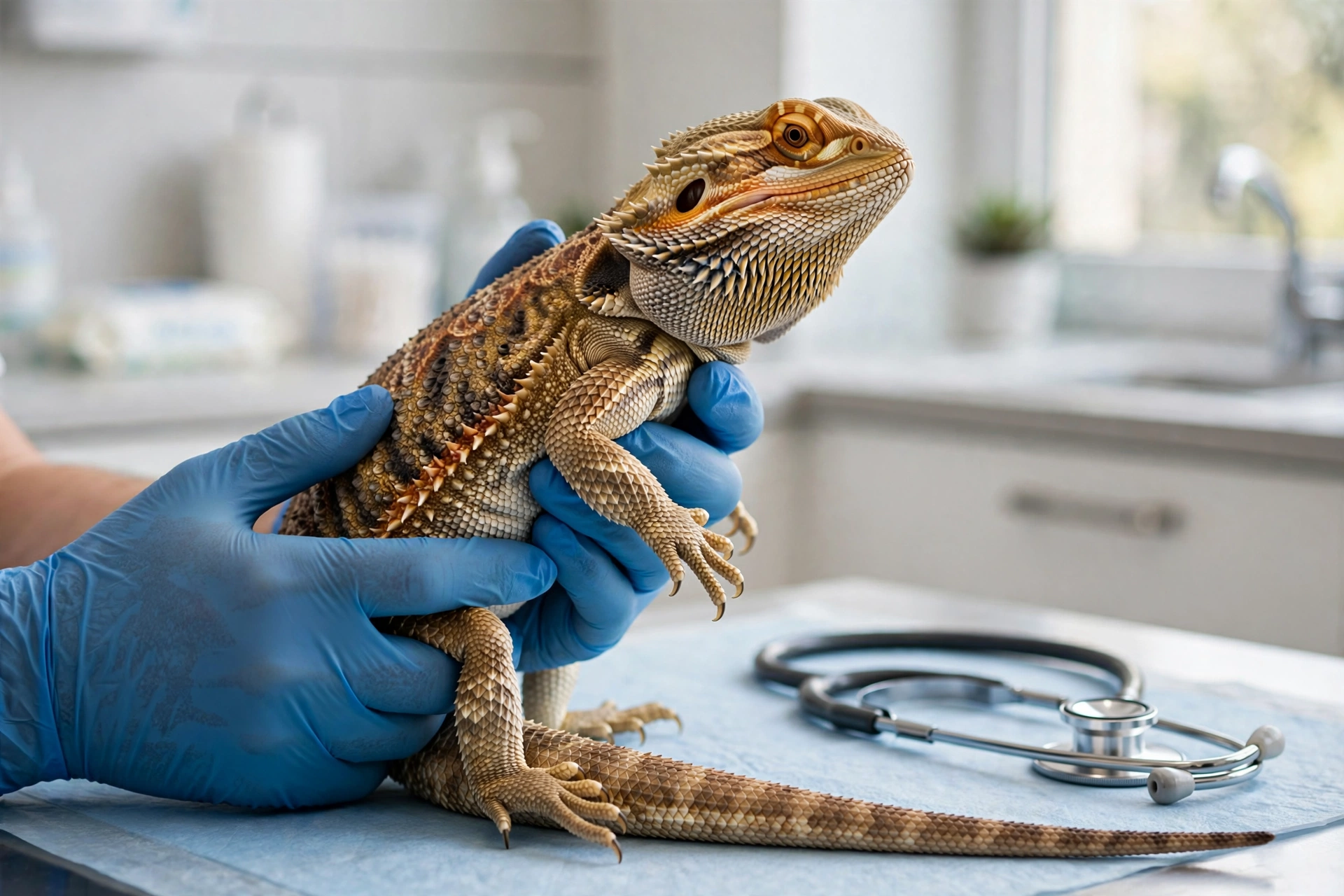
A thorough reptile wellness exam is part physical, part interview. Expect the vet to weigh your dragon and assess body condition, check the eyes, mouth, and vent, feel the limbs and jaw for symmetry and strength, and look over the skin for retained shed or injuries. Then comes the husbandry interview: basking and cool-side temperatures, UVB bulb type and age, diet and supplement schedule, substrate, and enclosure size. Answer honestly — even if you suspect something in your setup isn’t ideal. The vet can only help with the full picture, and there’s no judgment in an exam room; they’ve heard it all.
The fecal test deserves special attention. A fresh droppings sample lets the lab check for intestinal parasites, which are remarkably common in pet-store and rescue dragons. Fecal parasite testing is quick, inexpensive, and catches problems you’d never see at home — collect the freshest sample you can in a sealed bag or container and bring it along.
Some estimates suggest more than half of captive bearded dragons carry at least one intestinal parasite when first acquired — most without any visible symptoms. That’s why reptile vets treat the first-visit fecal test as near-mandatory rather than optional, and why a “healthy-looking” new dragon still deserves a checkup.
Questions worth asking while you’re there
Use the appointment as a husbandry audit, not just a health check. Good questions include: Is my UVB setup adequate for this enclosure size? How does my supplement schedule look for this dragon’s age? What weight range should I aim for? What symptoms would warrant an emergency visit versus waiting for a regular appointment? If the vet mentions metabolic bone disease as a risk, ask exactly what early warning signs look like in your dragon’s case — it’s the most common preventable condition in captive beardies, and catching it early changes everything.
Red flags at the clinic
You’re allowed to evaluate the vet while they evaluate your dragon. Walk away — politely, and find someone else — if the vet can’t or won’t explain why a treatment is recommended, seems hesitant or clumsy handling a reptile, rushes through the appointment, or brushes off your questions. Be cautious of clinics that advertise “exotics” but show only dog and cat photos, and of anyone who reaches for dog-and-cat medications without reptile-specific dosing references. A great reptile vet welcomes your questions; it signals an engaged owner, and engaged owners have healthier dragons.
After the Visit: Building the Routine
Before you leave, make sure you know three things: what was found (even if the answer is “nothing — great baseline”), what comes next (any recheck date, test results to expect by phone, or diet and lighting tweaks), and what would bring you back sooner (the specific warning signs to watch for). Ask for a written summary — most clinics provide one, and it’s gold for your records.
At home, the most valuable habit is tracking weight at home. A cheap kitchen scale and a monthly weigh-in catches slow declines months before they become visible. Keep a simple log: weight, shed dates, appetite notes, and vet visits with test results. If you ever switch vets or need an emergency visit elsewhere, that log plus your first-visit summary tells the new vet more in five minutes than an hour of guesswork.
Finally, set the rhythm. Healthy adult dragons typically see the vet once a year for a wellness exam and fecal test; juveniles, seniors, and breeding females may need more frequent check-ins. And keep a fresh sample for bringing a fecal sample in mind before each visit — many clinics will run the test from a drop-off sample even without a full appointment, which keeps costs down between annuals.
What to Read Next