Reptile Mites on Bearded Dragons: How to Find and Kill Them
You spot them during a routine handling session: tiny black dots crawling between your dragon’s scales. Take a breath — reptile mites are one of the most common external parasites in captive bearded dragons, and they are beatable. What matters is speed: a single female mite can lay dozens of eggs in the enclosure, and the population can explode in weeks. This guide covers identifying them, getting them off your dragon, and sterilizing the tank so they never come back.
Is it actually mites? Use the spotter cards
Not every dark speck is a mite. Tap each card below to see what the suspect looks like up close, how to confirm it, and what to do next.
What reptile mites actually are
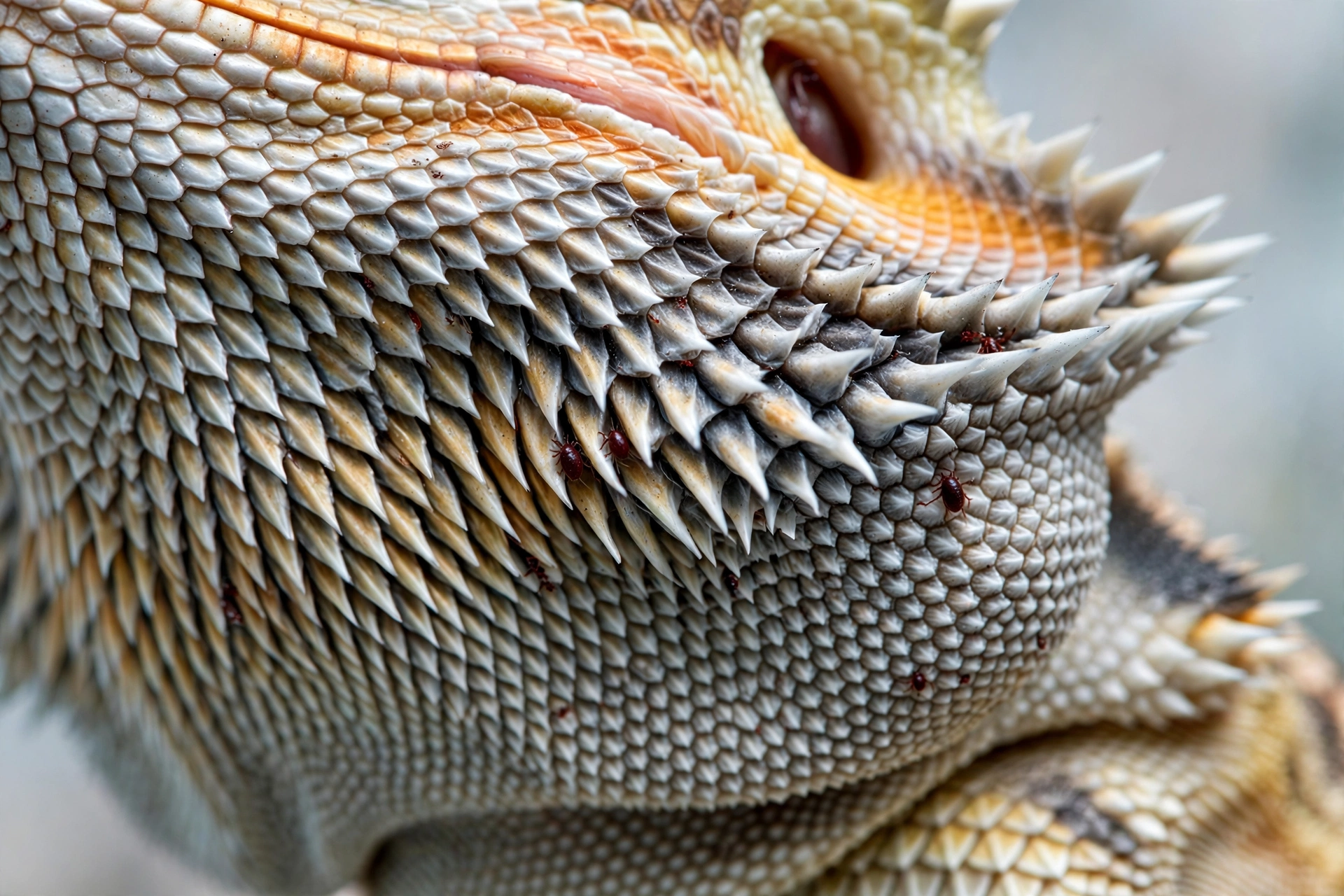
The culprit is almost always Ophionyssus natricis, the so-called snake mite — a blood-feeding parasite most famous in snake collections but perfectly happy on captive lizards, including bearded dragons. Unlike internal parasites, which hide inside the body and announce themselves through droppings and weight loss, these live on the outside: they wedge between scales, pierce the skin, and feed on blood. An unfed mite is pale, almost ivory; after feeding it turns dark red to black and swells — which is why the specks you see are usually dark.
Most of the population lives off the dragon — in substrate, under decor, along glass seams — so the few you see are the tip of the iceberg. A warm terrarium with crevices is an ideal nesting environment, and a dragon that cannot leave its shed skin behind the way a wild reptile would gets reinfested again and again.
Where mites hide on a bearded dragon
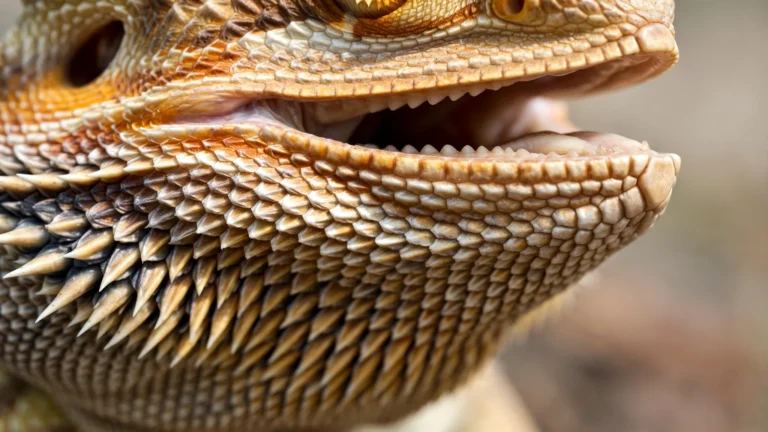
Mites feed where skin is thinnest and scales give the most cover. Check in good light: around the eyes and ear openings (the number-one hotspot — look for dots rimming the eyelids or tucked in the ear hole), under the chin and along the beard (part the spikes gently and look at the skin between them), the vent area and inner thighs, between the toes and in armpit folds, and the water bowl — mites that wander in drown, so dark specks in the water are a classic giveaway.
White paper towel as temporary substrate makes wandering mites dramatically easier to spot — dark dots stand out on white, and the paper gets changed before eggs hatch.
The signs your dragon has mites
A few mites cause mild irritation; a heavy infestation makes a dragon miserable. Watch for restlessness and rubbing against decor, marathon soaking (dragons seem to soak to drown mites, then get reinfested climbing out), appetite drops, lethargy and dull color — in severe cases the blood loss adds up, and pale gums plus weight loss are red flags — and ragged shedding, since irritated skin creates more hiding places for mites.
One caution: soaking alone proves nothing — plenty of dragons soak for fun. It is the combination — soaking plus visible specks plus behavior changes — that points to mites.
How to get mites off your dragon
Start with the animal, today. Soak in lukewarm water for 15–20 minutes, deep enough to cover the body with the head above the surface — this drowns the mites on the body, though not the ones on the head. Then sweep gently with a very soft toothbrush, stroking with the direction of the scales (extra gentle around eyes and ears), and pick the head mites off one by one with a damp cotton swab — mites often migrate toward the head during a soak, which makes them easier to collect. Repeat every few days: one soak never finishes the job, because newly hatched mites keep arriving from the enclosure for weeks.
What not to do: do not reach for insecticides, dog flea sprays, or any mite-killing chemical on your own. Products safe on one species can be dangerous on reptiles, and dosing a bearded dragon is a job for a reptile vet — not a forum thread. The soak-and-clean approach handles mild to moderate cases; anything chemical goes through your vet.
The enclosure protocol: killing the ones you cannot see
This is the part that actually ends the infestation. Mite eggs sit in the enclosure and hatch on a staggered schedule — so the protocol is a cycle, not a one-time clean. Move the dragon to a simple temporary setup (bare tank or tub with paper towels, a basking spot, and a hide), then replace the loose substrate — bag it, seal it, get it out of the house — with plain paper towels, which make wandering mites visible and get swapped before eggs hatch. Bake wooden hides and branches at 250°F for 30–45 minutes; mites and eggs die at sustained high heat. Disinfect everything else: hot water and scrubbing for decor, a diluted bleach solution for the empty tank followed by thorough rinsing and complete air-drying — follow a full tank disinfection protocol rather than a quick wipe, because eggs hide in seams and silicone corners. Repeat weekly for at least three weeks — fresh paper towels, another wipe-down, another look — so newly hatched nymphs find no host and no hiding places, and the cycle breaks.
The single most common reason treatment “fails” is stopping too early. If you see even one live mite in week three, reset the clock and keep going — and treat other reptiles in the same room as potentially exposed, since mites travel between enclosures.
Preventing the next infestation
Once the tank is clean, keep it that way: quarantine every new arrival in a simple separate setup for several weeks before it meets your main enclosure (most infestations start with a skipped quarantine); inspect before you buy — inspecting a new dragon before you buy is a two-minute eye-and-ear check that prevents month-long ordeals; disinfect second-hand decor (bake or bleach it before it enters your tank, no exceptions); wash hands between reptiles after handling dragons at expos, pet stores, or a friend’s house; and do a monthly scale check — thirty seconds on the eye rims, ears, and vent during handling catches the next infestation at the five-mite stage instead of the five-hundred-mite stage.
When to call a reptile vet
Home treatment handles mild to moderate cases. Get professional help if you can count dozens of mites, they keep rebounding after three full weeks, your dragon is lethargic, losing weight, or has pale gums, the skin looks raw or scabbed where mites fed — or you are considering any chemical or medication-based treatment, which only a reptile vet should prescribe and dose for a bearded dragon. Bring notes: when you first noticed the specks, what you have tried, and how the dragon is eating and behaving.
What to Read Next
- Bearded Dragon Parasites: Signs, Fecal Tests & Treatment (2026) — the internal kind, and how they differ from what you just fought on the outside.
- How to Build a Bearded Dragon First Aid Kit — stock the supplies (soaking tub, soft brushes, spare paper towels) before the next discovery.
- How to Clean and Disinfect a Bearded Dragon Tank — the deep-clean routine that makes your enclosure hostile to mite eggs.
Still seeing mites after three weeks, or is your dragon lethargic and off food? Severe infestations drain a bearded dragon fast — do not keep cycling home remedies alone. Find a reptile vet near you and get professional treatment before it becomes an emergency.
The bottom line: tiny black dots are alarming, but they are a solvable problem. Confirm with the spotter cards, soak on a schedule, run the enclosure protocol for the full three weeks, and quarantine the next newcomer. Do that, and mites become a story you tell — not a cycle you repeat.