12 Safe Plants for Bearded Dragons: Tank Guide
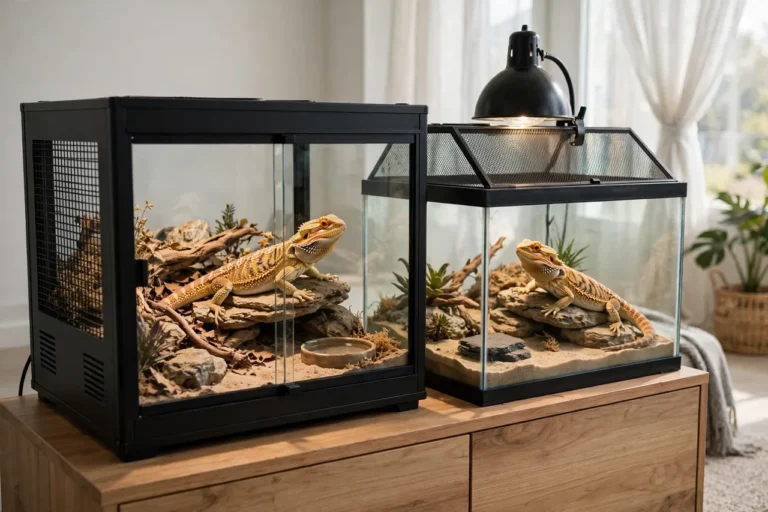
A planted tank does three jobs at once: it hands your dragon fresh grazing, gives them living cover that makes them feel secure, and turns a glass box into something you would actually want in your living room. The catch is that bearded dragons sample everything with their mouths and have zero instinct for telling salad from poison — so the plant list matters more than the prettiness. Here are twelve verified-safe plants, eight popular ones to avoid, and a searchable database covering all twenty, so you can plant confidently.
Why live plants are worth the effort
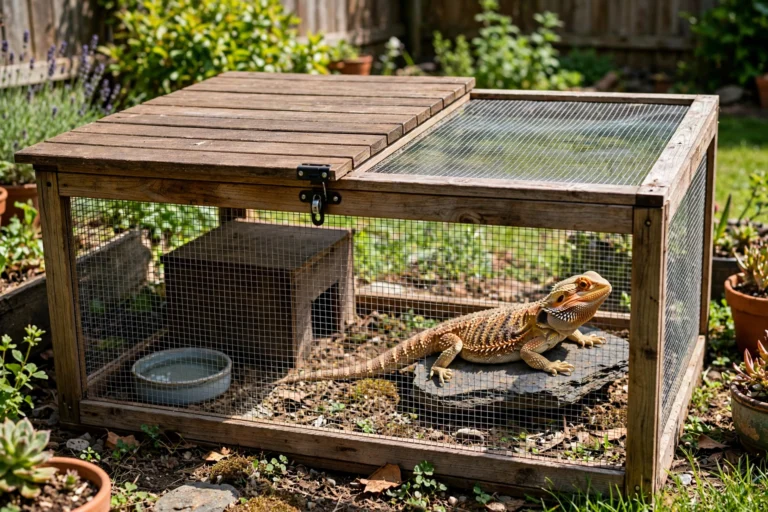
Live plants are true enrichment: new textures, smells to tongue-flick at, and foliage to hide behind, encouraging natural foraging. They also release a little moisture — a subtle humidity buffer in dry homes. The honest trade-off: dragons are bulldozers. They trample, dig, and flop onto anything green, so choose sturdy, well-established plants, expect casualties, and start with pots — no full ecosystem required. Pair greenery with tank decor that doubles as enrichment for climbing structure no plant could survive alone.
The edible staples: plants your dragon can graze
These are the plants you can put within tongue reach on purpose. They still do not replace the salad bowl — think living garnish and foraging enrichment.
Hibiscus Hibiscus rosa-sinensis
The gold standard: flowers and leaves both edible and nutritious, and most dragons love the blooms. Needs bright light; buy pesticide-free — nursery hibiscus is heavily sprayed. The blooms also rank among the edible flowers your dragon will love as bowl treats.
Dandelion Taraxacum officinale
Leaves and flowers are edible and vitamin-packed, and dandelion outpaces even determined grazers. Only pesticide-free specimens — never from lawns, roadsides, or sprayed areas.
Basil Ocimum basilicum
Safe, aromatic nibbling most dragons find interesting — treat as garnish, not a staple. Succession-plant: a hungry dragon strips a small plant in a weekend.
Mint Mentha spp.
Safe in small amounts and great sensory enrichment. It is a garden thug that colonizes any soil it touches — always keep it in its own pot.
Nasturtium Tropaeolum majus
The whole plant is edible, and the peppery flowers appeal to dragons that like strong flavors. Fast-growing and quick to recover — a good sacrificial foreground plant.
Spineless prickly pear Opuntia spp.
The most desert-authentic edible: nutritious pads on a plant that thrives in basking heat. Spineless variety only — and rub pads down first, since hair-fine glochids injure eyes and mouths.
And the golden rule of grazing plants: enclosure greenery is garnish, not groceries. Real nutrition comes from the 47 foods cleared for the salad bowl — staple greens first, tank snacks second.
The decorative workhorses: safe looks, hands off the salad
Verified safe to have around a curious grazer, but not food — structure, cover, and scenery. Your dragon will still mouth them; that is fine for everything on this list.
Spider plant Chlorophytum comosum
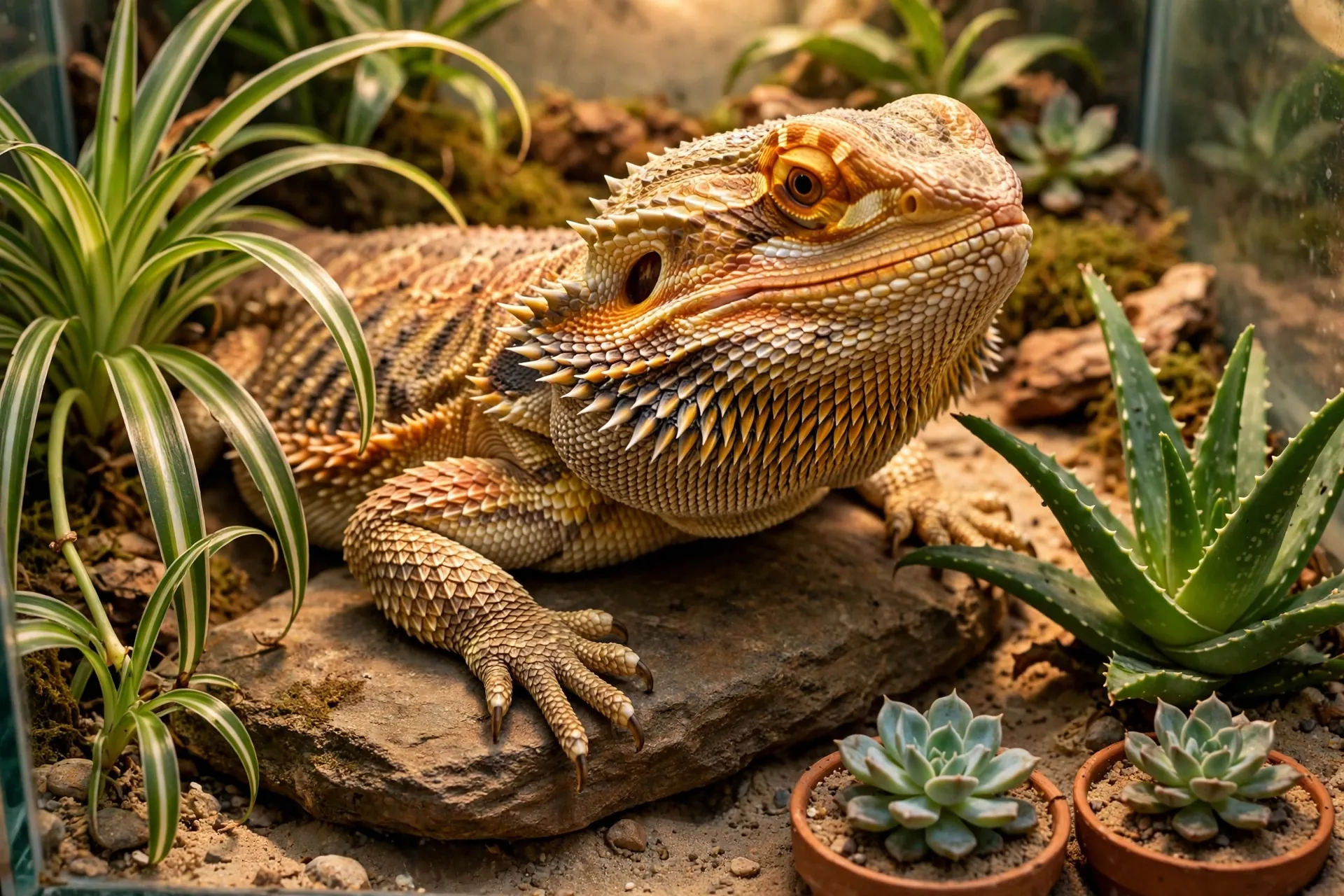
Non-toxic, forgiving, and tougher than it looks. Once well-established it survives trampling that kills daintier species, and the arching leaves make good partial cover.
Aloe vera Aloe barbadensis miller
The classic desert succulent: sculptural, drought-proof, safe if nibbled. Plant mature specimens — babies get crushed — and keep it as decor, not salad.
Haworthia Haworthia spp.
Compact, ultra-hardy, nearly indestructible. Shrugs off heat, drought, and the occasional dragon flop — ideal for filling gaps between larger plants.
Echeveria Echeveria spp.
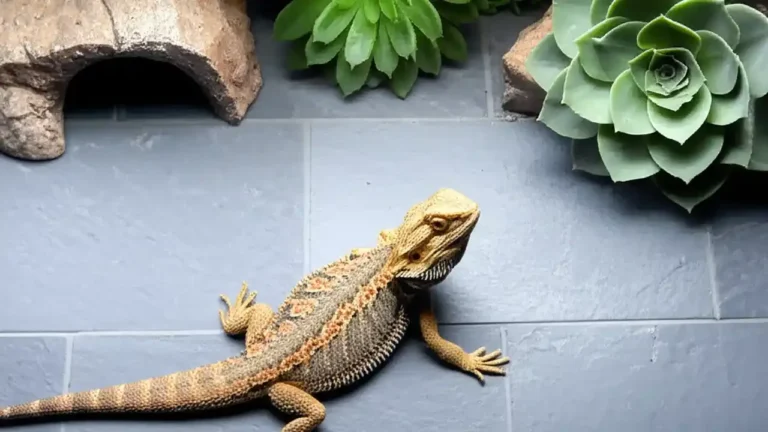
Rosette succulents that genuinely love arid heat; the dry basking end is their happy place. Tight rosettes resist casual nibbling.
Ponytail palm Beaucarnea recurvata
Non-toxic, with a sturdy swollen trunk that doubles as a climbing anchor. Slow-growing and long-lived — a buy-it-once plant.
Air plants Tillandsia spp.
The zero-soil option: mount on branches or rocks, mist lightly, done. No soil means nothing to dig up.
Reality: those labels are tested against cats and dogs. Pothos is the classic trap — sold as “reptile safe” yet on the Reptiles Magazine toxic plant list, because its calcium oxalate crystals irritate and swell the mouth and throat. Verify against reptile-specific sources, always.
The avoid list: popular plants that can harm your dragon
Every plant below is common, attractive, and a bad idea. Enjoy them in another room — never in the enclosure.
Pothos Epipremnum aureum
Calcium oxalate crystals irritate and swell the mouth and throat when chewed.
Philodendron Philodendron spp.
Oxalates; same risk as pothos. Pretty, popular, and firmly off the list.
Jade plant Crassula ovata
Mildly toxic — vomiting, incoordination, lethargy — and constantly confused with safe dwarf jade.
English ivy Hedera helix
Triterpenoid saponins cause digestive distress — do not copy the “natural terrarium” photos.
Sago palm Cycas revoluta
Highly toxic; all parts can cause irreversible liver failure.
Daffodil Narcissus spp.
Highly toxic — vomiting, tremors, possible cardiac effects.
Foxglove Digitalis purpurea
Cardiac glycosides can trigger fatal heart arrhythmias.
Oleander Nerium oleander
Extremely toxic — a single well-chewed leaf has been reported as lethal.
When in doubt, leave it out. The safe list above gives you plenty — no reason to gamble on an unverified species.
The plant safety database: search all 20 plants
Type any plant name for its verdict, or filter by use (edible, decorative only, avoid), light needs, and difficulty. Every row matches a profile above — no surprises.
Showing 20 of 20 plants
| Plant | Use | Safety note | Light | Difficulty |
|---|---|---|---|---|
| Hibiscus Hibiscus rosa-sinensis | Edible | Flowers and leaves edible. | Bright | Moderate |
| Dandelion Taraxacum officinale | Edible | Leaves and flowers edible. | Bright | Easy |
| Basil Ocimum basilicum | Edible | Safe nibbling herb. | Bright | Easy |
| Mint Mentha spp. | Edible | Safe in small amounts. | Medium | Easy |
| Nasturtium Tropaeolum majus | Edible | Whole plant edible. | Bright | Easy |
| Spineless prickly pear Opuntia spp. | Edible | Edible pads; spineless only. | Bright | Easy |
| Spider plant Chlorophytum comosum | Decorative only | Non-toxic; trampling-tough. | Medium | Easy |
| Aloe vera Aloe barbadensis miller | Decorative only | Safe if nibbled. | Bright | Easy |
| Haworthia Haworthia spp. | Decorative only | Ultra-hardy desert succulent. | Bright | Easy |
| Echeveria Echeveria spp. | Decorative only | Loves arid heat. | Bright | Easy |
| Ponytail palm Beaucarnea recurvata | Decorative only | Non-toxic climbing anchor. | Bright | Easy |
| Air plants Tillandsia spp. | Decorative only | Soil-free; mount on branches. | Bright | Moderate |
| Pothos Epipremnum aureum | Avoid | Oxalates irritate mouth, throat. | Low | Easy |
| Philodendron Philodendron spp. | Avoid | Same oxalate problem as pothos. | Low | Easy |
| Jade plant Crassula ovata | Avoid | Mildly toxic; mislabeled often. | Bright | Easy |
| English ivy Hedera helix | Avoid | Saponins; digestive distress. | Low | Easy |
| Sago palm Cycas revoluta | Avoid | Highly toxic; liver failure risk. | Bright | Easy |
| Daffodil Narcissus spp. | Avoid | Highly toxic; cardiac risk. | Medium | Easy |
| Foxglove Digitalis purpurea | Avoid | Cardiac glycosides; fatal risk. | Medium | Moderate |
| Oleander Nerium oleander | Avoid | Extremely toxic. | Bright | Easy |
Planting it right: pots, quarantine, and watering
A safe plant can still arrive coated in nursery chemicals. Quarantine every new plant for several weeks before it goes near the tank — this clears hitchhiking pests and gives systemic pesticides time to break down. Rinse the foliage, discard the nursery soil, and repot into organic mix with no perlite or vermiculite, which are an impaction risk if your dragon samples the soil.
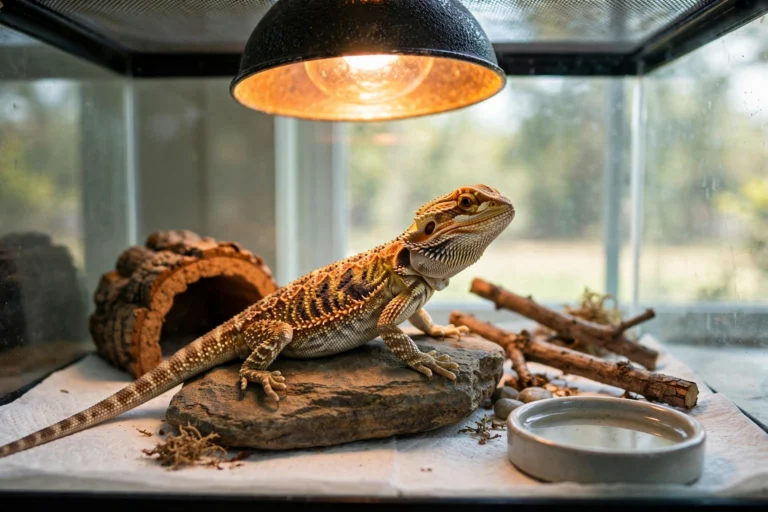
Terracotta pots are ideal: breathable, heavy enough to resist bulldozing, and they keep soil from staying soggy. Sink pots slightly into the substrate, ring the bases with flat rocks against digging, and keep everything clear of the basking spot. Water sparingly, letting soil dry between waterings — constant dampness invites fungus. For plants rooted into a living system rather than pots, our full bioactive setup guide covers drainage layers and soil mixes; either way, use a substrate that drains well for both roots and reptiles. Most plants manage under the existing basking and UVB lights, though hibiscus appreciates a full-spectrum LED on a timer.
What to Read Next
Planning the layout? Before you buy a single pot, check the space-planning math in Bearded Dragon Tank Size: The Complete Guide by Age — plants need elbow room too, and a crowded tank stresses the dragon you planted it all for.