How to Help Your Bearded Dragon Through a Shed
Your dragon’s skin is turning pale and papery, they’re grumpy, and there are flakes all over the tank. Congratulations — it’s a shed. Shedding freaks out every new owner the first time, and it’s almost always completely normal. Here’s how often it happens, exactly how to help, and the one situation that’s actually dangerous.
How often do bearded dragons shed?
Growing animals shed; that’s the whole story. The faster they’re growing, the more often it happens:
| Age | How often | What it looks like |
|---|---|---|
| Hatchling – 4 months | Every 2–4 weeks | Frequent, often patchy |
| 4 – 12 months | Every 4–8 weeks | Big body sheds |
| 12 – 18 months | Every couple of months | Slowing down as growth slows |
| Adult (18+ months) | 1–2 times a year | Usually in patches — a leg here, the head there |
Note the adult pattern: unlike snakes, adult bearded dragons rarely shed their whole body at once. Patches are normal. A full-body shed on a three-year-old isn’t alarming either — just less common.
The shed timeline
A shed announces itself days before the first flake falls. Once you know the sequence, you’ll stop wondering whether something is wrong and start just counting down:
- Days 1–3: the dull phase. Your dragon’s colors wash out and the skin looks matte, like someone turned the saturation down. The new skin is forming underneath, and the old layer is already loosening. Nothing is falling off yet — this is just the heads-up.
- Days 3–5: the pale, papery phase. The old skin turns whitish and dry-looking, and the dragon may look slightly puffy where the skin is lifting away from the body. The head is often the most dramatic-looking at this stage.
- Days 5–10: the flake phase. Pieces start coming off, usually at the edges first, helped along by rubbing against decor. This is the itchy, cranky stretch — and the one where the walkthrough below earns its keep.
- The tail end: inspection time. Once the bulk has cleared, run the toe-and-tail check. A clean shed ends with the dragon looking brighter and more vivid than before — new skin always pops.
The whole cycle usually runs one to two weeks. The signal that it’s not a normal cycle: a single patch stuck in the pale, papery phase for more than two weeks while everything else has cleared. That’s stuck shed, not a slow shed — and the protocol for it is in the “Stuck shed” section below.
Why shedding makes them so grumpy
If your sweet dragon turns into a hissing pancake during shed week, nothing is wrong with them — shedding is just miserable. It itches. When the head sheds, the loosening skin clouds their vision. They feel vulnerable and cranky, the way you'd feel wearing a too-tight wool sweater you can't take off. Grumpiness, appetite dips, and extra hiding are all normal shed behavior — and they usually resolve within days of the shed clearing. Handle less, offer baths, and wait it out.
Two pre-shed behaviors that freak owners out
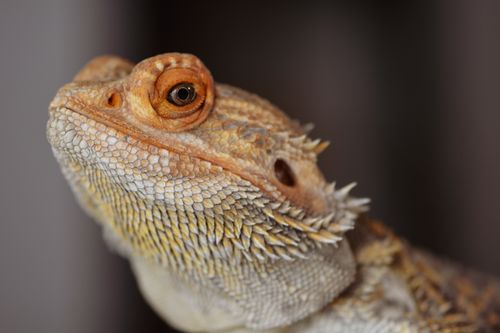
Eye bulging. Your dragon's eyes suddenly bulge outward like they're about to pop. It is terrifying the first time and completely normal: they're stretching the skin around their eyes to loosen it before a head shed. It comes and goes over the course of minutes, and the dragon otherwise acts like itself. What changes the story is company it keeps — squinting, cloudiness, or discharge, or bulging paired with a dragon that has stopped eating and gone lethargic. Bulging alone in an otherwise normal dragon is pre-shed stretching. Bulging plus symptoms is a reptile vet call.
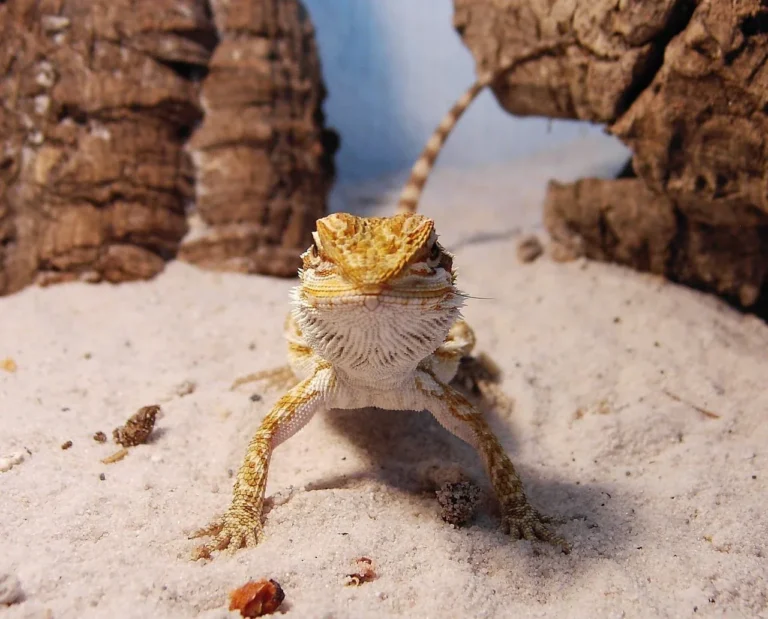
Beard puffing. A dragon that isn't displaying at anyone — no rival, no reflection, no perceived threat — may puff its beard out during shed week for the same reason: stretching the loosening skin around the chin and throat. It's temporary and it looks far more dramatic than it is. Let them get on with it.
Both behaviors share one rule: watch, don't intervene. The dragon is doing exactly what it should be doing, and grabbing them mid-stretch helps nothing.
The shed-week handling rules
Shedding is the one time your normal routine should bend — but not break:
- Keep feeding, lighting, and temperatures exactly as usual. A dragon mid-shed still needs its heat and UVB to digest and stay healthy. "Giving them a break" by skipping meals or cutting the light cycle short does real harm for zero benefit.
- Handle less, and never mid-flake. Picking up a dragon with half-loosened skin risks tearing pieces that weren't ready — the same injury as peeling, caused a different way. If you must handle them, scoop from below, support the body, and keep it short.
- Let baths replace playtime. The daily shed-week bath is both the help and the interaction. Most dragons settle into it once it becomes routine, and it's doing more for them than being carried around ever would.
- Don't rearrange the tank. They know where their rubbing spots are. Moving the branches and rocks mid-shed takes away the tools they're actively using to work the old skin off.
Once the shed clears, resume normally. Most dragons bounce back to their usual temperament within a day or two of the last flake — the grumpiness was the shed talking, not a personality change.
The damp hide trick
For dragons that always seem to struggle with sheds, a damp hide during shed week works wonders. Take a plastic tub with an entrance hole cut in the side, fill it with damp (not dripping) sphagnum moss or paper towel, and place it on the warm side of the tank. It gives your dragon a humidity retreat to loosen stubborn skin on their own schedule. Pull it out once the shed finishes — damp moss left indefinitely grows mold.
Stuck shed: the actually dangerous part
Normal shed comes off on its own within a week or two. Stuck shed — skin that stays put around toes or the tail tip — is the one scenario that can cause real harm. As the layers build up, they tighten like a tourniquet, cut off circulation, and the toe or tail tip dies. Lost toes and tail tips are the classic outcome, and they're almost always preventable.
The protocol: warm bath, gentle toothbrush, recheck in a few days. If a ring has been stuck for more than two weeks, looks tight or shiny, or the toe below it is swelling or changing color — stop home-treating and see a reptile vet. And never pull shed near the eyes; eye-area retained shed is vet territory, full stop.
What NOT to do during a shed
- Don't peel it. Worth saying twice — it's the #1 way owners turn a normal shed into a wound.
- Don't use oils, lotions, or "shed-ease" products. A bath and a bump in humidity do the job; oils can trap bacteria against the skin.
- Don't soak for hours. Fifteen to twenty minutes is plenty. Marathon soaks stress them out.
- Don't panic about appetite dips. Many dragons eat less while shedding — it's uncomfortable, like wearing a too-tight sweater. Appetite returns when the shed finishes. (If it doesn't, that's what the not-eating guide is for.)
Shedding questions, answered
Why is my bearded dragon not eating while shedding?
Completely normal — shedding is uncomfortable and many dragons go off food for a few days. Offer as usual, don't force it, and expect appetite back once the shed clears.
How long does shedding take?
Anywhere from a few days to two weeks, depending on the dragon and the body part. Heads and tails are often slowest.
Is it normal to shed in patches?
Yes — especially in adults. Patchy shedding (a leg here, the head there) is the normal adult pattern, not a problem.
My dragon keeps rubbing on everything — normal?
Yes. Rubbing against branches, rocks, and tank walls is how they work the old skin off. Rough surfaces in the tank (bark, slate) give them something to rub on — another reason decor matters.