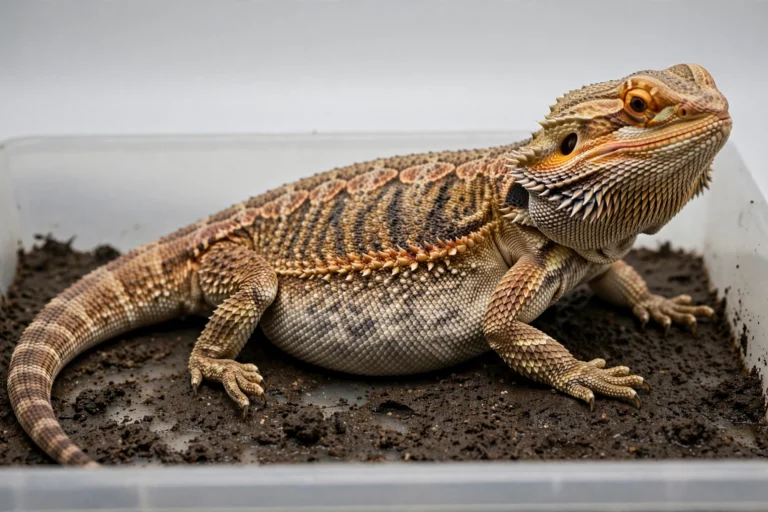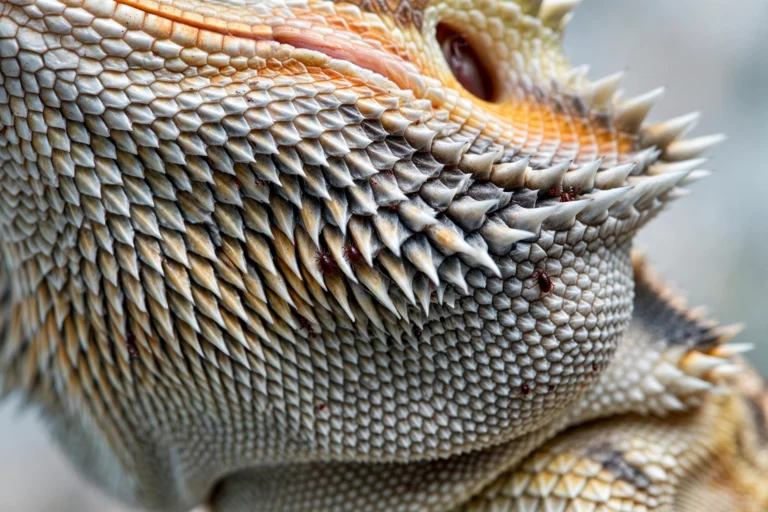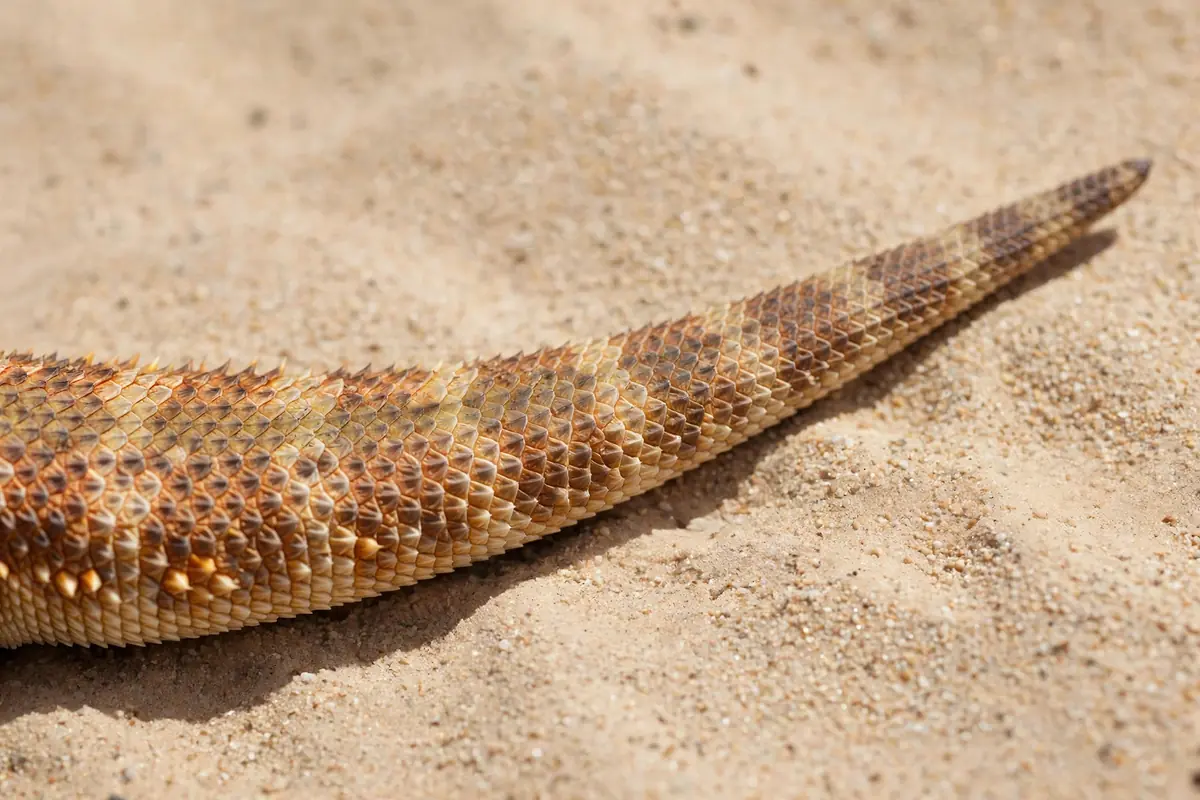
Bearded Dragon Tail Rot — How Do You Spot It?
A dark tip on your bearded dragon’s tail can stop your heart the first time you see it. Before you panic, take a breath: not every dark tail is tail rot. But real bearded dragon tail rot — tissue dying because its blood supply has been cut off — is one of the few conditions that can spread, get worse on its own, and even threaten your dragon’s life if ignored. Knowing what it looks like, what causes it, and when to get help is one of the most useful skills a keeper can have.
What tail rot actually is
Tail rot is tissue death (necrosis) in the tail. When blood stops reaching part of the tail — because of an injury, an infection, or shed skin constricting it like a tourniquet — the tissue beyond that point starts to die. Dead tissue can’t heal back to life, and the infection behind it can travel upward toward the body. That is why reptile vets treat suspected tail rot as urgent rather than cosmetic.
It most often starts at the very tip of the tail, the thinnest point with the weakest blood flow, but it can appear higher up the tail or even on the toes after a bad injury. Young dragons and newly acquired dragons seem to run into it most, often because of old injuries or shed problems that went unnoticed before they arrived.
What tail rot looks like, stage by stage
Tail rot doesn’t appear overnight. It usually follows a progression, and catching it early gives your vet far more options:
- Early: the tail tip looks darker than usual — brown, grey, or dusky — and the skin feels dry and slightly stiff compared with the rest of the tail.
- Developing: the dark area spreads upward, the tail starts to shrivel or look pinched, and the texture turns hard or brittle, a bit like dried plastic.
- Advanced: the tissue turns black around its full circumference, may look shrunken or kinked, and can develop swelling, discharge, or a bad smell. The dragon may start biting at its own tail because it hurts.
The single most important distinction: normal dark pigmentation and pre-shed darkening usually affect only the top of the tail and don’t spread or shrivel. Tail rot wraps the whole circumference and keeps marching upward week after week.
Reality: many bearded dragons have naturally dark tail tips, and tails often darken for a few days before a shed. What separates tail rot from normal color is change over time — spreading darkness, shriveling, and hardening that doesn’t shed off normally.
Test yourself: tail rot or normal?
Reading about warning signs is one thing — recognizing them is another. This quick knowledge check quizzes you on the difference between tail rot and harmless look-alikes. It’s a quiz about your knowledge, not a diagnosis of your dragon: if anything you read here matches what you’re seeing at home, skip the quiz and call a reptile vet.
🐉 The Tail-Rot Knowledge Quiz
What causes tail rot
Tail rot is almost always the end result of something else going wrong first. The common triggers:
- Tail injuries. Bites from cage mates, nips from feeder insects left in the tank, a tail caught in decor or a closing door, or a fall. Any wound on the tail can become infected.
- Stuck shed constricting the tail. Rings of unshed skin around the tail tip act like a tiny tourniquet, slowly cutting off circulation. Multiple incomplete sheds stack up and make it worse — which is why shed trouble on the tail deserves attention, not a shrug. (See our retained shed guide for safe removal techniques.)
- Humidity that’s too low. Bearded dragons need relatively dry air (around 30–40%), but air that stays below that range dries out the tail tip and makes shed stick — a slow setup for circulation trouble.
- Infection. Bacterial or fungal infections can take hold in damaged tissue and destroy it from the inside out.
- Weak overall husbandry. Poor diet, weak UVB, or chronic stress won’t cause tail rot directly, but they weaken the immune response that would otherwise fight off a small infection before it spreads.
What to do if you spot warning signs
If your dragon’s tail shows the spreading, shriveling, hardening pattern described above, treat it as urgent:
- Book a reptile vet promptly. This is the step that matters most. Only a vet can judge whether tissue is still alive, whether infection is spreading, and whether part of the tail needs to be removed. Tail rot does not reverse on its own.
- Keep the enclosure spotless while you wait — clean water, fresh substrate or paper towels, no loose feeders roaming the tank.
- Don’t pick at the tail. Pulling at dark or loose-looking tissue can tear into living tissue and make infection worse.
- Review your husbandry. Check basking temperatures, UVB age and placement, humidity (30–40%), and diet. Fixing the underlying weakness helps recovery and prevents a repeat.
Preventing tail rot
Most tail rot is preventable with steady, boring husbandry:
- House bearded dragons alone — cage-mate bites are a classic cause of tail injuries.
- Never leave live feeder insects in the tank overnight; hungry crickets will nibble a sleeping dragon.
- Check the tail tip after every shed. If rings of old skin are stuck, address them gently and promptly (our retained shed guide walks through it).
- Keep humidity in the 30–40% band — high enough for clean sheds, low enough for respiratory health.
- Give regular baths during shed cycles to help old skin release from the tail tip.
- Learn what a healthy bearded dragon looks like overall, so changes stand out early.
Frequently asked questions
Can tail rot heal on its own?
No. Once tail tissue has died, it cannot come back to life, and the infection driving it tends to spread upward rather than resolve. Veterinary treatment is needed to stop it.
Will my dragon need part of its tail amputated?
Sometimes, yes — if the tissue is fully dead, a vet may remove it to stop infection spreading. Bearded dragons adapt well to a shorter tail, and it doesn’t affect their quality of life. Only a reptile vet can make that call.
Is tail rot contagious to other reptiles?
The underlying infections can spread through shared water, substrate, or decor, so a dragon with suspected tail rot should be kept separate and its enclosure disinfected. Still, bearded dragons should be housed alone regardless.
My dragon’s tail tip is dark but hasn’t changed in weeks. Is that tail rot?
Probably not — stable, unchanging dark color on the top of the tail is often just natural pigmentation. Tail rot is defined by progression: spreading, shriveling, and hardening over time. When in doubt, a vet check is cheap peace of mind.