The Complete Bearded Dragon Brumation Guide
Every fall, bearded dragon forums fill with the same panicked post: “My dragon stopped eating and won’t wake up — is he dying?” Nine times out of ten, the answer is brumation — the reptile version of winter dormancy. Your dragon isn’t broken. He’s powering down for the cold season, the way his Australian ancestors have for millennia.
“Natural” doesn’t mean “ignore it.” A brumating dragon still needs you — for water, weekly weight checks, and knowing when sleep stops being normal. Tap through the phases below, then read the details.
What brumation actually is
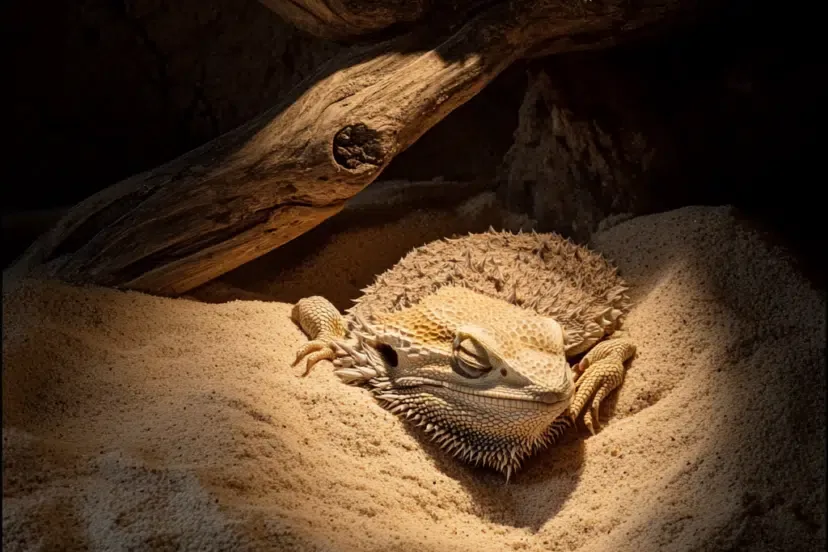
Brumation is seasonal dormancy — the reptile answer to winter. In the wild, central bearded dragons face cooler, drier months with scarce food and short days. Rather than burn energy they can't replace, they throttle everything down: heart rate slows, digestion nearly stops, and they retreat to a cool, dark shelter to wait it out.
It's often called reptile hibernation, but the comparison is loose. Mammalian hibernation is a deep, continuous shutdown. Brumation is lighter and intermittent — a brumating dragon may surface for a drink or bask for an afternoon, then go back under. That half-awake behavior confuses keepers, but it's the normal rhythm of the thing.
The trigger is seasonal change: shortening days and cooling temperatures. Here's the part that surprises people — dragons can sense the season shifting even when your tank conditions stay perfectly constant. Your thermostat didn't fail; your dragon is reading a calendar you can't see.
💡 Did you know? A brumating dragon that surfaces for a drink and goes back to sleep isn't "failing" at brumation — that's the design. Unlike hibernating mammals, brumating reptiles maintain enough awareness to hydrate and thermoregulate in brief waking windows. The water bowl you keep refreshing all winter is for exactly those moments.
Who brumates, when, and for how long
First, the reassurance: not every captive bearded dragon brumates. Some go down every winter, some brumate one year and skip the next, some never show a hint of it. All of these are normal, and there's no reason to induce brumation artificially.
Age matters. Brumation is an adult behavior — dragons typically start between 10 and 24 months old, and many keepers don't see it until the second or third year. A baby or juvenile under 12 months that goes lethargic and stops eating is not brumating; that's a vet visit. Growing bodies can't afford a months-long fast.
Timing follows your hemisphere's winter: roughly October through February in the north, May through August in the south. Duration varies enormously — a few weeks of light napping at the short end, 6–12 weeks of mostly-sleeping in the middle, up to 4–6 months at the long end. The length itself isn't a concern provided three things hold: your dragon was healthy going in, weight loss stays under about 10%, and no illness signs appear.
📊 Stat: Across keeper reports and care guides, the most commonly cited brumation window is 8–12 weeks — but documented healthy brumations range from under a month to over four months. There is no reliable average, because the length is driven by the individual dragon's internal signals, not by anything you do. Monitor the weight, not the calendar.
The four phases at a glance
| Phase | Duration | Dragon behavior | Your main job |
|---|---|---|---|
| Winding down | Days to weeks | Fading appetite, longer naps, cool-side seeking | Empty the gut; baseline weight; vet check |
| Deep sleep | Weeks to months | 20+ hrs/day asleep, minimal movement | Water, consistent lights, weekly checks |
| Stirring | Days to weeks | Brief basking, drinking, looking around | Keep water fresh; don't rush feeding |
| Waking up | Days to weeks | Active, basking, interested in food | Restore heat/light; rehydrate; feed gradually |
During brumation: your actual job description
Your role during deep sleep is glorified monitoring — and that's exactly as it should be.
Water, always. Keep a small, shallow water bowl in the enclosure and refresh it every few days. Your dragon may only use it twice all winter, but dehydration is one of the genuine risks of a long brumation.
No routine food. Do not offer meals to a sleeping dragon. At brumation temperatures the digestive system is essentially offline — food sitting in a cold gut doesn't digest, it decays. The single exception: if your dragon fully emerges and actively approaches food, offer a small meal with basking heat available. Appetite is the dragon's call, never yours.
Pick a lighting approach and stick with it. Keeper practice genuinely varies here: some keepers gradually reduce to a shortened cycle (around 10 hours on), some turn everything off once the dragon is fully down, some keep the UVB running. There's no single correct answer — what matters is consistency. Don't flip the lights on and off, which disrupts the cycle. Return to the full normal schedule when brumation ends.
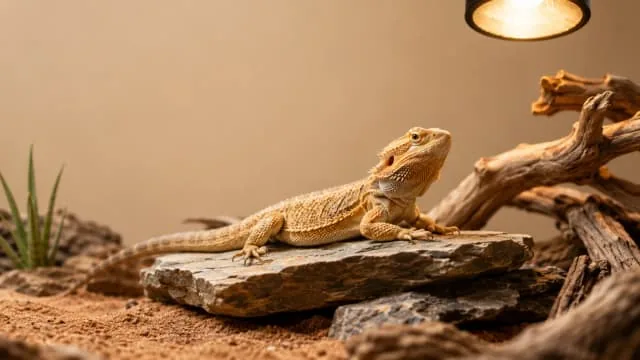
A proper hide. This is the cool-side hide earning its keep — a cave, a wooden shelter, or a quiet covered corner where your dragon can settle undisturbed. Some dragons use it, some dig into the substrate, some just pick a spot on the cool end and commit. All normal.
Weekly wellness checks — brief and boring. Once a week, confirm breathing, look for dehydration signs (sunken eyes, wrinkled skin), and weigh them. Log the weight. Then walk away. Two minutes, once a week — not handling time, bonding time, or bath time.
What not to do
The don't list is short but important. Don't try to wake them up — once brumation starts, it's very hard to stop, and warming the tank to force it usually just stresses a groggy animal. Don't handle them regularly — every disturbance costs energy they can't easily replace. Don't offer food to a sleeping dragon "just in case." Don't panic over stillness — first-timers regularly mistake deep sleep for death. Check breathing, check the weekly weight trend, and let the process run.
⚖️ Myth vs reality: "My dragon hasn't moved in three weeks — he must be dead." Reality: check for breathing (watch the sides for slow movement), and note that a brumating dragon placed on its back will make a slow attempt to right itself. If breathing is absent or the body is limp and unresponsive rather than merely sluggish, that's a vet emergency — not a wait-and-see.
When sleep stops being normal
Brumation explains behavioral changes: sleeping, not eating, hiding, ignoring the basking spot. It does not explain physical changes: rapid weight loss, a persistently black beard, discharge from eyes or nose, swollen limbs, wheezing, or abnormal waste. Those are illness signs wearing a brumation costume, and they need a reptile vet — the "it's probably just brumation" assumption has delayed treatment for many sick dragons.
The weekly weigh-in is your early warning system. A slow drift down is expected; total loss should stay under about 10% of the pre-brumation weight. Rapid loss, or a dragon that keeps losing week after week with no plateau, is a vet trigger. If you're ever unsure whether you're looking at brumation or illness, run through the brumation vs. illness checker — and when in doubt, the vet visit is always the right call.
Brumation questions, answered
Should I turn the lights completely off during brumation?
No single correct answer — keepers use everything from a shortened 10-hour cycle to lights-off entirely. Pick one approach, stay consistent, and restore the full normal cycle when your dragon wakes. If your dragon stirs and basks, having some light available lets them use it.
My dragon has been asleep for a month and hasn't drunk anything. Should I wake him to offer water?
No — waking a deeply brumating dragon causes more stress than the missed drink. Keep the fresh bowl available; dragons that need water surface for it on their own. Visible dehydration (deeply sunken eyes, very wrinkled skin) warrants a vet call, not a forced wake-up.
Can brumation happen in summer?
Occasionally, yes — some dragons run an "off-season" slowdown. Treat it like any brumation: confirm health and weight stability, keep water available, and see a vet if weight drops or illness signs appear.
Will my dragon lose weight during brumation?
A little — that's the fat reserves doing their job. Normal is a slow decline totaling under about 10% of pre-brumation weight. Rapid loss, or visible thinning week to week, is not normal. Weekly weigh-ins turn this from a worry into a number.
Do I need to do anything special with the tank?
Keep it clean and simple: fresh water bowl, a proper cool-side hide, and otherwise leave the setup alone. Spot-clean as needed during weekly checks and save the deep clean for after wake-up.