Bearded Dragon Salad — Build a Bowl They’ll Eat
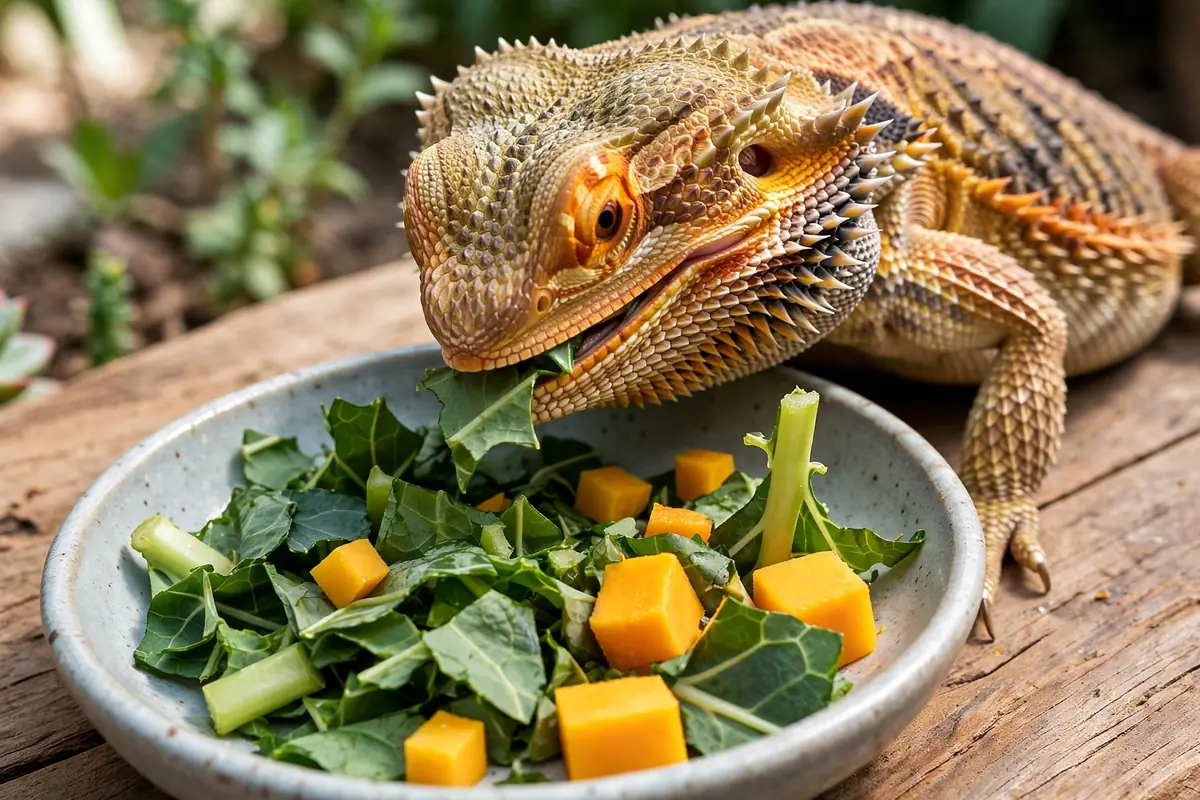
A proper bearded dragon salad is the difference between a dragon that thrives and one that just survives. Babies may act like salad is a rumor, but the greens habit you build early becomes the backbone of the adult diet — when plant matter should make up most of what your dragon eats. This guide gives you the full formula: which greens to use daily, which veggies add variety, which fruits work as treats, and the short list of foods that should never touch the bowl.
The salad formula
Think of every salad in three layers:
- The base (70–80% of the bowl): dark leafy staple greens — the daily workhorses below.
- The mix-ins: a rotating cast of chopped veggies for color, texture, and nutrients.
- The topper (sparingly): a little fruit or a favorite treat to lure picky eaters in.
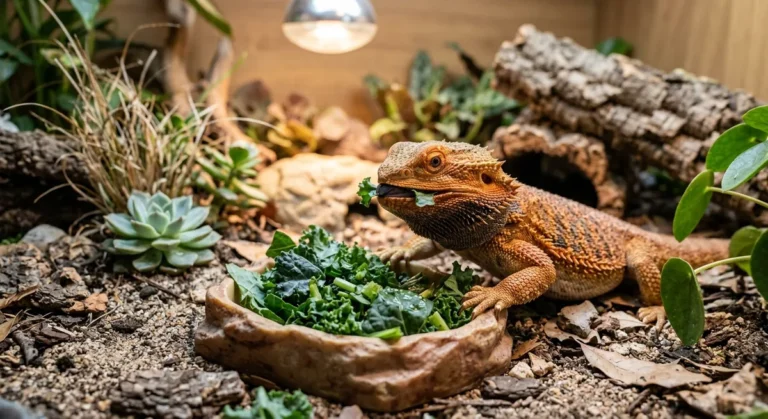
Chop everything to bite-size pieces (no bigger than the space between your dragon’s eyes for babies), wash all produce to remove dirt and pesticide residue, and serve the salad first thing in the morning — hungry dragons are far more likely to graze greens before the insects arrive.
Reality: offering greens from day one trains the habit while they’re young. Juveniles raised on insects alone often become adults that refuse salad entirely, and converting a stubborn adult is far harder than raising a willing one.
Explore the salad bar
Tap through the four tabs for the complete food lists, each with honest feeding-frequency notes. Everything here assumes washed, raw, bite-size produce.
These low-oxalate, nutrient-dense greens form the daily base of the bowl. Rotate between at least two or three across the week.
The gold standard: calcium-rich, low in oxalates, and widely available. If you buy one green, make it this.
Slightly peppery — many dragons love the stronger flavor. Another excellent calcium-to-phosphorus profile.
Right up there with collards and mustards for everyday feeding. Chop the stems finely; dragons usually prefer the leaves.
Only pesticide-free ones — never from a treated lawn. Flowers are edible too and make great toppers.
Mild, crunchy, and well accepted. Good rotation greens when the “big four” get boring.
Fine in rotation, but go easy — like other brassicas it contains goitrogens, so it shouldn’t dominate the bowl.
Chop these into the base for variety and extra vitamins. Most do best a few times a week rather than every single day.
Grated or finely diced, it’s one of the few non-leafy veggies solid enough for everyday use. Dragons love the color.
Red, orange, or yellow — bright colors attract picky eaters. Dice small; the skin is fine.
Chopped raw or lightly steamed. A reliable, inoffensive mix-in most dragons accept.
Same family as butternut, same deal: grate or dice finely and rotate through the week.
Split or chop — whole peas can be a choking concern for babies. Sweet enough to tempt salad skeptics.
Grated, in small amounts. High in vitamin A, which is great in moderation but not as a daily flood.
Grated raw or cooked and cooled. Nutritious but starchy — a sometimes food, not a staple.
Fruit is candy: the sugar adds up fast, and too much can cause runny stools and picky eating. Keep portions small — a few bite-size pieces — and frequency low.
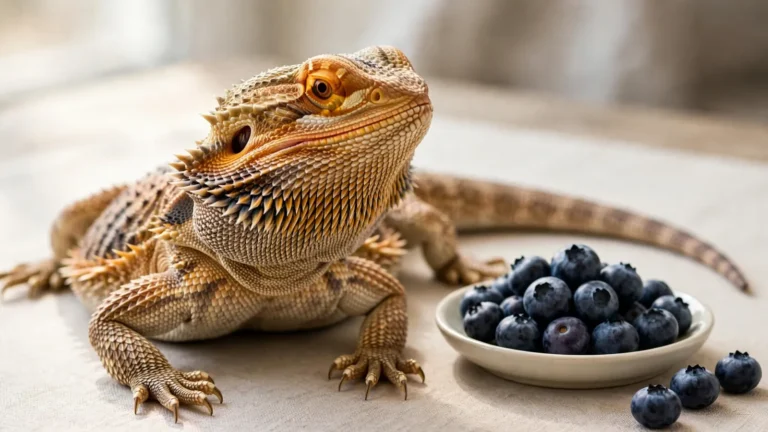
Halve or quarter for babies. Antioxidant-rich and most dragons go crazy for them — perfect training treats.
Soft, fragrant, and hydrating. Dice into pea-size cubes.
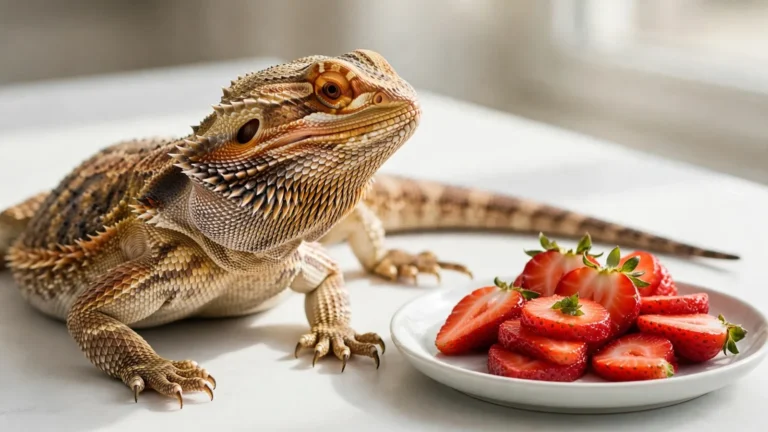
Messy but beloved. Halve large berries for smaller dragons.
Finely grated or diced. Never feed the seeds.
Dice small. The tops are fine to include.
Quarter lengthwise — whole grapes are a choking hazard. High sugar, so genuinely occasional.
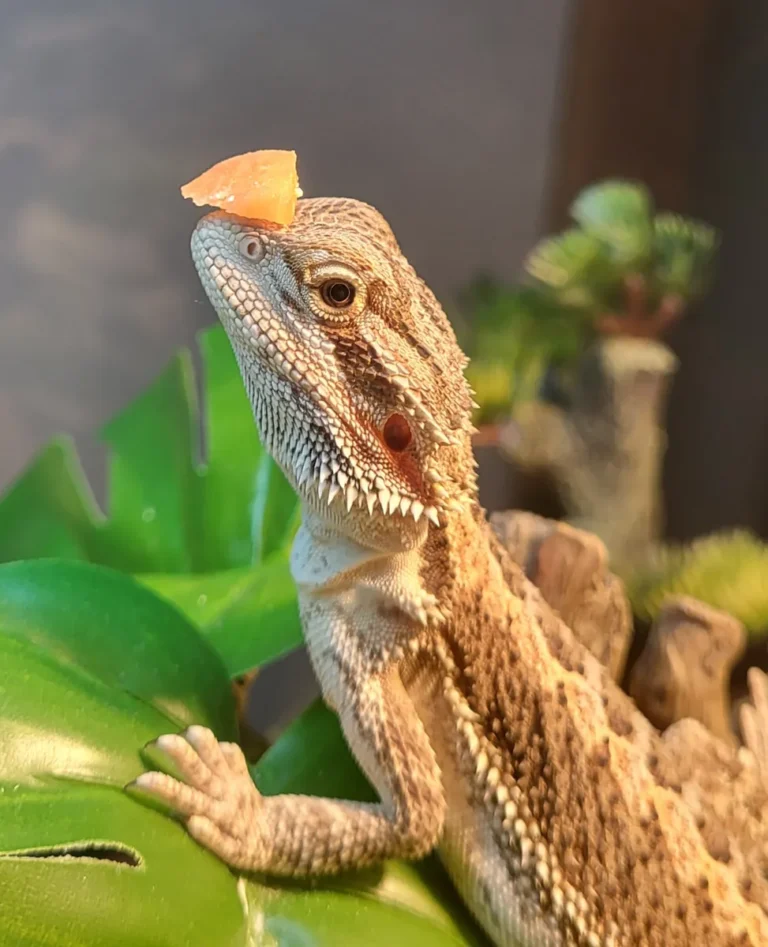
Hydrating and sweet. Rind off, diced small.
These are off the menu — some are nutritionally bankrupt, some interfere with calcium, and a few are genuinely dangerous.
Building the bowl: a practical routine
- Morning: put the fresh salad in first, before any insects. A hungry dragon investigates; a full one naps.
- Rotate the base. Collards on Monday, mustards on Tuesday, dandelion on Wednesday — rotation covers nutritional gaps no single green fills.
- Color sells it. A drab all-green bowl gets ignored; a few shreds of butternut squash or bell pepper turn it into something worth investigating.
- Don’t remove uneaten salad too fast. Leave it through the day (toss it in the evening) so grazing happens on the dragon’s schedule.
- Match the life stage. Babies still need daily insects for growth — salad is the side dish. Adults flip the ratio toward greens. Our growth chart helps you track where your dragon is.
When your dragon won’t touch salad
Some dragons — especially juveniles raised insect-only — stage a full protest. Don’t cave and don’t force it:
- Keep offering daily anyway. Refusal today doesn’t predict refusal next month.
- Try the “worm garnish”: wiggle a treat insect (like a hornworm or silkworm) on top of the greens so the dragon accidentally tastes salad while striking.
- Hand-feed a blueberry, then a blueberry touching a leaf — bridge flavors gradually.
- Bright colors and movement help: gently rustle the greens with tongs to trigger the feeding response.
For the full stubborn-case playbook, see our guide on the bearded dragon that won’t eat greens.
Frequently asked questions
Can bearded dragons eat salad every day?
Yes — a fresh salad should be offered daily at every age. Babies may mostly ignore it in favor of insects, but the daily offer builds the habit that pays off in adulthood.
Should salad be wet or dry?
Lightly misted is ideal. A light spray adds hydration to every bite and makes greens look fresher and more appealing. Just don’t serve a soggy, wilted mess — toss leftovers each evening.
Can I use pre-bagged salad mixes?
Check the ingredients: many spring mixes contain spinach (high oxalates) and low-nutrition lettuces. A bag that’s mostly dark leafy greens is fine after a rinse, but building your own from the staple list above is cheaper and better.
How small should I chop everything?
A good rule: no piece bigger than the space between your dragon’s eyes. Babies need a fine chop; adults handle chunkier pieces.