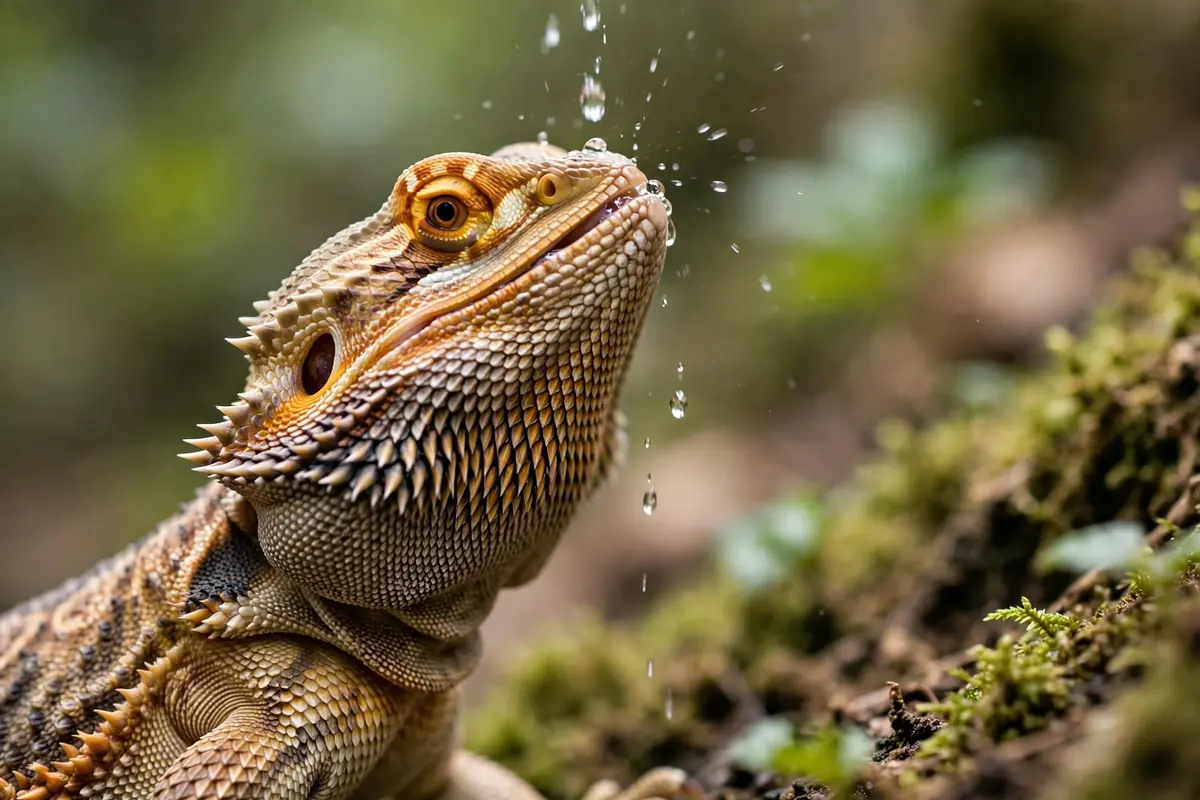
7 Signs of Dehydration in Bearded Dragons
Bearded dragons are desert animals, so it’s easy to assume they barely need water. That’s only half true: they get a lot of moisture from their food, but signs of dehydration in bearded dragons are still one of the most common problems keepers miss. Dehydration creeps in quietly — a little wrinkled skin here, slightly sunken eyes there — until it starts affecting appetite, digestion, and shedding. Here’s how to spot it early, what causes it, and how to fix it safely.
7 signs your bearded dragon may be dehydrated
Estimate your dragon’s daily water needs
There’s no exact prescription for how much water a bearded dragon should drink — most of it arrives hidden inside food. But a rough daily drinking-water estimate helps you judge whether your setup is in the right ballpark. Enter your dragon’s details for a conservative estimate based on a commonly used reptile maintenance guideline (about 10 ml of water per pound of body weight per day), adjusted for age and diet.
💧 Daily Hydration Estimator
This is a rough husbandry estimate, not a medical measurement. Individual needs vary with temperature, activity, and health — and most daily moisture comes from food, not the bowl.
What causes dehydration
- Diet too dry. An insect-heavy diet with few fresh greens delivers far less moisture than a balanced mix. Gut-loaded feeders and fresh salads are hydration, not just nutrition.
- No accessible water. Some dragons never learn the bowl; if yours ignores standing water, it effectively has no water source.
- Low humidity. Air below about 30% pulls moisture from skin and airways faster than the dragon replaces it. (Aim for the 30–40% band — see our humidity guide.)
- Excess heat. A basking spot running too hot, or a tank with no cool retreat, drives water loss up.
- Illness. Parasites, infections, and other health problems can dehydrate a dragon even when water is available — which is why persistent signs deserve a vet visit, not just more baths.
How to rehydrate safely at home
For mild dehydration — your dragon is alert and eating but showing early signs — these husbandry steps usually turn things around within a few days:
- Drip water on the snout. Use a dropper or your fingertip to place droplets on the nose. Most dragons start licking within a minute or two.
- Offer a shallow lukewarm bath (water up to the elbows, never unattended) for 15–20 minutes a few times a week. Many dragons drink during baths — see our bathing guide for the full routine.
- Mist the greens, not just the tank. Lightly spraying salad leaves boosts the moisture content of every bite.
- Refresh the water bowl daily and try moving it — some dragons drink more when the bowl sits on the cool side, and splashing the surface with a finger can catch their eye.
- Add moisture-rich foods like squash, bell pepper, and watery greens to the rotation for a week or two.
Who dehydrates fastest: babies and seniors
Not all dragons carry the same risk. Hatchlings and juveniles lose water faster relative to their body size — they have more skin surface per gram, eat mostly insects (which carry little moisture), and are still learning that the water bowl is for drinking. If you keep a baby, dripping water on the snout daily and offering moisture-rich greens from day one isn’t optional; it’s core care.
Seniors (roughly six years and up) sit at the other end of the risk curve: older kidneys concentrate urine less efficiently, and an older dragon with an underlying health issue can tip into dehydration quickly. For seniors, weigh monthly — sudden drops often show up on the scale before they show up in the eyes — and keep vet checkups regular so a small problem doesn’t become a fluid crisis.
Frequently asked questions
How often should a bearded dragon drink water?
There’s no fixed schedule — many healthy dragons are rarely seen drinking because they get most moisture from food. What matters is that fresh water is always available and that you’re offering it in ways your dragon actually uses (drips, baths, misted greens).
Can a bearded dragon get dehydrated even with a water bowl?
Yes, easily. A bowl the dragon never drinks from is decoration, not hydration. Watch the signs — skin, eyes, urates — rather than assuming the bowl is doing the job.
Do baths really help with dehydration?
They help because many dragons drink while soaking. A calm 15–20 minute lukewarm bath a few times a week is one of the most reliable ways to get fluids into a reluctant drinker.
Is misting the tank enough?
No — misting supports humidity and can stimulate drinking behavior, but it doesn’t replace drinking water and moisture-rich food. Think of it as a supplement, not the main supply.