Adopting a Bearded Dragon: Your Guide to the Rescue Route
Most bearded dragon buying guides point you toward breeders, pet stores, and expos — and our where-to-buy guide covers those channels honestly. But there is a fourth channel that deserves its own guide: rescue and rehoming. Every year, thousands of healthy bearded dragons end up in rescues through no fault of their own, and adopting one is often cheaper, faster, and more rewarding than buying new.
This guide covers the rescue route end to end: why dragons get surrendered, what adoption really costs, how rescues screen you (and how to screen them), and a day-by-day settling plan for the first two weeks. Start with the quick answers below, then read the full walkthrough.
What does it cost to adopt?
Rescue adoption fees for bearded dragons typically run $50–$100 for the dragon alone — some rescues charge around $60, others up to $85–$100 depending on age and health. Many rescues also offer bundled adoptions (dragon plus its enclosure and gear) in the $150–$175 range, which can be a genuine bargain if the setup is sound.
The fee covers the rescue’s costs — food, housing, and veterinary care during fostering — and it screens out impulse takers. Compared with breeder prices for even a basic morph, adoption is almost always the cheaper route into the hobby.
Will the rescue check my home?
Expect screening — and be glad of it. A responsible rescue will typically ask for:
- A description or photos of your enclosure setup (size, heating, UVB, substrate)
- Your reptile-keeping experience, if any
- Whether all household members are on board
- Landlord or housing approval if you rent
- Sometimes a video call or in-person home visit
This isn’t gatekeeping; it’s matching. A rescue that hands dragons to anyone with cash is a red flag, not a convenience. Have your setup ready before you apply — it signals seriousness and speeds everything up.
What should the rescue disclose?
A trustworthy rescue tells you the dragon’s full story, including the uncomfortable parts. Insist on straight answers to these:
- Known history — why was the dragon surrendered, and how long has the rescue had it?
- Health status — any past or current issues (MBD, parasites, injuries), and what treatment was given
- Vet records — has a reptile vet examined it? Any fecal test results?
- Age and sex — approximate age and confirmed sex if known
- Temperament — handling tolerance, feeding habits, quirks the foster home has noticed
- Diet — what it’s currently eating, so you can transition gradually
Vague answers, rushed adoptions, or “no returns” policies are walk-away signals. Good rescues offer post-adoption support and will take the animal back if things don’t work out.
First 14 days: the settling plan
- 1Days 1–3: hands off.
Set the dragon in its pre-built enclosure and leave it alone except for feeding and spot-cleaning. No handling, no photo shoots. It’s decompressing.
- 2Days 4–7: routine and observation.
Keep lighting, feeding times, and handling attempts minimal but consistent. Watch appetite, stool, and basking behavior — these tell you how the dragon is really doing.
- 3Days 8–11: first handling.
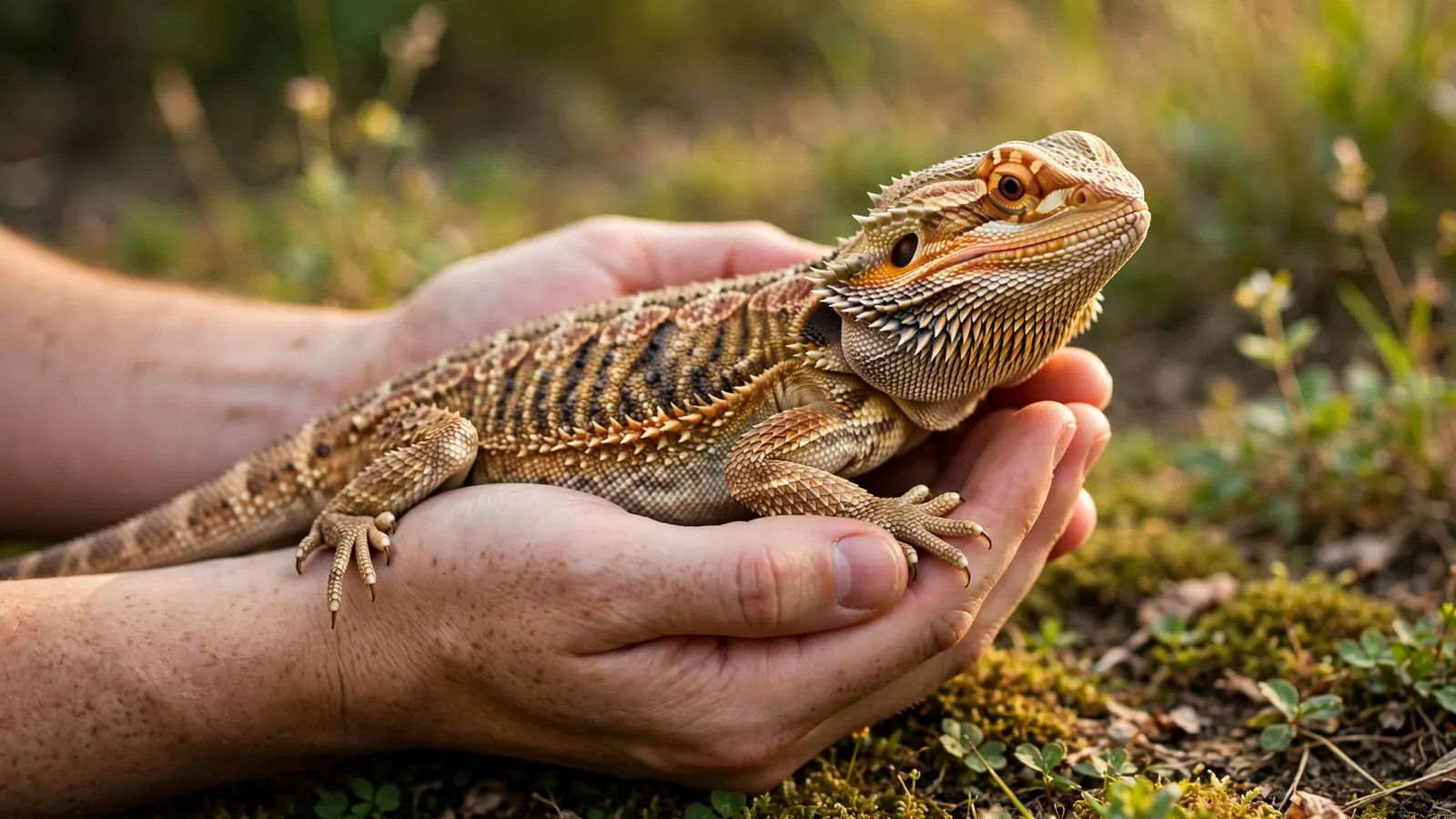
Start with short, calm handling sessions — 10–15 minutes, inside the room, low to the ground. Let the dragon set the pace; end on a calm note.
- 4Days 12–14: settle into normal life.
By now you should see regular basking, eating, and exploring. Book a new-patient reptile vet check if the rescue hasn’t provided a recent one.
Why do dragons end up in rescues?
Rarely because something is wrong with the dragon. The common stories rescues hear: the kids lost interest, the owner moved into no-pets housing, the “easy starter pet” turned out to need a 120-gallon tank and live insects, or a well-meaning buyer didn’t budget for the real first-year costs. Many surrendered dragons are healthy, handleable adults whose only problem was an unprepared owner — which is exactly why adoption can land you a calmer, already-socialized animal.
Should I quarantine a rescue dragon?
If you already keep reptiles, yes — a 60–90 day quarantine in a separate room with separate tools is the responsible standard, since rescues can’t always guarantee a clean fecal history. If this is your first and only reptile, quarantine is less critical, but a reptile vet check with a fecal test in the first couple of weeks is still the smart move.
Evaluating the dragon in front of you
Adoption doesn’t mean lowering your standards — it means applying them. Run every candidate through the same health evaluation you’d use for a breeder purchase: clear bright eyes, a thick tail base, firm jaw, clean vent, active alertness, and all toes and tail tip intact. Our healthy-dragon checklist walks through the full 12-point inspection. If the rescue won’t let you handle the dragon before committing, treat that as a red flag.
Ask specifically about metabolic bone disease history — it’s the most common legacy issue in surrendered dragons, and a dragon with mild, stabilized MBD can still live a good life, but you deserve to know before you commit. Same for missing toes or tail nips from cohabitation: cosmetic, but yours to know about.
Rescue adoption fees for bearded dragons cluster around $50–$100 for the animal alone, with dragon-plus-setup bundles around $150–$175. Against breeder prices that start in the low hundreds for basic morphs, adoption typically saves you 50% or more on the animal itself.
Screen the rescue like you’d screen a breeder
The questions you’d ask a breeder adapt neatly to rescues: How long have you had this dragon? What vet care has it received? What happens if I can’t keep it? A good rescue answers all of these crisply and has a written adoption agreement. Be wary of “rescues” that are really flippers — signs include constantly rotating inventory, no vet relationships, cash-only deals, and pressure to decide on the spot.
Adult rescue dragons are often easier first pets than babies. They’re past the fragile hatchling stage, their temperament is already known, many are comfortable being handled, and what you see is what you get — no surprises about adult size or personality.
Set up before adoption day
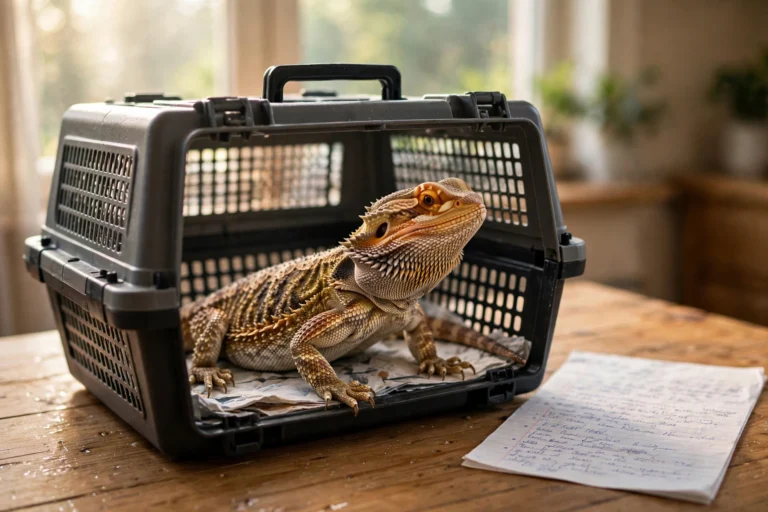
The single biggest favor you can do your future dragon: have the full enclosure built, heated, and tested before you bring it home. A rescue dragon arriving to a finished, warm tank settles in days faster than one arriving to a work in progress. Run through the starter-kit checklist — enclosure, UVB, basking setup, thermostat, decor, feeders, supplements — and let the tank run for 24–48 hours so temperatures stabilize. Bringing the dragon home should be the last step, not the first.
Myth: “Rescue dragons are all sick, aggressive, or damaged.” Reality: most are surrendered for owner reasons — moves, money, lost interest — not dragon reasons. Many are healthy, handleable adults. The ones with medical histories are usually disclosed upfront, and a well-run rescue won’t adopt out an animal it can’t stand behind.
After adoption: the long game
The first two weeks are about settling; the months after are about building. Keep a simple log of feeding, shedding, and behavior for the first couple of months — it helps you learn the dragon’s personal normal, which makes spotting problems later much easier. Stay in touch with the rescue; good ones genuinely want updates, and they’re a free helpline from people who already know your specific animal. And give it time: a dragon that hid for a week can become a shoulder-perching companion by month two. Patience is the whole secret.