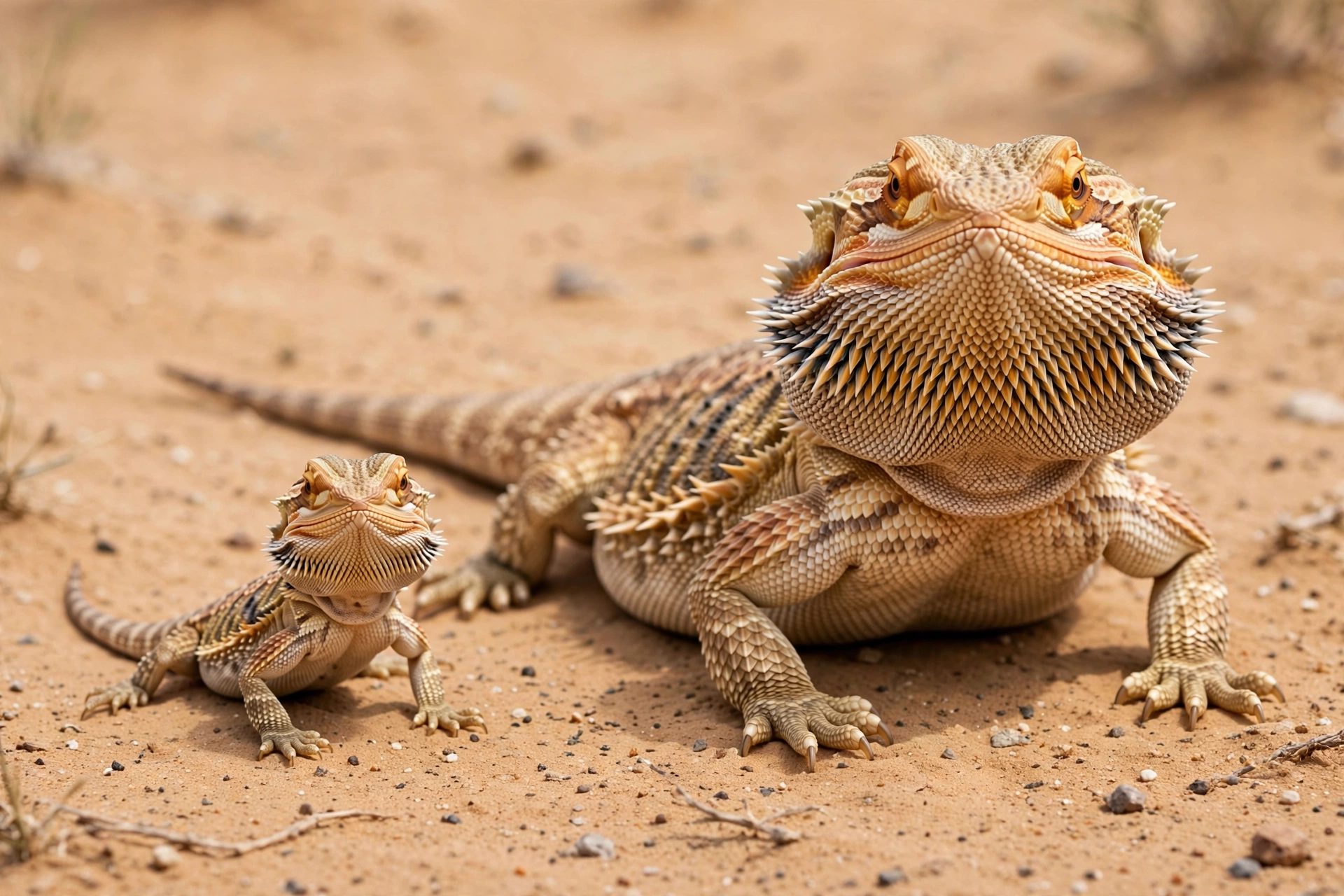
Baby vs Adult Bearded Dragon: Which Should You Get?
So you’ve decided on a bearded dragon. Congratulations — now comes the first real fork in the road, and it’s one most care guides skip right over: do you bring home a tiny hatchling, or an adult that’s already grown into itself?
It sounds like a small choice. It isn’t. The age you pick shapes your grocery bill, your daily routine, how much patience you’ll need in month one, and what the next decade of your life looks like. There’s no universally right answer — but there is a right answer for you. Let’s run the two side by side, round by round.
Round 1: The Price Tag (and the Bill After It)
Let’s talk money first, because this is where most people get fooled. A normal-morph hatchling from a breeder typically costs $50–$150 — sometimes less at a reptile expo. An adult from a breeder runs more like $100–$250+, with fancy morphs climbing well beyond that. On purchase price alone, babies win.
But the purchase price is the cheapest part of the whole equation. A growing juvenile can put away 50–100 appropriately sized insects a day, and buying crickets or dubia roaches retail runs about $20–$40 a week. Over the 12–18 months of active growth, that adds up to real money — one keeper reported spending $150 a month, counting down the days until his dragon switched to salads. An adult flips the script: the dragon costs more, but dinner is mostly collard greens and squash at $5–$10 a week. When you run the full first-year numbers, the adult often comes out cheaper overall — our breakdown of the real cost of owning a bearded dragon walks through both scenarios line by line.
A growing juvenile can eat 50–100 appropriately sized insects per day — roughly $20–$40 a week in retail feeders. An adult’s weekly grocery bill is mostly greens, at a fraction of that cost. (Sources: stevetonksgardendesign.co.uk cost breakdown; beardeddragon.org keeper reports.)
Round 2: Feeding and Daily Care
This is the round that decides more purchases than any other, because it touches your actual life every single day. Babies need 2–3 insect feedings daily — 10 to 15 minutes per session, insects dusted with calcium, uneaten bugs removed so they don’t stress the dragon overnight. Their diet runs about 70–80% insects and 20–30% greens, and they need fresh salad offered daily too, even if they mostly ignore it at first. Realistically, budget 20–30 minutes of hands-on time per day, plus keeping your feeder insects alive.
Adults are a different animal, literally and logistically. Fresh salad goes in every morning; live insects arrive 2–3 times a week. The ratio reverses to roughly 20–30% insects and 70–80% greens. Total daily effort: about 10 minutes, and most of that is chopping vegetables. If your workdays are long or your weekends are sacred, that difference matters more than any other factor on this page.
Round 3: Taming and Bonding
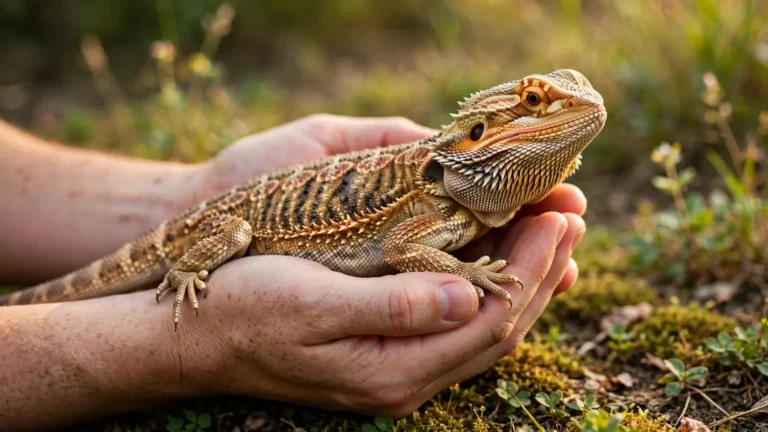
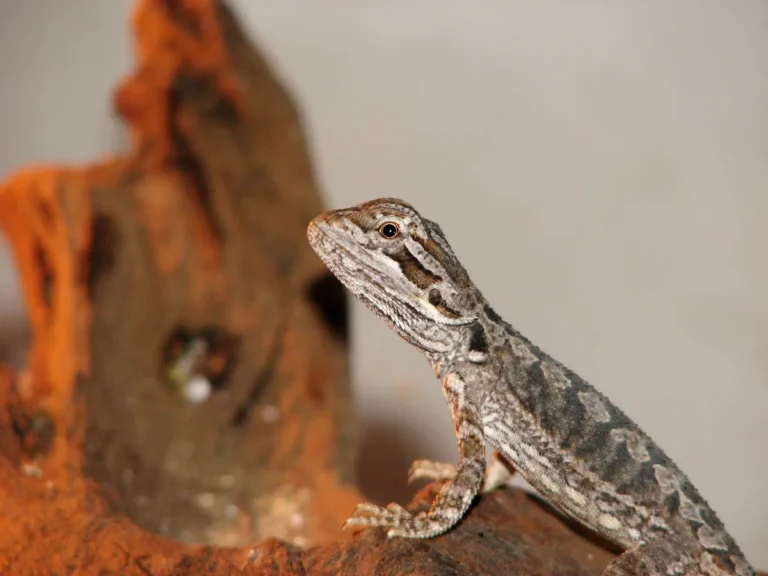
Babies arrive skittish, lightning-fast, and impossibly fragile-feeling. The first week usually includes relocation stress — hiding, refusing food, the works. Taming means short, calm handling sessions every day for 2–4 weeks, letting the dragon learn that your giant warm hand is furniture, not a predator. It’s work, but there’s a genuine magic to it: you shape the entire personality, and watching a palm-sized hatchling grow into a shoulder-perching companion is one of the great pleasures of the hobby.
Adults usually arrive calmer and already accustomed to being handled — especially breeder-raised animals. The huge advantage is certainty: the personality you meet is the personality you get. No guessing whether that shy baby will grow bold or stay timid. Rescue and rehomed adults sometimes need patient re-taming, but many are already perfectly handleable from day one.
Myth: Adults are always calmer and easier than babies.
Reality: Temperament is individual, not age-guaranteed. Some hatchlings tame down in two weeks; some adult rehomes arrive with handling baggage that takes months of patient work to undo. Whenever possible, meet the actual animal before you decide — where to buy a bearded dragon covers how to evaluate a seller and what to look for in person.
Round 4: Health and Risk
Nobody likes this round, but it belongs in the decision. Baby dragons are fragile: small bodies mean small margins for error. Dehydration, impaction from the wrong substrate, and parasite loads all hit a 20-gram hatchling harder than a 400-gram adult. The first-year risk is genuinely higher, which is why a vet check plus a fecal test in the first week is the cheapest insurance you’ll ever buy — and why you should run the new-dragon health checklist before any money changes hands, regardless of age.
Adults have cleared the fragile window, and an established eater is easy to assess: bright eyes, good weight, clean vent, active basking. The trade-off is history. A rehomed adult can arrive with unknown care behind it — previous diet gaps, old injuries, parasites from a multi-reptile household. Same prescription, though: vet check, fecal test, and a quarantine-style observation period. Neither age is risk-free; they’re just risky in different ways.
Round 5: The Years Ahead
Bearded dragons live 10–15 years with good care — our guide to how long bearded dragons live breaks down what actually decides where a dragon lands in that range. A hatchling is the full journey: every first shed, the awkward teenage months, the first brumation, a decade-plus of companionship. That’s wonderful if you’re ready for it, and worth saying out loud if you’re not — a lot can change in 12 years.
An adult at 3–5 years old still gives you many good years, with the guesswork removed: you know the adult size, the color, the temperament. For some keepers the shorter runway is a feature, not a bug — a full decade-plus commitment is a lot to sign up for sight unseen. (One more choice you’ll face either way: male or female. Our guide to sex differences in bearded dragons walks through what actually differs and what doesn’t.)
Rescues are full of healthy adult bearded dragons surrendered for entirely non-dragon reasons — moves, landlord rules, a kid who lost interest. Adoption fees are often under $100, you skip the fragile baby months completely, and you free up a rescue spot for the next surrender. For many first-time keepers, it’s the best deal in the hobby.
So, Who Should Get Which?
Get a baby if: you have 20–30 unhurried minutes a day, your feeder budget has room for $80–$160 a month during the growth year, you’ve kept reptiles before (or you’re eager to learn fast), and the idea of watching a hatchling grow up genuinely excites you. Small children in the house are a point against babies — tiny dragons and grabby hands are a bad combination.
Get an adult if: this is your first reptile, your weekdays are packed, you’d rather spend $30 a month on greens than $120 on roaches, you want a known personality from day one, or a decade-plus commitment feels like a lot right now. And seriously consider the rescue route before you buy — the dragon doesn’t care about papers, and your wallet will thank you.
Either way, the next step is the same: set up the tank before the dragon comes home, book that first vet visit, and enjoy the process. You’ve already done the hardest part — researching before you buy.
What to Read Next
Baby or adult, the setup is the same — get the full shopping list before you bring your dragon home.