Can Bearded Dragons Eat Bell Peppers? Colors Compared
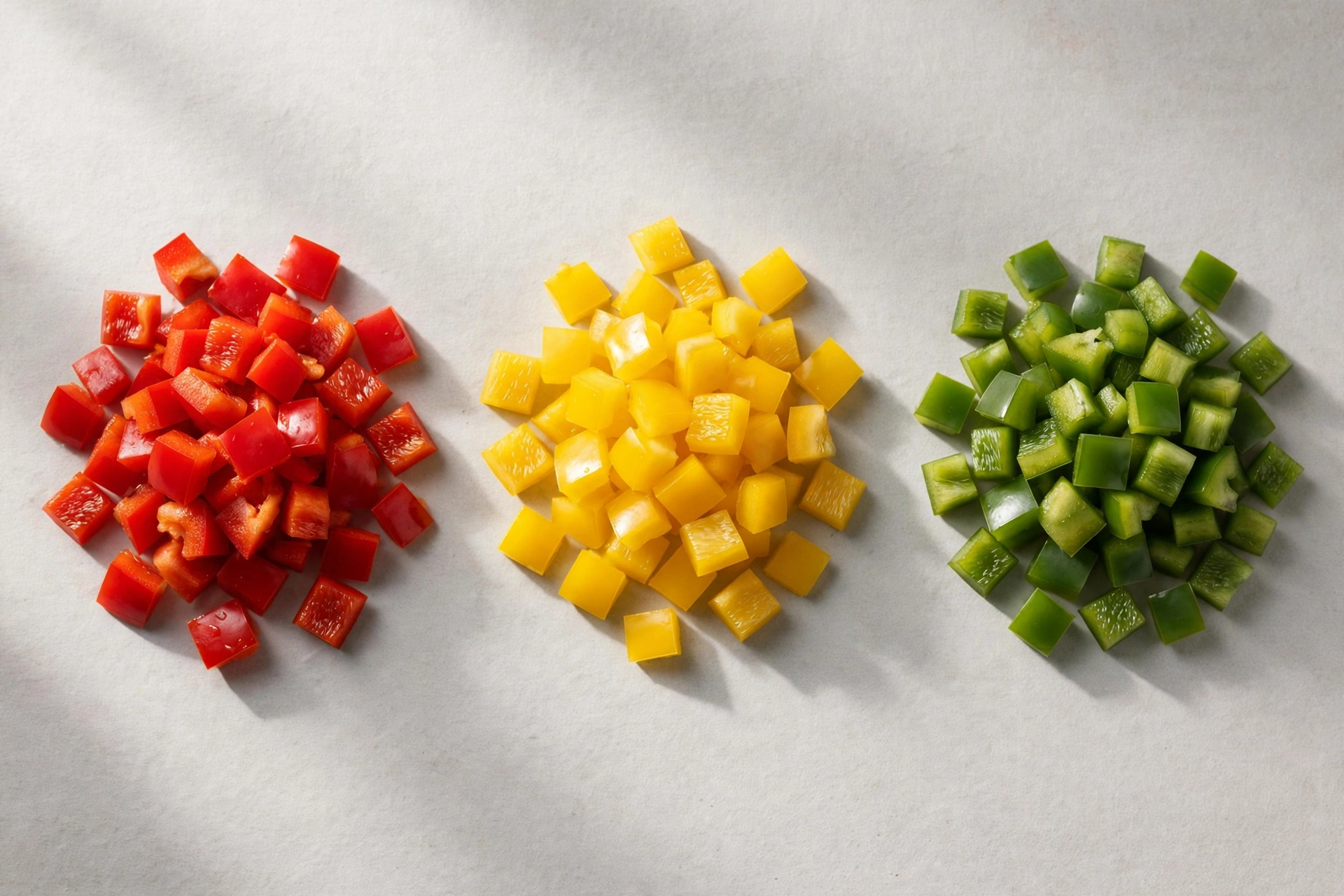
Yes — bearded dragons can eat bell peppers. Red, yellow, and green are all safe when served raw, diced, and seedless, and the bright color makes peppers one of the easiest vegetables for tempting a picky dragon toward the salad bowl. But the three colors are not identical: a red pepper is a fully ripened green pepper, and ripening changes the sugar, vitamin A, and vitamin C content in ways worth knowing before you stock up.
This guide compares the three colors side by side, covers which parts of the pepper to serve and which to discard, and flags the two things that turn a safe pepper into a dangerous one — hot peppers and anything cooked in oil. Use the picker below to compare colors and check each part.
The Short Answer: Yes, All Three Colors Are Safe
Red, yellow, and green bell peppers are all non-toxic for bearded dragons and all belong in the “occasional vegetable” tier of the diet — roughly 1–2 times per week as a small accent in the salad, not a daily staple. The sweet, crunchy flesh carries a solid vitamin C payload, useful beta-carotene (especially in red), and a high water content that supports hydration.
The main limitation is the calcium-to-phosphorus ratio, roughly 0.27:1 (about 7 mg calcium to 26 mg phosphorus per 100 g) — well below the 1.5–2:1 ratio bearded dragons need. Always dust peppers with calcium powder or serve them alongside calcium-rich staples. Our safe foods list shows how peppers slot into the bigger rotation.
Red vs Yellow vs Green: What Ripening Changes
Every bell pepper starts green. Left on the plant, it ripens through yellow and orange to a final red. That extra hang time does four things: sugars climb, vitamin C peaks (yellow tops the charts), beta-carotene surges in red, and the flesh turns sweeter and softer. Green peppers are picked unripe — grassier, crunchier, least sugar.
| Nutrient (per 100 g, raw) | Green | Yellow | Red |
|---|---|---|---|
| Vitamin C | ~80 mg | ~184 mg | ~128 mg |
| Vitamin A (as beta-carotene) | low (~18 µg RAE) | low (~18 µg RAE) | high (~157 µg RAE) |
| Sugars | ~2.4 g | ~4.2 g | ~4.2 g |
| Oxalates | very low | very low | very low |
What this means in practice: red is the best all-rounder — the only color with meaningful vitamin A activity, which supports eye and immune health, plus respectable vitamin C. Yellow wins on vitamin C outright. Green is the mildest choice — least sugar, least likely to train a dragon into refusing collard greens the next day. None of the three is high in oxalates, so unlike spinach or beet greens, peppers carry no real kidney-stone risk at salad-level portions.
Bearded dragons see in full color — including ultraviolet. That is one reason brightly colored foods like red bell pepper work as “salad toppers”: the color itself triggers feeding curiosity in a way a pile of plain greens does not, which makes peppers a practical tool for dragons that are learning to eat their vegetables.
Bell Pepper Nutrition: The Fine Print
Beyond the color differences, three nutritional facts shape how peppers should be used. First, the calcium-to-phosphorus ratio of roughly 0.27:1 skews mineral balance the wrong way when peppers dominate a meal. Bearded dragons absorb calcium only when it outnumbers phosphorus in the diet; chronic phosphorus-heavy feeding is one of the slow roads to metabolic bone disease. The fix is easy — dust every pepper serving with calcium powder and keep peppers as an accent, not a base — and our guide to balancing the calcium-to-phosphorus ratio covers the dusting schedule that makes low-calcium vegetables safe.
Second, peppers are about 92–94% water, which helps hydration but dilutes the meal’s fiber and calcium density. Fine once or twice a week; a reason not to let a dragon fill up on peppers at the expense of staples like collards and dandelion greens. Third, the sugar content — 4.2 g per 100 g in ripe red and yellow — is modest by fruit standards but real. Regular overfeeding of sweet vegetables can soften stools and train picky eating, so keep portions honest: a few dice, not a pepper bowl.
Which Parts to Serve — and Which to Skip
The edible verdict on a bell pepper is simple: the flesh is food, everything else is prep waste.
Flesh — serve it. The thick, crunchy walls are the only part worth offering. Dice them small (see prep below) and serve raw. The skin is edible too and carries some of the pepper’s antioxidants; no need to peel it.
Seeds — remove them. Not poisonous, but small, hard, and a genuine choking hazard for juveniles. Tap the pepper upside down and rinse the cavity to clear every last one.
White membrane / pith — remove it. The pale ribs are tough, bitter, and fibrous. Most dragons reject them anyway; cut them out along with the seeds.
Stem and leaves — skip them. The stem top is inedible, and the leaves belong to the nightshade family, whose foliage is best treated as off-limits for reptiles.
Claim: “Bell peppers are in the nightshade family, so the whole pepper is dangerous for bearded dragons.” Verdict: False as stated. Bell peppers are nightshades, but the risky nightshade compounds concentrate in foliage and green parts of some relatives — the ripe fruit of the sweet bell pepper is widely considered safe for reptiles, raw and in moderation. The real nightshade dangers in a reptile kitchen are tomato leaves and raw green potato, not a red bell pepper.
How to Prep Bell Peppers Safely
Preparation takes two minutes. First, wash the pepper thoroughly to remove pesticide residue — or buy organic if your dragon eats peppers regularly. Cut off the stem cap, slice the pepper open, and remove every seed and the white membrane ribs. Then dice the flesh into pieces no larger than the space between your dragon’s eyes — about pea-sized for adults, smaller for juveniles. Oversized chunks are a choking and impaction risk.
Serve peppers raw only. Cooking softens the crunch — and peppers are almost always cooked with oil, butter, salt, or seasoning, any of which turns a safe vegetable into a stomach-upset event. No roasting, no sautéing, no seasoning. If you are mixing peppers into a balanced salad, dice them fine enough that they distribute through the greens rather than sitting as a separate pile your dragon can cherry-pick.
How Often and How Much
Think of bell pepper as a 1–2 times per week accent vegetable. For an adult, a tablespoon-sized portion of diced pepper mixed into a salad of calcium-rich staples is sensible. Juveniles still need mostly insects for growth, so a teaspoon of fine dice on their greens is plenty — the pepper’s job at that age is introducing vegetable variety.
Rotate the colors across the week rather than serving the same one every time: red one day for its vitamin A, yellow or green the next for variety and lower sugar. Because of the poor calcium ratio, always pair peppers with a calcium-dusted staple or dust the pepper pieces themselves. Watch droppings the first time you serve a new color — watery stool after sweet red or yellow pepper usually means the portion was too generous, not that the food is unsafe.
What to Avoid: Hot Peppers and Cooked Peppers
Two hard rules close the loop. First, hot peppers are off the menu: jalapeños, chilis, cayenne, and anything containing capsaicin. Reptile pain receptors respond to capsaicin like a mammal’s do — a hot pepper is a painful irritant that can burn the mouth and gut lining, not “spicy enrichment.” Never feed hot peppers, hot sauce, or anything dusted with chili powder.
Second, never feed peppers cooked in oil, butter, or seasoning. Plain raw pepper is the entire offering. Also skip jarred or pickled peppers — the vinegar, salt, and preservatives in the brine are unsuitable — and keep garden pepper leaves and stems out of the bowl for the same nightshade-foliage reasons above.
Add peppers to a properly balanced salad — here’s the formula. A few dice of red, yellow, or green bell pepper, calcium-dusted and scattered through staple greens, give your dragon color, crunch, and vitamin C — with nothing in the bowl you need to worry about.