Does Bee Pollen Help Picky Bearded Dragons?
Every reptile forum has the same thread: an adult bearded dragon suddenly refusing greens, and a chorus of keepers replying with two words — “bee pollen.” Sprinkle it on the salad, they say, and the pickiest dragon turns into a salad vacuum. Some owners swear it worked overnight. Others bought an expensive little jar, watched their dragon sniff the greens and walk away, and wondered what they paid for.
Bee pollen sits in a strange spot in reptile care: hugely popular, almost entirely unstudied in reptiles, and marketed with claims that range from sensible to absurd. This guide weighs the actual evidence claim by claim, explains the one thing bee pollen plausibly does well, and shows how to use it without wasting money.
What Bee Pollen Actually Is
Bee pollen is the granular mix of flower pollen, nectar, and bee enzymes that foraging bees pack into pellets and carry back to the hive. Health-food stores sell the dried granules for human smoothies; reptile keepers buy the same product — or pricier “reptile” versions of it — to sprinkle over salads.
Nutritionally, analyses vary a lot by floral source — there is no single “bee pollen nutrition profile.” Broadly, it contains protein, B-complex vitamins, trace minerals, and fatty acids alongside a large carbohydrate fraction. It is a real food, not an empty gimmick. But the dose matters enormously: a bearded dragon gets a pinch, and at that amount it functions as a flavoring, not a nutrient source.
Why Keepers Reach for It
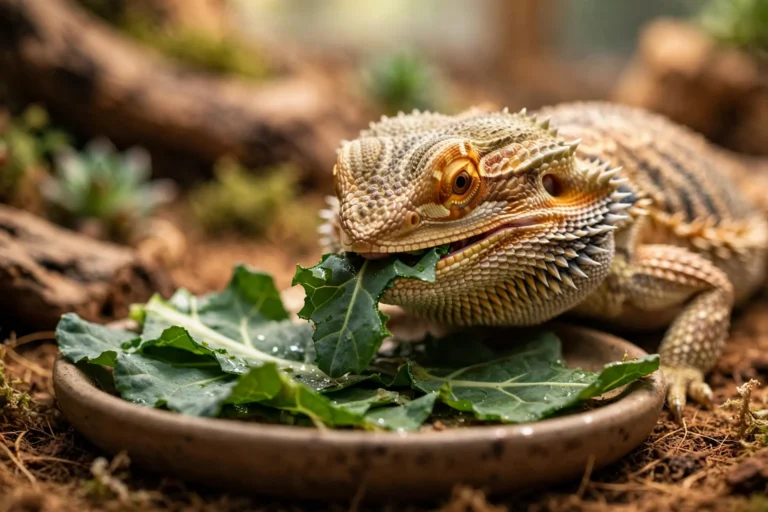
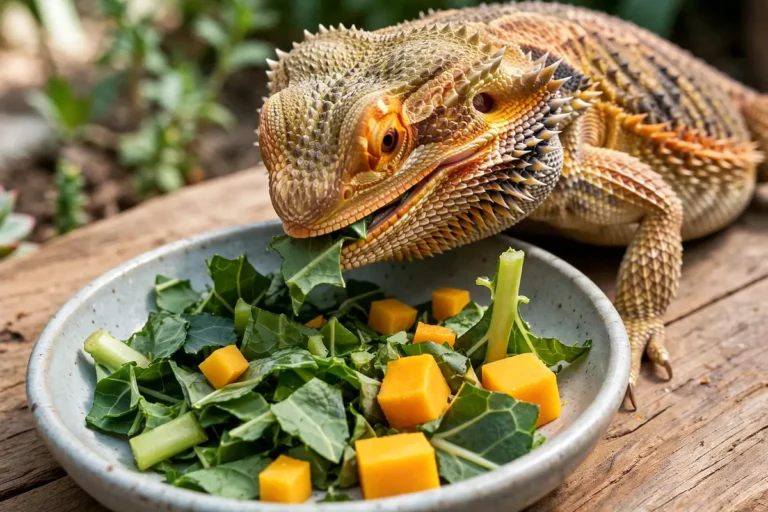
The use case is almost always the same: picky bearded dragons that refuse their greens. Juveniles usually attack anything that moves, but many adults become insect-fixated and treat a salad bowl like furniture. Owners try everything — and bee pollen has the best word-of-mouth of any trick in the book.
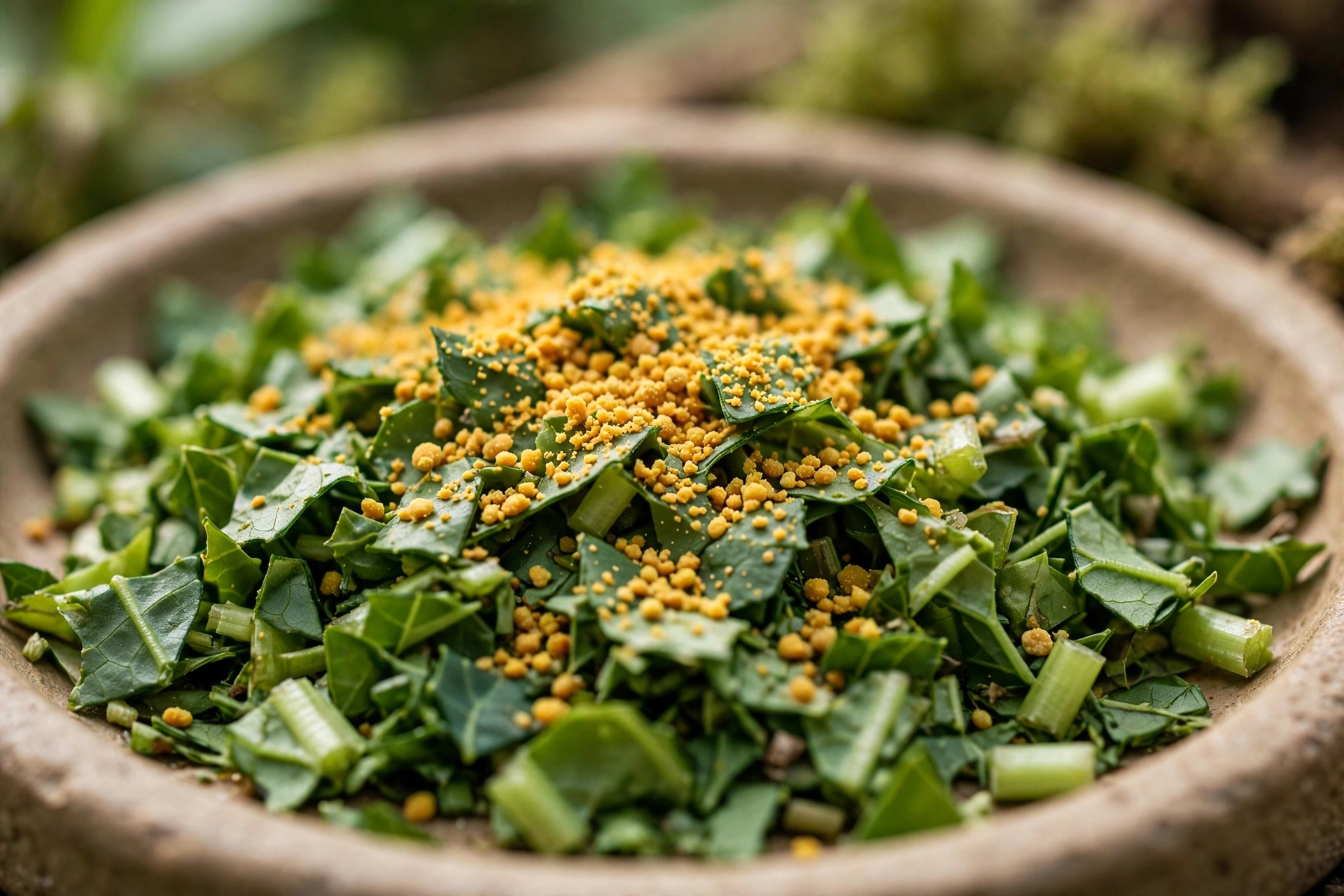
The plausible mechanism is unglamorous but sensible. Bearded dragons explore food partly by scent, and bee pollen adds a novel, slightly sweet odor plus visual contrast (golden granules on green leaves) to a familiar bowl the dragon has learned to ignore. Novelty gets a tongue-flick; a tongue-flick sometimes becomes a bite; a bite sometimes becomes a habit. But a dragon ignoring greens from brumation appetite loss, illness, or stress will not be fixed by seasoning, because the greens were never the problem.
Myth: Bee pollen is a superfood that fills nutrition gaps in a bearded dragon’s diet. Reality: At a pinch per serving, it is a scent-and-taste enticement — a seasoning, not a supplement. The nutrition in the jar does not survive the journey to the pinch.
How to Use It the Right Way
If you want to try it, technique decides whether it works or just makes expensive compost. The method that gives it the best chance:
- Use a literal pinch. Five to ten granules scattered over the greens is plenty. More is not better — a heavy dusting changes the texture and can put dragons off, and you are paying per gram.
- Sprinkle on damp greens. Mist the salad lightly first so the granules stick to the leaves instead of sifting to the bottom of the dish, where they will be ignored. Dry granules on dry greens mostly end up uneaten.
- Offer a few times a week, not daily. Part of the enticement is novelty. Daily heavy use turns the novel scent into background noise, and at that point you are just salting the salad out of habit.
- Pair it with the other picky-eater tricks. Pollen works best combined with the fundamentals — finely chopped greens, bright mix-ins, proper basking temps that drive appetite — not as a lone rescue attempt.
Give it a fair trial of one to two weeks. If the dragon is still ignoring the bowl, the answer is probably not more pollen — revisit the underlying cause instead. And one firm rule: never use bee pollen to mask a genuine appetite loss. A dragon that stops eating entirely needs the picky-eater troubleshooting approach, not seasoning.
A typical pinch of bee pollen weighs a fraction of a gram — well under 1% of the meal’s weight. At that dose, even a nutrient-dense food is mathematically a flavoring. Anyone quoting the jar’s nutrition label to justify reptile use is answering the wrong question.
The 3 Mistakes That Waste Your Money
Mistake 1: buying “reptile” bee pollen. Some brands repackage plain granules with a lizard on the label at two to three times the price of the same granules from a health-food supplier. Check the ingredient list: if it says bee pollen and nothing else, the premium is packaging. Plain, pesticide-free granules are plain, pesticide-free granules.
Mistake 2: dusting the insects instead of the greens. This one is common and completely backwards. The whole point is making greens interesting; coating feeders with pollen just adds cost to the food your dragon already eats. Worse, it can make you feel like you “did the pollen thing” while the salad bowl stays untouched. It also muddies your gut-loading feeder insects routine, which is where insect nutrition should actually come from.
Mistake 3: treating it as a supplement replacement. This is the expensive mistake and the dangerous one. Bee pollen does not replace calcium dusting, does not replace a reptile multivitamin, and does not fix a diet built on the wrong staples. An owner who sprinkles pollen while skipping calcium is paying to feel responsible while the actual deficiency grows. Pollen is the garnish; the calcium dusting schedule is the meal.
Claim: “Bee pollen is high in calcium, so it can replace dusting.” Verdict: false. Published analyses consistently show bee pollen is a poor calcium source with far more phosphorus than calcium — the opposite of what a bearded dragon needs. It cannot replace calcium powder, full stop.
Buying Decent Bee Pollen Without Overpaying
Buy plain granules with a single ingredient: bee pollen. Favor a supplier that states the country of origin and tests for contaminants or states pesticide-free sourcing — the one quality factor that genuinely matters, since pollen concentrates whatever the foraging area was sprayed with. Skip flavored blends, “pollen plus” mixes with added sugars, and capsules.
Store it sealed, cool, and dark; the refrigerator extends freshness noticeably. Granules that smell musty or look damp have absorbed moisture — replace them. And keep expectations in the right place: you are buying a balanced salad bowl‘s best supporting actor, not its star.
The Honest Bottom Line
Bee pollen is neither the miracle the forums promise nor the scam the skeptics assume. It is a safe, cheap flavoring that sometimes coaxes a greens-refusing dragon into tasting the salad — worth one small jar and a two-week trial, and worth abandoning cheerfully if your dragon is unimpressed. What it will never be is nutrition, medicine, or a substitute for the fundamentals: correct temperatures, a varied diet, and calcium dusting. Buy the pinch, not the promise.
Worth knowing: Bee pollen isn’t calcium — get the dusting schedule right so the supplement that actually prevents bone disease does its job.