Can UVB Go Through Glass?
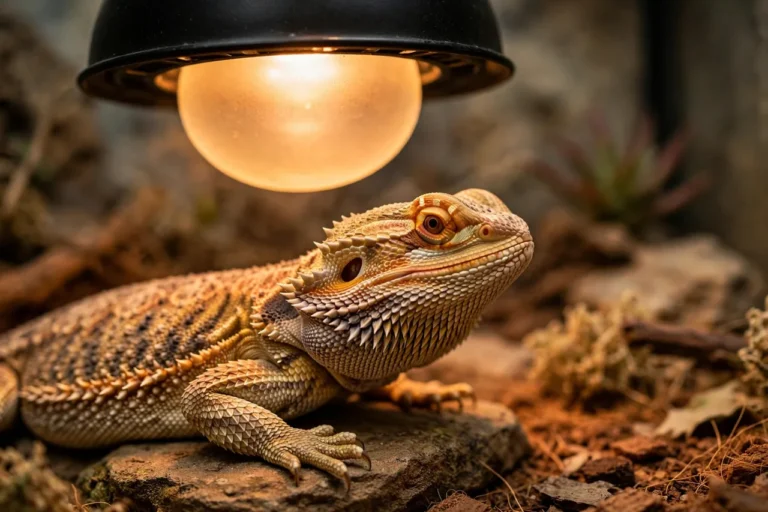
A shaft of afternoon sun cuts across the living room and lands square on your bearded dragon’s tank. She shuffles into the bright patch, flattens out, and closes her eyes in bliss. It feels like nature doing your job for you — free UVB, zero electricity.
Here is the part that ruins the moment: almost none of the light that matters is reaching her. Window glass is an outstanding UVB filter. That warm patch is visible light and heat — the ultraviolet B her skin needs to make vitamin D3 stopped at the pane.
This is one of the costliest misunderstandings in reptile keeping, and it goes well beyond windows. Glass tank walls, plastic fixture covers, acrylic lids, and even the mesh screen top your tank probably shipped with all take their cut. This guide tests the barriers one by one, with measured numbers.
The short answer
- Glass: No. Standard glass blocks virtually all UVB — roughly 0–5% gets through, which is effectively zero.
- Plastic and acrylic: No. Most plastics filter out all UVB emissions.
- Mesh screen: Partially. Expect to lose 25–45% of your UVB, depending on the mesh.
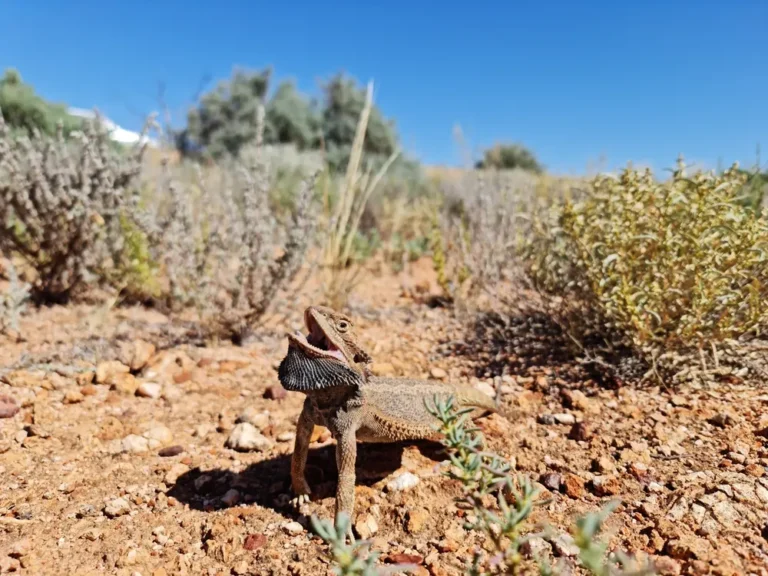
- Open air: Yes — 100%. This is the baseline everything else is measured against.
Barrier 1: Glass — the zero-percent club
Glass looks like nothing — that is exactly the problem. It is transparent to your eyes and opaque to UVB: the short wavelengths get absorbed by the pane itself. Veterinary sources put it bluntly — UVB cannot pass through normal glass.
Where keepers get caught:
- The sunny window. A tank parked in direct sun looks like a gift and acts like a greenhouse: the glass strips out the UVB while trapping heat, and temperatures inside can spike to dangerous levels fast. One reptile veterinarian puts it memorably — the enclosure turns into an oven.
- The glass lid or cover. Resting your UVB tube on a glass tank cover turns it into a very expensive night-light — bright to your eyes, empty of UVB.
- Glass between lamp and animal in display vivaria. Any pane the rays must cross — doors, dividers, viewing panels — kills UVB the same way.
The fix is always the same: nothing solid between the bulb and the basking spot. If you want your dragon to experience real sun, do it properly — a supervised outdoor session delivers genuine unfiltered UVB. Just remember the natural sunlight through windows idea is exactly that: an idea, not a lighting plan. The pane takes the UVB; only the brightness comes through.
"My tank sits by a sunny window, so my dragon gets UVB."
False. Window glass filters out UVB while letting light and heat through, so the sunny patch is cosmetic — and direct sun can overheat a glass tank rapidly. Real UVB comes from a tube mounted inside the setup, or from supervised time in actual outdoor sun, never through a pane.
Barrier 2: Mesh screen — the partial tax
Mesh is the barrier most keepers actually live with: the screen top the tank shipped with, the tube resting on top. The good news is mesh does not block UVB completely. The bad news is the tax is bigger than most people assume.
Veterinary lighting data tells the story: a coarse quarter-inch wire panel blocks about 25% of UVB, standard screen tops from the big brands block around 35%, and dense fine-mesh screens block up to 45%. Broader testing puts the general range at 30–50%.
Why? Every wire casts a tiny shadow — finer mesh means more wire per square inch, which means more shadow. That is why two tanks with the same bulb can deliver wildly different UVB at the basking spot.
In practice, a strong T5 tube on a dense screen 18 inches above the basking spot may deliver half the UVB the box promised. Two options: mount the fixture under the mesh, inside the tank — no barrier, full output (we measured the mesh screen UVB loss in detail) — or keep the tube on top and verify the basking spot with a Solarmeter 6.5 UV index meter, adjusting distance until the reading lands in the healthy range. Guessing is how dragons end up deficient on paper-perfect setups.
Veterinary lighting measurements put hard numbers on the mesh tax: quarter-inch wire panels block 25% of UVB, standard Exo Terra and Zoo Med screens block 35%, and dense Dubia and Zen Habitats screens block 45%.
Barrier 3: Plastic and acrylic — the hidden cover
Plastic is glass's sneakier cousin — it looks equally like nothing, and most plastics filter out all UVB emissions just as thoroughly. The classic trap is the clear plastic cover or diffuser on a fixture or hood, left on for a "finished" look, unknowingly neutering the UVB tube. The rule stands: remove any plastic or glass covers from fixtures, hoods, or the top of the cage.
Acrylic (plexiglass) lids deserve their own warning: standard acrylic blocks a significant amount of UVB, so treat it like glass. Specialty UV-transparent panels exist but are rare and expensive — never what a stock tank ships with. If you did not specifically buy UV-transmitting acrylic, assume yours blocks it.
One more quiet culprit: temporary plastic — cling film draped over the tank during a deep clean, or a rain guard rigged above an outdoor basking tub. If it sits between the bulb (or the sun) and the dragon, it filters the UVB.
UVB travels in straight lines — it does not bend around corners or bounce usefully off walls. If a barrier sits between the bulb and the basking spot, the shadow is total: the rays that hit it are gone, not redirected.
The 100% baseline: mounting for full transmission
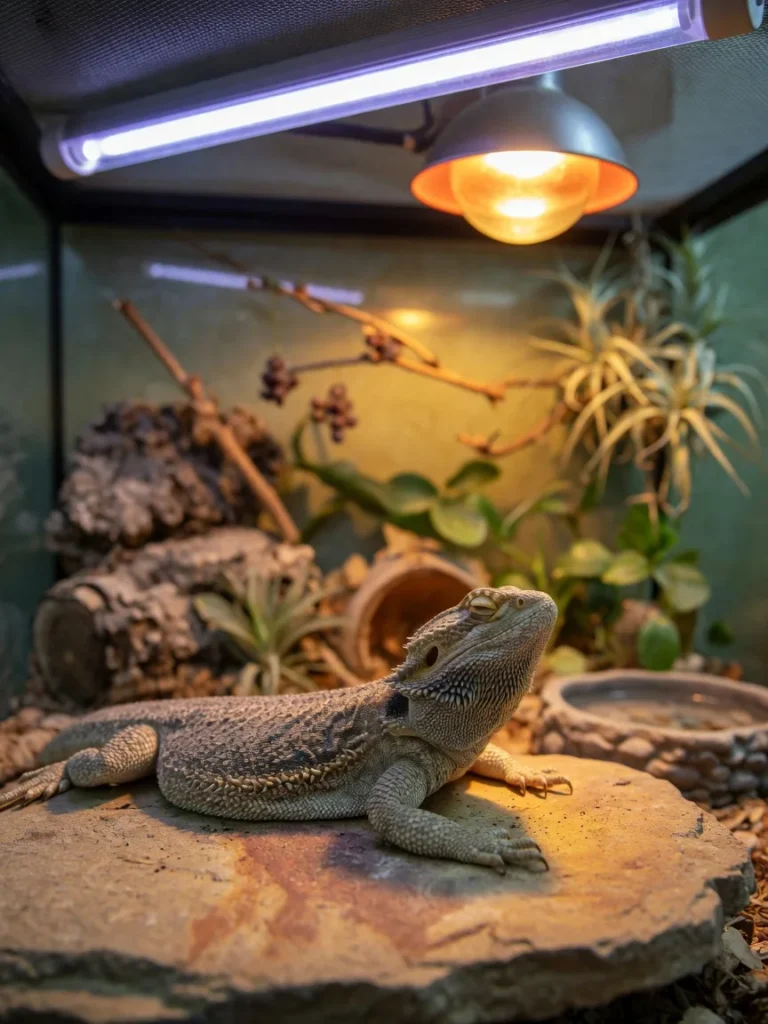
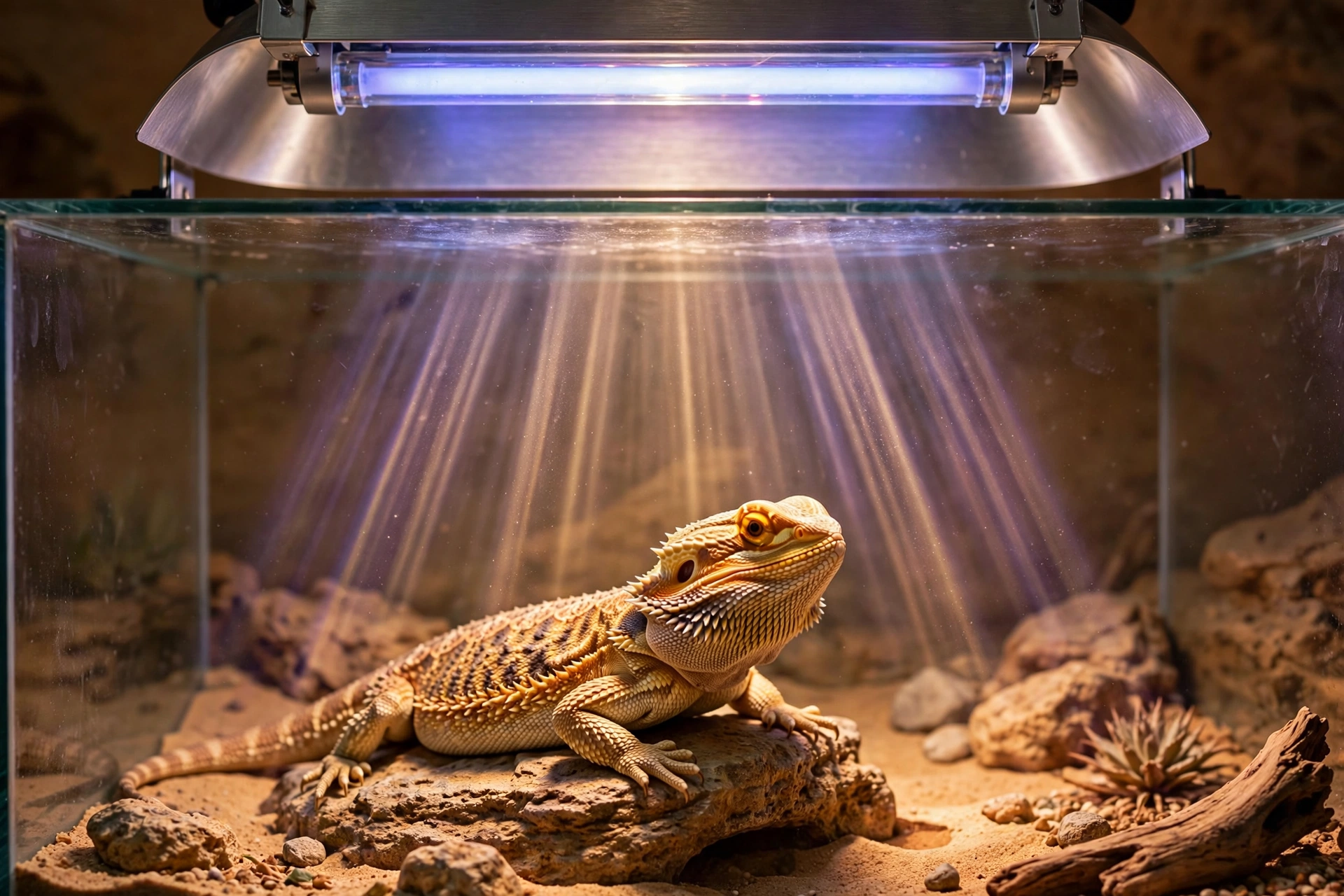
The gold standard is simple: a linear T5 HO tube mounted inside the tank, under any mesh, spanning about two-thirds of the enclosure with the basking zone underneath — so your dragon never has to choose between heat and UVB. Our full UVB setup guide covers exact tube choice and distances, but the barrier principle is the whole game: nothing solid between bulb and animal.
Three details complete the picture:
- Distance still matters — full transmission at the wrong distance is still the wrong dose. Measure from the bulb to your dragon's back at the basking spot, not the tank floor.
- Add a reflector — a tube radiates in every direction, including straight up. A polished reflector bounces the wasted half back down, often worth more than a stronger bulb.
- Run the full day: 12 to 14 hours of daily UVB hours on a timer, then true darkness. A perfect tube running four hours a day is still a deficiency.
How to know for sure
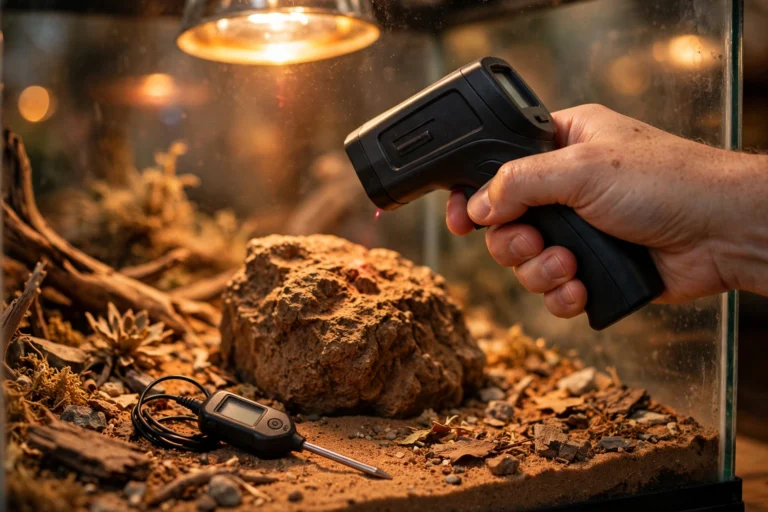
Here is the uncomfortable truth: UVB is invisible and fades invisibly — tubes keep glowing long after their UVB output dies, so replace on the manufacturer's schedule no matter how the tube looks — and your dragon cannot complain until the damage is months old. The only way to know your setup works is a Solarmeter 6.5 UV index meter held at the basking spot at your dragon's back height. It is the tool reptile vets use, and it ends every argument about mesh percentages and mounting heights.
Without a meter, audit the setup instead of the dragon: correct tube, correct distance, nothing between bulb and basking spot, replaced on schedule. The stakes are real — chronic, invisible UVB deficiency is the slow road to MBD in Bearded Dragons, the most common serious disease in captive dragons and almost entirely preventable. The barrier between your dragon and good health is rarely the bulb you bought; it is usually the pane, cover, or lid you forgot was there.
Quick verdicts recap
| Barrier | UVB gets through | Verdict |
|---|---|---|
| Glass | ~0% | Never mount a UVB lamp behind it |
| Plastic / acrylic | ~0% | Remove fixture covers and diffusers |
| Mesh screen | 55–75% | Mount the tube under it, or measure |
| Open air | 100% | The baseline — aim for this |
What to Read Next
If this article made you suspicious of your setup, good — that suspicion is where the fix starts. Work through tube choice, mounting position, and distances in our lighting guide and start fixing your UVB setup this weekend: move the tube inside the tank, strip off any covers, and re-check your basking-spot distance.