Deep Heat Projector vs Basking Bulb for Bearded Dragons
Walk into any reptile group and ask “deep heat projector or basking bulb?” and you’ll start a debate. Here’s the secret the debaters miss: it’s mostly not an either/or question. A deep heat projector (DHP) and a basking bulb do fundamentally different jobs — one provides invisible, round-the-clock deep-penetrating warmth, the other creates the bright, hot basking zone your dragon’s instincts expect. Most great setups use both, each doing what it’s best at.
This guide explains how each device actually works, compares them head-to-head on heat type, light, night use, lifespan, and cost, covers the thermostat rules (non-negotiable for both), and gives you a verdict by tank size. Take the quiz below first — it’ll point you at the right answer for your specific setup before you read a word of theory.
The Short Answer: Different Jobs
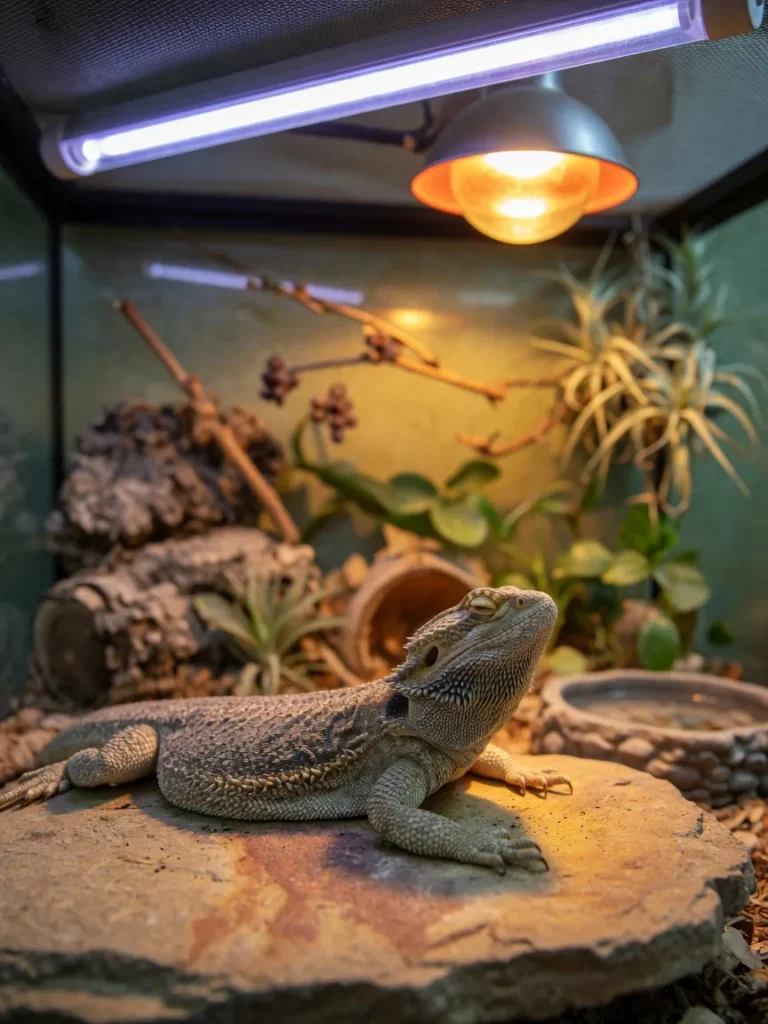
A basking bulb is a daytime spotlight: it throws bright visible light plus heat onto one zone, creating the 100–110°F basking surface your dragon thermoregulates around. It mimics the sun — light and heat arriving together, which is exactly the cue your dragon’s brain expects.
A deep heat projector is a 24-hour furnace: a ceramic-bodied device that emits infrared-A and infrared-B (the deep-penetrating wavelengths) with zero visible light. It warms objects and animals rather than just air, and because it’s lightless, it can run all night without disturbing sleep.
That’s the whole debate in one paragraph: the bulb does daytime basking, the DHP does background warmth around the clock. Asking which one “wins” is like asking whether you need a lamp or a furnace — in most homes, both.
How a Deep Heat Projector Works
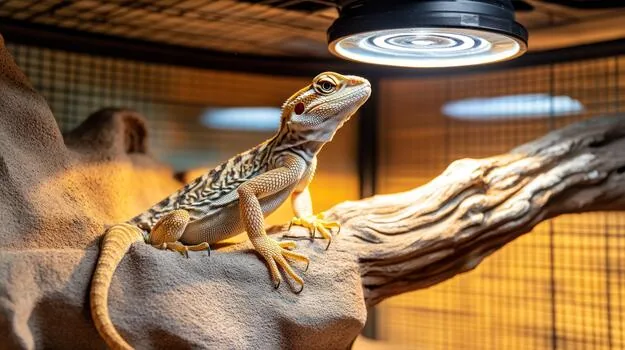
A DHP looks like a chunky floodlight bulb with a ceramic face. Inside, a heating element produces infrared radiation weighted toward the shorter, more energetic wavelengths (IR-A/B). These penetrate skin and muscle the way sunlight does, warming the animal from the outside in — dragons basking under a DHP often show the flat “pancake” posture of deep, comfortable warmth.
Because it emits no visible light, a DHP can run 24/7 on a thermostat: holding the warm side steady during the day and keeping nighttime temperatures from crashing. Typical sizes are 50W and 80W; most bearded dragon tanks do well with the 80W on a dimming or pulse thermostat.
How a Basking Bulb Works
A basking bulb is simpler: a bright incandescent/halogen spot lamp that converts most of its wattage into light plus heat. Placed over one end of the tank, it creates the thermal gradient — a 100–110°F basking surface fading to ~80°F on the cool side — while flooding the tank with the bright white light bearded dragons associate with daytime activity and appetite.
The brightness is a feature, not a side effect. Dragons under dim lighting eat less, bask less, and behave more lethargically even when temperatures are technically correct. The bulb’s light is doing behavioral work the DHP can’t. See our basking temperature guide for exact targets and measurement.
Head-to-Head Comparison
| Deep heat projector | Basking bulb | |
|---|---|---|
| Heat type | IR-A/B, deep-penetrating | Radiant + convective, surface-focused |
| Light output | None — runs day and night | Bright white — daytime only |
| Night use | ✅ Ideal | 🔴 Must turn off (light disrupts sleep) |
| Thermostat | Mandatory — powerful, focused output | Strongly recommended (dimming type) |
| Lifespan | Very long (often years) | Months — burns out periodically |
| Upfront cost | Higher (~$30–40 + fixture) | Lower (~$10–15) |
| Best for | Background warmth, cold nights | Daytime basking zone + brightness |
When to Use Both Together
The premium setup — and the one most experienced keepers land on — is both: a basking bulb creating the bright daytime hot spot, plus a DHP on a thermostat maintaining ambient warmth across the warm side 24 hours. The DHP smooths out the gradient, prevents nighttime crashes, and lets you run a slightly lower-wattage basking bulb (longer bulb life, less harsh hotspot). If your room drops below 65°F at night, “both” stops being premium and becomes necessary.
Thermostat Requirements: Non-Negotiable
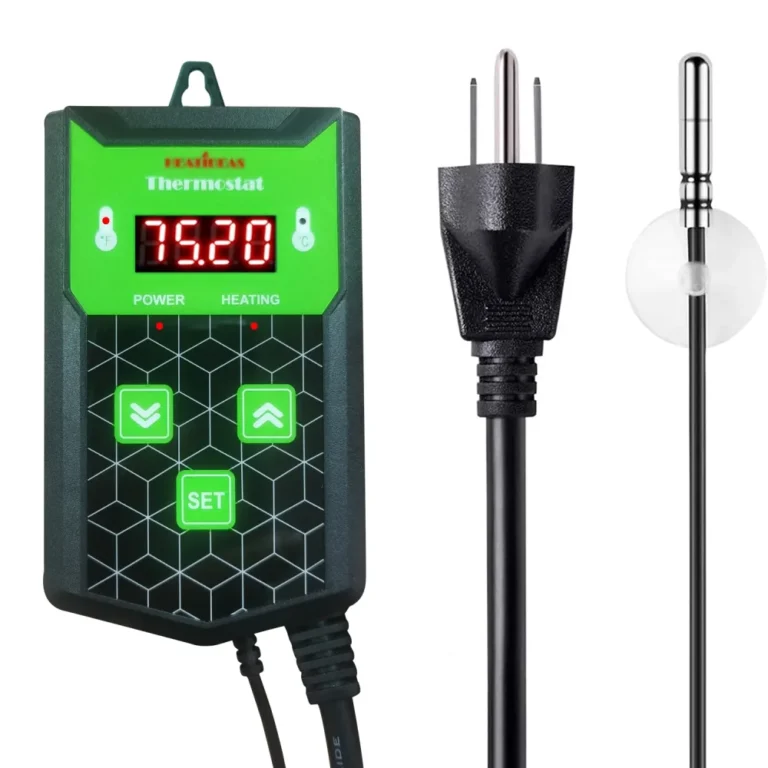
Both devices need thermostatic control, but the DHP needs it critically. An unregulated 80W DHP in a closed tank can push temperatures into dangerous territory — it doesn’t “look” hot the way a glowing bulb does, which makes it sneakier. Use a dimming or pulse-proportional thermostat (not a cheap on/off mat stat) with the probe secured near the basking zone. For basking bulbs, a dimming thermostat is the gold standard: it holds the exact temperature by trimming power instead of clicking the bulb on and off, which also extends bulb life. Our thermostat guide walks through probe placement and settings.
Common Setup Mistakes
- DHP with no thermostat. The single most dangerous mistake in this article. Never run one unregulated.
- Replacing the basking bulb entirely with a DHP. You lose the bright light cue — expect a dimmer, less active dragon. The DHP supplements; it doesn’t replace daylight.
- Using a colored “night” bulb instead. Red and blue night bulbs disrupt reptile sleep. If you need night heat, it must be lightless: DHP or ceramic emitter.
- Wrong DHP wattage. 50W for smaller tanks, 80W for 75–120 gallons. Oversized + no thermostat is how overheating happens.
- Probe in the wrong place. A thermostat probe dangling in cool air while the DHP blasts the basking spot is the same as no thermostat. Probe goes in the warm zone, secured, not touching the bulb.
The Cost Math: Running Costs Compared
Upfront, the DHP costs more — roughly $30–40 plus a fixture, versus $10–15 for a basking bulb. But the honest comparison includes lifespan and power draw. A basking bulb burning 100W for 12 hours daily uses about 1.2 kWh per day; an 80W DHP on a dimming thermostat typically averages well under its rated wattage since the stat throttles it — often 40–60W effective. Over a year at average US electricity rates, the DHP usually costs less to run while lasting 3–5× longer before replacement. Add the bulbs you stop buying (4–6 basking bulbs per DHP lifetime) and the DHP wins on total cost within the first year for most keepers. The basking bulb’s real cost isn’t money — it’s the replacement cycle and the lack of nighttime capability. Buy the bulb for daylight; buy the DHP for everything else.
Verdict by Tank Size
40-gallon (juvenile grow-out): a basking bulb alone is usually enough if your room stays above 65°F at night. Add a 50W DHP on a thermostat if nights run cold.
75-gallon: basking bulb for the hot spot + 50–80W DHP for background stability. This is the sweet spot where “both” starts paying off.
120-gallon (adult standard): both, properly thermostatted. The large air volume of a 4×2×2 ft tank benefits enormously from the DHP’s ambient warmth, and the basking bulb provides the bright focal hot spot. This combination holds the most stable gradient with the least fiddling.