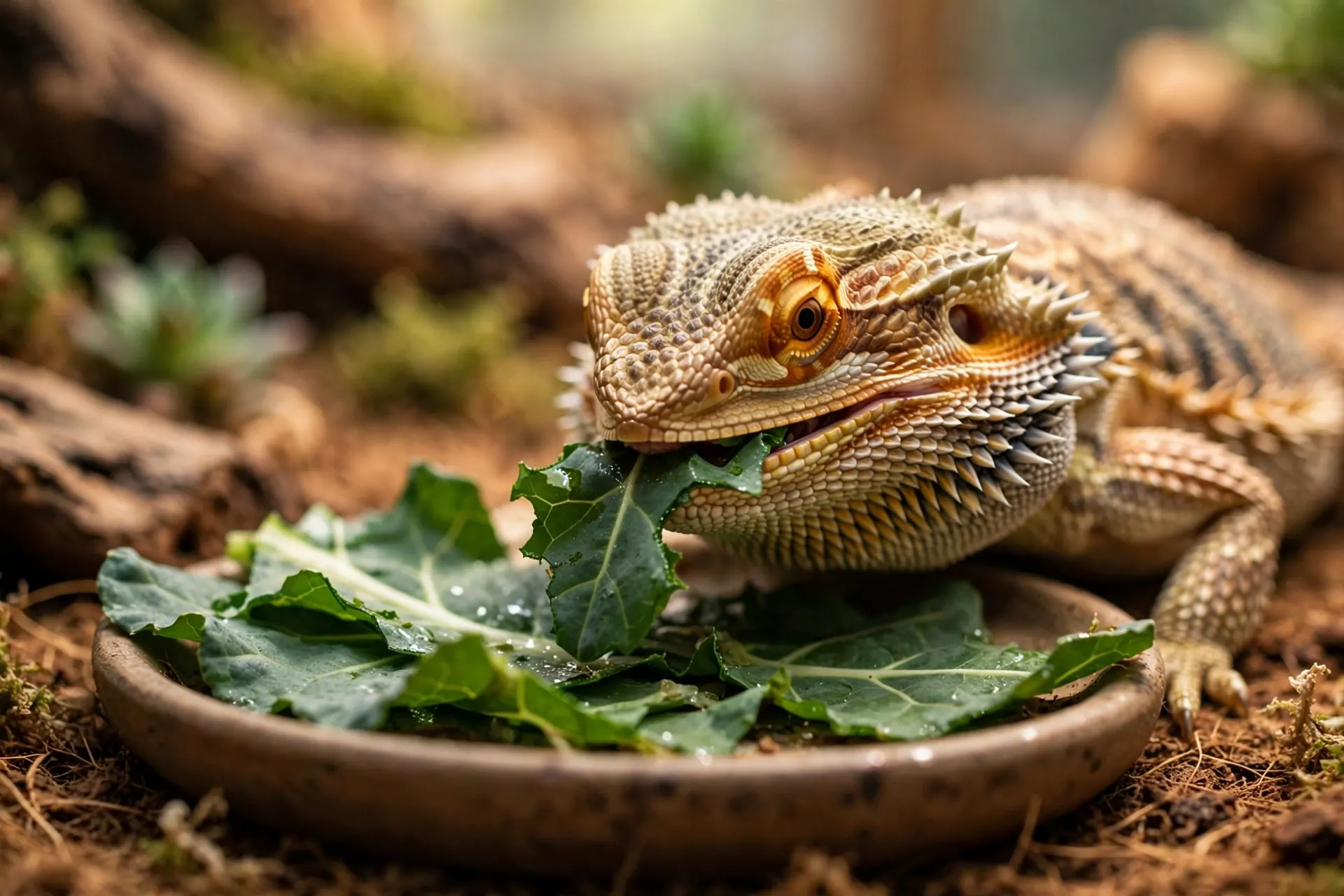
What to Feed Your Bearded Dragon at Every Age
Here’s the whole feeding program in one paragraph: babies eat insects 2–3 times a day (about 80% insects, 20% greens); juveniles get insects twice daily as greens take over; adults eat a fresh salad every day and insects every other day (about 20% insects, 80% greens). Dust the insects with calcium on the schedule below.
Read this before you buy another tub of crickets: the most expensive feeding mistake isn’t the wrong insect — it’s the wrong dusting schedule. Skipping calcium causes metabolic bone disease, the #1 nutritional disease in pet bearded dragons, and it’s entirely preventable with the routine below.
The numbers that matter
80/20
baby diet: insects to greens
20/80
adult diet: the ratio flips
3×
insect feedings per day for babies
10–15 min
eat-as-much-as-they’ll-chase window
Feeding schedule by age
Baby schedule — growth mode
- Insects: 3× daily, 10–15 minute sessions — as many as they’ll chase
- Greens: small fresh salad daily (mostly ignored — offer anyway)
- Calcium: dust insects daily
- Multivitamin: 1–2× per week
Juvenile schedule — the transition
- Insects: 2× daily, 10–15 minute sessions
- Greens: fresh salad daily — they’ll start nibbling
- Calcium: dust insects 4–5× per week
- Multivitamin: 1–2× per week
Adult schedule — maintenance
- Insects: every other day, a modest portion
- Greens: big fresh salad every single day
- Calcium: dust insects 2–3× per week
- Multivitamin: 1× per week
The ratio flip, visualized
Tap to see how the diet transforms as your dragon grows.
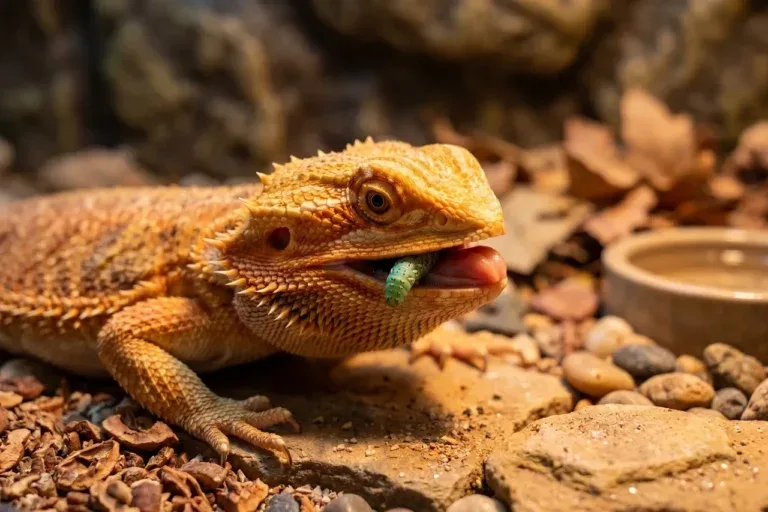
Babies are insect machines — protein for growth.
Count sessions, not insects. A baby might eat dozens of small dubias in 15 minutes — that’s the point. And prey size rule never changes: nothing wider than the space between the dragon’s eyes.
Did you know?
Dust the insects, not the salad. Calcium powder sticks to a moving dubia far better than it sticks to a collard leaf — and the dragon actually eats the insects.
Feeder insects compared
No single insect is perfect. Rotate at least two staples.
| Insect | Protein | Fat | Keeping them | Best for |
|---|---|---|---|---|
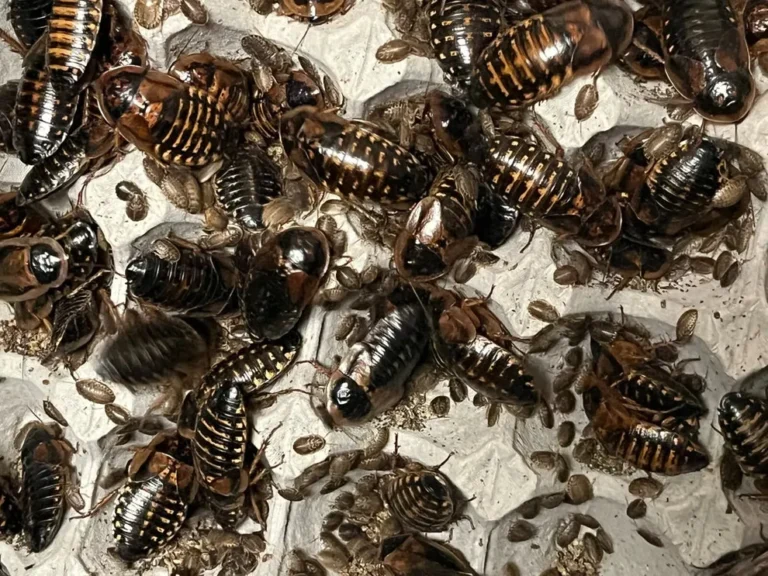
| Dubia roaches | High | Moderate | Easy — no smell, no noise, can’t climb smooth walls | Best all-around staple |
| Crickets | Good | Low | Smelly, noisy, escape artists | Staple if you tolerate the chaos |
| Black soldier fly larvae | Good | Low | Very easy — keep cool, no feeding needed | Great staple; naturally high in calcium |
| Silkworms | Excellent | Low | Fussy — need mulberry or chow, die easily | Superb but pricey staple |
| Hornworms | Low | Low | Easy, grow fast | Hydrating treats, not a staple |
| Mealworms | Moderate | High | Very easy | Occasional only — hard exoskeleton; not for babies |
| Superworms | Moderate | High | Easy | Adults only — they can bite, and babies can’t handle them |
| Waxworms | Low | Very high | Easy | Rare treats — lizard candy |
🦗 Which feeder should I buy? Tell us what matters most:
Did you know?
Gut-load your feeders 24 hours before offering them. A dubia stuffed with squash and greens is a multivitamin with legs; an unfed dubia is just a shell.
What a real feeding day looks like
Schedules on paper are tidy. Real life is messier, so here’s what it actually looks like:
Baby day (under 4 months): Lights on at 7. First insect feeding around 8:30 — as many appropriately-sized dubias as they’ll chase in 10–15 minutes. Fresh salad goes in by 9 and stays all day (they’ll mostly ignore it; that’s fine, it’s about exposure). Second insect round at 1, third at 5. Lights out at 7–8. Total active feeding time for you: about 40 minutes spread across the day.
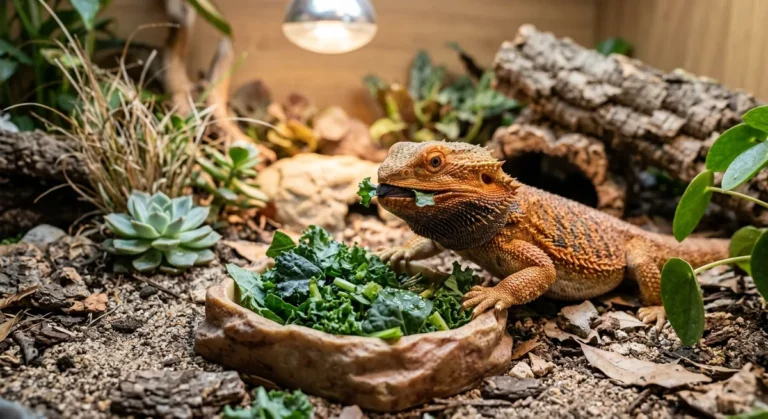
Adult day (18+ months): Fresh salad in the morning, swapped for a fresh one if it wilts. Insects every other day — a dozen or so dubias or a handful of BSFL, dusted with calcium. That’s genuinely it. Adults are the easy mode everyone promised you at the pet store.
Gut-loading: the step everyone skips
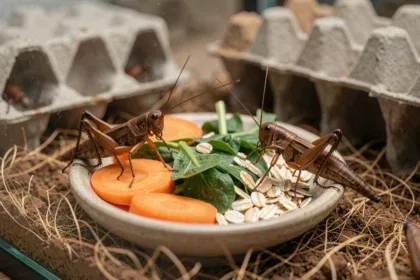
Your dragon is only as nutritious as what its insects ate. “Gut-loading” just means feeding your feeders well for 24 hours before offering them — fresh greens, carrots, sweet potato, and a slice of orange for moisture. The sad, starved crickets from the pet store cup are nutritionally empty boxes. A well-fed dubia is a multivitamin with legs. This single habit does more for your dragon’s health than any supplement powder, and it costs you nothing but the vegetable scraps you already have.
Safe foods chart
Staple greens (feed freely): collard greens, mustard greens, dandelion greens, turnip greens, butternut squash, acorn squash.
Occasional (a few times a week): bell peppers, blueberries, strawberries, mango, green beans, prickly pear pads.
Rare treats: banana, watermelon — sugary, so tiny amounts.
Never feed: fireflies (a single one can be lethal), avocado, rhubarb, iceberg lettuce (zero nutrition), citrus, wild-caught insects (pesticides).
Did you know?
Bearded dragons rarely drink from a water bowl. They get most of their moisture from food — which is why gut-loaded insects and fresh greens matter more than the dish in the corner. Drip water on the snout if you’re worried about hydration.
Quick answers
How many insects does a baby need per day?
Don’t count — time it. Three 10–15 minute sessions of as-many-as-they’ll-chase. For tiny dubias that can mean 30–60 a day at peak growth. Appetite varies; the session method self-adjusts.
Can an adult live on salad alone?
Almost, but not quite. Adults still need insects every other day for protein. A salad-only adult slowly loses condition over months.
Does the calcium need D3?
With a proper linear UVB tube, plain calcium most days is the standard routine, plus a D3-containing calcium once or twice a week as backup. Without reliable UVB, nothing in this schedule works — fix the lighting first.
Can bearded dragons eat fruit every day?
No. Fruit is a treat — a few times a week at most. Daily fruit means too much sugar and a dragon that refuses its greens.
What to read next
- Why Is My Bearded Dragon Not Eating? 12 Causes and Fixes — when appetite disappears, start here
- Bearded Dragon Tank Setup: Complete Checklist for Beginners — feeding only works in a correct enclosure
- Diet & Feeding Guides — per-food deep dives and feeder comparisons
- Lighting, UVB & Heating Guides — fix the lighting first