New Bearded Dragon Quarantine: The 90-Day Protocol
Picture this: you bring home a gorgeous citrus morph from a reptile expo on Saturday. It looks perfect — active, alert, nicely filled out. Two weeks later your resident dragon, the one you have had for three years, stops eating and its droppings look wrong. The expo dragon still looks fine. But looks say almost nothing about parasites or viruses, and by the time you notice something wrong, both dragons are exposed.
This is the exact disaster a new bearded dragon quarantine exists to prevent. Quarantine is a 90-day health screening for every new reptile: a separate room, separate tools, a deliberate testing schedule, and daily observation before the newcomer ever meets your collection. It is the single highest-leverage habit in reptile keeping, and it costs almost nothing.
What quarantine actually is (and what it isn’t)
Quarantine is a 90-day observation and testing window, not a punishment and not a suggestion. During quarantine the new dragon lives in a separate room from your other reptiles, is handled and serviced last, and gets tested for parasites and — ideally — atadenovirus before any introduction happens. Run through the health checklist on arrival day so you know your starting point.
What quarantine is not: two weeks on the same shelf. A quick visual once-over. “I’ll watch him for a bit.” Parasites like coccidia and pinworms shed intermittently, so a single clean-looking dropping proves nothing, and atadenovirus can be carried by dragons that look perfectly healthy for months. Time plus testing is the whole mechanism — there is no shortcut version.
90 days is the veterinary standard. Herpetological medicine guidelines recommend quarantining new reptiles for at least 90 days — long enough for most clinical signs to appear and for follow-up testing to actually mean something. Shorter quarantines miss slow-developing problems.
The bare-bones quarantine setup
Simple is the point. A quarantine enclosure should be the easiest thing in your house to clean, because you will be cleaning it constantly and watching every dropping that lands in it.
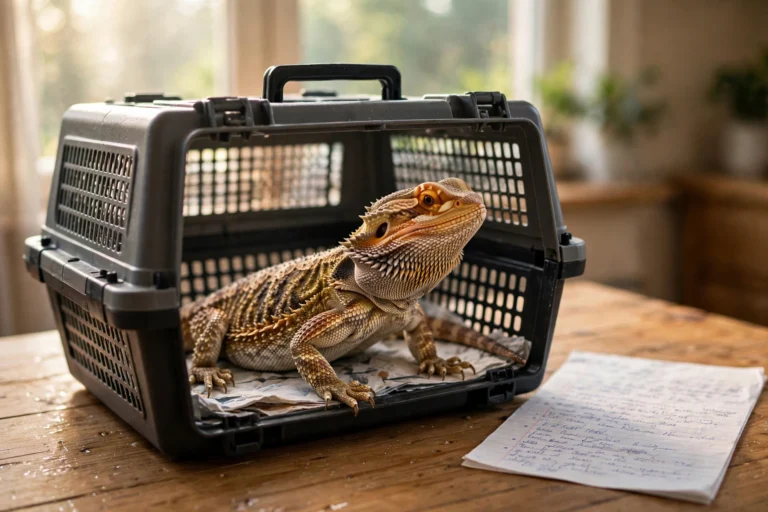
- A simple tub or spare tank. Even a 40-gallon breeder works as a temporary quarantine home — this is not the forever enclosure.
- Paper towels or newspaper as substrate. Droppings must be visible at a glance and the bedding must be disposable. This is no place for a bioactive build.
- Minimal furnishings. One hide, one basking spot, a water dish, a food dish — everything smooth, simple, and disinfectable.
- Dedicated tools. Feeding tongs, water dish, and cleaning supplies that never touch your other enclosures. Label them.
- A separate room. Not the same rack, not the shelf above your resident dragon — a different room, with the door closed.
The rule that governs all of it: everything that touches the quarantine dragon stays in quarantine until day 90. When you are done with the temporary setup, give it the full How to Clean and Disinfect a Bearded Dragon Tank treatment before it goes back into storage.
Your 90-day quarantine plan
Use this stepper to work the protocol phase by phase. Enter your dragon’s arrival date to see which day you are on, then check off each phase’s tasks as you complete them.
🦎 90-Day Quarantine Stepper
Days 1–30: observe everything
The first month is about baselines. Keep a simple daily log — appetite (what and how much), droppings (consistency and frequency; photos help enormously), and behavior (basking normally? alert?). Weigh the dragon within the first few days to set a baseline, then weigh weekly. A drop of more than 10% from the starting weight is a vet-visit flag, not a wait-and-see situation.
Expect a quiet first few days. Most new dragons eat little while they settle in — that is relocation stress, and it fades as the dragon learns the new routine. The distinction that matters: relocation stress improves within days; persistent lethargy, ongoing weight loss, or abnormal droppings do not improve, and those get a vet call. Keep handling minimal during this phase, and when you do handle, the quarantine dragon is always last.
Days 30–60: test
Observation catches a lot, but some problems only show up under a microscope. This is the testing phase:
- Fecal test. Collect a fresh dropping, refrigerate it, and have your reptile vet run a float and smear — the standard fecal testing for parasites. Submit the first sample early (within the first couple of weeks is ideal) and plan a second one, because parasites shed intermittently and one clean test is not conclusive.
- Atadenovirus PCR. A cloacal swab run through your reptile vet, ideally within the first week home. Many dragons carry ADV with no signs at all; knowing the status changes how you manage that animal for its entire life. Only a veterinarian can diagnose this — home observation cannot rule it out.
- Wellness exam. A new-dragon vet visit covers weight, body condition, mouth, eyes, and vent, and gives you a professional baseline to compare against later.
Learn what normal looks like while you are at it — What Your Bearded Dragon’s Poop Is Telling You will make your daily dropping checks far more useful.
Days 60–90: clear and graduate
The final month is confirmation. The second fecal is still clean, weight is stable or climbing, and the dragon is eating, basking, and producing normal droppings on a steady routine. If all of that is true, disinfect every piece of quarantine gear and make the move to the permanent enclosure.
And if anything was off — a positive test, weight loss, a round of treatment — quarantine extends until your vet clears the dragon. Ninety days is the minimum, not a deadline. Extending quarantine is the protocol working as designed, not failing.
A healthy-looking dragon can still carry parasites or atadenovirus. Many infected dragons show zero outward signs for weeks or months — which is exactly why quarantine relies on testing plus time, never on eyeballing. “He looked fine at the expo” has ended more collections than any other sentence in the hobby.
The hygiene rules that make quarantine work
The setup and the schedule only work if the daily discipline holds:
- Separate room, always. The door stays closed; the quarantine dragon never free-roams where your other reptiles live.
- Service quarantine last. Feed, clean, and handle your existing animals first. Never go back to them after handling the quarantine dragon.
- Wash up between rooms. Hands every time, and change your shirt if you have had close contact.
- Nothing is shared. No shared tongs, dishes, decor, or substrate — and never return uneaten insects to your main feeder colony.
- Disinfect on schedule. Between phases and fully at day 90, before anything re-enters general use.
The mistakes that defeat the whole point
- “The breeder tested, so I can skip it.” Trust, then verify. Your own 90-day window still catches stress-triggered shedding and transport-related issues that no breeder certificate covers.
- Two weeks and done. Not enough time for intermittent parasite shedding or slow-onset signs to appear.
- Same room, different shelf. Hands and tools are the real transmission routes, and separate rooms are what enforce the discipline.
- A beautiful quarantine build. Wrong tool for the job — you need visibility and disinfectability, not enrichment. Save the bioactive masterpiece for day 91.
Quarantine questions, answered
Do I need to quarantine if this is my only reptile? The testing half still applies. A quarantine-style first 90 days gives you a baseline weight, a fecal result, and a vet relationship — all worth having before small problems become big ones. (Also: most keepers do not stay at one dragon for long.)
Can I shorten it if all the tests come back clean? The 90 days exists because some issues surface late. Clean tests at day 30 plus steady weight and normal behavior at day 90 is the combination that actually means something.
What if the fecal comes back positive? Your vet prescribes the treatment; quarantine extends until a recheck comes back clear. That is not a quarantine failure — that is quarantine doing exactly what it was built to do.
What to read next
🧰 Stock the quarantine kit: a gram scale for weekly weigh-ins, spare paper towels, dedicated tongs, and a sample container for the vet are the core of your quarantine observation supplies — gather them before arrival day, not after.