Why Your Bearded Dragon Flattens Like a Pancake
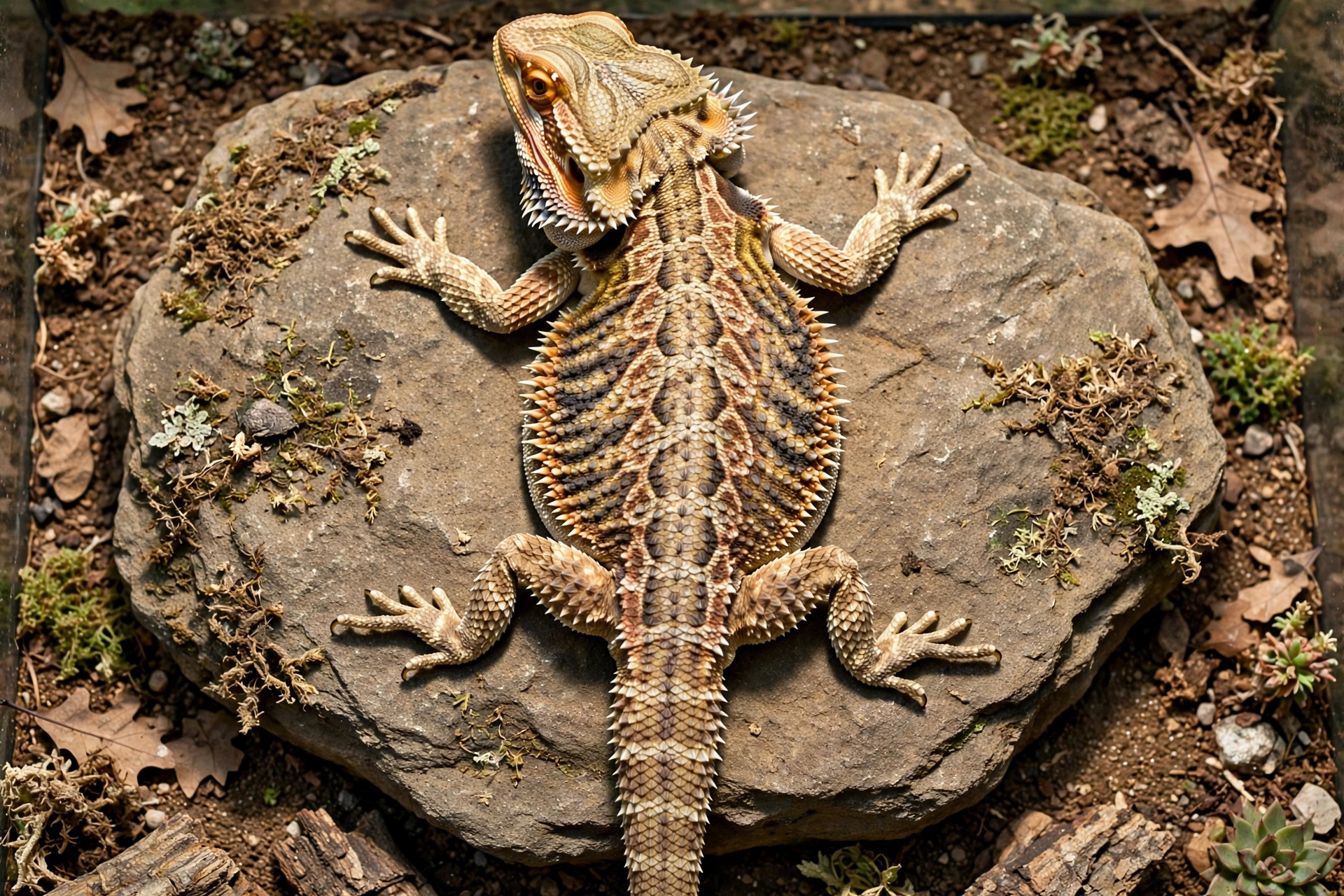
You walk past the tank and stop cold. Your bearded dragon — the same animal that was perched tall on its basking rock this morning — is now spread across the floor like a dropped pancake: body flattened, ribs splayed, legs stuck out sideways, chin nearly touching the ground. First-time owners almost always assume the worst. Injury. Illness. Something broken.
In most cases, pancaking is one of the smartest things your dragon does all day. But the same flattened posture can also mean fear or stress, and the difference is entirely about context. This guide decodes the three contexts where pancaking happens, gives you a 30-second cross-check to read any episode, and includes a logbook widget that finds the pattern in your own dragon’s behavior — so you stop guessing and start knowing.
The Physics of Pancaking
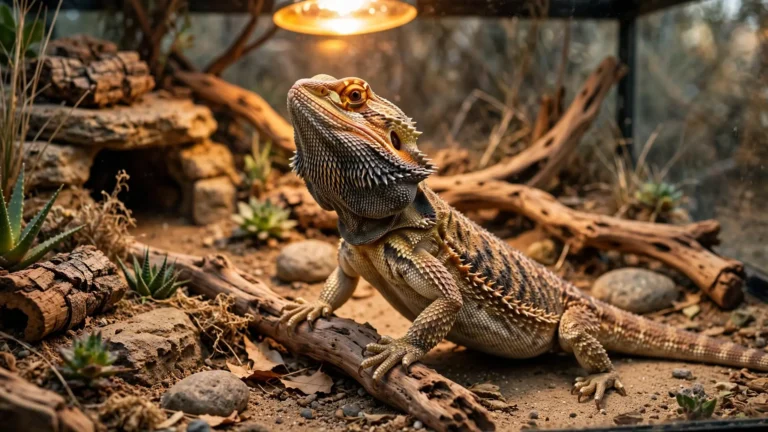
A bearded dragon cannot sweat, pant effectively, or move to another climate zone — it has one tank and one body. Flattening is how it tunes its heat intake with precision. By spreading the ribs and pressing the belly flat, the dragon dramatically increases the skin surface facing the heat source, absorbing warmth far faster than it could sitting tall. In the wild, the same posture appears on sun-heated rocks at dawn: pancake first, hunt later.
This is why the classic pancake happens under the basking lamp in the morning. The dragon is cold from the night, the lamp just came on, and flattening is the fastest route to operating temperature. If your basking temperature guide numbers are right, this episode needs no action at all — it is the system working exactly as designed.
Context 1: The Basking Pancake (The Good One)
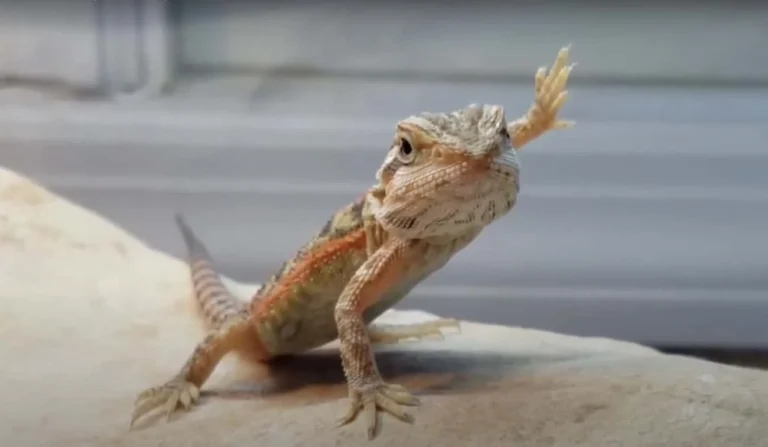
The healthy version has a recognizable signature. It happens in the morning or after the lights cycle on, directly under or beside the basking lamp. Body colors stay normal or even brighten. The eyes look relaxed — sometimes half-lidded in contentment — and the dragon may stay flattened for twenty minutes or more before perking up and going about its day. Appetite afterward is normal.
Think of it as the reptile equivalent of spreading a towel on warm sand. New owners sometimes “rescue” the dragon by picking it up, which interrupts the warm-up and teaches nothing. Unless something else looks wrong, the correct response to a basking pancake is admiration, maybe a photo, and otherwise leaving the animal alone. Our full bearded dragon body language dictionary covers the rest of the calm-and-content signals that usually accompany it.
Wild bearded dragons pancake on sun-warmed rocks at first light for the same reason captive ones flatten under a lamp: a cold reptile is a slow reptile. Fast warm-up means earlier hunting, earlier digestion, and less time vulnerable to predators while sluggish.
Context 2: The Stress Flatten (The One to Fix)
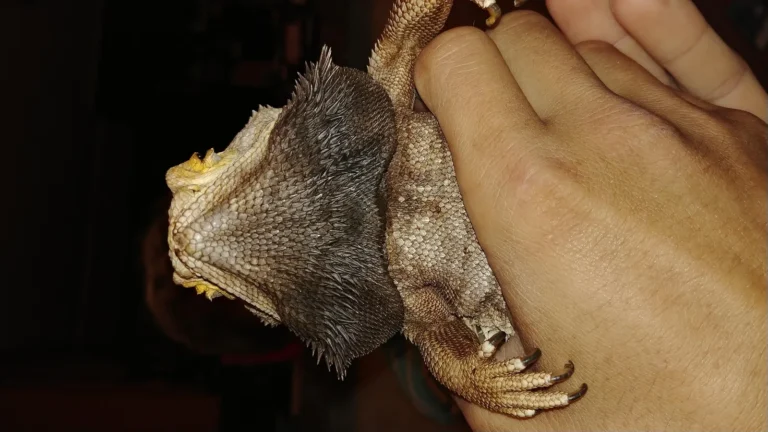
The same posture in a different context means the opposite. A stressed or frightened dragon flattens to make itself look wider and harder to swallow — or to disappear against the ground. The signature here: flattening on the cool side, inside or behind the hide, or pressed into a corner — anywhere away from the heat. The beard often darkens, sometimes to full black beard, and the eyes look alert or wary rather than relaxed.
Common triggers include a new home (the first week is peak stress-flatten territory), a recent tank rearrangement, a looming “predator” like a ceiling fan, a cat staring through the glass, or handling that went on too long. The posture is a freeze response: the dragon has decided that being noticed is dangerous. If the flattening clusters on the cool side with dark colors, run through our bearded dragon stress signs checklist and remove the trigger rather than the symptom — the pancake will resolve itself once the dragon feels safe.
Context 3: Out-of-Tank Pancaking
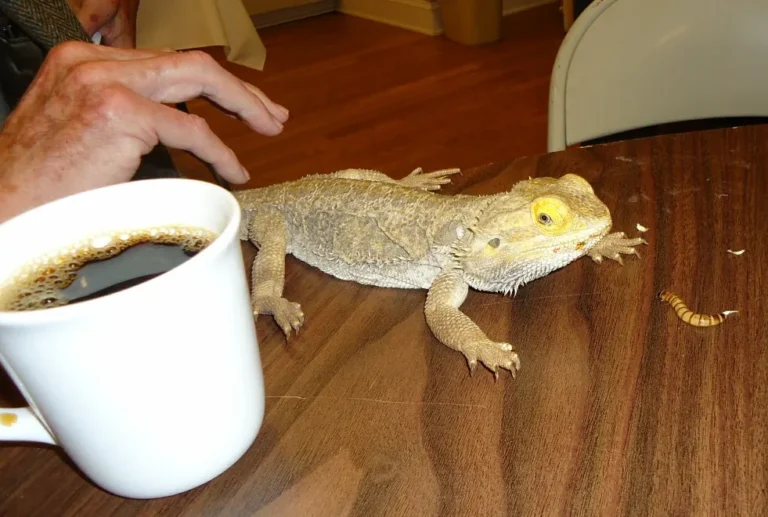
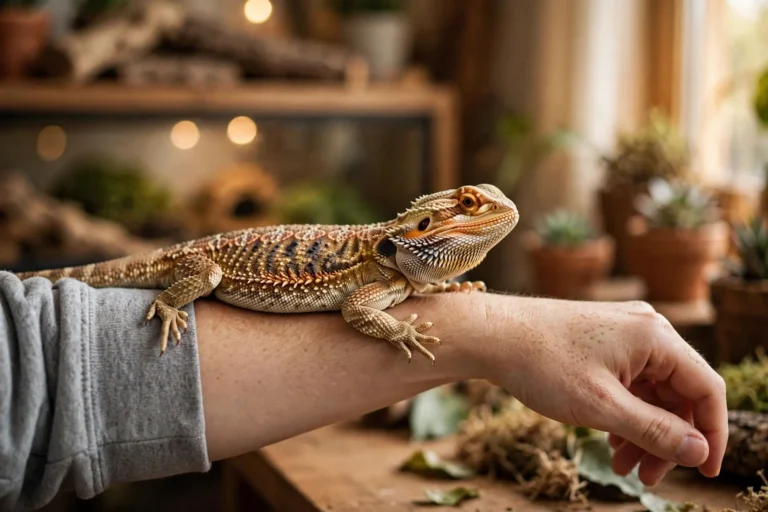
Dragons pancake outside the enclosure too, and here the read depends on what the body is doing otherwise. A dragon flattened on your warm chest or a sunlit patch of floor, colors normal, occasionally tongue-flicking the air, is usually heat-seeking and comfortable — you are the basking rock now. A dragon flattened on an unfamiliar floor, dark-bearded, motionless, and unresponsive to gentle touch is freezing in fear, not relaxing.
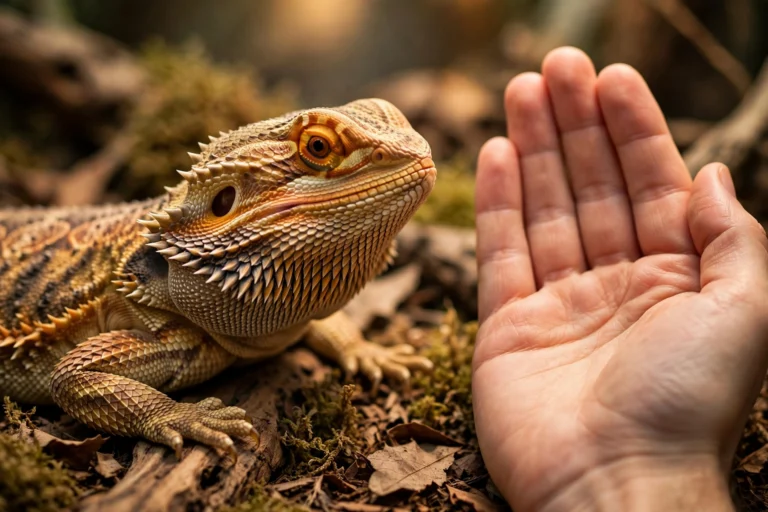
The test is simple: offer a warm, enclosed-feeling option (your hands cupped, a towel tent) and watch. A comfortable dragon explores or settles deeper; a frightened one stays rigid or scrambles for cover. Never leave a pancaked-fearful dragon loose in an open room “to get used to it” — flooding a frightened animal with exposure teaches fear, not confidence.
The 30-Second Cross-Check
For any single episode, four questions settle it:
- Where? Under the lamp points to thermoregulation; cool side, hide, or corner points to stress or fear.
- What color is the beard? Normal coloring supports the heat-seeking read; a dark or black beard supports the stress read.
- What are the eyes doing? Relaxed, half-lidded eyes mean comfort; wide, fixed staring means the dragon is monitoring a threat.
- Are the temps actually right? A dragon that pancakes under the lamp all day may be struggling to reach temperature because the basking spot is too cool — flattening harder to compensate. Measure the surface, don’t guess.
Adult bearded dragons typically need a basking surface temperature of 95–110°F (35–43°C), measured with an infrared temp gun on the rock itself — not the air above it. Chronic all-day pancaking under the lamp is a classic sign the surface is running too cool.
When Flattening Means Changing Something
Act when the pattern, not a single episode, looks wrong. All-day pancaking under the lamp means the basking spot needs raising (move the lamp closer or increase wattage) — verify with a temp gun before changing anything. Repeated cool-side flattening with dark colors means something in or around the enclosure is scaring the animal: relocate the tank away from high-traffic sightlines, cover part of the glass, or give handling a rest for a few days.
One more scenario worth naming: a dragon that suddenly starts stress-flattening after months of confidence. New fear in an established dragon usually has a cause — a new pet, a moved tank, a change in lighting, or the onset of breeding season restlessness. Fix the change and the posture follows. What you should not do is “treat” pancaking itself. It is a signal, not a disease, and suppressing the signal teaches you nothing.
Learning Your Dragon’s Normal
Here is the quiet truth about pancaking: after a few weeks of watching, you will not need the cross-check anymore. You will know your dragon’s morning pancake — same rock, same sprawl, same dopey half-lidded expression — the way you know a dog’s stretch. The logbook above exists to get you to that familiarity faster, by turning vague worry (“it keeps doing the flat thing”) into data (“six episodes, all under the lamp, all mornings”). Most owners discover their dragon was thermoregulating beautifully all along. And on the day the pattern genuinely changes, you will notice — because you learned what normal looks like.
If pancaking means fear: taming builds trust — follow the 4-week plan to turn a fearful freezer into a confident explorer.