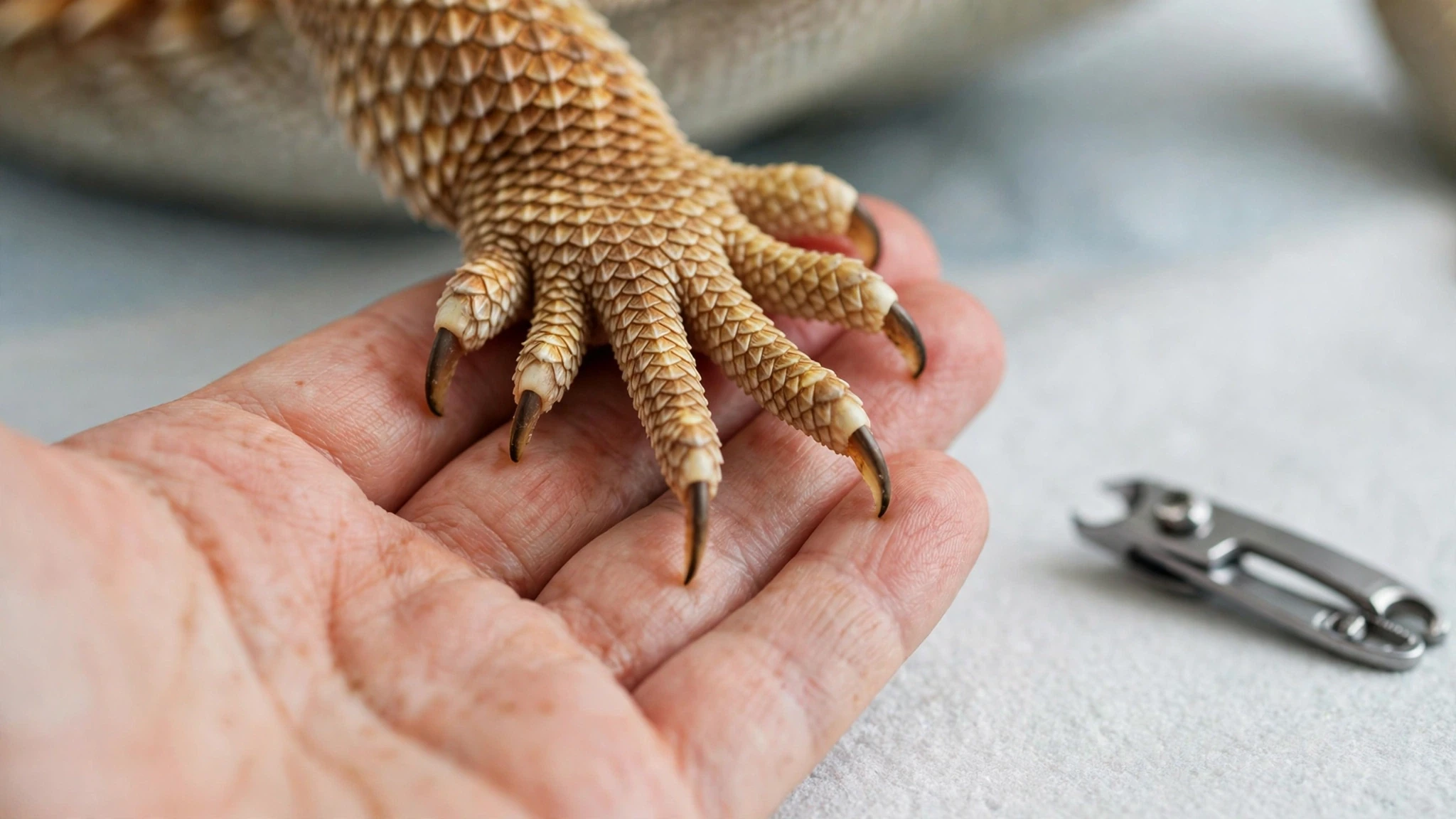
How to Trim Bearded Dragon Nails Without Hurting Them
Sooner or later, every bearded dragon owner gets scratched hard enough to draw blood — not from a bite, but from a casual climb up an arm with overgrown claws. In the wild, your dragon’s nails wear down on rock, hard-packed earth, and bark. In a glass tank with soft reptile carpet, they just keep growing. Learning how to trim bearded dragon nails is one of those small care skills that pays off for years: it keeps your dragon comfortable, protects you from scratches, and prevents nails from snagging and tearing. This guide walks you through the whole process — tools, the all-important quick, the dark-nail problem, and what to do if you cut too short.
Do bearded dragons really need nail trims?
Yes — most captive bearded dragons do. A wild dragon covers rough terrain every day, which files its claws naturally. A pet dragon living on smooth or soft substrates gets almost none of that wear. Left alone, the nails grow long, curve sideways, and eventually catch on fabric, carpet, and tank decor. In bad cases a curled nail can snag hard enough to tear, which is painful and can become infected. Overgrown nails can also change how the foot sits on the ground, making climbing and walking awkward for your dragon.
There is one natural exception worth knowing: dragons kept on genuinely rough surfaces — slate tile, rough flagstone, or textured rocks — wear their nails down noticeably and may need trims far less often. Even then, check the nails regularly rather than assuming the tank is doing the job.
How often should you trim your dragon’s nails?
The honest answer is “when they need it,” but that is not helpful the first time, so here is a practical schedule:
- Inspect every 2 to 3 weeks. Look at all four feet. If the nail tips are sharp enough to scratch you badly or are starting to hook, it is time.
- Trim roughly every 4 to 6 weeks for the average dragon on standard substrate.
- Trim sooner if a nail curls sideways, catches on fabric, or the dragon starts favoring a foot.
Young, fast-growing dragons may need more frequent attention than slow-growing adults. Keep a quick note of trim dates on your phone — it is easy to lose track, and a simple log is the difference between a five-minute maintenance trim and a rescue mission on badly overgrown claws.
What you will need
Gather everything before you pick up your dragon. A calm session depends on not hunting for supplies mid-trim with a squirming lizard in your hand:
- Small-animal nail clippers — scissor-style or guillotine clippers sized for small pets. Human nail clippers can crush or split reptile nails, so use the right tool.
- Styptic powder (or plain cornstarch as a backup) — to stop bleeding if you nick the quick.
- A towel — for a loose wrap that keeps the dragon secure while leaving one foot free.
- Good lighting — a bright lamp or daylight. You need to see the quick clearly.
- A treat — a favorite feeder insect or a blueberry for after. Positive reinforcement genuinely helps next time.
The quick: the one thing you must find before you cut
Inside every nail runs the quick — a blood vessel and nerve that feeds the growing nail. Cutting into it hurts and bleeds. Your entire job is to cut the dead tip before the quick, which means you need to see it first.
Light-colored nails make this easy: hold the foot up to the light and you will see a pinkish line running partway up the nail. That pink line is the quick. Clip just beyond it, leaving a small safety margin of pale nail.
Dark nails are the tricky ones — the quick is hidden. The safe technique is to trim only the very tip of the curl in tiny increments, a sliver at a time, stopping the moment the cut surface stops looking dry and flaky and starts looking slightly darker or moist. If in doubt, take less. You can always trim again next week; you cannot un-cut.
Trim Session Walkthrough: the five phases
Every calm trim session follows the same five phases. Tap each phase below to open the technique for that step, then work through them in order.
Trim Session Walkthrough
Phase 1: Gather your tools
Select a phase above to see exactly what to do at each stage of the trim.
If you cut the quick (it happens to everyone)
Do not panic — even experienced keepers nick the quick occasionally, and it looks worse than it is. Press a pinch of styptic powder or cornstarch firmly onto the bleeding nail and hold gentle pressure for 5 to 10 minutes. The bleeding should stop. Keep the foot clean and dry afterward, and watch the nail over the next few days for swelling or discharge, which would suggest infection.
If bleeding does not stop with pressure and styptic powder, or the toe swells, contact a reptile veterinarian promptly. And if the whole process makes you too nervous, there is no shame in having your reptile vet or an experienced reptile groomer do the trims — a professional trim every couple of months is a perfectly valid plan.
Keeping nails short between trims
Trimming is maintenance; habitat design is prevention. A few setup choices meaningfully slow nail overgrowth:
- Rough basking surfaces: a piece of slate or a textured (not sharp) rock under the basking spot gives daily passive wear. See our substrate guide for safe surface options.
- Climbing decor: branches and textured hides encourage the gripping and scratching that files nails naturally.
- Do not confuse toe shed with nail problems: flaky skin around the toes is usually shedding, not a nail issue — but retained shed constricting a toe is a separate problem. Our retained shed guide shows how to tell the difference.
One caution: never try to “file down” nails aggressively with a Dremel-style rotary tool unless you have been shown how by a professional. The vibration stresses most dragons, and the heat from friction can damage the nail.
When to let a reptile vet handle it
Book a vet trim instead of doing it yourself if the nails are severely overgrown and curling into the foot pads, if a nail has already torn or looks infected (swelling, pus, discoloration spreading up the toe), or if your dragon is so stressed by handling that trims become a wrestling match. A healthy bearded dragon should tolerate a gentle trim session — if yours panics every time despite calm technique and practice, a vet visit doubles as a useful health check.
Quick recap
Nail trims are simple once you respect the quick: inspect every few weeks, trim every 4 to 6 weeks, take tiny increments on dark nails, keep styptic powder within reach, and reward your dragon afterward. Five quiet minutes a month saves you from scratched arms and saves your dragon from snagged, torn claws. After two or three calm sessions, most dragons learn that the clippers mean a treat is coming — and the whole thing becomes routine.