How to Remove Retained Shed From Your Dragon’s Toes
Most sheds go fine on their own. But sometimes a ring of old skin stays stuck around a toe or the tail tip — and unlike a flaky patch on the back, a tight band of retained shed can act like a tourniquet, cutting off circulation to the digit underneath. This is one of the few shedding problems that can cause permanent damage if ignored, and it’s also one of the most fixable — if you use the right method and avoid the single worst mistake owners make. Follow the guided rescue below, then read the full protocol.
🩹 Stuck Shed Rescue
A guided 5-step protocol for safely dealing with retained shed on toes and tail tips. Never pull — the steps below explain why.
1 · Assess — is it really stuck?
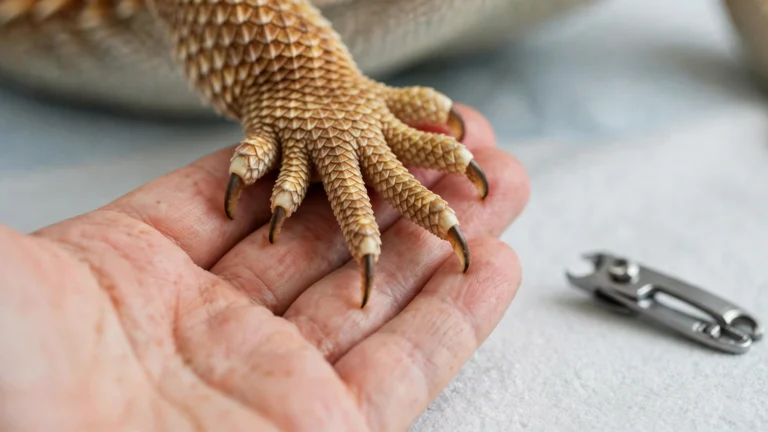
Look closely at the toe or tail tip. Normal shedding looks dull, papery, and lifts at the edges — and it resolves on its own within days. Retained shed is a tight, shiny ring that has stayed put for more than a week after the rest of the shed finished, often slightly darker than the skin around it.
Check every toe and the tail tip — stuck shed hides between digits.
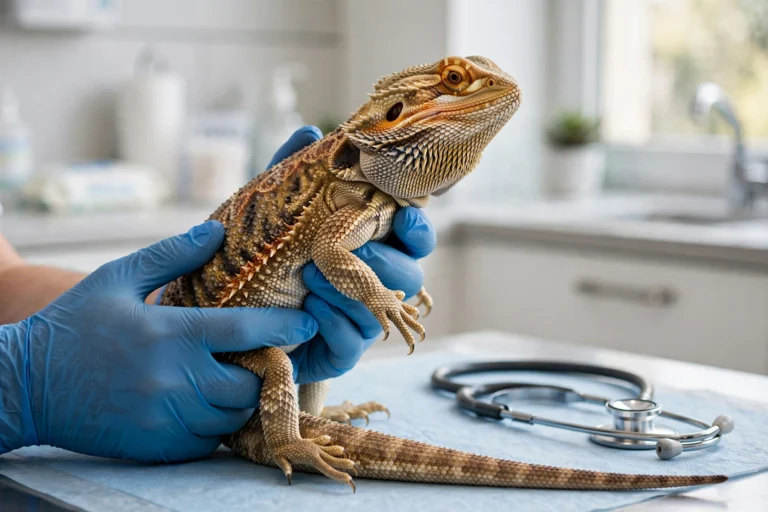
âš ï¸ If the toe is already swollen, dark purple/black, or the dragon flinches hard when touched, skip the home steps and call a reptile vet. Those are constriction signs, not a DIY situation.
Next →
What retained shed is — and why toes and tail tips are at risk
Shedding skin shrinks slightly as it dries. On broad surfaces like the back, that’s harmless. But around a narrow cylinder — a toe, a tail tip — a shrinking ring of dead skin tightens like a rubber band. With each layer that fails to come off, the band gets tighter, and eventually it can restrict blood flow to everything beyond it. Toes are the most common casualty because shed skin wedges between the digits where the dragon can’t easily rub it off, and the tail tip is a close second.
One retained layer is a nuisance; multiple stacked layers are an emergency. The danger builds silently — a toe can look only slightly dull for weeks before swelling starts. That’s why the habit that matters most is simply looking: check toes and tail tip every time your dragon sheds.
How to tell stuck shed from a normal shed in progress
A normal shed looks messy but loose: dull gray-white patches, edges lifting, pieces flaking off when the dragon rubs against decor. It moves — today the back, tomorrow the legs, done within a week or two. Retained shed doesn’t move. It’s a defined band, often slightly constricted-looking, sitting in the same place long after everything else has cleared.
The time test is the simplest diagnostic: if the rest of the body finished shedding more than 7–10 days ago and one ring is still exactly where it was, treat it as retained. Don’t wait another shed cycle “to see if it comes off with the next one” — stacked layers are how toes get lost.
💡 Did you know
Bearded dragons don’t shed in one piece like snakes. They shed in patches over 1–2 weeks — head one day, legs days later — which is exactly why a single leftover patch is easy to miss if you aren’t checking deliberately.
The safe removal method: warm soak plus damp cotton-swab roll
The entire safe method is hydration plus gentle friction, and nothing else. Soak the affected area in 85–90°F water for 15–20 minutes to rehydrate the dead skin, then roll a damp cotton swab from the base of the digit toward the tip. The key word is roll — the swab rotates, the skin slides, and you never grip or tug anything.
Two rounds per day maximum, with a soak before each round. Most single-layer retained rings release within 1–3 days of this routine. If a ring survives three days of proper soak-and-roll, it’s either multi-layered or adhered to healing tissue — both are reasons to let a reptile vet take over rather than escalating force at home.
What never to do
This list is short because every item on it causes real injuries every year:
Pulling or peeling — the number one cause of torn, bleeding digits. Shed skin can be fused to live tissue underneath.
Tweezers, nail scissors, or any sharp tool near a toe — one flinch and you’ve cut living skin.
Cutting the ring to “release the pressure” — without training you can’t tell where dead skin ends and live tissue begins.
Soaking in anything but plain water — oils and soaps irritate eyes and can be ingested when the dragon drinks the bath.
Forcing a dry removal because you’re in a hurry — dry skin doesn’t slide; it tears.
If you take one rule from this article, make it this: if it doesn’t come off with gentle rolling after a good soak, it isn’t ready, and the next step is a vet — not more force.
🔠Myth vs reality
Myth: “You’re supposed to help by peeling the loose skin — they’d do it themselves in the wild.” Reality: Wild dragons rub against rocks and bark; they don’t get peeled. Peeling by hand is the fastest route to a torn toe. Your job is humidity, soaks, and rough surfaces — the dragon’s body does the rest.
Aftercare: watching the digit afterward
Once the ring is off, the job isn’t quite done. Check the toe daily for about a week: normal color returning, no swelling, and the dragon walking on the foot normally. A photo on day one gives you an honest baseline — subtle swelling is much easier to spot when you can compare side by side.
Mild redness right after removal usually fades within a day. What’s not normal: increasing swelling, darkening toward purple or black, discharge, or the dragon refusing to put weight on the foot. Any of those means the tissue was already compromised, and a reptile vet needs to see it promptly — digit infections can travel fast in small reptiles.
Preventing retained shed in the first place
Retained shed is almost always a husbandry signal, not bad luck. The big three fixes:
Humidity in the 30–40% range. Chronically dry tanks (under 25%) make every shed harder. A quick hygrometer check on the cool side tells you where you stand.
Hydration. A well-hydrated dragon sheds more cleanly. Weekly soaks during shed cycles, fresh water daily, and moisture-rich salads all help.
Texture. Give the dragon something to rub against — a rough basking rock, textured tile, or a piece of cork bark. A tank full of smooth surfaces gives stuck skin nothing to catch on.
Also review the basics from our bearded dragon tank setup checklist — correct basking temperatures matter here too, since a dragon that can’t thermoregulate properly often has sluggish, patchy sheds.
Constriction warning signs
Learn these, because they change the situation from “home care” to “vet now”:
Swelling of the toe or tail beyond the retained ring (fluid backing up behind the constriction)
Color change — the digit turning dark purple, gray, or black
The dragon biting at the toe or holding the foot oddly
A visible groove or indentation where the ring sits, with puffiness past it
Constricted tissue is on a clock. A vet can remove the band safely and assess whether the digit is viable — something no home method can do once circulation is compromised.
📊 Stat
Dysecdysis is the most common skin disorder vets see in captive reptiles, and retained bands around digits are the classic case — entirely preventable with proper humidity and soaks. Almost every case traces back to the same trio: low humidity, no soak routine, and nothing rough to rub against.
When retained shed needs a reptile vet
Use home care for a simple stuck ring on an otherwise healthy toe. Call a reptile vet when: the ring has survived three days of proper soak-and-roll; there’s any swelling, discoloration, or discharge; the dragon won’t bear weight on the foot; multiple toes or the tail tip are affected at once; or you see raw or bleeding tissue after an attempted removal. Bring notes on your humidity readings and how long the ring has been there — it helps the vet judge how deep the problem goes.
For the full shedding picture — timelines, what normal looks like week by week, and humidity’s role — see our complete bearded dragon shedding guide.
What to read next
How to Help Your Bearded Dragon Through a Shed — the full shed cycle from dull skin to done.
The Complete Bearded Dragon Tank Setup Checklist — humidity, heat, and surfaces that prevent stuck shed.
Why Is My Bearded Dragon Not Eating? 12 Causes and Fixes — appetite often dips during shed cycles; know what’s normal.