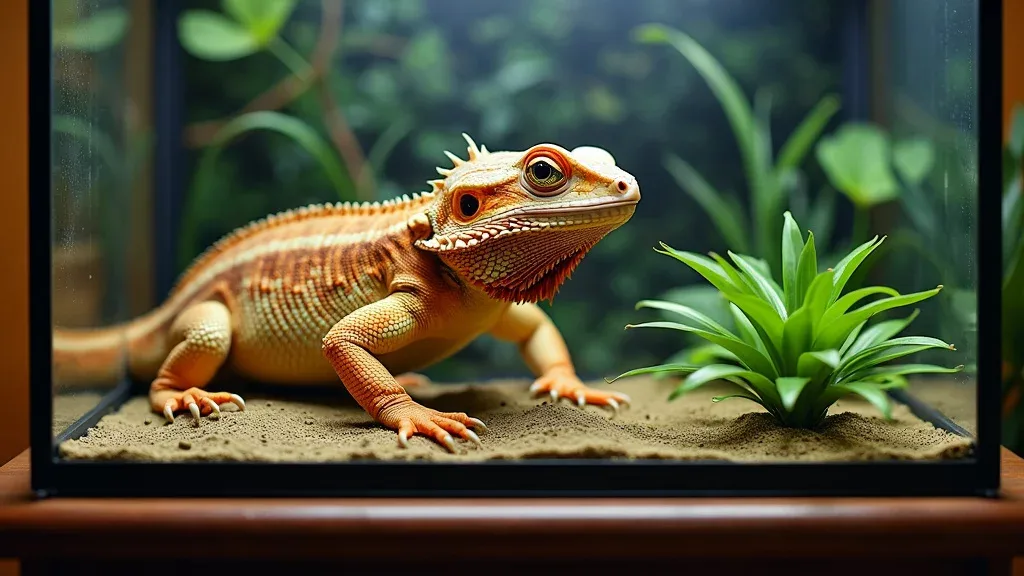
How to Build a Bioactive Bearded Dragon Setup
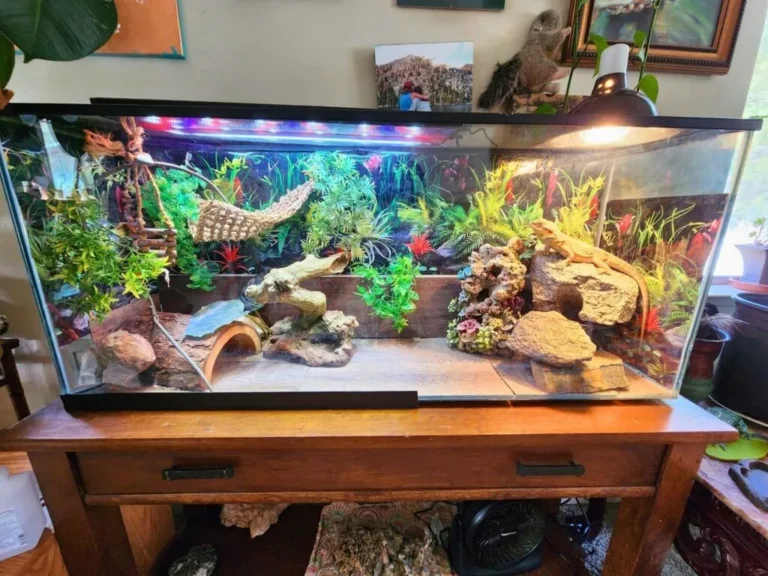
A bioactive enclosure is a tiny ecosystem: live soil, a crew of tiny invertebrates eating waste, and plants — all working so you barely have to clean. It’s the most enriching way to house a bearded dragon, and the most misunderstood. Half the “bioactive” tanks on social media are just dirt with a dead succulent in it.
Done right, bioactive is genuinely low-maintenance once established. Done wrong, it’s an expensive mold farm. This guide covers the real build — layers, crew, plants — and starts with a four-question quiz, because bioactive is not for every keeper or every dragon.
What “bioactive” actually means
Three living systems doing the cleaning for you:
- The substrate — a soil-based mix (not bagged “reptile soil” alone) that supports plant roots and microfauna.
- The cleanup crew — isopods (“rolly pollies”) and springtails: tiny invertebrates that eat droppings, shed skin, and decaying plant matter around the clock.
- The plants — live, dragon-safe plants that use the nitrogen the crew produces. The loop closes: waste becomes plant food.
What bioactive is not: dirt in a tank. Without the crew and without the right mix, you just have dirty substrate that you still have to change — the worst of both worlds.
💡 Did you know? Arid bioactive (desert species like bearded dragons) is harder than tropical bioactive. Dart-frog-style wet setups practically run themselves; desert setups fight you on moisture balance — too dry and the crew dies, too wet and you get mold in a species that needs 30–40% humidity. It is doable, but it is the advanced class, not the intro course.
The layers, bottom to top
A proper build is a stack, and the order matters:
| Layer (bottom → top) | What it is | Depth | Why |
|---|---|---|---|
| Drainage layer | Clay pebbles (LECA) or gravel | 1–2 in | Catches excess water so the soil above never sits soggy |
| Barrier mesh | Fiberglass screen or landscape fabric | — | Keeps soil from falling into the drainage layer |
| Substrate mix | See recipe below | 3–4 in | The living layer: crew habitat + plant root zone |
| Leaf litter | Oak/magnolia leaves, dried | Thin scatter | Crew shelter and food; keeps surface dry |
The substrate recipe
There are many recipes; they all rhyme. A proven arid mix:
- 40% organic topsoil — plain, no fertilizers, no perlite, no manure. Read the bag.
- 30% washed play sand — drainage and diggability.
- 20% excavator clay or red clay — holds burrow shapes, mimics hard-packed wild soil.
- 10% leaf litter / orchid bark (fine) — organic matter for the crew to process.
Mix it dry, then dampen slightly while building — you want it moist enough to hold a tunnel, not wet. A 4×2×2 tank needs roughly 2.5–3 cubic feet of mix. Buy more than you think; running out mid-build is tradition.
Meet the cleanup crew
| Crew member | Job | Notes for arid setups |
|---|---|---|
| Powder orange isopods | Eat droppings, shed, decaying matter | Hardy, breed fast; the standard arid choice |
| Dwarf white isopods | Soil aeration, tiny waste | Stay small, great in combination with powders |
| Springtails | Eat mold before it starts | Your mold insurance policy — always include them |
| Arid springtail species | Same job, drier tolerance | Ask the breeder for the arid-tolerant strain |
Seed the crew before the dragon moves in — give them 2–4 weeks to establish in the soil. Drop in a starter culture of each, add leaf litter for shelter, and keep one corner of the substrate slightly damper than the rest (a “moisture gradient”) so the crew always has a refuge. In a hot desert tank, the crew lives mostly under things — under the water dish, under cork bark, in the damper corner.
💡 Did you know? Your dragon will hunt the isopods. It is enrichment, not a disaster — a healthy crew outbreeds casual predation. But if your dragon becomes an obsessive isopod hunter and the crew cannot keep up, that is a sign to supplement the crew, not punish the dragon.
Dragon-safe plants that survive dragons
The plant list has two filters: non-toxic and tough enough to survive being sat on. Bearded dragons are not delicate with landscaping.
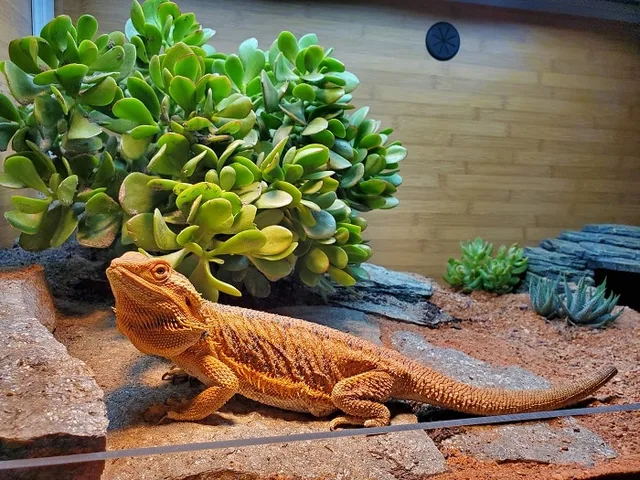
- Prickly pear cactus (spineless varieties) — the classic. Edible pads, nearly indestructible.
- Aloe vera — tough, safe, and useful.
- Haworthia — small, sturdy rosettes that tolerate abuse.
- Spider plant — fast-growing, safe, good for the cooler end.
- Wheatgrass / herb pots — plant it, let the dragon demolish it, replant. Enrichment as agriculture.
Plant in the substrate directly (not in pots buried in the substrate — roots need the soil food web). Expect casualties; keep a “hospital rotation” of replacement plants. Quarantine new plants 4–6 weeks, repot into untreated organic mix, and rinse leaves thoroughly before planting.
The honest downsides
Bioactive content online is 90% hype. The real costs:
- Upfront cost: $150–$250 for a 4×2×2 build (drainage, soil components, crew cultures, plants). Versus $30 of tile.
- Establishment time: 2–4 weeks of crew-only cycling before the dragon moves in. Impatient keepers skip this and wonder why it fails.
- Not for babies: loose substrate plus clumsy hunters plus tiny guts — the baby rule applies to bioactive too. Adults only.
- You will still spot-clean: the crew handles most waste, but big urates and uneaten insects still get picked up by you. “Self-cleaning” means less cleaning, not none.
- Parasite monitoring gets harder: droppings disappear into the system fast, which is the point — but it also means you cannot easily do the visual health checks paper towel makes trivial. Annual fecal tests become non-negotiable.
Maintenance once it is running
A mature arid bioactive needs surprisingly little:
- Spot-remove large urates and uneaten feeders (the crew cannot process a whole superworm overnight).
- Top up leaf litter every month or two — it is crew food and shelter.
- Water plants individually, not the whole tank — a squeeze bottle at the base of each plant keeps ambient humidity desert-appropriate.
- Re-seed the crew every 6–12 months if numbers look thin.
- Watch the moisture gradient corner: if it is bone-dry for weeks, the crew crashes. A light misting there — and only there — keeps the system alive.
Bioactive questions, answered
Can I convert my current tank to bioactive?
Yes — strip it to glass, build the layers fresh, seed the crew, wait 2–4 weeks, then move the dragon back in. Do not try to convert around an occupied tank.
Will the plants raise humidity too much?
Not if you water at the base of plants rather than misting the tank. A few plants in a ventilated 4×2×2 will not push a desert setup out of the 30–40% range.
What if my dragon eats the soil?
Occasional tasting is normal and the mix is non-toxic by design. Deliberate, repeated soil-eating signals a husbandry problem — usually basking temps or calcium — same as with any loose substrate. Fix the cause, not the soil.
How long does a bioactive setup last?
Years, with maintenance. The substrate does not get “used up” — that is the whole point. Refresh leaf litter, re-seed crew occasionally, replace dead plants, and the system runs indefinitely.
Is bioactive actually better for the dragon?
It is more enriching — digging, hunting isopods, interacting with plants. Whether that translates to measurably better health is unproven. The honest pitch is enrichment and keeper enjoyment, not medical necessity.