How to Pick a Healthy Bearded Dragon
You’re standing in front of a tank full of baby bearded dragons, and they all look adorable. That’s the problem — sick dragons can look adorable too, right up until the vet bill arrives. The difference between a healthy dragon and a struggling one is visible if you know where to look, and it takes about five minutes.
Run these 12 checks before money changes hands. Bring this page on your phone.
Eyes and Breathing: The Fastest Tell
1. Eyes bright, clear, and open. A healthy dragon’s eyes are alert and track movement — including yours. Sunken, cloudy, or half-closed eyes suggest dehydration or infection, and any discharge is an immediate no.
2. Nose dry, breathing quiet. Watch the dragon breathe for 30 seconds. You should hear nothing. Wheezing, clicking, open-mouth breathing, or mucus around the nostrils points to a respiratory infection — one of the priciest problems to treat.
3. Mouth and gums healthy. If the seller will let you (a good one will), gently check inside the mouth: gums should be pink, with no cheesy yellow deposits. Those deposits mean mouth rot — painful, contagious to tankmates, and vet-bound.
Body Condition: Reading the Silhouette
4. Skin smooth, no sores. Run your eyes over the whole body: no lesions, swelling, stuck shed bands, or dark patches that look like bruising. A dragon mid-shed is fine — a dragon with sores is not.
5. All toes present, limbs straight. Count toes (yes, really) and look at the legs: no swelling, no kinks, no missing digits. Swollen limbs can signal gout or old fractures; missing toes usually mean the babies were overcrowded and nipping each other.
6. Tail long and tapering. The tail should flow smoothly to a point — no kinks, cuts, or blackened tip. A dark, shriveled tail tip is tail rot, and it doesn’t heal on its own.
7. Vent clean. The vent (under the tail base) should be clean with no discharge, swelling, or smeared stool stuck around it. A dirty vent suggests digestive trouble or parasites.
8. Belly filled out, not sunken. A healthy dragon has a gently rounded belly and a plump tail base — that’s where they store fat. Ribs should be palpable but not jutting. A sharply triangular body cross-section means the animal is underfed or ill.
| Body signal | Healthy | Walk away |
|---|---|---|
| Belly | Gently rounded | Sunken or bloated |
| Tail base | Plump, thick | Bony, thin |
| Hip bones | Padded | Visible / sharp |
| Fat pads on head | Slightly raised | Sunken in |
Behavior: The Honesty Test
9. Alert and curious. A healthy dragon reacts to its environment — watches you, tracks movement, maybe puffs up a little at a stranger (that’s normal). A dragon that lies limp, slumps, or doesn’t react at all is either very ill or severely stressed.
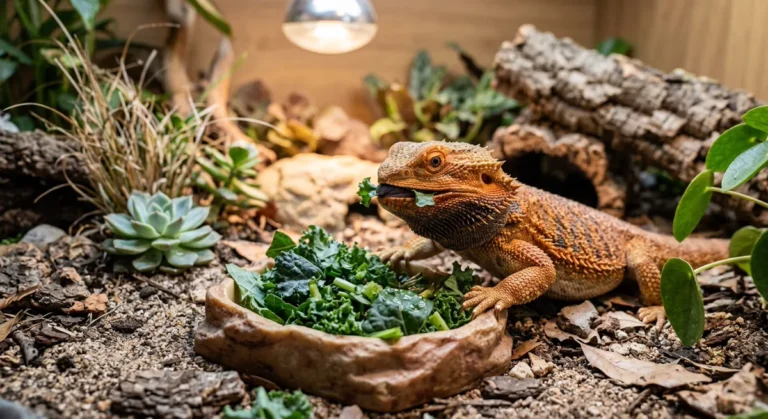
10. Eats in front of you. Worth repeating: feeding response is the best single health indicator. Babies should chase insects with genuine enthusiasm.
Context Checks: Beyond the Animal
11. Tankmates look healthy too. You’re not just evaluating your dragon — you’re evaluating the conditions it was raised in. If every baby in the tank looks thin or lethargic, the problem is the husbandry, and your pick is marinating in it.
12. The seller answers questions well. Hatch date? Current diet? Feeding schedule? UVB setup? A knowledgeable seller answers instantly. Vagueness, annoyance, or “I don’t know, I just sell them” is information — act on it.
Red Flags: The Instant Walk-Away List
| Sign | Likely issue |
|---|---|
| Runny or bloody stool in the tank | Parasites |
| Wheezing / mucus / open-mouth breathing | Respiratory infection |
| Cheesy deposits in mouth | Mouth rot |
| Blackened tail tip | Tail rot |
| Swollen or kinked limbs | MBD, gout, or old fractures |
| Limp, unresponsive, or constantly dark-stressed | Serious illness or severe stress |
Any single row on this table is enough to pass on that animal. There will always be another dragon. There won’t always be another $400.
After You Choose: The First 48 Hours
Passing the checks doesn’t end the job. Get your dragon home into a finished, heated setup — not a work in progress. Offer food the next day (relocation stress suppresses appetite for a day or two — that’s normal). If you have other reptiles, quarantine the newcomer in a separate room for 60–90 days. And keep handling minimal for the first week; let it learn that its new home is safe before it learns that you’re safe.
What to Ask the Seller (Take This List)
The dragon is only half the evaluation — the seller is the other half. Ask these before you commit:
- When did it hatch, and what is it eating right now?
- How often is it fed, and does it hunt live insects eagerly?
- What are the parents’ morphs — and is anything het?
- Has it had a fecal test? Any prior illness or treatment?
- What UVB and temperatures is it kept under currently?
- Is it housed alone or with clutchmates?
- What’s your health guarantee, in writing?
- If I have problems in the first month, will you answer my questions?
You’re not interrogating anyone — a good seller lights up answering these. A bad seller deflects. Either way, you learn what you need.
Baby, Juvenile, or Adult: What Changes
The 12 checks apply at every age, but the emphasis shifts:
- Babies (0–3 months): most fragile, most variable. Feeding response matters most — a baby that won’t hunt is a gamble. Expect them to be skittish; that’s age, not illness.
- Juveniles (3–10 months): the sweet spot for most buyers — hardy enough to be stable, young enough to tame easily. Body condition should be clearly good by now; a thin juvenile is a red flag, not a “late bloomer.”
- Adults (18+ months): what you see is what you get — size, color, and temperament are settled. Ask why it’s being rehomed; “moving” is common and fine, but press gently on health history.
When to Walk Away vs. When to Negotiate
Not every imperfect dragon is a no. The distinction:
- Walk away: anything on the red-flag table — respiratory signs, mouth rot, tail rot, parasites, deformities. These are vet bills, not bargains.
- Negotiate (or accept knowingly): cosmetic issues — a nipped tail tip that’s fully healed, a missing toe from clutchmate nipping, a slightly dull shed cycle. These don’t affect health or lifespan and can justify a lower price.
- Special case — rescues: if you’re choosing a project dragon, the checklist flips purpose: it tells you what you’re signing up for, not whether to sign. Price the vet work first, then decide.
The golden rule stays golden: never pay a premium price for a discount dragon. If the animal has issues, the price should reflect them — or your feet should do the talking.
The Bottom Line
Twelve checks, five minutes, one rule: never fall in love before the inspection. The dragon that passes every check and eats like a tiny dinosaur in front of you is the one worth taking home — and worth every penny of the price tag.
Read next: 11 Bearded Dragon Morphs, Explained in Plain English