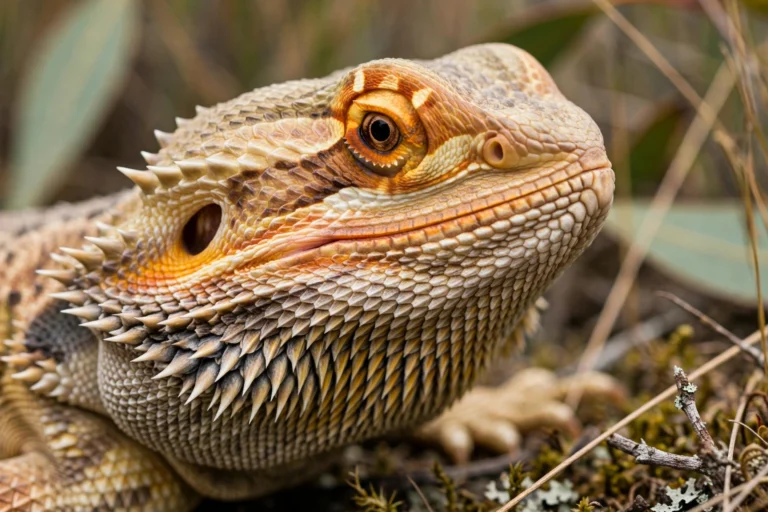
Your Bearded Dragon Won’t Bask? 8 Reasons Why
A bearded dragon that will not bask is telling you something is wrong. Basking is not a preference — it is the engine room of their biology. Without sustained time under heat and UVB, digestion stalls, calcium metabolism breaks down, and the immune system runs at half power. A dragon avoiding its basking spot for days is a dragon running on fumes.
The good news: there are only eight common reasons, and each one has a specific fix. Play the matching game below — pair each cause with its fix — then read the full troubleshooting breakdown with the exact numbers.
Why Basking Is Non-Negotiable
Understanding why dragons bask makes every cause below intuitive. A bearded dragon is ectothermic: its body temperature, and therefore its metabolism, comes from the environment. Basking raises core temperature into the range where digestive enzymes work, where UVB converts to vitamin D3 in the skin, and where the immune system operates at full capacity. A dragon that skips basking is skipping digestion, calcium processing, and immune defense simultaneously — which is why “won’t bask” is never a quirk to wait out. It is always a symptom with a cause.
Myth: Some bearded dragons just prefer the cool side — it is a personality thing. Reality: A healthy dragon thermoregulates, moving between hot and cool zones. A dragon that never basks is avoiding the spot for a reason: wrong temperature, wrong light, stress, or illness. Preference explains variation; avoidance signals a problem.
The 8 Reasons, Each With Its Fix
1. The basking spot is too cool
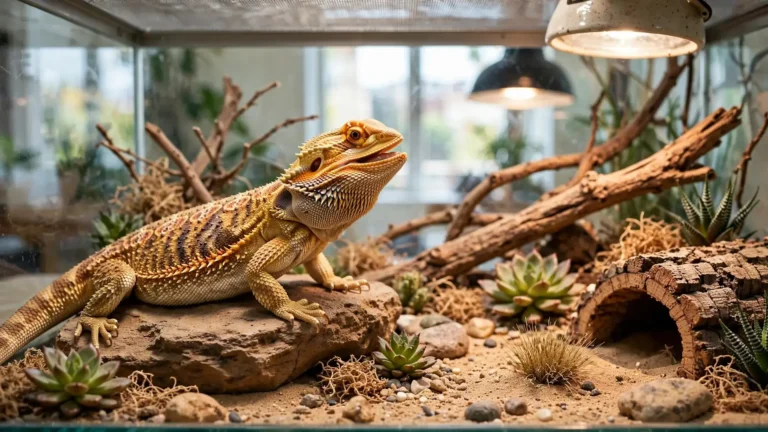
The most common reason. If the surface reads under 100°F, the dragon gains little from sitting there — so it doesn’t. Bulbs dim with age, winter rooms run colder, and a setup that worked in August drifts through autumn. Fix: measure the basking surface with a temp gun and raise it to the exact basking temperature for your dragon’s age — 105–110°F for juveniles, 100–110°F for adults.
2. The basking spot is too hot
The mirror image: a surface over about 115°F is painful, and the dragon flees to the cool end and stays there. This often follows a bulb upgrade — a 100W replacement where a 75W used to sit — or new decor that raised the platform closer to the lamp. Fix: lower the wattage or raise the lamp, then recheck the surface. The gradient should run from the basking target down to 75–85°F on the cool side, giving the dragon a full range to choose from.
3. The wrong bulb
Colored bulbs (red, blue, “moonlight”) wash out a bearded dragon’s tetrachromatic vision and create an unnatural basking experience; tight coil fluorescents create harsh hotspots and weak spread. Dragons under poor light often bask less because the light itself is aversive. Fix: a bright white incandescent or halogen basking bulb for heat, plus a proper UVB tube — the UVB setup guide covers distance and bulb types in full.
Confirmed: bearded dragons see in tetrachromatic color — four color channels to our three, including ultraviolet. Colored basking bulbs do not just look unnatural to them; they distort the entire visual world the dragon uses to hunt, navigate, and feel secure.
4. Weak or missing UVB
Dragons can sense the UVB spectrum, and a basking spot without it is an incomplete basking spot. Old tubes (UVB output decays long before visible light does — replace every 6–12 months depending on type), tubes mounted too far away, or tubes blocked by fine mesh all deliver a fraction of the needed UVB. The dragon basks less because the spot is not doing its full job. Fix: install a T5 HO UVB tube at the manufacturer-specified distance for your mounting (inside vs. above mesh), on the same timer as the basking lamp.
5. Stress
A stressed dragon hides instead of basking — security outranks thermoregulation. New-home relocation, too much handling, a tank in a busy hallway, reflections, or another pet looming over the glass can suppress basking for weeks. Fix: cut handling to a minimum, cover three sides of the tank, move the enclosure away from high-traffic sightlines, and audit against the stress signs checklist. Basking usually resumes within days of the stressor lifting.
6. Shedding
Mid-shed dragons are uncomfortable, itchy, and grumpy — and they often skip basking for a few days while skin loosens. This is normal and self-limiting. Fix: a 15–20 minute lukewarm soak to ease the shed, then patience. If basking does not resume within a few days of the shed clearing, keep troubleshooting down this list.
UVB tube output can drop 30–50% within 6–12 months while the tube still looks bright to human eyes. If your dragon gradually stopped basking over months and the tube is nearing a year old, the bulb is the prime suspect — replace on schedule, not on appearance.
7. Brumation
Adults winding down for winter bask less and less over weeks — the seasonal program, not a malfunction. The pattern is gradual, seasonal (roughly October–February), and paired with reduced appetite rather than distress. Fix: confirm it matches the brumation profile and let the dragon sleep, keeping water available and the light cycle steady. Review the day/night light schedule so the cycle stays consistent through the slowdown.
8. Illness
When temperatures, lighting, stress, shedding, and season all check out and the dragon still will not bask, something medical is suppressing it — respiratory infection, parasites, organ issues. Illness rarely travels alone: look for companion signs like lethargy, appetite loss, weight loss, gaping, or discharge. Fix: this one belongs to a reptile veterinarian. Bring your measured temperatures, the bulb ages, and the timeline — the vet rules out husbandry faster with data.
The 10-Minute Basking Audit
Run this in order before changing anything: 1. Temp-gun the basking surface — is it 100–110°F? 2. Temp-gun the cool side — 75–85°F? 3. Check the bulb — bright white, correct wattage, guarded? 4. Check the UVB tube’s age and distance. 5. Note the calendar — brumation season? 6. Scan for shed — dull, flaky patches? 7. Audit stress — new home, handling, traffic, reflections? 8. List companion symptoms — appetite, stool, breathing? Most non-basking dragons fail at step 1, 3, or 4. The audit takes ten minutes and resolves the majority of cases without a single purchase.
How Long Without Basking Is Too Long?
A day or two of skipped basking during a shed or a stressful week is not an emergency — dragons are resilient, and short dips resolve on their own. The line sits around three to five days of consistent avoidance in an otherwise normal-looking dragon: that is long enough to rule out a passing mood and start the audit above in earnest. Shorten the timeline if companion symptoms appear — appetite loss, lethargy, weight loss, or abnormal stool make “not basking” part of a bigger picture that deserves a vet call now rather than after a week of watching. And remember the seasonal exception: an adult gradually basking less through November is following brumation’s program, which is the one scenario where declining basking is expected rather than alarming.