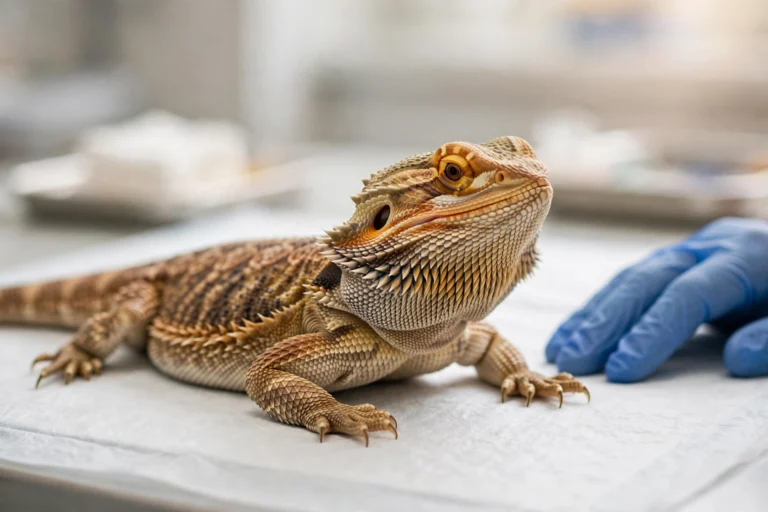
7 Warning Signs of Bearded Dragon Mouth Rot
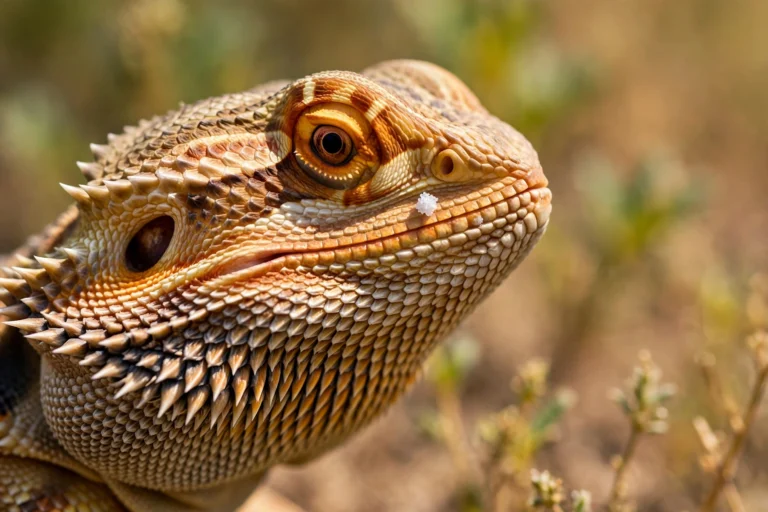
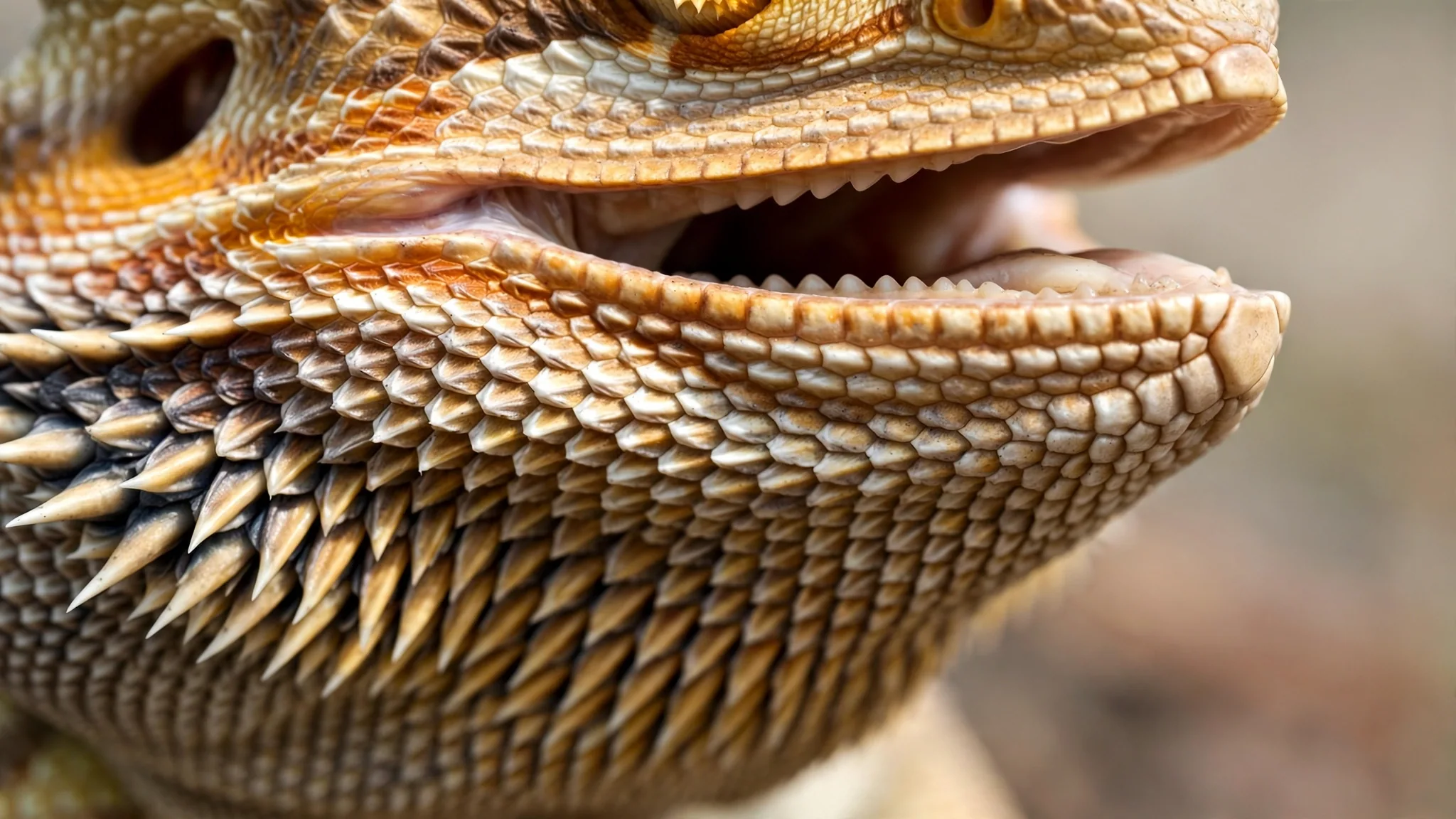
Open your bearded dragon’s mouth (gently, and only if it tolerates it) and you expect to see healthy pink tissue. If instead you see swollen red gums, yellowish patches, or thick saliva — or you notice a foul smell when your dragon gapes — you may be looking at the early signs of bearded dragon mouth rot. The veterinary name is infectious stomatitis: a bacterial infection of the mouth and gums that starts small and can turn serious if ignored. The good news is that mouth rot is very treatable when caught early. This guide walks you through the seven warning signs, how to tell real trouble from normal mouth variations, what a reptile vet actually does about it, and an interactive grader that scores what you are seeing.
What mouth rot is
Mouth rot is a bacterial infection of the oral cavity — the gums, the soft tissue inside the mouth, and in advanced cases the jawbone. It usually takes hold when the immune system is weakened or the mouth’s defenses are breached: chronic stress, poor hygiene, temperatures too cool for proper immune function, an injury inside the mouth, or an underlying illness. Once established, the infection causes inflammation, tissue damage, and the classic visible signs below. Left untreated, it can spread beyond the mouth into the face and become a whole-body problem — which is why early recognition matters so much. Catching it in the first days usually means a straightforward vet visit; catching it late can mean a long, difficult recovery.
Mouth rot vs. normal: the comparison that matters
Not everything unusual-looking in a dragon’s mouth is mouth rot. Dragons have naturally varied mouth pigmentation, and shed skin around the lips can look alarming. Use this comparison before you worry:
| What you see | Likely normal | Worth a closer look |
|---|---|---|
| Mouth color | Pink, tan, grey, or darkly pigmented tissue that has always looked that way | New redness, swelling, or bleeding along the gum line |
| Spots or patches | Dry, flaky shed skin around the lips that lifts away cleanly | Yellow, white, or greenish cheesy patches inside the mouth that do not wipe away |
| Saliva | Dry mouth most of the time; a little drool while eating | Thick, discolored, or foul-smelling saliva; drooling outside of meals |
| Eating behavior | Normal appetite for the season | Sudden food refusal, dropping food, or visible difficulty chewing |
The key word in every row is change: what is new, spreading, or getting worse deserves attention. What has always been there and is not changing usually does not.
The 7 warning signs of mouth rot
- Red, swollen, or bleeding gums. Healthy gums lie flat and calm. Gums that look puffy, angry-red, or bleed easily are the single most common early sign.
- Yellow or whitish patches inside the mouth. Cheesy-looking plaques on the gums, tongue, or roof of the mouth that do not wipe away are a hallmark sign.
- Thick or discolored saliva. Stringy mucus, pus-tinged drool, or saliva that looks anything other than clear and watery.
- Foul odor from the mouth. A healthy dragon’s mouth has almost no smell. A distinctly bad smell is the infection announcing itself.
- Drooling or trouble closing the mouth. Swelling can make it hard for the mouth to close fully, letting saliva spill out.
- Appetite loss or difficulty eating. A painful mouth makes eating miserable — see our guide on why a bearded dragon stops eating for how mouth pain fits the bigger picture.
- Swelling of the face or jaw. Puffiness spreading beyond the gums to the jaw or face suggests the infection is advancing — this is urgent.
Mouth-health grader: score what you see
For each of the five checks below, tap the option that best matches your dragon right now. You will get an A–F mouth-health grade with clear next steps. This grader is a screening aid, not a diagnosis — only a reptile vet can diagnose mouth rot.
Mouth-health check
Answer all five checks to see your grade.
What raises the risk
Mouth rot rarely appears out of nowhere. The usual setup:
- Chronic stress — poor handling, bullying by a tankmate, or constant environmental stress suppresses immunity.
- Dirty conditions — bacteria thrive in soiled enclosures and fouled water. Regular tank cleaning is real prevention.
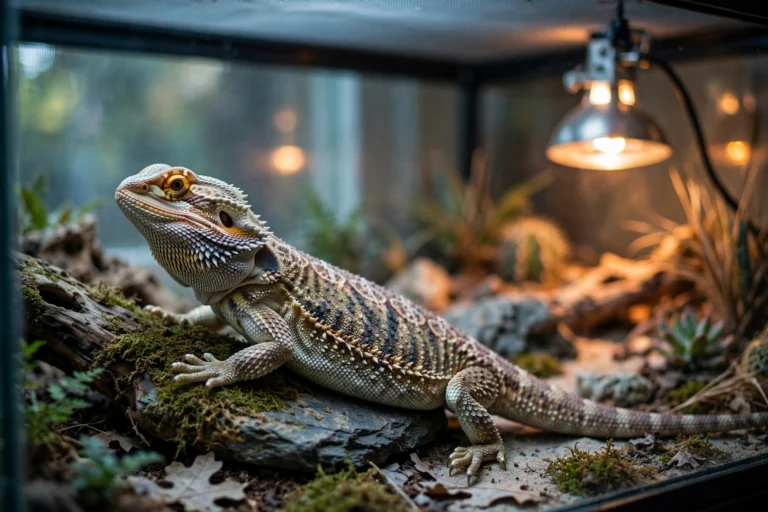
- Temperatures too cool — a dragon that cannot warm up properly cannot fight infection properly.
- Mouth injuries — a cut from a sharp feeder, a bite, or rough decor gives bacteria an entry point.
- Underlying illness or parasites — anything already taxing the immune system opens the door.
- Dehydration and poor nutrition weaken overall resilience — our dehydration signs guide covers the overlap symptoms.
What a reptile vet does about mouth rot
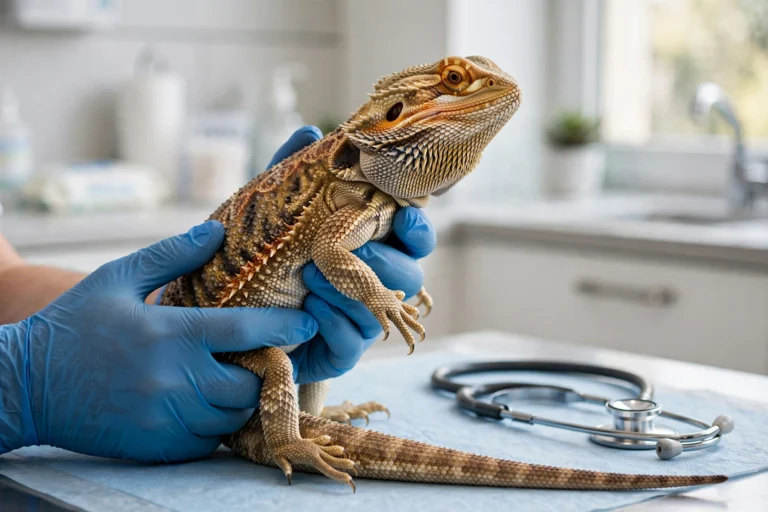
This is the part you cannot do at home, and it is important to understand why. A reptile vet will examine the full oral cavity, often taking a swab to identify the bacteria involved, and assess how deep the infection goes — surface-level cases and jaw-involving cases are handled very differently. Treatment is professional: the vet cleans the mouth properly, prescribes medication chosen for the specific infection and dosed to your dragon’s weight, and schedules rechecks to confirm healing. Severe cases may need dead tissue removed under veterinary care. No product from a pet-store shelf replicates any of this, which is why mouth rot is always a vet visit, never a home-treatment project.
Preventing mouth rot
- Keep the enclosure clean: spot-clean daily, deep-clean on schedule, refresh water daily.
- Hold correct temperatures so the immune system works at full strength.
- Quarantine new dragons before introducing them to existing animals, and wash hands between handling different reptiles.
- Remove uneaten live feeders promptly — they stress the dragon and can injure the mouth area.
- Do a quick mouth check monthly: lift the lip gently, look for the seven signs, and note your dragon’s normal so changes stand out. A healthy bearded dragon checkup routine makes this second nature.