Is Your Bearded Dragon Sick or Just Sleeping?
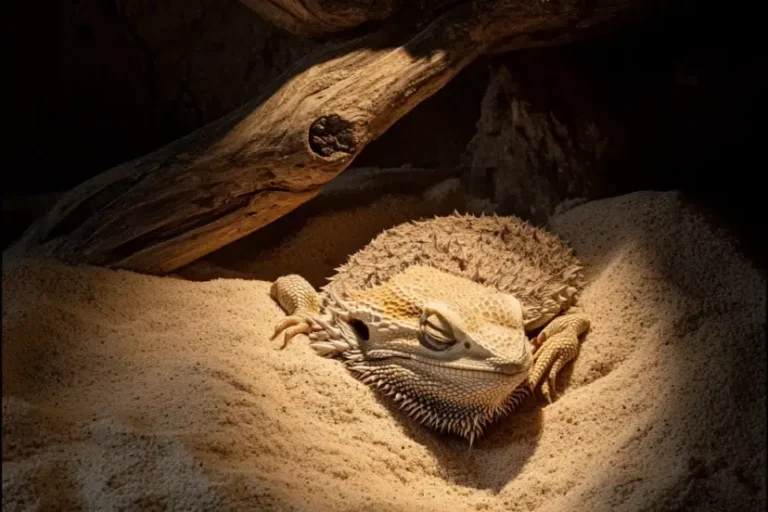
Your bearded dragon has been asleep in its hide for two weeks, barely touches food, and you’re spiraling. Here’s the short version: a brumating dragon sleeps for weeks to months but stays responsive when handled, keeps its weight, and has clear eyes. A sick dragon loses weight, looks sunken or discharged, or goes limp.
And here’s the rule that matters most — read it twice: babies don’t brumate. If your dragon is under a year old and suddenly lethargic, treat it as illness until a reptile vet says otherwise.
Question 1 of 5
The numbers that matter
12+ months
age true brumation usually starts
1–4 months
how long normal brumation lasts
8
signs in the comparison table
~0
weight a healthy brumating dragon loses
Brumation vs. illness: the side-by-side check
Go down the left column. If most of your answers land in the middle column, it’s brumation. If two or more land in the right column, call a vet.
| Sign | Brumation | Illness — see a vet |
|---|---|---|
| Appetite | Fades gradually over weeks as days shorten | Sudden, complete stop — especially outside fall/winter |
| Activity | Sleeps in the hide, but wakes and moves when picked up | Limp, unresponsive, or can’t lift its body |
| Weight | Stable week to week | Dropping — weigh weekly; loss during “brumation” is never normal |
| Eyes | Clear and alert when awake | Sunken, stuck shut, or any discharge |
| Breathing | Slow and quiet | Wheezing, clicking, popping, or mucus around the nose |
| Beard & skin | Normal coloring | Black beard for days, wrinkled/dehydrated skin |
| Droppings | Less frequent, but normal when they happen | Runny, foul-smelling, bloody — or no poop for weeks with a swollen belly |
| Season | Fall into winter, triggered by shorter days | Any time of year, especially in a juvenile |
The baby rule, once more:
true brumation is rare under 12 months. A lethargic baby in July isn’t brumating — it’s sick. This is the single most common fatal misread in the hobby.
Do all bearded dragons brumate?
No — and this surprises people. Brumation is triggered by shorter days and cooler temperatures. A dragon kept indoors under steady 12–14 hour lighting and warm temps may never brumate at all, or just do a light “slowdown” for a few weeks: eating a little less, basking a little less, but basically still themselves. That’s completely normal. Don’t try to force brumation by cutting light or heat — an indoor dragon that skips it is not missing out on anything. The only thing that matters is the pattern: a dragon that’s always been active in winter suddenly going still is worth a vet visit. A dragon that’s never slowed down in three winters is just… consistent.
Setting up for brumation season
If your dragon did this last year, they’ll probably do it again — and a little prep in late fall makes the whole thing boring, which is exactly what you want. First, get a fecal test done at the reptile vet before they wind down. Parasites plus brumation is a bad combination, and this is the one vet visit that genuinely prevents problems. Second, offer a few good final meals while the basking spot is still hot — food sitting undigested in a cooling gut can rot, so you want the tank warm for a week or two after the last big meal. Third, make sure the hide is ready and set your lights on a timer for 8–10 hours a day. And grab a notebook: write down their weight now. That number is your baseline for every weekly weigh-in through the winter.
If it is brumation: the care checklist
| Task | How often | Why |
|---|---|---|
| Vet check + fecal test | Once, before the season | Parasites plus brumation can be fatal — rule them out first |
| Weigh the dragon | Weekly, same scale | Stable weight confirms it’s brumation; loss means vet |
| Offer water | Weekly — drip on the snout | They dehydrate slowly even while asleep |
| Shorten the light cycle | Daily — 8 to 10 hours of light | Mimics the shorter days that triggered it |
| Keep a basking spot available | Daily | If they wake and eat, they need heat to digest |
| Don’t offer food to a sleeping dragon | — | Undigested food sitting in a cool gut can rot — a real risk |
The brumation timeline
Before the season — vet check
Get a fecal test done before they slow down. Parasites plus brumation can be fatal, and this is the moment to rule them out.
Weeks 1–2 — winding down
Appetite fades gradually. They bask less, hide more. Don’t panic — and don’t force food.
Weeks 3–12 — deep sleep
Mostly in the hide. Weigh weekly (stable = good), drip water on the snout weekly, keep lights at 8–10 hours with a basking spot available.
Waking up — spring
They emerge on their own. Offer water first, then small meals with full heat and UVB for digestion. Appetite ramps back over 1–2 weeks.
Did you know?
Brumation is triggered mostly by shorter daylight hours, not just cold — which is why indoor dragons with steady light schedules sometimes skip it entirely. Skipping brumation is completely fine.
Did you know?
Many brumating dragons wake up every week or two, take a drink, maybe bask for an hour, and go straight back to sleep. That’s normal — not a sign it’s over.
Quick answers
Should I wake up my brumating dragon?
No — let them sleep. Brief weekly weigh-ins are fine and recommended, but don’t drag them out for handling sessions.
How long does brumation last?
Typically 1–4 months. Some dragons do 6 weeks, some do 5 months. What matters isn’t the calendar — it’s stable weight and no illness signs.
Do I turn the lights off completely?
No. Reduce to 8–10 hours a day and keep temperatures slightly cooler, but always offer a basking spot. A dragon that wakes up to eat needs heat to digest.
Will my dragon brumate every year?
Not necessarily. Many captive dragons brumate some years and skip others, especially if your light cycle stays constant. Both are normal.
He’s 8 months old and sleeping all day — brumation?
Almost certainly not. See the baby rule above: under a year, lethargy means a vet visit. Juvenile “brumation” is usually parasites, wrong temperatures, or bad UVB.
What to read next
- Why Is My Bearded Dragon Not Eating? 12 Causes and Fixes — appetite loss outside brumation season
- Bearded Dragon Tank Setup: Complete Checklist for Beginners — wrong temperatures mimic brumation
- Lighting, UVB & Heating Guides — photoperiod drives the whole cycle