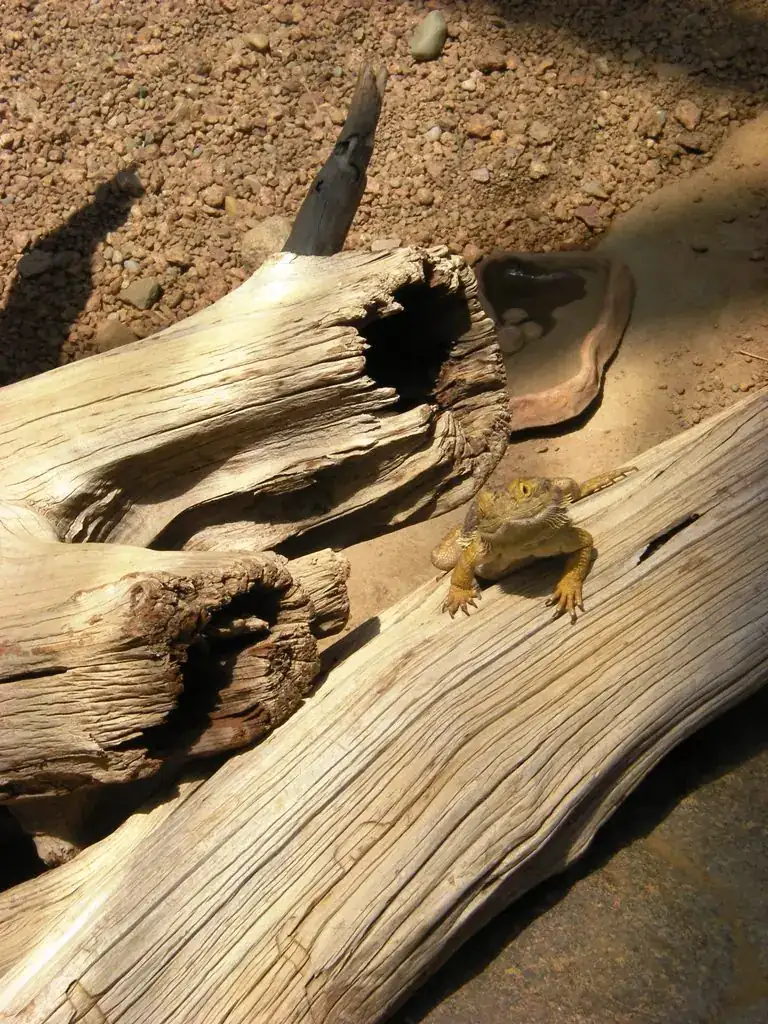
How to Clean and Disinfect a Bearded Dragon Tank
A clean tank is a healthy dragon — full stop. Feces left in a warm enclosure grow bacteria fast, dirty water bowls become soup, and decor that’s never wiped down accumulates the kind of biofilm you’d never tolerate in your own kitchen. The dragons that get sick from dirty tanks don’t get sick dramatically; they get sick slowly, from the low-grade bacterial load that a simple routine would have prevented.
The good news: tank cleaning isn’t a weekend project. It’s a handful of tiny habits stacked into a rhythm — two minutes a day, fifteen minutes a week, one deeper session a month. This guide gives you the full schedule (daily, weekly, monthly), which disinfectants are actually reptile-safe and which to avoid, how to clean decor and bowls without residue risk, and the mistakes that make dragons sick. Use the planner below to generate a routine matched to your substrate.
🧹 Tank Cleaning Planner
Pick your substrate — get a daily, weekly, and monthly task list with check-offs.
Your substrate type
Tile / shelf liner / paper towel
Loose (sand / soil mix)
Bioactive
â˜€ï¸ Daily (4 tasks)
Spot-clean feces and urate immediately
Empty, scrub, and refill the water bowl
Wash the food dish (salad residue sours fast)
Quick wipe of the basking platform if soiled
📅 Weekly (5 tasks)
Wipe down glass inside and out
Disinfect food and water dishes
Wipe hides and decor with reptile-safe disinfectant
Replace paper towel substrate (if used)
Check and clean the hygrometer/thermometer probes
ðŸ—“ï¸ Monthly (4 tasks)
Full breakdown: remove everything, disinfect the empty tank
Soak decor in disinfectant, rinse, air-dry fully
Inspect sealant and screen top for wear
Replace shelf liner if stained or curling
Why a Cleaning Schedule Matters
A bearded dragon’s tank is a warm, humid microclimate — exactly the conditions bacteria love. Feces left for a day in 100°F basking heat becomes a bacterial bloom; a water bowl with a drowned cricket in it becomes a pathogen soup; salad left overnight ferments. Your dragon walks through all of it, then licks its feet. This is the primary route for the bacterial gut infections and parasite reinfections that send dragons to the vet.
The schedule below isn’t about a showroom tank. It’s about breaking the fecal-oral transmission cycle — the route behind most captive reptile illness — with the least effort that actually works. If you’re still assembling the enclosure itself, start with our bearded dragon tank setup checklist, then layer this routine on top.
Stat: Veterinarians widely consider poor enclosure hygiene a major contributor to captive reptile bacterial infections — and the fix is unglamorous: feces removed the same day, water changed daily, dishes disinfected weekly. None of it requires special products, just consistency.
Daily Tasks: The 2-Minute Version
Do these every single day, ideally in the morning:
Spot-clean feces and urate immediately. Don’t wait for “cleaning day.” Scoop it the moment you see it — on solid substrates wipe the spot; on loose substrate scoop the waste plus the surrounding inch.
Fresh water. Empty, give the bowl a quick scrub (biofilm builds invisibly), refill. Dragons often soak or defecate in their water — check it, don’t just top it off.
Wash the food dish. Old salad residue sours and grows mold shockingly fast under a heat lamp — and a clean bowl starts with safe ingredients (see our safe foods guide for what belongs in it). A quick wash with hot water daily beats a deep scrub weekly.
Weekly Tasks: The 15-Minute Version
Pick a day and make it routine:
Glass: wipe inside and out. Inside for nose-prints and water spots; outside because you’ll actually see your dragon better.
Disinfect dishes: food and water bowls get a proper disinfectant soak weekly, not just a rinse.
Decor wipe-down: hides, branches, basking platform — wipe with reptile-safe disinfectant, then rinse or wipe with clean water.
Substrate check: replace paper towel; inspect tile/liner; sift loose substrate for hidden waste.
Monthly Deep Clean: The Full Breakdown
Once a month, strip the tank completely: dragon into a secure temporary bin (with a heat source if the room is cool), everything out, full disinfect of the empty enclosure, decor soaked and air-dried, substrate replaced or deep-sifted. This is also your inspection window — check silicone seals, screen top integrity, and probe wires for chew damage. A monthly breakdown catches the slow problems (a cracked hide harboring bacteria, substrate compacted into concrete) before they matter.
Reptile-Safe Disinfectants: What Works and What to Avoid
Product Verdict Notes
F10 veterinary disinfectant ✅ Best choice Vet-grade, effective at high dilution, safe when used as directed
Chlorhexidine (2%) ✅ Great Dilute per label; rinse after — the workhorse of reptile rooms
White vinegar âš ï¸ OK for glass Cuts water spots; not a true disinfectant for pathogens
Bleach (diluted) âš ï¸ Use with care Effective but must be rinsed obsessively and fully air-dried — residue is toxic
Pine / phenol cleaners 🔴 Never Phenols are toxic to reptiles — this includes many household “disinfectant” sprays
Scented household sprays 🔴 Never Fragrances and surfactants leave residues dragons will ingest
Myth vs. reality: “If it smells clean, it is clean.” Reality: fragrance means residue, and residue in a reptile tank is a hazard — dragons lick everything. The safest disinfectants (F10, chlorhexidine) are nearly odorless when properly diluted and rinsed. Clean should smell like nothing.
How to Disinfect Decor, Bowls, and Hides
The method matters as much as the product: remove the item from the tank, scrub off organic matter first (disinfectants can’t punch through a layer of dried feces), apply the disinfectant at label dilution with the proper contact time (usually 10 minutes — read the label), rinse thoroughly with clean water, and air-dry completely before it goes back. Wood decor that’s deeply soiled or moldy should be baked (250°F for an hour) or replaced — porous wood can harbor pathogens past what surface disinfecting reaches.
Cleaning Mistakes That Make Dragons Sick
Cleaning around the dragon with spray bottles — aerosolized disinfectant in a small tank is a respiratory risk. Always remove the dragon first.
Putting decor back wet with disinfectant. The rinse-and-dry step is non-negotiable.
Using the kitchen sponge. Cross-contamination both ways. Keep a dedicated reptile cleaning kit.
“Deep cleaning” with the dragon locked in a cold bin for hours. Keep a basking lamp on the temporary bin if the deep clean runs long.
Forgetting the water bowl. It’s the most-touched, most-soiled item in the tank and the most commonly under-cleaned.
Did you know: Springtails and isopods — the “cleanup crew” in bioactive setups — eat mold, shed, and decaying matter around the clock, but they do not neutralize fresh feces’ parasite load. Even bioactive keepers spot-clean droppings the same day; the crew handles what you can’t see, not what you can.
Printable Routine Recap
Tape this inside your enclosure stand until it’s habit:
Daily (2 min): spot-clean waste → fresh scrubbed water → wash food dish.
Weekly (15 min): glass → disinfect dishes → wipe decor → substrate check.
Monthly (45 min): full breakdown → disinfect empty tank → soak decor → fresh substrate → inspect seals and screen.
Two minutes a day keeps the vet away far more reliably than any supplement. Build the rhythm with the planner above, and cleaning stops being a chore — it just becomes part of having a dragon.
Cleaning Secondhand Gear: The Craigslist Protocol
Used tanks and decor are the hobby’s best bargains — and its most common disease vectors. A secondhand enclosure can carry parasites, bacteria, or viruses from its previous occupant, so everything used gets the full treatment before your dragon touches it. Strip it completely, scrub off all organic matter, then disinfect with F10 or chlorhexidine at label strength with full contact time. For glass tanks, follow with a vinegar wipe to cut mineral scale, then rinse until the rinse water runs completely clear and odorless. Porous items (wood hides, backgrounds) from unknown sources are often safer replaced than disinfected — if you keep them, bake wood at 250°F for an hour after disinfecting. Let everything air-dry fully in sunlight if possible; UV is a free secondary disinfectant. Only after the full protocol does the bargain become safe.
Fact check: Atadenovirus (ADV) — the most feared contagious virus in bearded dragons — survives in the environment far longer than bacteria and resists casual cleaning. This is the real reason secondhand gear from unknown sources demands serious disinfection, not just a wipe-down. When buying used, ask about the previous dragon’s health history; a seller who can’t answer is a red flag.
What to Read Next
Bearded Dragon Tank Setup Checklist: Everything You Actually Need
What Can Bearded Dragons Eat? 47 Safe Foods
Why Is My Bearded Dragon Not Eating? Causes and Fixes