Choosing Safe Substrate for Your Bearded Dragon
Ask ten bearded dragon keepers what belongs on the tank floor and you’ll get eleven opinions, three arguments, and one person who is very angry about sand. Substrate is the most debated topic in the hobby — and the confusion is understandable, because the honest answer is annoying: it depends on your dragon’s age, your husbandry, and how much risk you’re comfortable with.
This guide cuts through the shouting. Below you’ll find an interactive safety checker — click any substrate to get a straight verdict — plus the full reasoning behind each one, so you can make the call yourself instead of trusting a forum thread from 2014.
The whole debate on one spectrum
If the checker above felt like a lot of individual verdicts, here’s the big picture. Every substrate sits somewhere on a single line from “nothing can go wrong” to “why would you do this”:
The real trade-off: loose vs. solid
Every substrate argument is really one argument: loose substrates (sand, soil mixes) let dragons dig — a deeply natural behavior — but can be swallowed. Solid substrates (tile, paper towel, liner) eliminate ingestion risk entirely but offer zero digging enrichment. Here’s the honest comparison:
| Solid substrates | Loose substrates | |
|---|---|---|
| Impaction risk | None — nothing to swallow | Real; varies by type and particle size |
| Digging enrichment | None | Excellent — natural behavior |
| Cleaning effort | Wipe and done | Spot-clean daily, full change periodically |
| Cost over 2 years | $0–$30, lasts for years | $10–$40 per full change, several times |
| Nail wear | Tile/slate files nails naturally | No wear — trim manually |
| Best for | Babies, new owners, quarantine tanks | Healthy adults, experienced keepers |
| Look | Functional, not naturalistic | Beautiful natural desert look |
Notice the “best for” row — that’s the key most online arguments miss. The substrate that’s right for a four-month-old is different from what’s right for a three-year-old, and the keepers shouting past each other are usually picturing different dragons.
The baby rule (non-negotiable)
Babies go on solid substrate. Full stop. Young dragons are clumsy hunters — they miss strikes, lunge at anything that moves, and Hoover up mouthfuls of whatever they’re standing on. Their digestive tracts are narrow, their aim is terrible, and they’re eating constantly because they’re growing. Every one of those factors multiplies impaction risk.
Paper towel or tile until they’re juveniles at minimum; many experienced keepers wait until 10–12 months, when hunting aim and gut size are essentially adult. There’s no prize for rushing it — a year of paper towel costs you almost nothing and risks nothing. An adult-only loose substrate is a reward for surviving the clumsy phase, not a starting point.
💡 Did you know? Impaction isn’t just “eating sand.” The biggest risk factor is actually low basking temperature — a cold dragon can’t digest properly, so even small amounts of swallowed substrate sit in the gut instead of passing. Correct temps make every substrate safer; wrong temps make every substrate dangerous. If your basking spot isn’t verified with a temp gun, fix that before debating sand.
The upgrade path I’d actually recommend
If you’re starting from zero, here’s the progression most long-term keepers end up on — whether they planned it or not:
- Months 0–6: paper towel. You’re watching droppings for parasites, learning your dragon’s habits, and making beginner mistakes. Paper towel forgives all of them and makes health monitoring trivial.
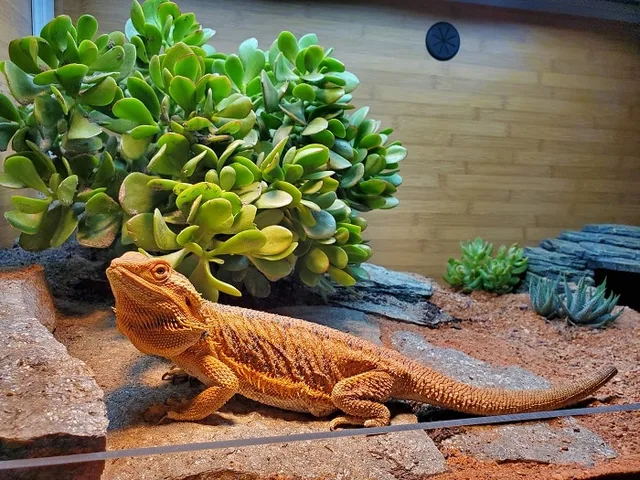
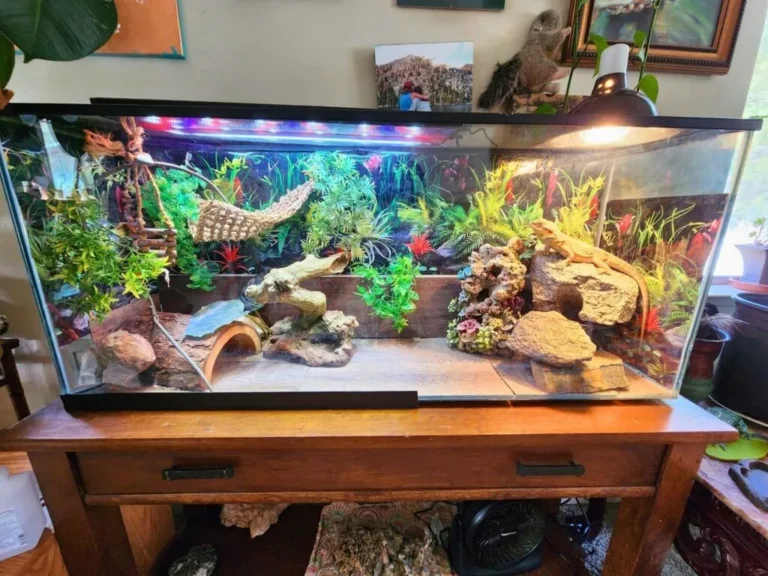
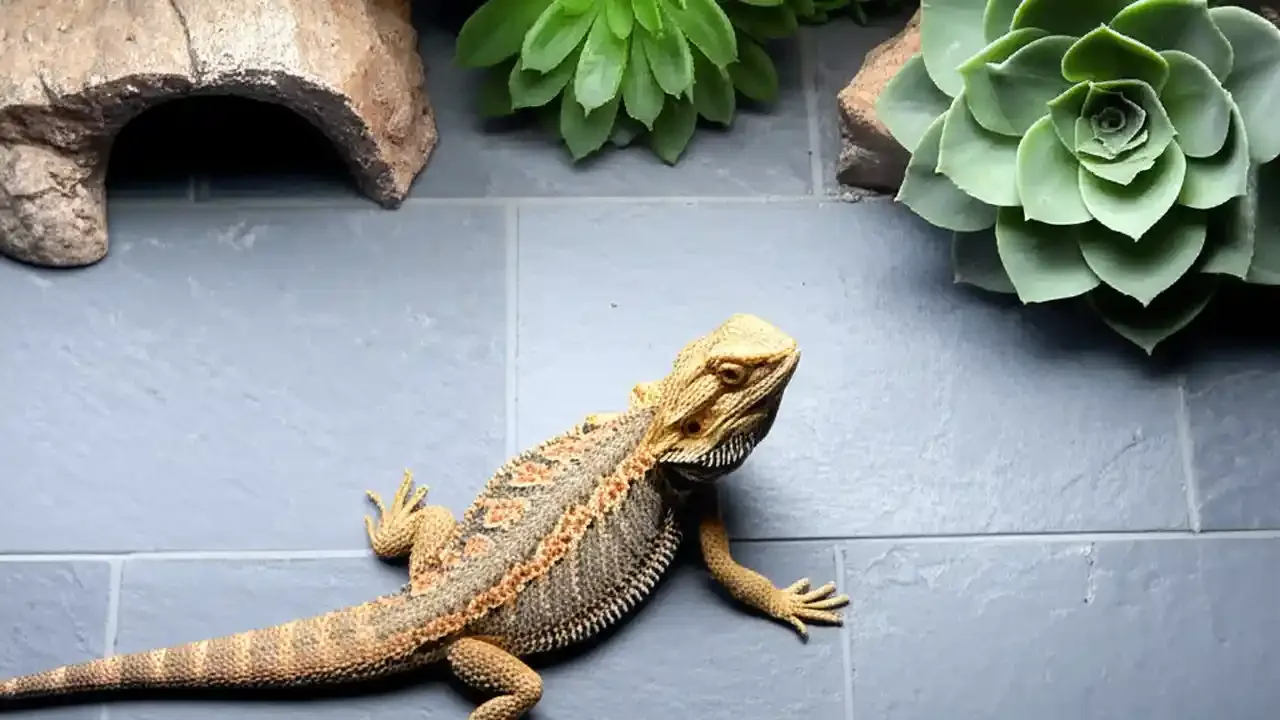
- Months 6–12: tile or slate. Your dragon’s aim has improved, you’re past quarantine worries, and you want something permanent and good-looking. Tile holds heat, files nails, and cleans in seconds.
- Year 1+: tile with a dig box — or bioactive. Now add enrichment back: a dig box of washed play sand in one corner gives digging without turning the feeding zone into a sandbox. Or go full bioactive if the project appeals to you. Either way, the risky part is now optional enrichment, not the floor they eat off.
Each step only happens when the previous one’s job is done. That’s the whole philosophy: earn the prettier substrate with a healthy, established dragon.
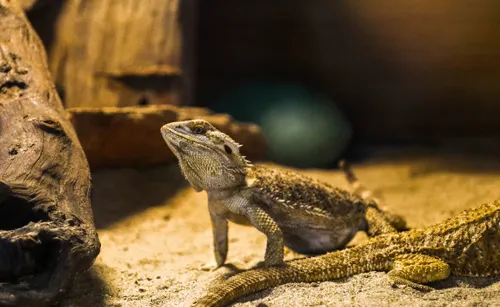
💡 Did you know? Wild bearded dragons live on hard-packed earth and clay, not soft dunes. The “desert = sand” logic that sells calcium sand is based on a postcard, not their actual habitat — which is one reason tile and packed clay mixes are arguably closer to nature than a dune of loose sand.
If you want loose: the shortlist for adults
For healthy adults with correct heating, UVB, and hydration already dialed in, these are the loose options with the best track records:
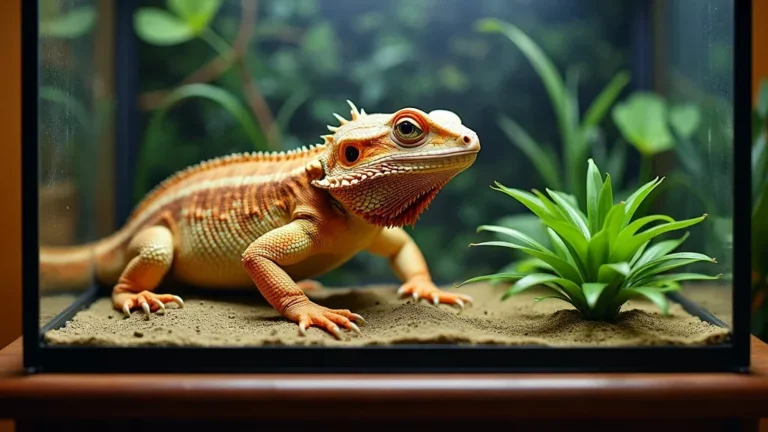
- Washed play sand — the classic. Cheap, diggable, decades of keeper experience behind it. Sift out the fine dust, keep it shallow (1–2 inches), adults only.
- Bioactive mix — organic topsoil, sand, and clay with isopods and springtails as a cleanup crew. The most enriching option and largely self-maintaining once established. But research it properly first — it’s a project with drainage layers and microfauna, not a bag you pour in.
- Excavator clay / sand-clay mix — holds burrow shapes so dragons can dig tunnels that don’t collapse. Fantastic enrichment; harder to clean than plain sand.
What unites all three: they’re used by keepers whose temperatures, UVB, and hydration are already correct. Loose substrate is the last upgrade, not the first — decoration for a dialed-in tank, not a foundation to build on.
The never-use list
Some substrates aren’t debated — they’re just bad. If any of these came in a starter kit, throw them out:
- Calcium sand — clumps when wet inside the gut, and the added calcium makes dragons deliberately eat it. The worst of both worlds.
- Crushed walnut shell — sharp edges, indigestible, dusty.
- Wood chips / bark — classic blockage material, irritates airways.
- Gravel / pebbles — swallowing hazard with zero upside.
- Corn cob bedding — swells, molds, indigestible. Made for rodents.
💡 Did you know? Starter kits are the #1 source of bad substrate. Manufacturers bundle calcium sand and walnut shell because they’re cheap, light, and look premium through the box window — not because they’re safe. The kit’s business model depends on you not knowing better yet.
Cleaning: the schedule nobody follows (but should)
Whatever’s on the floor, the routine is the same. This is the part that actually prevents the bacterial problems people blame on substrate choice:
| Task | How often | Notes |
|---|---|---|
| Spot-clean droppings + uneaten food | Daily | 90 seconds with a paper towel; the single highest-value habit |
| Wipe solid surfaces | Weekly | Reptile-safe disinfectant or diluted vinegar, then rinse |
| Full substrate change (loose) | Every 2–3 months | Sooner if it smells — your nose knows before your eyes do |
| Replace paper towel | As soiled | Usually every few days; basically free |
| Deep clean + disinfect tank | Monthly | Remove everything, disinfect, bake wood decor at 250°F for an hour |
Substrate questions, answered
Can I mix substrates — like tile with a dig box?
Yes, and it’s one of the best compromises in the hobby: solid flooring under the feeding area (zero ingestion while hunting) plus a dig box of washed play sand for enrichment. Many experienced keepers consider this the ideal adult setup.
Is reptile carpet really that bad?
It’s not dangerous the way walnut shell is — but it traps bacteria no matter how often you wash it and snags claws, and it needs constant laundering to stay sanitary. Tile does everything carpet does, better, with none of the downsides.
My dragon is eating the sand — what do I do?
Switch to solid substrate immediately, then check two things: basking temperature (cold dragons eat substrate more) and calcium supplementation (deficient dragons lick and eat odd things). Deliberate substrate-eating is a symptom worth investigating, not a quirk.
When can my baby go on loose substrate?
Most keepers wait until 10–12 months, when hunting aim and gut size are adult-like. There’s no prize for rushing it.
Does substrate affect humidity?
Yes — loose substrates hold more moisture than tile, and damp substrate in a warm tank grows mold and raises humidity above the 30–40% bearded dragons want. If you’re using loose substrate, keep water bowls on the cool end and spot-dry any damp patches.