Why Does My Bearded Dragon Have a Black Beard?
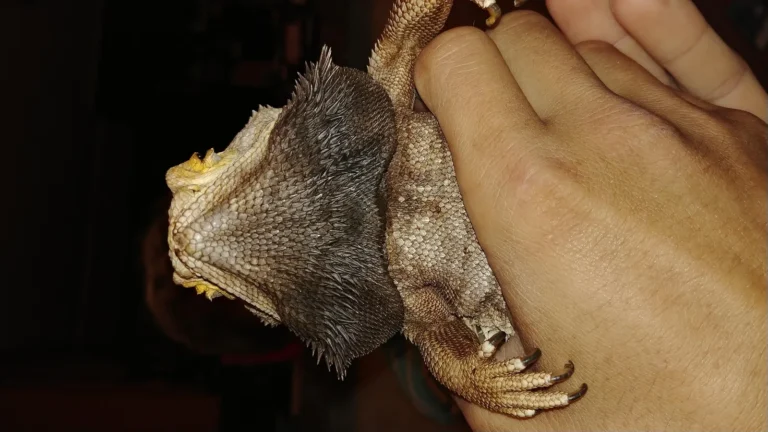
A black beard on a bearded dragon stops every owner cold the first time they see it. One minute your dragon is their usual sandy color; the next, the whole throat fan has gone dark as coal. Here’s what experienced keepers know: a black beard is a message, not a diagnosis. It can mean “I’m warming up,” “back off,” “I’m stressed,” or occasionally “something is wrong” — and the context around it tells you which. Answer four quick questions below to decode what your dragon is most likely saying, then read the full guide to all six causes.
What the black beard actually is
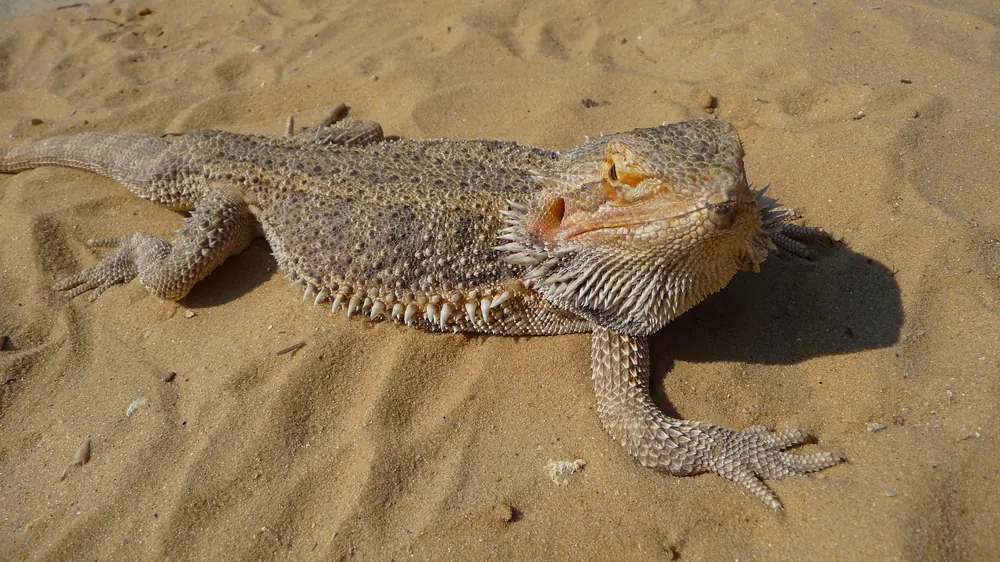
The “beard” is the expandable throat fan under a bearded dragon’s chin — the feature that gives the species its name. It’s packed with specialized pigment cells called chromatophores that can darken or lighten in seconds. This isn’t camouflage; it’s communication, closer to a facial expression than a mood ring. A dark beard amplifies the dragon’s silhouette and signals intensity — whether that intensity is “I’m cold,” “I’m the boss,” or “I’m not okay.”
Because it’s a signal, the golden rule of black beards is context over color. The same dark beard means completely different things at 8 a.m. under the basking lamp versus 3 p.m. while staring at the cat. The decoder above walks through that context; the sections below explain each cause in depth.
Cause 1: Thermoregulation — the morning darkening
The most common and most harmless cause. Dark surfaces absorb radiant heat faster than light ones, so dragons deliberately darken their beards (and often their whole underside) while warming up in the morning, then fade back to normal coloring as their body temperature rises. If the beard is black at lights-on and sandy by mid-morning, your dragon is just running its heating system efficiently.
One nuance worth knowing: a dragon that stays dark well past warm-up may be telling you the basking spot isn’t hot enough. If the surface reads under 95°F, the dragon can’t reach operating temperature and stays in “heat-seeking” mode all day. Verify with an IR temp gun — it’s the fastest way to rule this in or out.
💡 Did you know
Bearded dragons can lighten and darken their whole body, not just the beard — it’s all the same chromatophore system. The beard just shows it most dramatically because the skin there is thin and the color change is concentrated.
Cause 2: Stress — new home, reflections, nearby pets
Stress darkening is the black beard most owners worry about, and it’s also the most fixable. Classic triggers: a recent move or rehoming (expect 1–2 weeks of adjustment darkening), the dragon’s own reflection in the glass (it reads as a rival that never leaves), a cat or dog staring at the tank, loud construction noise, or a tank placed in a chaotic high-traffic spot.
The signature of stress darkening is that it tracks the trigger — it appears when the stressor is present and fades when it’s gone. If the beard goes black every evening when the dog parks itself by the tank and fades after the dog leaves, you’ve found your answer. Fix the environment, not the dragon. Our guide to bearded dragon stress signs covers the full stress picture, including the belly stress marks that often accompany a stress-darkened beard.
Cause 3: Territorial and dominance displays
Sometimes the black beard isn’t stress at all — it’s swagger. A dragon that spots its reflection, another reptile, or even a favorite human may puff the beard, turn it black, and add head bobbing for emphasis. This is the “look how impressive I am” display, and it’s most common in adult males during spring.
Display darkening is theatrical and intermittent: big puffed beard, dramatic bobbing, then back to normal ten minutes later. It’s healthy social behavior, not a problem to solve — though if the trigger is a constant reflection, covering that glass panel saves the dragon the trouble of defending its territory all day.
Cause 4: Mating behavior
During breeding season (typically spring), hormonal surges make males especially demonstrative: near-constant black beards, vigorous head bobbing, and restless pacing. Females may darken too, though usually less dramatically. If your adult male turns into a bobbing black-bearded showoff every March through May and is otherwise eating and basking normally, season is the likely explanation.
There’s nothing to fix here, but do keep handling calm and predictable — hormonal dragons can be jumpier than usual, and males may be more territorial about their space for a few weeks.
🔍 Myth vs reality
Myth: “A black beard always means an angry or aggressive dragon.” Reality: Most black beards have nothing to do with aggression — morning warm-ups, breeding displays, and brief stress reactions make up the large majority. True aggression (lunging, biting) is rare and comes with a whole suite of other signals.
Cause 5: Illness — when the darkening won’t resolve
Here’s the one that matters most. Communication darkening comes and goes; illness darkening stays. A beard that remains dark for days, especially combined with lethargy, appetite loss, sunken eyes, discharge, or unusual breathing, is a genuine warning sign. The dragon isn’t signaling anymore — it’s showing you it’s unwell.
Don’t try to decode this one at home beyond recognizing the pattern. Persistent darkening plus any other symptom is a reptile-vet visit, full stop. Note when it started, what’s changed in husbandry, and bring those notes — they help the vet narrow things down enormously.
Reading the full picture: beard plus body language
The beard is one instrument in an orchestra. Read it alongside the rest: black beard plus head bobbing means display; black beard plus hiding and belly marks means stress; black beard plus lethargy and no appetite means possible illness; black beard at 8 a.m. that fades by 10 means thermoregulation. No single signal stands alone, which is why the best next step after this article is learning the whole vocabulary — our guide on how to read your bearded dragon’s body language covers all twelve major signals and how they combine.
📊 Stat
In owner surveys, first-time keepers consistently rank the black beard among the top three most alarming things their dragon does — yet reptile vets report that the large majority of black-beard concerns brought to clinics turn out to be normal thermoregulation or display behavior. Context really is everything.
Juveniles vs adults: age changes the odds
Age shifts which causes are most likely. Juveniles darken primarily from stress and thermoregulation — everything is new, their world is still scary, and small bodies lose heat fast, so morning darkening is especially pronounced. If your baby is black-bearded most of the day, think stress and temperatures before anything else, and give new arrivals a full two weeks of minimal handling to settle.
Adults add two more common causes to the mix: dominance displays and breeding-season hormones, both rare in dragons under a year old. An adult male who is black-bearded and bobbing every spring is running seasonal software; a juvenile doing the same in its first month home is almost certainly stressed. Match the explanation to the life stage and you’ll decode faster.
When a black beard means call the vet
Make the call when: the beard stays dark for multiple days without fading; darkening comes with lethargy, appetite loss, breathing changes, or discharge; the dragon is dark and hiding constantly rather than basking; or you see darkening plus visible injury, swelling, or weight loss. Describe the timeline and the accompanying symptoms — “black beard for four days, not eating, lethargic” gets you triaged far faster than “my dragon looks dark.”
What to read next
- How to Read Your Bearded Dragon’s Body Language — all 12 signals and how they combine.
- Is Your Bearded Dragon Stressed? 8 Signs to Watch — when darkening means stress, and how to fix it.
- Exact Basking Temperatures for Bearded Dragons by Age — rule out a too-cool basking spot first.