Why Does My Bearded Dragon Lick Me?
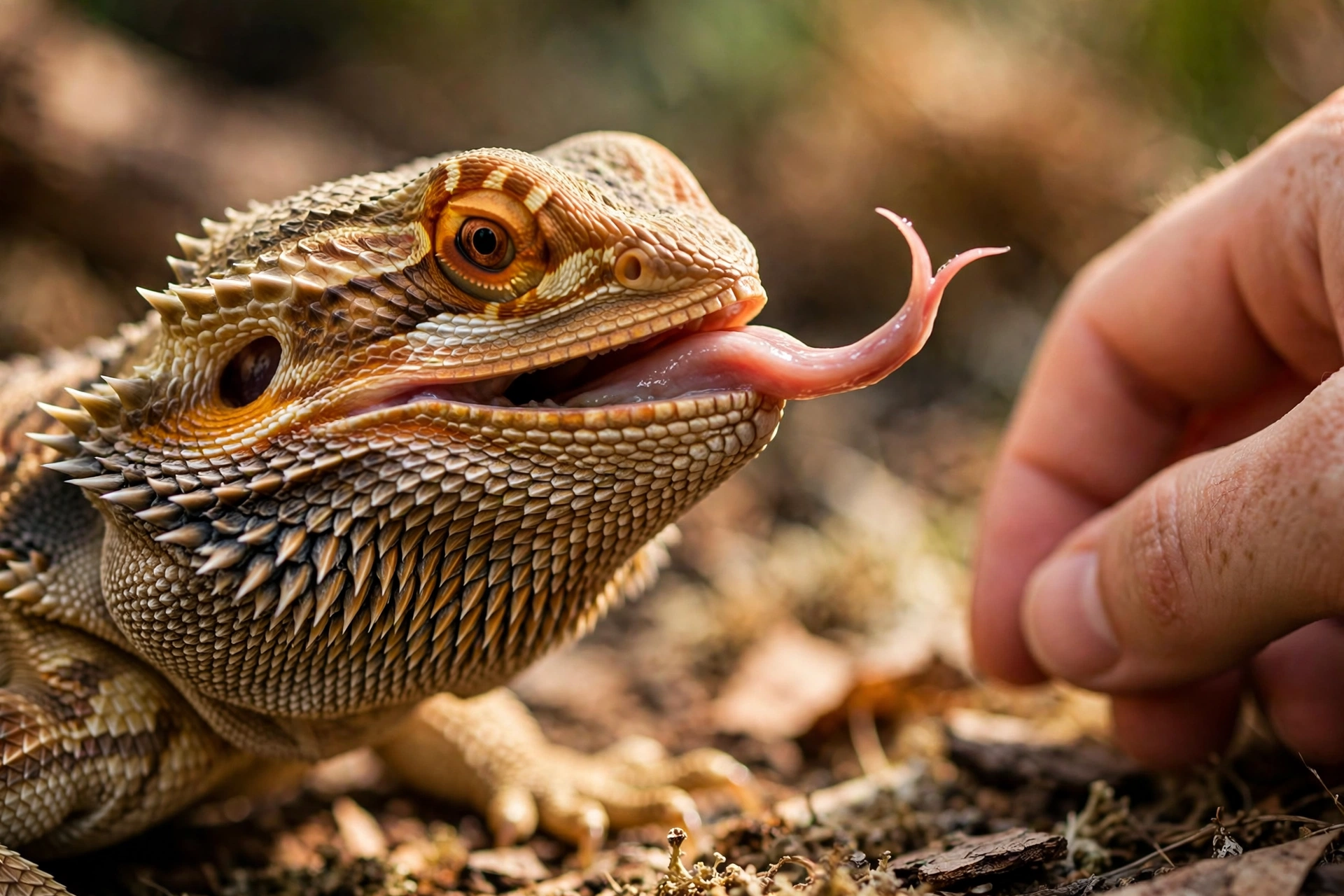
The first time it happened, I had my palm flat in the tank offering a collard green, and instead of taking the food, my dragon leaned forward and gave my fingertip a slow, deliberate lick. Then another. My first thought was the same one most owners have: is she tasting me? About to bite?
None of those. What looks like a kiss or a taste test is actually your bearded dragon doing something more interesting: reading you. A bearded dragon’s tongue is less a tasting tool and more a mobile chemistry lab, and when it licks you, it files your scent away in its mental catalog of the world.
Your Dragon’s Tongue Is a Nose in Disguise
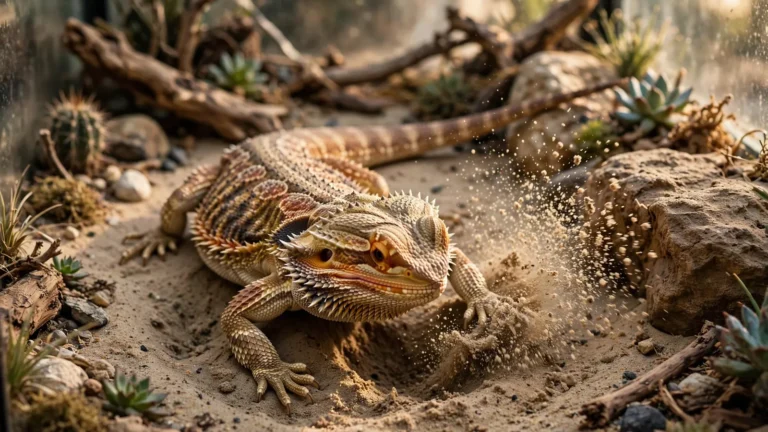
When a bearded dragon flicks its tongue — quick darts, or the slower press against your skin — it collects microscopic scent particles from the air and surfaces. When the tongue retracts, it presses those particles against a structure on the roof of the mouth called the Jacobson’s organ (vomeronasal organ), which analyzes the chemicals and sends the result to the brain as smell.
This is the same system snakes use, which is why scent-gathering tongue flicks are constant background behavior in a healthy dragon. The tongue gathers, the Jacobson’s organ interprets — letting dragons detect food, predators, and familiar individuals without needing to see them.
Many keepers leave a worn, unwashed T-shirt in a new dragon’s tank for the first few nights. The idea is simple: your dragon spends hours tongue-flicking the fabric and learning your scent while you aren’t even there — so by the time you start handling, you already smell like something familiar instead of something alarming.
It also explains why dragons lick new objects so eagerly. A new hide, a new branch, your hand — each gets sampled, pressed against the Jacobson’s organ, and classified. Tongue-flicking is just one sense in their sensory world, but it is the one that tells them exactly who — and what — is in front of them.
The Scent-Learning Timeline: How Your Dragon Learns You
A bearded dragon doesn’t learn your scent in one afternoon — it happens in phases, and the licking changes meaning as the weeks pass. Tap through the timeline to see what your dragon is reading at each stage and how to handle it.
How Your Dragon Learns Your Scent
Days 1–3: The Stranger
Your scent is brand new, and new means potentially dangerous. Expect quick tongue-flicks when you approach and possibly a lick if you offer your hand — followed by freezing, flattening, or scooting away. Your dragon is asking one question: predator or not?
- Handling tip: Keep sessions to 5–10 minutes and let the dragon come to you — don’t chase or scoop from above.
- Handling tip: Wash your hands but skip strong soaps — heavy fragrance is a whole new scent to process.
- Handling tip: Talk quietly near the tank so your voice joins your scent as familiar data.
Weeks 1–2: The Familiar
The urgent investigation fades. Licks become slower — your scent is on file and being confirmed. Expect fewer tongue-flicks, normal color, and a willingness to stay on your hand.
- Handling tip: Extend sessions to 15–20 minutes; hand-feeding a favorite insect links your scent to good things.
- Handling tip: Watch for how to read your dragon’s body language; fading stress marks matter more than licking itself.
Weeks 3–4: The Association
Your scent is now linked to outcomes. Many dragons perk up or move toward the glass when you enter, while ignoring other people. Licking at this stage is a greeting check: a quick confirmation that you are who your scent says you are.
- Handling tip: Introduce short out-of-tank exploration on your terms — a lizard-proofed room, supervised.
- Handling tip: Let the dragon initiate sometimes — one that climbs onto your hand voluntarily trusts the scent.
- Handling tip: Avoid lots of new people at once; each one restarts a mini version of this timeline.
Month 2+: The Routine
Licking becomes occasional maintenance sampling rather than investigation. Some dragons lick, then settle straight into your palm and close their eyes. Your scent now means warmth, safety, and food.
- Handling tip: Maintain the routine but keep sessions reasonable — 20–30 minutes, then back to the tank’s heat.
- Handling tip: If licking suddenly spikes after months of calm, check what changed: new soap, lotion, or a pet’s scent on your hands.
- Handling tip: Enjoy it — a dragon that licks you and relaxes has decided you are part of its safe world.
What the Licks Actually Mean
Context is everything. The same lick can mean different things depending on when and how it happens.
The identity check
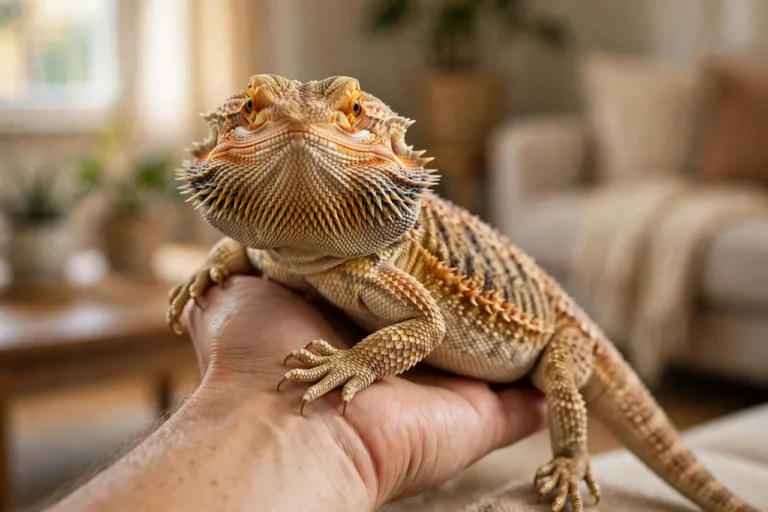
A slow lick to your finger or palm during handling is usually exactly what it looks like: identification. Your dragon is confirming you are the same large warm thing it has been cataloging — part of how dragons learn to recognize you over time. A genuinely frightened dragon does not pause to lick — it freezes, flattens, puffs its beard, or runs.
The investigation
New object, new smell, new round of licks. Offer a new branch or a hand that smells like the orange you just peeled, and you will get a thorough sampling session. This is also why a dragon may lick you more after you’ve handled another pet, cooked a meal, or applied lotion — your scent profile changed, and the file needs updating.
The food question
Sometimes a lick is genuinely about food. Dragons sample potential meals with quick tongue-flicks before committing, and a finger that smells like the greens you just chopped may get an exploratory lick followed by a testing nibble. Wash your hands before handling if you’ve been preparing food — not because the lick is dangerous, but because a food-scented finger invites a harder bite. When tasting new foods, the tongue-flick-first pattern is the same one aimed at your hand.
“My dragon licks me because it loves me” — partly myth. Licking is scent-mapping, not affection in the human sense; your dragon isn’t kissing you. But a dragon only investigates something it doesn’t consider a threat — calm licking with relaxed body language is about as close to a compliment as reptile behavior gets.
The comfort signal
Watch what happens after the lick. A dragon that licks your hand and then settles — normal color, relaxed limbs, maybe closed eyes — is telling you the investigation came back clean. Paired with how to read your dragon’s body language, it becomes a reliable read on trust.
When Licking Deserves a Second Look
Normal licking is calm, occasional, and paired with relaxed body language. Licking that looks different is worth noticing — not panicking over.
Constant, frantic licking of the air, glass, or everything in reach — especially paired with restlessness or glass surfing — often means stress or an environmental problem. A new enclosure, wrong temperatures, or a recent move can all trigger obsessive sampling. Check husbandry first: basking spot, cool side, and whether anything in the setup changed recently.
Licking plus gaping or labored breathing is a different category. Occasional tongue-flicks are silent and easy; repeated open-mouth behavior with mucus, wheezing, or lethargy is not normal licking. Those are signs worth describing to a reptile vet promptly rather than waiting to see.
A pale or white-looking tongue and mouth interior is another sign to take seriously. A healthy dragon’s mouth and tongue look pink; noticeably pale or white tissue can indicate an underlying health issue. Don’t try to diagnose it yourself — note what you’re seeing and get a reptile vet’s eyes on it.
The Jacobson’s (vomeronasal) organ is present and functional in all snakes and lizards — it’s the dedicated chemical-analysis system behind every tongue-flick. Your dragon’s “licking” is the visible half of a two-step process: the tongue collects, the organ analyzes, and the brain files the result.
The reassuring bottom line: nearly all licking is healthy, normal sensory behavior. Learn the pattern, enjoy watching your dragon get to know you, and save your worry for licking that comes with other warning signs.
What to Read Next
Turn those licks into a real bond — our 4-week taming plan walks you through handling, trust-building, and reading your dragon’s signals step by step.
Start bonding through handling →