Can Two Bearded Dragons Live Together? The Truth
It is the most natural question in reptile keeping. You love your bearded dragon, you have space for a bigger tank, and a second dragon is sitting in a pet-store enclosure looking lonely. “Wouldn’t mine like a friend?” Pet stores sometimes even suggest it. The internet, meanwhile, is full of photos of dragons stacked cozily together that make cohabitation look like a slumber party.
Here is the honest answer, the one experienced keepers and reptile veterinarians converge on: bearded dragons are solitary, territorial animals, and housing two together almost always ends with one stressed, injured, or dead dragon. This guide shows you exactly what unfolds week by week in a shared tank, why each pairing fails in its own way, and the safe alternatives that give you two dragons without the welfare cost.
The Short Answer: No — and Here’s Why
Bearded dragons did not evolve for company. In the Australian wild they live alone, meet to breed, and otherwise treat other dragons as competitors or threats. That wiring does not switch off in a glass box — if anything, captivity makes it worse, because the subordinate animal cannot do the one thing a wild loser does: leave. Every shared tank is a territory dispute with no exit.
The dispute plays out through resource guarding long before it becomes violence. The dominant dragon claims the best basking spot, the warmest hide, and first access to food. The subordinate gets the cool corner, eats less, basks less, and lives under chronic stress — the slow-burn version of which you can learn to spot in our bearded dragon stress signs guide. Remember the baseline too: one dragon needs a full 4×2×2-foot enclosure to itself. Two dragons do not fit in “a bigger tank” — they need two territories, which means two tanks.
Reptile veterinarians consistently rank cohabitation injuries — bitten toes, tail-tip necrosis, and stress-related illness — among the most common preventable emergencies in pet bearded dragons. The injuries rarely happen on day one; they accumulate as the dominance dynamic hardens over weeks.
What Actually Happens: The Dominance Timeline
The pattern is so consistent across pairings that you can nearly set a watch by it. The first week or two often looks peaceful — both animals are settling, and owners post the “cuddle puddle” photos. But dragons do not cuddle; what looks like snuggling is usually stacking, where the dominant animal sits on top of the subordinate to monopolize the heat and light. It is resource guarding wearing a cute costume.
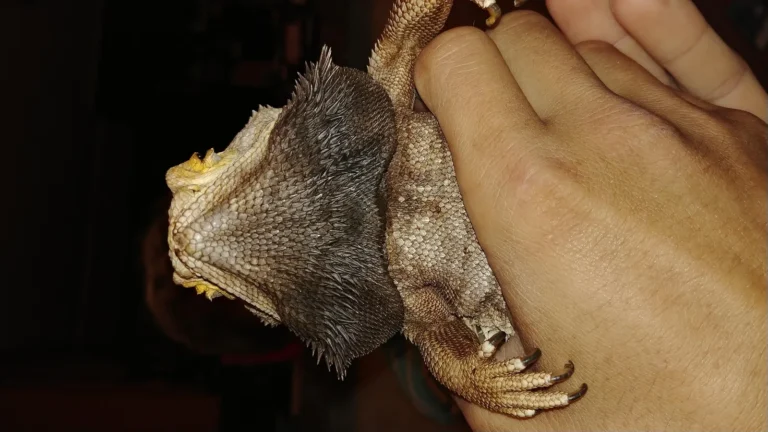
By weeks three and four, the guarding turns active: head bobbing, black bearding, chasing the other dragon away from the basking spot and the food dish. The subordinate starts glass surfing — frantic escape behavior — or goes still and hides, which owners misread as “calming down.” By weeks five to eight, the subordinate is typically eating less, basking less, and losing weight while the dominant animal thrives. Past two months, the outcomes turn physical: bite wounds on toes and tail tips, chronic stress suppressing the immune system, and in male pairings, fights that can maim or kill within minutes.
Pairing by Pairing: How Each Combination Fails
- Two males — the fastest failure. Adult males are hardwired to treat other males as rivals. Posturing escalates to combat quickly, and male combat in bearded dragons is not ritualized pushing — it involves biting, and bites remove toes and tail tips. This pairing should never be attempted, not even “to see.”
- Two females — the slowest, cruelest failure. Females fight less theatrically, which is exactly why this pairing fools people the longest. The dominance is quiet: one female owns the basking spot and the food, and the other simply… fades. Months of suppressed feeding and chronic stress, often discovered only when the subordinate is visibly ill.
- Male + female — the breeding trap. The male will pursue the female relentlessly, and she cannot escape in a shared tank. Constant breeding attempts exhaust her, suppress her feeding, and risk injuries — plus unplanned clutches of eggs that drain her calcium reserves. “They’ll just be friends” ignores what the male’s instincts are actually for. Sex matters enormously in this species’ social behavior.
- Babies together — the “but they’re so small” trap. Hatchlings nipping each other’s toes and tail tips is one of the most common cohabitation injuries, and it starts young. Babies also diverge in size fast: the bolder one monopolizes food, the smaller one stalls, and the gap compounds weekly. Separate them before the damage, not after.
Myth: Dragons sleeping in a pile are cuddling because they like each other. Reality: That “cuddle puddle” is stacking — the dominant dragon monopolizing the warmest spot by sitting on the subordinate. It is competition, not affection, and it is one of the earliest visible signs the pairing is already failing.
“But Mine Seem Fine” — About the Exceptions
Someone always knows someone whose two females lived together for years “with no problems.” Two things are worth saying about these stories. First, survivorship bias: the uneventful pairs get talked about; the bitten tails and the dragon that wasted away quietly do not make anecdotes. Second, “no problems” usually means “no problems the owner noticed” — chronic low-grade stress and a subordinate that simply never thrived are easy to miss when you are not looking for them.
There is also a real, narrow exception: very large, heavily structured outdoor-style enclosures where animals can fully avoid each other sometimes work for experienced keepers — but “sometimes works for experts with acres” is not a husbandry recommendation for a living-room tank. The responsible default, and the one every reptile vet will give you, is one dragon per enclosure. Full stop.
The Safe Alternatives (You Can Still Have Two Dragons)
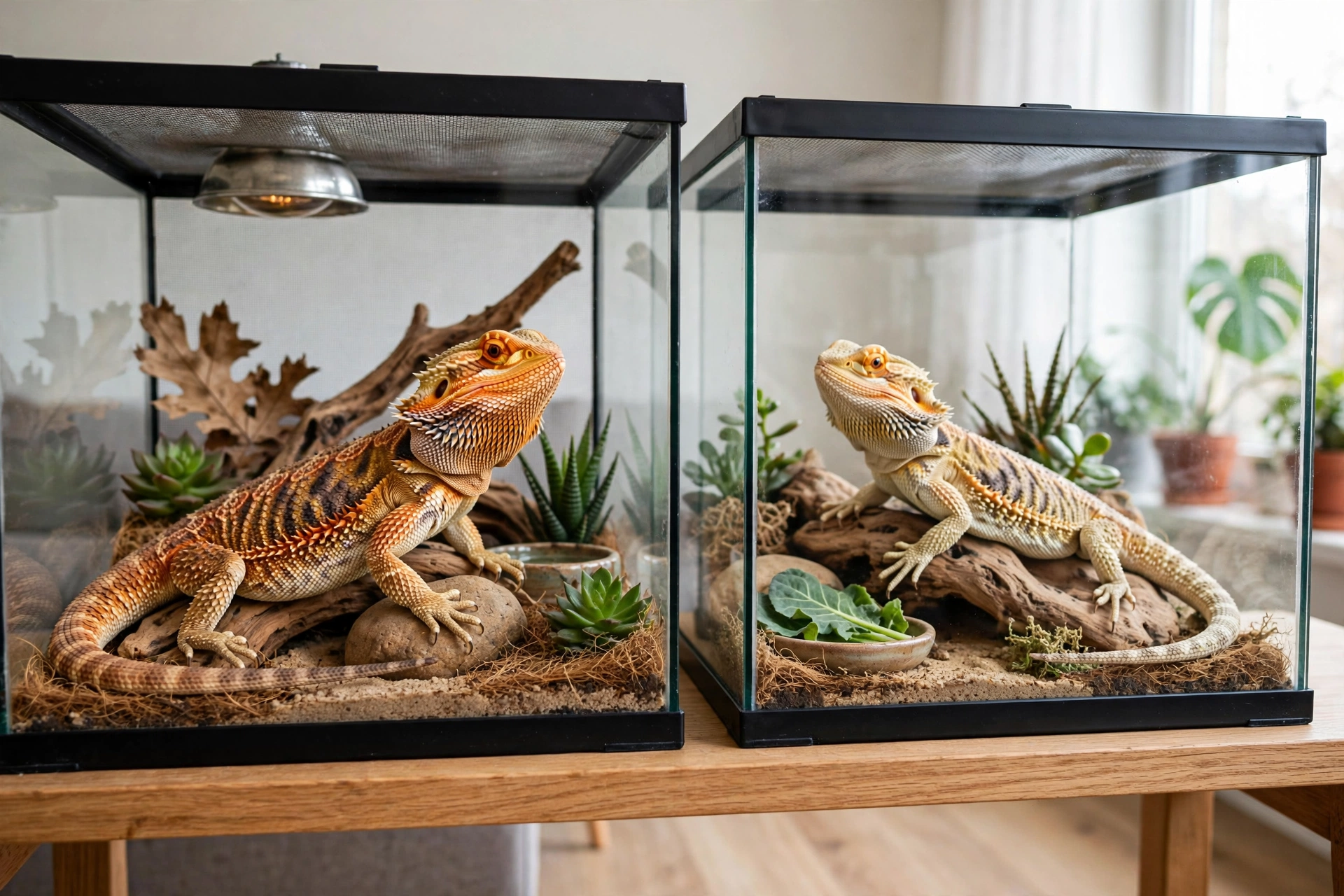
Wanting more than one bearded dragon is completely reasonable — you just house them the way the species requires: separately. Side-by-side enclosures give you two dragons to enjoy with zero conflict; many keepers find the animals even seem enriched by seeing activity nearby, with a visual barrier available if either shows stress. Each dragon gets its own basking spot, its own food, its own territory — the entire dominance problem disappears because there is nothing to dominate.
Supervised out-of-tank time can be shared only with extreme caution and never unsupervised — even brief lapses have produced injuries. The genuinely safe version of “together” is separate play sessions, or one dragon out while the other watches from its tank. And if you are adding a second dragon, quarantine it in its own setup for several weeks first: new animals can carry parasites, and a shared tank would have shared those on day one.
The Bottom Line
Bearded dragons do not get lonely — that is a human feeling projected onto a solitary reptile. What they get from a tankmate is competition, stress, and risk, delivered on a predictable timeline that the predictor above lays out. The kindest thing you can do for two dragons is also the simplest: give each one its own kingdom. They will never thank you for it, because they will never know what you spared them — which is exactly the point.
Getting a second dragon? House it separately from day one — read the expo buying guide before you bring it home.