7 Facts About Bearded Dragon Femoral Pores
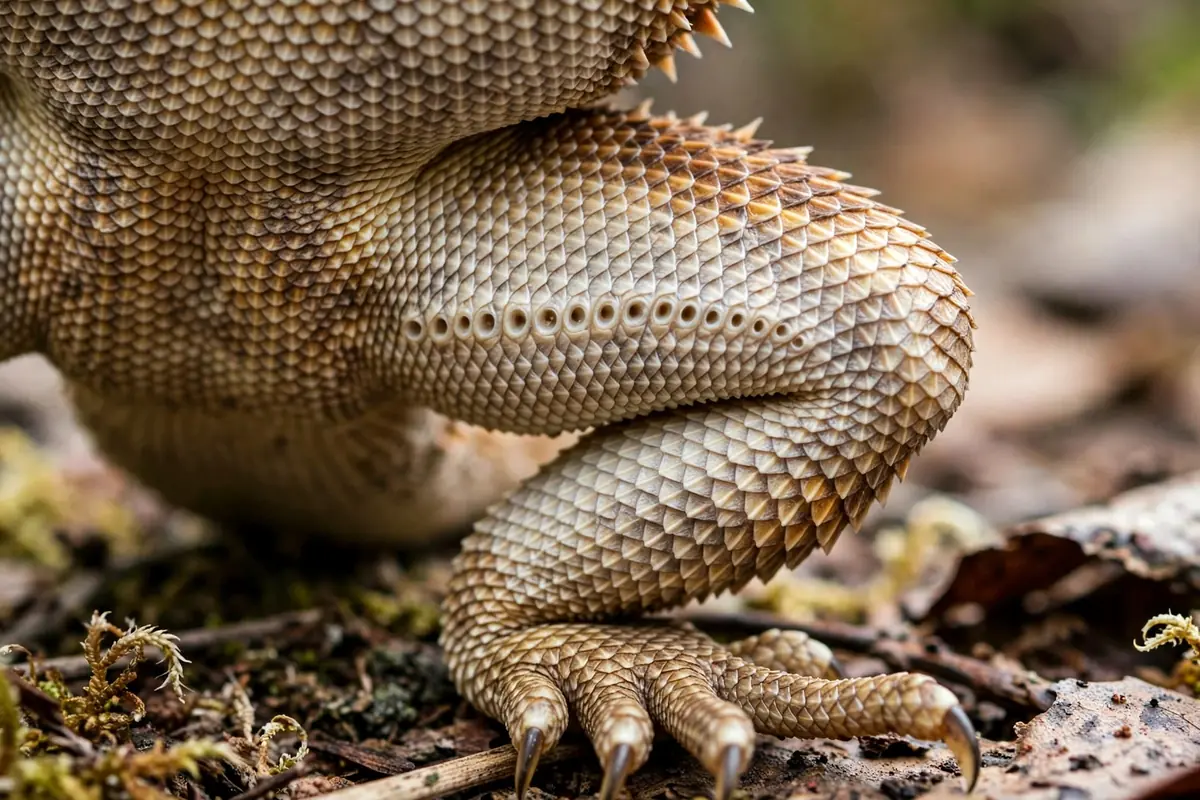
Flip a bearded dragon gently onto its back — supported, never dangling — and look at the inner thighs: a neat row of small dark dots along each leg, like stitching. Most new owners find the sight alarming, and a quick search will show people proudly squeezing thick waxy plugs out of them, which only makes the alarm worse.
Those dots are femoral pores: the visible openings of scent glands every bearded dragon carries. They are normal anatomy, not a condition. The real problem is what the internet tells you to do with them. This guide covers what femoral pores are, what healthy ones look like, the safe soak-and-brush routine that keeps them clear, and when a pore issue belongs at the reptile vet instead of in your bathroom.
What Femoral Pores Actually Are
Femoral pores are the external openings of the femoral glands, scent glands found in many lizard species. Their job is chemical communication: the glands produce a waxy secretion the lizard deposits onto surfaces as it moves — a scent mark carrying information about the individual, its sex, and its reproductive status. A wild male may drag his thighs across a favored basking rock, laying down a chemical signature that marks territory and advertises him to females.
Both sexes have femoral pores, but they are far more prominent in adult males, whose higher hormone levels keep the glands larger and more active. Juveniles of either sex may show almost nothing; the pores become obvious with maturity, usually well before the second year. If a “female” bought as a baby develops very obvious pores at eighteen months, the pores are telling the truth — males are frequently mis-sexed as juveniles.
Femoral pore secretions are chemical messages, not waste. When a male drags his thighs across a basking spot, he is scent-marking territory — the waxy plug material is the message itself, still loaded in the sender.
What Healthy Pores Look Like — and What Buildup Looks Like
A healthy pore line is tidy: small dots of roughly equal size, sitting flush with the surrounding scales on both legs, roughly symmetrical. You may see a tiny bead of waxy material at some openings, especially in adult males during warmer months when gland activity peaks. That is the gland doing exactly what it evolved to do, and it needs no intervention.
Simple buildup looks different. The plugs become hard and protrude past the scale surface like little dark thorns, sometimes with flakes of old shed skin clinging around the opening — often when low hydration or infrequent soaks keep the secretions dry and stiff, or a shed cycle leaves skin capping the openings.
Reptile veterinarians stress one point: a pore containing visible material is not automatically an abnormal or “clogged” pore. Their most common pore injury comes from owners “fixing” a normal gland with their thumbnails. Learn the difference between a working gland and a troubled one before you touch anything.
The Safe Soak-and-Brush Routine
When the plugs are clearly protruding and hard, the safe home routine has two steps and one rule: soften first, then encourage — never force.
- Soak in lukewarm water, 85–92°F (29–33°C), for 15–20 minutes. Water should be shallow enough for your dragon to stand comfortably — roughly elbow-deep. Check with a thermometer, not your wrist; water that feels merely “warm” to a human hand can be too hot for a reptile. This step does most of the work: heat and moisture soften the waxy plugs and loosen shed skin capping the openings.
- Brush gently with a soft tool. While the skin is still damp, roll a damp cotton swab or a soft-bristle toothbrush in small circles over the pore line, using almost no pressure. Loosened material will flake or roll away on its own. A second short soak can follow if you want to repeat the pass.
- Stop at resistance. If a plug does not release with gentle encouragement, the session is over. Hard, impacted material that will not budge is what reptile vets are for — they can remove it safely and check for infection underneath.
- Repeat only as needed. For a dragon prone to buildup, a 15-minute soak once or twice a week during dry months is plenty. Daily aggressive cleaning is counterproductive: irritated glands produce thicker secretions, manufacturing the problem you are trying to solve.
What not to use: no tweezers, pins, or sharp tools near the pores — ever. A punctured gland is an open door for infection. Skip harsh chemicals, alcohol, and “pore cleaner” products with undisclosed ingredients; plain water and a soft brush outperform them without risking the surrounding skin. Our guide to how often to bathe a bearded dragon covers water depth, temperature checks, and drying in full.
The vet-recommended soak for waxy pore plugs: lukewarm water at 85–92°F (29–33°C) for 15–20 minutes. Most of the cleaning happens during the soak itself — the brush pass is just encouragement.
The “Don’t Squeeze” Rule, Explained
The gland behind each plug is a living, vascular structure; forcing material out tears the delicate tissue lining the pore, and the micro-wounds left behind are ideal entry points for bacteria. A routine “cleaning” can convert a healthy gland into a swollen, infected one within days.
There is also a simpler point the videos skip: the waxy material is supposed to be there. The gland manufactures it on purpose. Squeezing out every plug is not hygiene — it is injury. A dragon whose pores look “full” but show no redness, swelling, or discharge has healthy glands. The one legitimate exception is a reptile veterinarian removing an impacted plug under controlled conditions, with sterile technique and proper aftercare — a medical procedure, not a grooming habit.
Myth: Waxy plugs are clogs, like pimples, that must be squeezed out regularly. Reality: The femoral gland is designed to contain material and release it gradually. Routine squeezing traumatizes healthy tissue and can cause the very infections owners hope to prevent.
When Pore Issues Belong at the Reptile Vet
Most buildup resolves with soaks and patience. Contact a reptile veterinarian promptly for redness, swelling, or heat around the pores (especially worse on one leg), smelly discharge, bleeding, behavior changes such as avoiding walking or basking, or buildup that will not soften after several gentle sessions across a week or two.
Describe what you see — when it started, which leg, what the discharge looks like — and let the vet decide what it is. Do not apply ointments or home remedies to a suspected infection unless the vet instructs you to; the wrong product on reptile skin can do more harm than the waiting. Pore checks are also a good moment for a wider once-over: shed trapping around the pore line can signal a humidity problem (see our retained shed guide), and our healthy bearded dragon checklist walks through the full body scan.