The Best Hides for Bearded Dragons Cover Both Ends
Ask five keepers about the best hides for bearded dragons and you’ll get five favorite products — but the real answer is less about the brand and more about the setup. A bearded dragon needs somewhere to feel invisible on both ends of the temperature gradient: a hide on the warm side and one on the cool side, each big enough to fit the whole dragon, tail included. Get that right and the exact style is mostly personal taste. This guide covers the hide types that work, how to size and place them, and a picker wizard that narrows it down for your exact tank.
Why two hides is the rule, not a suggestion
Bearded dragons thermoregulate by moving between heat zones. If the only hide sits on the cool end, your dragon has to choose between feeling safe and staying warm — and many will pick safety, then spend the day too cold to digest properly. One hide per end removes the trade-off: wherever the dragon needs to be temperature-wise, cover is waiting.
Hides also do quiet psychological work. A new or nervous dragon with nowhere to retreat stays in low-grade stress mode: darker colors, less appetite, more glass surfing. A good hide is the cheapest stress-reduction tool in the hobby.
The hide types that actually work
Half-log hides
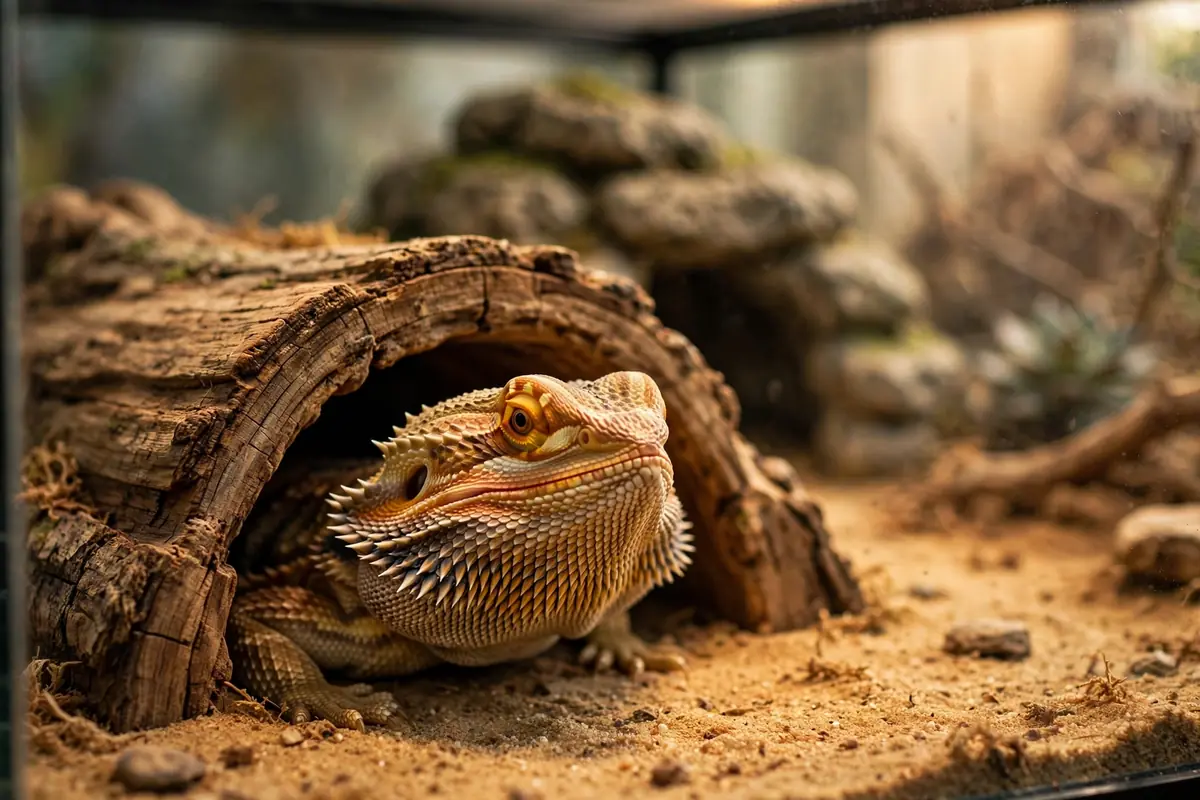
The classic. Cheap, natural-looking, and open at both ends so the dragon never feels trapped. The downside keepers report most: standard sizes leave an adult’s back legs and tail sticking out. Buy the large or jumbo size even for a juvenile — your baby becomes a 20-inch adult faster than you think.
Rock / stone caves
Resin or ceramic caves molded to look like rock. The flat roof doubles as a basking platform, which makes them the best value per square inch of tank space. Look for a low center of gravity so an active adult can’t tip it.
Corner caves
Triangular caves designed to tuck into a tank corner. They waste zero floor space and the slate or tile tops on some models work as basking spots. A favorite for the warm end.
Box / black plastic hides
Simple enclosed boxes with a single doorway. Maximum privacy, minimum aesthetics. Check the doorway size before buying — some are cut for smaller species and an adult beardie won’t bother squeezing through.
Humid hides
An enclosed hide with damp sphagnum moss or paper towel inside, used mainly during sheds. It sits on the cool end or middle of the tank (heat evaporates the moisture too fast on the warm end). Not a replacement for the two main hides — it’s a seasonal bonus.
Find your hides: the picker wizard
Answer four quick questions and get 2–3 hide recommendations matched to your tank size, your dragon’s size, which end needs cover, and your budget — including where to put each one.
🏠 Hide Picker Wizard
Sizing rules that prevent buyer’s remorse
- Fit the adult, not the baby. A hide your juvenile outgrows in four months is money wasted. Size for a 18–22 inch adult from the start.
- The tail test. The whole dragon — nose to tail tip — should disappear inside. Tail sticking out means the hide fails at its one job.
- Doorway matters more than interior. A palace with a doorway the dragon won’t enter is a decoration. The opening should clear the dragon’s shoulders comfortably.
- Stability first. Anything stackable-looking will be climbed. Heavy, low, tip-proof shapes only.
Placement: the part most people get wrong
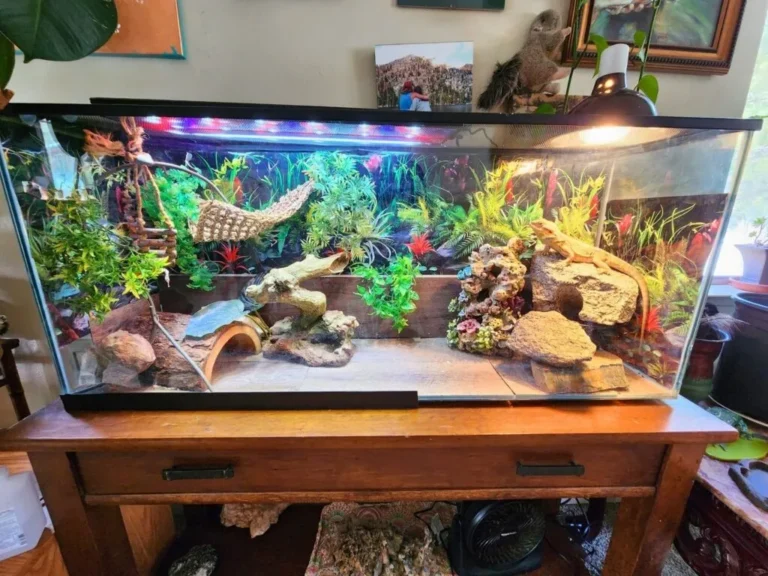
- Warm-end hide: near — not directly under — the basking lamp, so the dragon can duck out of the spotlight without leaving the warmth. Check that the hide’s roof doesn’t block the basking surface.
- Cool-end hide: at the far cool end, giving a true retreat into the low-80s °F zone. This is the “I’m done socializing” bunker.
- Away from the water dish. Hides parked next to water collect humidity and get grimy faster.
- Don’t overcrowd. Two or three hides plus a basking platform still needs open floor space — your dragon has to walk, hunt, and thermoregulate between its furniture.
Placement also interacts with your heating setup: if you’re still dialing in wattage, our basking bulb wattage guide pairs well with this one. And since hides trap a little moisture, keep an eye on overall levels with our humidity guide.
Cleaning and upkeep
Hides are poop magnets — dragons love to go where they feel hidden. Spot-clean daily and give every hide a proper wash with reptile-safe disinfectant (rinsed thoroughly) during your regular deep cleans. Resin and ceramic wipe down in seconds; natural wood half-logs are harder to sanitize and may need replacing yearly. Our starter kit checklist includes hides among the essentials for day one, so new keepers can budget for them upfront.
Common hide mistakes (and easy fixes)
- One hide, wrong end. A single hide on the cool end forces the “safety vs. warmth” trade-off described above. Fix: add the second hide before buying anything fancier.
- Hides sized for the baby. That adorable mini log lasts about three months. Fix: buy adult-size once — juveniles happily use oversized hides.
- Hide as the only decor. Hides handle security; your dragon still needs a basking platform, open floor, and visual interest. Fix: think in zones (bask, hide, roam) rather than single items.
- Never cleaning them. Enclosed hides trap waste and bacteria out of sight. Fix: make hides part of the weekly spot-clean route, not just the monthly deep clean.
- Blocking the UVB. A tall hide parked directly under the UVB tube shades the basking zone. Fix: keep hides beside the light’s footprint, never under it.
Frequently asked questions
Does my bearded dragon really need a hide? Mine never uses one.
A dragon that never hides may simply feel secure — or the hide may be wrong (too small, wrong end, doorway too tight). Keep at least one proper hide available regardless; behavior changes with sheds, seasons, and stress, and the option should be there when it’s needed.
Can I make a DIY hide?
Yes — sturdy cardboard boxes, terracotta pots on their side (smooth the edges), and sealed wooden boxes all work short-term. Avoid anything with sharp edges, toxic paints, or staples, and replace cardboard once it gets soiled.
Should the hide be dark inside?
Reasonably dark, yes — that’s the point. But it shouldn’t be a sealed lightless box with no airflow; hides with an open back or ventilation gaps stay fresher.
Where should a humid hide go?
Cool end or middle of the tank. On the warm end the heat evaporates the damp moss within hours, defeating the purpose.