Bearded Dragon Eye Bulging Is Usually Just Shedding
It is one of the most alarming things a new owner can witness: your bearded dragon suddenly bulges its eyes out like a cartoon character, holds them there, then pops them back in as if nothing happened. Before you panic, take a breath — bearded dragon eye bulging is, most of the time, a completely normal part of shedding. But “most of the time” is doing real work in that sentence, because bulging can occasionally signal an eye problem that needs a vet. This guide shows you exactly how to tell the difference, with an interactive slider below that walks you through what normal looks like versus the warning signs.
Why bearded dragons bulge their eyes
Dragons cannot peel their own shed the way you would peel off a glove — and the skin around the eyes is some of the trickiest to loosen. To help, they deliberately bulge their eyes outward, stretching the skin around the eye socket so the old layer cracks and lifts away. Think of it as built-in shed assistance: a few seconds of dramatic eye-popping that loosens the exact patch of skin they cannot scratch.
This is why bulging almost always shows up right before or during a shed, when the skin on the head and around the eyes has gone dull, pale, or cloudy. It is a brief, purposeful behavior — not a spasm, not a seizure, and not your dragon in pain.
Young dragons shed every few weeks as they grow, so owners of juveniles see eye bulging often — sometimes several times in a single shed cycle as different patches of head skin loosen. Adults shed less frequently and in patches rather than all at once, so bulging becomes an occasional event rather than a routine one. Either way, the pattern is the same: dull pre-shed skin, a few dramatic eye puffs over a day or two, then a clean shed and back to normal. If you are new to the behavior, it helps to know that experienced keepers barely glance up anymore — it is simply part of the shedding toolkit, right alongside rubbing against rough decor and the dulling of the skin beforehand.
What normal shed-related bulging looks like
- Both eyes bulge at the same time, then retract fully.
- Each episode lasts seconds, not hours — a quick puff and release, maybe repeated a few times.
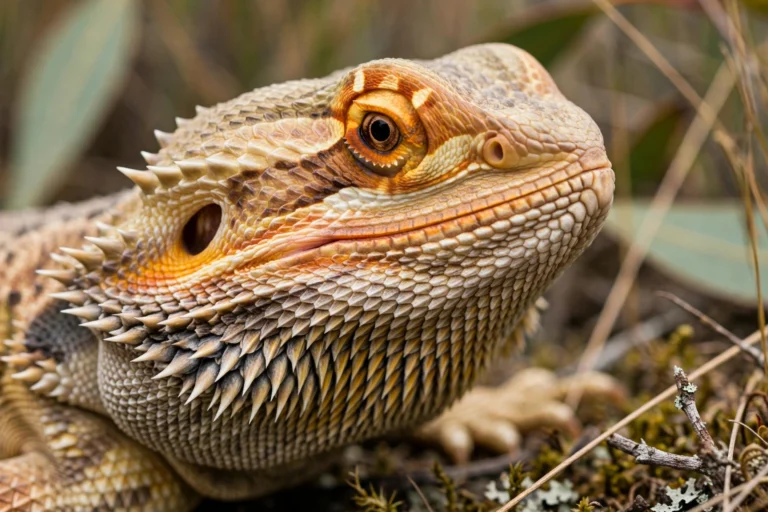
- The eyes look clear and normal between bulges: no discharge, no cloudiness, lids open normally.
- It coincides with dull, pale, or flaky skin on the head — the classic pre-shed look. Our shedding guide covers the full timeline.
- Your dragon is otherwise acting normally: eating, basking, alert.
If that checklist matches, you are almost certainly watching a healthy shed aid in action. No intervention needed — just let the shed do its thing.
Normal vs. concerning: drag the slider
Drag the divider to compare the two sides. Both sides show the same healthy eye — the left side is annotated with what normal shed-related bulging looks like, and the right side shows the warning-sign annotations: what swelling, discharge, or cloudiness would look like and why each one means a vet visit.
Eye bulging: normal or warning sign?
 Normal shed bulge
Both eyes bulge briefly, then retract fully
Eyes stay clear and open between bulges
Drag anywhere on the image (or use the slider control) to move the divider.
When bulging is a warning sign
Set the shed explanation aside and contact a reptile veterinarian if you see any of these:
- Bulging or swelling that does not retract — puffiness that lingers for hours, or swelling around the eye socket that stays put.
- One-sided swelling. Normal bulging is symmetrical. A single swollen or protruding eye points to injury, infection, a foreign body, or an abscess behind the eye.
- Discharge or crusting — anything thick, colored, or clumpy around the eye (a little clear moisture is normal).
- Cloudiness of the eye surface or a visible film over the eye.
- The eye held shut, frequent rubbing of the eye against decor, or squinting.
- Behavioral changes alongside: appetite loss, lethargy, or hiding more than usual.
Eye issues can deteriorate quickly and threaten vision, so do not “wait out” these signs. A vet can stain the eye to check for corneal scratches, flush out debris, and identify infection — none of which can be done safely at home beyond basic first aid.
Safe home care for mild eye irritation
For mild, shed-related puffiness with none of the warning signs above, supportive care is enough:
- Warm, damp cotton pad: hold a soft pad soaked in warm water gently against the eye area for a minute or two to loosen clinging shed. No scrubbing, no picking, no force — if the skin does not lift easily, it is not ready. Stuck shed constricting tissue is covered in our retained shed guide.
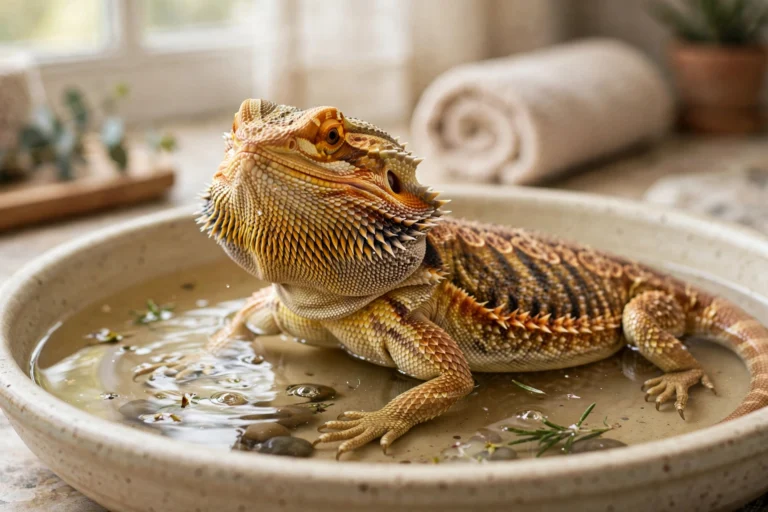
- A shallow warm soak (never submerging the head) softens shed and hydrates the skin — see how often to bathe a bearded dragon for safe soak basics.
- Remove uneaten live insects after feeding time; crickets left overnight can nibble sleeping dragons, including around the eyes.
- Keep the enclosure clean — dust, dirty substrate, and waste irritate eyes. A healthy bearded dragon baseline helps you notice when eye behavior changes.
Preventing eye problems
Most eye trouble is husbandry trouble wearing a disguise: hold humidity at 30–40%, provide proper UVB (too-weak or too-intense UV both irritate eyes), feed a balanced diet so vitamin levels stay in range, and keep the tank clean and free of dusty substrates. Dragons that shed cleanly and completely rarely need eye interventions at all. And if you ever catch yourself staring at a bulging dragon at 2am wondering whether to worry, run through the slider’s two sides once more — the symmetry-and-clarity check settles most midnight scares.