Why Is Your Bearded Dragon Lethargic? 9 Causes
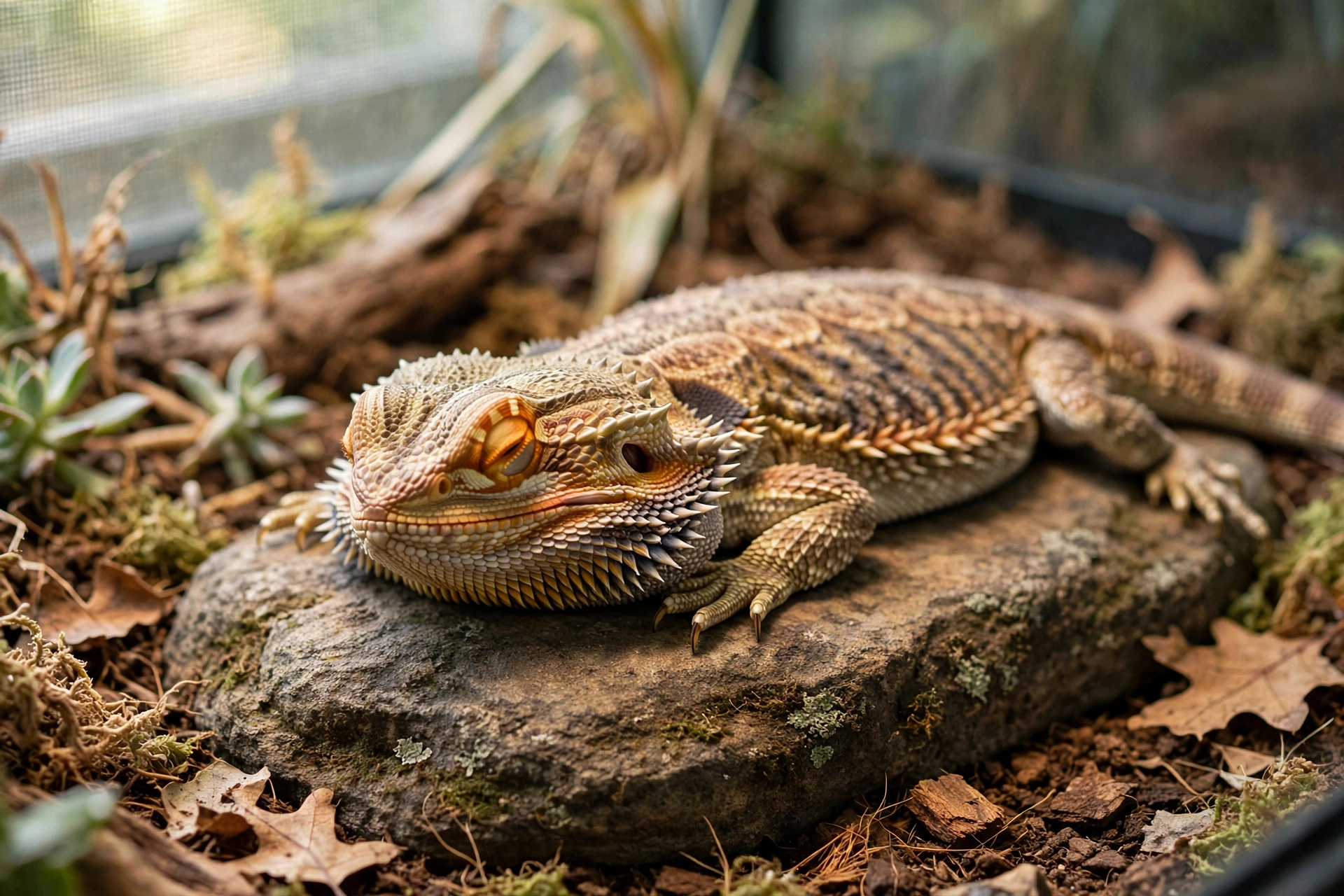
A bearded dragon lying flat and still under its basking lamp is usually doing exactly what it should. A bearded dragon lying flat and still on the cool side of the tank at 2pm, eyes half-closed, uninterested in the dubia roach walking past its nose — that is a different story.
The good news: lethargy follows patterns. The nine causes below are ranked by how often they actually turn out to be the answer, from the ordinary to the urgent. Work through them in order, run the 60-second checks first, and you will land on the right explanation far faster than a forum thread will.
Lethargy vs. Resting: Know the Difference
Before troubleshooting, make sure you are seeing actual lethargy. Healthy bearded dragons spend long stretches motionless — pancaked under the basking lamp, dozing in a hide at night, or sitting glass-still while watching the room. That is resting, and it is normal.
True lethargy looks different: your dragon stays limp or unresponsive when you pick it up, keeps its eyes closed during the day, shows no interest in food it normally chases, or stops basking and relocates to the cool end for days. The key test is responsiveness. A resting dragon perks up for food or a hand. A lethargic one barely registers either. If your dragon fails the responsiveness test, keep reading.
Bearded dragons are crepuscular-leaning baskers, not marathon movers. An adult may spend 60–70% of daylight hours essentially stationary — basking, digesting, watching. “Lazy” is the default setting; lethargy is when the default breaks and they stop responding to stimuli they normally notice.
The 9 Causes of Lethargy, Ranked by Likelihood
1. Brumation-Season Slowdown
From roughly October through February, adult bearded dragons often wind down: sleeping more, eating less, basking less. This is brumation, a natural seasonal dormancy, and it is the #1 explanation for winter lethargy in dragons over a year old. The slowdown is gradual — weeks, not overnight. Juveniles under a year rarely brumate, so winter sleepiness in a baby is far more suspicious. If the calendar says fall or winter and your adult is winding down in slow motion, compare the full picture with our guide to whether it is brumation or sickness before you worry.
Check this first: note when the slowdown started and whether appetite faded gradually alongside it. Gradual + seasonal = brumation until proven otherwise.
2. Basking Spot Too Cool
Bearded dragons are solar-powered. If the basking surface sits below about 100°F for adults (105–110°F for juveniles), digestion slows, energy drops, and the dragon parks itself in one spot — because it cannot generate the body heat its metabolism needs. Bulbs weaken with age and seasons change room temperature; a basking spot that was perfect in July can be ten degrees short in November.
Check this first: measure the actual basking surface with an infrared temp gun, not the air. If it reads under 100°F, raise the wattage or lower the lamp — then watch energy return within a day or two.
3. Dehydration
Mild dehydration saps energy before it shows anywhere else. Dragons that rarely drink standing water and eat mostly dry insects can run chronically a little dry — enough to make them sluggish without the classic sunken eyes. Lethargy plus slightly wrinkled skin or chalky white urates points here. Run through the dehydration signs checklist — the skin-tent test and eye check take thirty seconds.
Check this first: offer water by dripping it on the snout and note whether the dragon drinks eagerly. Eager drinking after days of stillness is a strong hint.
A bearded dragon’s basking surface needs to reach 100–110°F (38–43°C) depending on age. In rescue and vet case reports, underheated basking spots are implicated in the majority of “unexplained” lethargy cases that resolve with husbandry correction alone.
4. Not Eating Enough
Energy in equals energy out. A dragon that has been eating poorly for a week or two runs an energy deficit that shows up as stillness before it shows up as weight loss. Lethargy and appetite loss travel together so often they should always be investigated as a pair — work the not-eating troubleshooter alongside this guide.
Check this first: review the last 7–10 days of actual intake, not what you offered. A dragon offered food it never ate has still been fasting.
5. Early Impaction
Partial blockages announce themselves subtly: the dragon moves less, basks longer, and passes smaller or less frequent stools. Full impaction — no stool, swollen belly, straining — is unmistakable, but the early stage looks like generic lethargy. Suspect this if lethargy arrived alongside oversized insects, loose substrate ingestion, or a basking spot too cool to power digestion.
Check this first: when was the last normal stool, and was the last feeder wider than the space between the dragon’s eyes? Warm soaks and correct basking temps help mild cases; straining or bloating needs a vet.
6. Parasites
Internal parasites — most commonly coccidia and pinworms — drain energy over weeks. The pattern is distinctive: gradual lethargy plus soft, smelly, or runny stools, sometimes with weight loss despite a normal appetite. Because the decline is slow, owners often normalize it until the dragon is markedly flat.
Check this first: inspect the last few stools for unusual smell, mucus, or undigested food, and schedule a fecal test with a reptile vet — it is the only way to confirm or rule parasites out.
7. Stress
Chronic stress suppresses everything: appetite, basking, movement. A new home, excessive handling, a tank in a high-traffic hallway, or another pet staring through the glass can keep a dragon in a low-grade shutdown for weeks. Stress lethargy is a diagnosis of exclusion — what remains when temps, food, water, and season all check out. Walk through the stress signs guide and audit the environment honestly.
Check this first: did the lethargy start within two weeks of a move, a new enclosure, new decor, or a handling change? Timing is the giveaway.
Myth: A lethargic bearded dragon is just being lazy — they will snap out of it. Reality: Healthy dragons are calm but responsive. Persistent unresponsiveness is a symptom with a cause, and the cause is usually measurable (temperature, hydration, season, diet) — “lazy” explains nothing and delays the fix.
8. Shedding
A dragon mid-shed is a grumpy, itchy, low-energy dragon. The days when skin is loosening but not yet peeling are the worst: appetite dips, basking drops, and the dragon sits in one spot looking thoroughly miserable. This is normal and self-limiting — energy rebounds as soon as the shed clears. Suspect shedding if you see dull, pale, or flaky patches and the timeline fits a shed cycle.
Check this first: look for the telltale dull film over the skin. A warm soak often perks a shedding dragon up within the hour.
9. Illness
When the eight causes above are ruled out, lethargy points to genuine illness — respiratory infection, organ disease, or reproductive issues in females. Illness rarely travels alone: look for companion signs like gaping or wheezing, mucus around the nose or mouth, or weight loss. A reptile veterinarian can run bloodwork, imaging, and fecal tests that no checklist can replace, and early visits have far better outcomes than late ones.
Check this first: list every other symptom, however minor, and call a reptile vet with the full list. “Lethargic” plus one more sign is enough to justify the appointment.
Red Flags: When Lethargy Means Vet Now
Most lethargy resolves with a husbandry fix, but some combinations should not wait. Contact a reptile veterinarian promptly — the same day — if lethargy comes with labored breathing, gaping, or wheezing; mucus or bubbles around the nose or mouth; a swollen or hard belly with no stool; visible weight loss or a thinning tail base; limb tremors, a soft jaw, or difficulty walking; or complete unresponsiveness. A juvenile that goes flat suddenly is more urgent than an adult winding down in November.
When you call, bring data: basking surface temperature, last stool date and appearance, last shed, recent diet, and when the change started. Vets diagnose faster with numbers than with “he’s been acting weird.”