The 80–85°F Rule: Nailing Your Tank’s Cool Side
Ask a room of bearded dragon keepers what their basking spot reads and every hand shoots up. Ask what the cool end reads and the room goes quiet. That silence costs dragons their appetite, their digestion, and their energy — because the cool side is not the “leftover” third of the tank. It is the other half of the system that makes the hot side work.
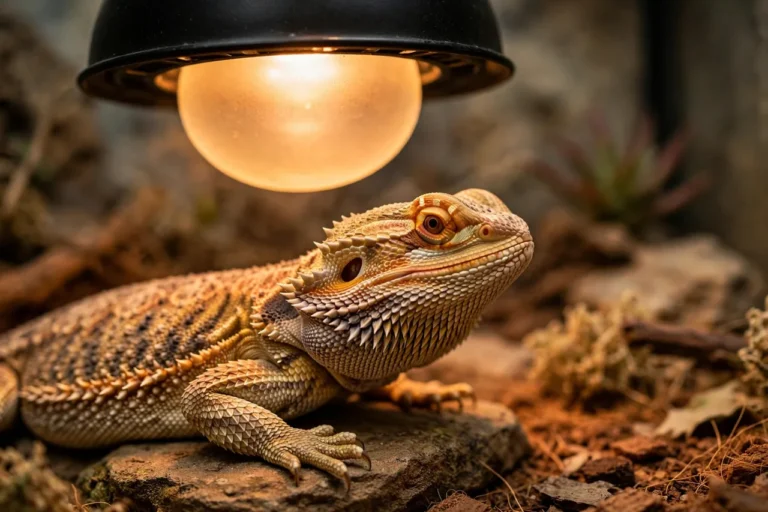
A bearded dragon is a solar-powered animal with a manual thermostat. It cannot sweat, it cannot shiver, and it cannot tell you it is uncomfortable. The only tool it has is movement: shuttle toward the heat to warm up, shuttle away from it to cool down. Take away a proper cool end and you have taken away half of its controls. Get the cool side right, though, and something clicks — appetite steadies, basking becomes a rhythm instead of a marathon, and the dragon starts using the whole tank instead of camping under the lamp.
This guide gives you the 80–85°F rule, shows you how to measure the cool side so the number means something, and walks you through fixing it when it reads too hot or too cold.
Step 1: Measure the right thing
Most cool-side readings are fiction, and the fiction usually comes from the thermometer, not the tank. Those little stick-on dial thermometers read the temperature of the glass they are stuck to, and they are routinely 10–20°F off from the air your dragon actually breathes. A dial that says 80°F might be sitting in a 68°F corner — or a 94°F one.
If you want numbers you can act on, you need the right tools and the right placement. Our guide to measuring accurately covers the full comparison, but the short version:
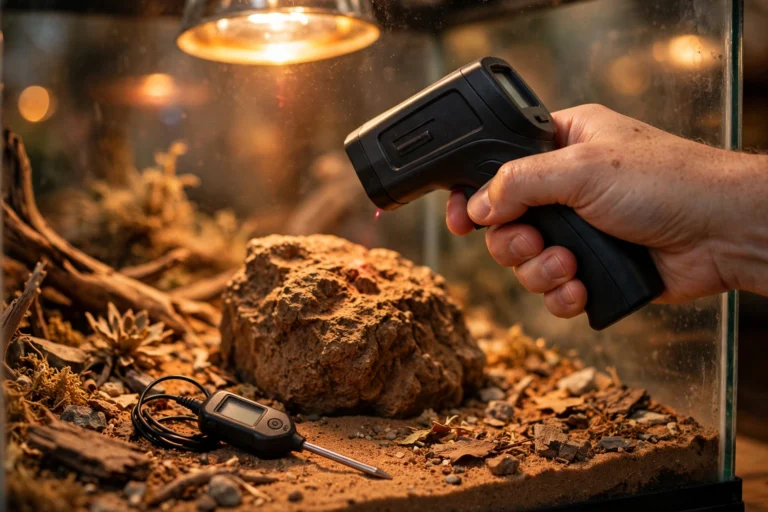
- An infrared temp gun for surfaces — point it at the basking rock and the cool-end floor for instant readings.
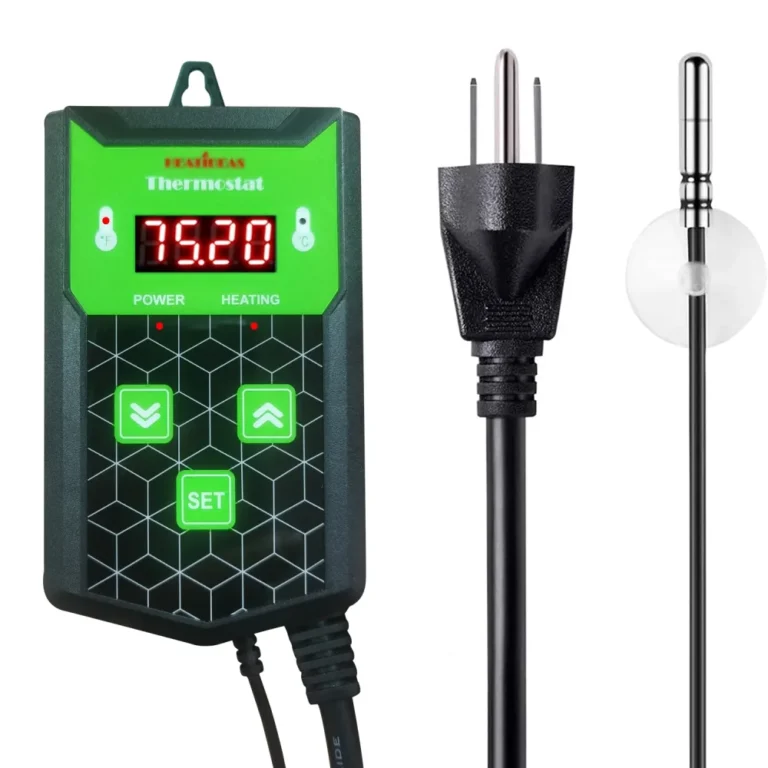
- Digital probe thermometers for continuous air temps — one probe at the basking spot, one at the cool end, running all day.
Probe placement on the cool side has three rules:
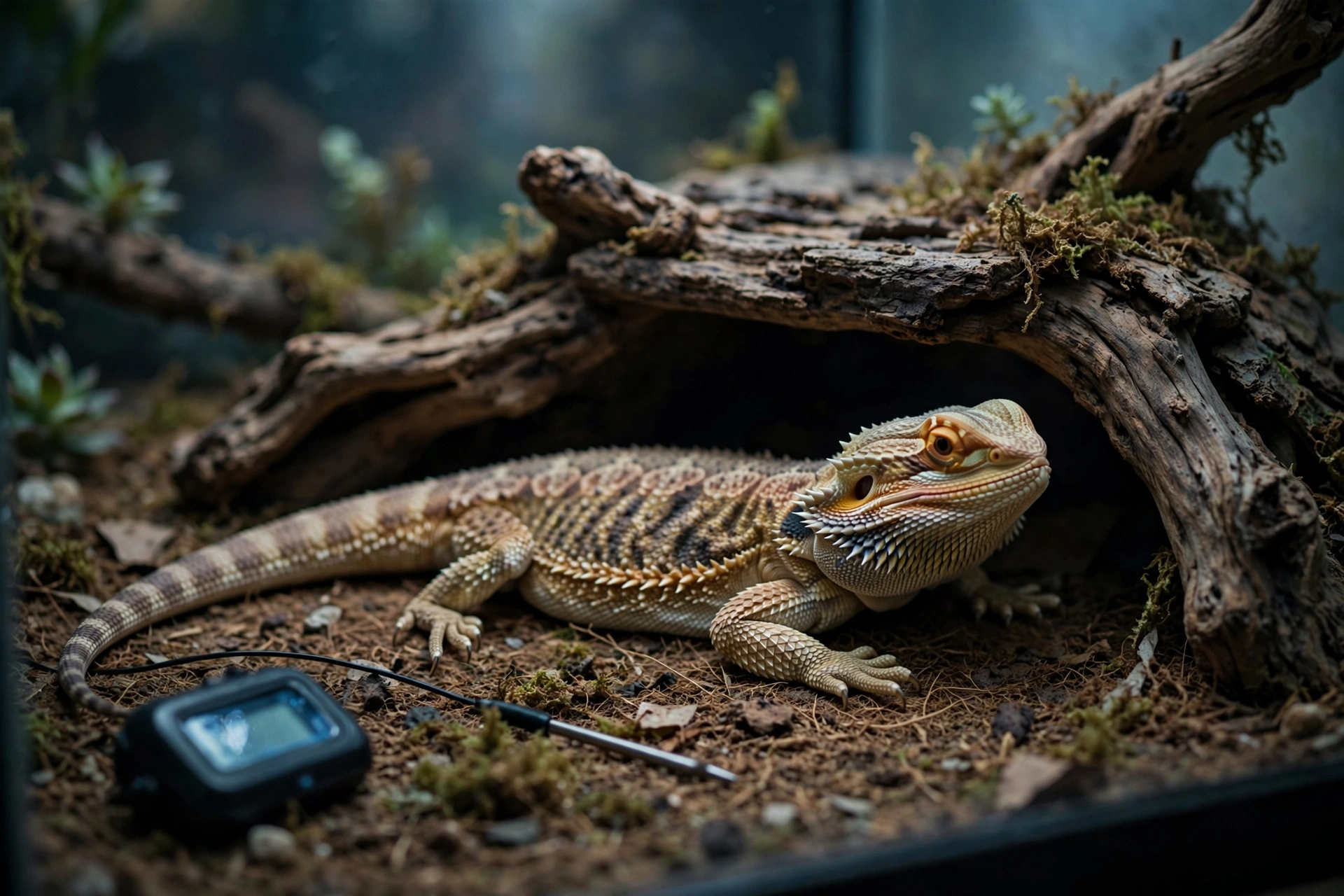
- Hang the probe about an inch above the substrate. That is the air layer your dragon’s body sits in. A probe lying on the floor reads the floor; a probe up by the lamp reads the lamp.
- Keep it off the glass and out of the water dish zone. Glass conducts heat from outside the tank, and evaporation above the water dish cools the air — both skew the reading.
- Put it in the shade. The probe should sit where the dragon actually retreats: beside the hide, under a branch, in the cool corner — never inside the basking lamp’s cone of light.
Take your readings in the mid-afternoon, when the tank has been running for hours and is at full operating temperature.
Step 2: Hit the 80–85°F target
Here is the rule, by age:
| Dragon | Cool-side air target |
|---|---|
| Baby (0–6 months) | 80–85°F |
| Juvenile (6–18 months) | 80–85°F |
| Adult (18+ months) | 75–80°F |
For context, the rest of the gradient should read roughly: basking surface 95–110°F (see the exact numbers in our basking spot temps guide), warm-side air 85–90°F, and nighttime 65–75°F across the whole tank.
A healthy tank spans roughly 20–30°F from basking surface to cool end. That spread is not a side effect of the setup — it is the thermostat your dragon operates. If basking runs 105°F, the cool end should sit near 80°F.
Why does the cool end matter so much? Because digestion is a shuttle, not a destination. A dragon basks until its core is warm enough to process food, then retreats to the cool side to avoid overheating, then returns when it needs heat again.
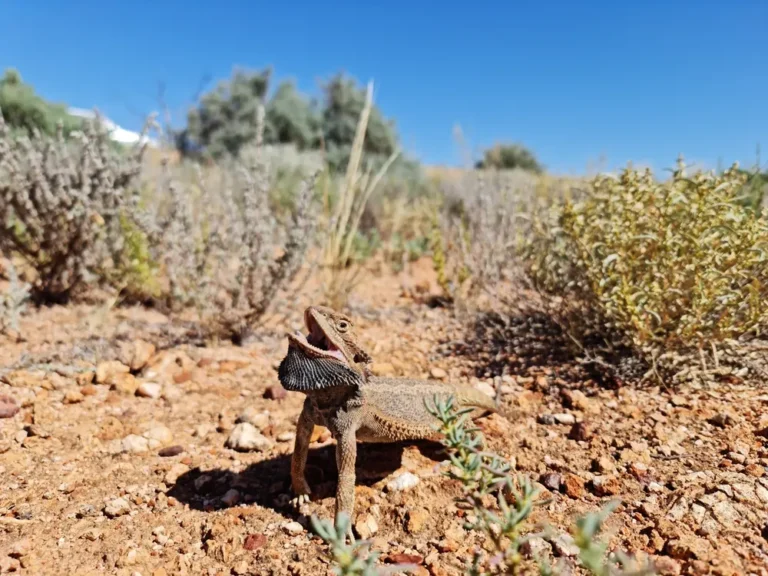
When the cool end is wrong, the commute breaks. Too hot, and the dragon has nowhere to dump heat — it gapes constantly, presses against the glass, or stops basking entirely. Too cold, and the warm-up never sticks — the dragon camps under the lamp all day, barely moves, and slowly loses appetite. Both failure modes look like “behavior problems” until you check the thermometer.
The cool side pulls double duty in a well-planned tank: it is the natural home for the hide and the salad dish. Greens stay crisp far longer away from the basking lamp’s blast, and a hide on the cool end gives a resting dragon somewhere dark and thermally comfortable — not one or the other.
Step 3: Map your gradient
Plug in your tank length and basking temperature to see where your cool end should land — and where your three thermometers belong.
🌡️ Cool-Side Gradient Mapper
Target by age: babies and juveniles 80–85°F · adults 75–80°F. Re-map any time you change bulbs, tanks, or seasons.
Step 4: Fix it when the number is wrong
Cool end too hot (reads 88°F or more at mid-afternoon)
The usual suspects: the tank sits against a sunny window or an exterior wall baking in summer heat; the room itself is hot; the basking bulb is oversized for the tank; or the tank is simply too short to hold a gradient — a 20-gallon long cannot keep a 25°F spread no matter what you do.
Fixes, in order of effort:
- Move the tank off the window and exterior wall. Direct sun through glass turns a tank into a greenhouse, and it will cook the cool end first.
- Step the basking wattage down or raise the lamp. A smaller hot zone radiates less into the cool end. Check the basking spot temps guide so you do not undershoot the hot side while fixing the cool side.
- Improve ventilation. A screen top vents hot air upward; a mostly sealed top traps it. Do not add a second heat source anywhere near the cool end — ever.
- Upgrade the tank. If you are fighting for a gradient in a tank under 36 inches long, the tank is the problem. A 40-gallon breeder is the realistic minimum for holding distinct zones, and a 4×2×2 gives adults real room to thermoregulate.
Cool end too cold (reads under 75°F at mid-afternoon)
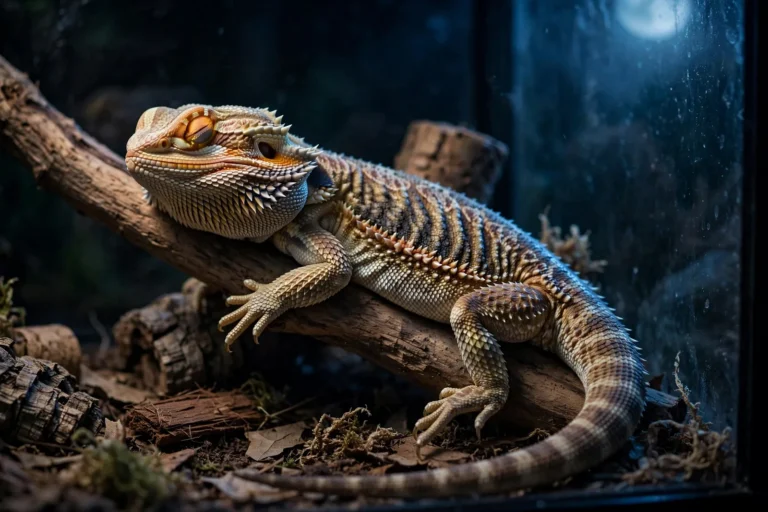
The usual suspects: a cold room in winter, the tank parked near a drafty window or door, or a basking bulb too weak to push heat across a large tank. Note that a cool end in the low 70s during the day is a different problem from a nighttime drop — if the whole tank falls below 65°F after lights-out, that is a nighttime temps issue and needs a ceramic heat emitter, not a bigger day bulb.
Fixes:
- Warm the room, not just the tank. Tank temperatures track room temperature more than most owners expect — a 10°F colder room drags the whole gradient down.
- Seal the drafts. Move the tank away from windows, doors, and air-conditioning vents.
- Right-size the basking bulb. In a 4×2×2, a 75W bulb that worked in a 40-gallon may not cut it. Step up wattage gradually and re-measure.
- Consider a thermostat-controlled ceramic heat emitter aimed at the middle of the tank for chronically cold rooms — controlling the gradient with a thermostat beats guessing with wattage.
Let behavior confirm the numbers
Your dragon is a second thermometer, and it never lies about comfort. A dragon glued to the basking spot all day with little exploring may be telling you the cool end is too cold — or that the basking spot itself is too weak, which is a different fix. A dragon plastered against the cool-end glass, gaping for hours, is telling you the whole tank runs hot. When behavior and readings agree, you have your answer; when they disagree, re-measure — one of your thermometers is lying, and it is usually the stick-on dial. Cross-checking behavior against readings is also how you catch thermoregulation behavior problems before they become health problems.
The two-minute weekly habit
Here is the whole maintenance routine: once a week, temp gun out, check the basking surface and the cool-end floor, glance at the two probe readouts. Two minutes. Do it again with every season change, because the bulb that was perfect in October is wrong by February — rooms swing, and the gradient swings with them.
Do both ends today. Grab the temp gun and measure both ends of your tank — the number on the cool side might surprise you, and it is the cheapest health check in reptile keeping.