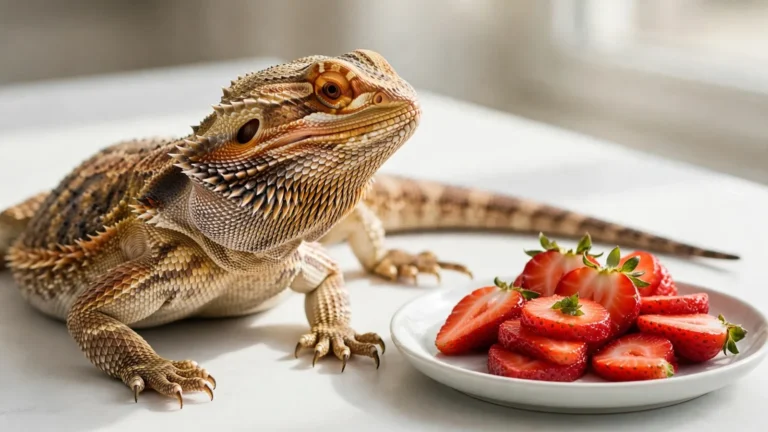
Can Bearded Dragons Eat Carrots?
Can bearded dragons eat carrots? Yes. Carrots are a safe, nutritious occasional vegetable for bearded dragons — but they belong in the rotation, not the daily salad. Feed them grated and raw, once or twice a week, mixed in with staple greens. That one sentence is the whole rule. Everything below explains why, with the actual numbers, so you never have to guess at portions again.
Carrot nutrition, by the numbers
Most care blogs call carrots “high in vitamin A” and leave it there. The fuller picture, per 100 grams of raw carrot (USDA data via the reptile nutrition profile at thebeardeddragon.org):
- Vitamin A: 16,706 IU (835 µg RAE) — delivered as beta-carotene (8,285 µg) and alpha-carotene (3,477 µg), the provitamin forms. More on why that distinction matters in a moment.
- Sugar: 4.74 g — mostly sucrose. Not huge for a vegetable, but roughly ten times what a staple green carries per bite, which is why portion size matters.
- Fiber: 2.8 g — genuinely useful for fiber and digestion; carrots can help keep things moving.
- Calcium 33 mg / Phosphorus 35 mg → Ca:P ≈ 0.9:1 — close to even, rated “good” for a rotation vegetable, but well short of the 2:1+ ratio you want in daily staples.
- Oxalates: 6 mg per 100 g — low. For comparison, spinach carries hundreds of milligrams; carrots are not an oxalate concern at normal portions.
- Water: 88.3 g — hydrating, like most fresh veg.
Reputable feeding guides land in the same place: reptiledirect.com lists carrots (root) at 1–2 times a week with a ~1:1 Ca:P ratio, noting the beta-carotene content as the reason to keep them occasional.
One medium carrot (~60 g) holds about 500 µg of vitamin A as beta-carotene — more than half the vitamin A in a typical multivitamin dose for a human, delivered in a single crunchy stick. That density is exactly why carrots are a twice-a-week food, not an everyday one.
The nutrient dial: find your serving
Rules like “a small amount” are hard to follow. Use the dial below: set how many grams of grated carrot you offer per serving and how many days a week, and it shows you what that actually delivers — vitamin A, sugar, and fiber per week — plus a verdict against the widely used 1–2×/week guideline. The green/amber/red zones are editorial guardrails built from that guidance, not veterinary dosing limits.
🥕 The Carrot Nutrient Dial
Gauge zones: green = 50 g·days/week or less (the 1–2×/week sweet spot); amber = 51–120; red = over 120. A 20 g serving twice a week scores 40.
Myth: “Carrots cause vitamin A toxicity, so be careful.” Reality: carrots deliver beta-carotene, a provitamin the body converts to vitamin A only as needed — toxicity from beta-carotene alone is far less plausible than the blogs imply. True hypervitaminosis A in reptiles is linked to preformed vitamin A (retinol) from over-supplementation, not from carrot shreds. The honest reason for the 1–2×/week limit is simpler: sugar adds up, the Ca:P ratio is mediocre, and a carrot-heavy bowl pushes staple greens off the plate. If your dragon already gets a vitamin A supplement, mention carrots to your vet — but don’t fear the vegetable itself.
How to serve carrots the right way
Preparation matters more with carrots than with leafy greens, because raw carrot is hard and dense. Follow these rules:
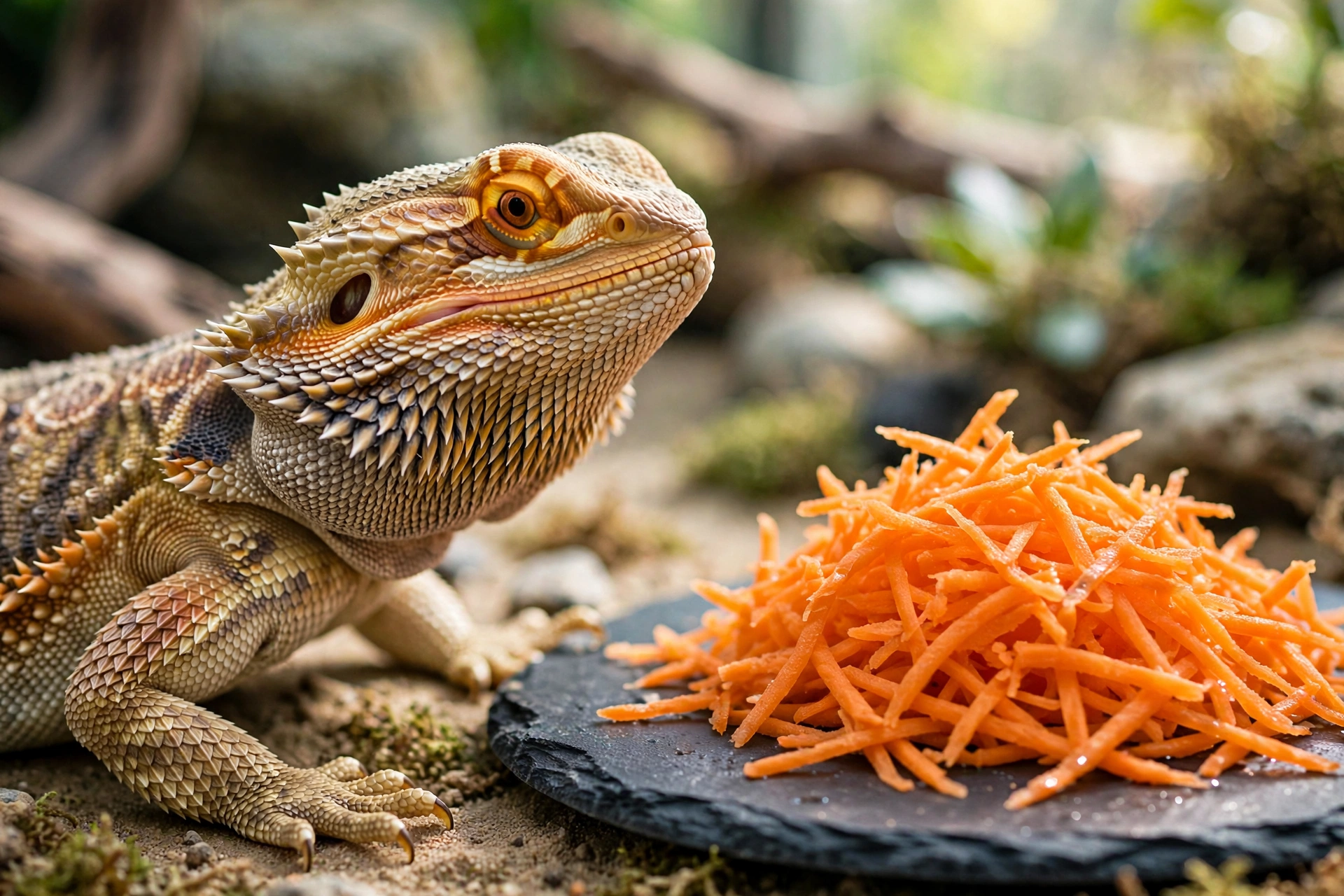
- Grate, don’t chunk. A box grater turns carrot into soft shreds your dragon can actually bite and swallow. Chunks are a choking and impaction risk, especially for juveniles.
- Serve raw. Cooking softens carrots but leaches nutrients into the water. Raw and freshly grated is the gold standard.
- Wash thoroughly — twice for baby carrots. Conventional baby carrots are often treated with a mild chlorine wash at the packing plant; a second rinse at home removes residues. Buying organic sidesteps the issue.
- Mix, don’t mound. Scatter the shreds through the salad rather than offering a carrot pile. Dragons that fill up on sweet shreds first may ignore their greens.
- Try carrot tops too. The leafy greens attached to whole carrots have a better Ca:P ratio (roughly 2:1 per reptiledirect.com) and can be fed a few times a week like other rotation greens — just wash them well and skip any that look wilted or sprayed.
The bright orange color is a genuine asset: picky eaters that ignore a green-only bowl will often investigate orange shreds, which is why carrots work so well as a topper in salad building for fussy dragons. Shred them fresh each morning rather than grating a big batch for the week — cut surfaces oxidize and lose vitamin content over a few days in the fridge.
Bearded dragons see color exceptionally well — including into the ultraviolet range — and keepers consistently report that orange and red foods get investigated first. Carrots’ color isn’t just pretty; it’s part of why they work as an appetite enticer for dragons that snub plain greens.
How much: serving sizes by age
- Hatchlings (0–2 months): skip the carrots. Babies this young need protein-heavy diets and tiny, soft foods; revisit carrots around 3 months.
- Juveniles (3–11 months): 1–2 teaspoons of grated carrot (roughly 5–10 g), once a week, mixed into greens. Their feeding schedule is insect-forward, so veg is garnish at this stage.
- Adults (12+ months): 1–2 tablespoons of grated carrot (roughly 15–25 g), 1–2 times a week, as part of the daily salad. Keep calcium dusting on schedule regardless — carrots’ near-even Ca:P ratio doesn’t replace supplementation.
Watch the droppings after carrot days: loose, orange-tinged stool means you overshot the portion or the frequency. Back off for a week, then resume smaller. Persistent diarrhea after any veg change is worth a vet call — it’s on the same watchlist as the full safe-foods list guidelines for new-food introductions.
The bottom line
Carrots are firmly in the “yes, in moderation” camp: safe, nutritious, and genuinely useful for tempting picky eaters, as long as they stay a 1–2×/week accent rather than a daily base. Grate them raw, mix them through staple greens, keep portions modest, and let the nutrient dial above settle any portion debates. Your dragon gets the beta-carotene and fiber; the salad bowl keeps its calcium-rich foundation.
What to Read Next
Building today’s bowl? Browse our bearded dragon salad recipes to build the rest of the plate around the carrot sprinkle.