How to Tame a Bearded Dragon in 4 Weeks
Every confident, shoulder-surfing bearded dragon you see in videos started as a skittish animal that wanted nothing to do with human hands. Taming isn’t a talent — it’s a process. A new bearded dragon doesn’t know you’re safe; it knows you’re enormous, warm-blooded, and you keep reaching at it from above exactly like a hawk would. Your job over the next few weeks is to methodically prove that assessment wrong.
The good news: bearded dragons are among the most tamable reptiles in the hobby. They’re naturally curious, strongly food-motivated, and quick to learn routines. Most dragons go from “hiss at the hand” to “climb onto the hand voluntarily” within three to four weeks of consistent, patient work. This is the plan that gets you there.
Week 0: Understand what you’re working with
Before the plan starts, calibrate your expectations. A bearded dragon’s trust works on reptile terms, not mammal terms. Your dragon will never love you the way a dog does — but it absolutely can learn your voice, your scent, and your hands, and show clear comfort and familiarity with all three. Dragons appear measurably less stressed being handled after hearing a familiar voice first, and they learn routines through food association the way any animal does.
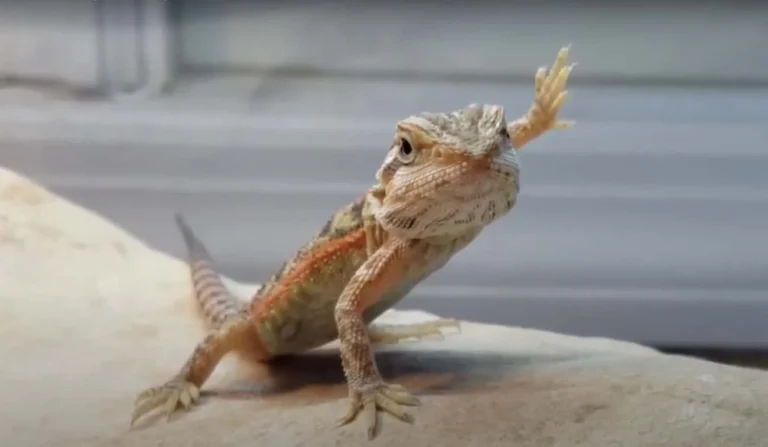
What “tame” actually looks like in a bearded dragon: it doesn’t flee when your hand enters the tank, it approaches your hand with or without food in it, it sits calmly on your lap or shoulder, and it shows relaxed body language — light even coloring, loose posture — while being held. That’s the target. Here’s how to get there.
💡 Did you know? Your dragon can see you coming before you arrive — and that’s the problem. Bearded dragons have a parietal “third eye” on top of their head that detects shadows and light changes from above. A hand swooping down from overhead reads as a predator strike, no matter how gentle your intentions. Almost every handling mistake traces back to this one piece of anatomy.
Days 1–3: Hands off, eyes on
A new dragon is experiencing relocation stress — a new home, new smells, new sounds, new everything. Typical adjustment runs one to two weeks of hiding and reduced appetite, with full comfort taking two to four weeks depending on age, personality, and enclosure quality. Your only job in the first days is to not make it worse.
Leave the dragon completely alone except for feeding and spot-cleaning. Don’t rearrange the enclosure. Keep other pets away from the tank, keep the room reasonably quiet, and resist every urge to “just hold it for a minute.” Spend time near the tank instead — read, work, scroll your phone — so the dragon learns your presence is background noise, not a threat event.
Meanwhile, audit the setup, because husbandry problems masquerade as behavior problems. Confirm the basking spot hits 100–110°F, the cool side sits at 75–80°F, and the UVB tube is the right type at the right distance. A cold dragon is a stressed dragon, and no taming plan overcomes bad temperatures.
Days 4–10: Be present, be the food person
Now you start building the core association of all reptile taming: you = good things happen. Rest your hand flat inside the tank for five to ten minutes a day — palm up, motionless, no grabbing. Let the dragon look at it, sniff it, and decide it’s boring. Boring is the goal.
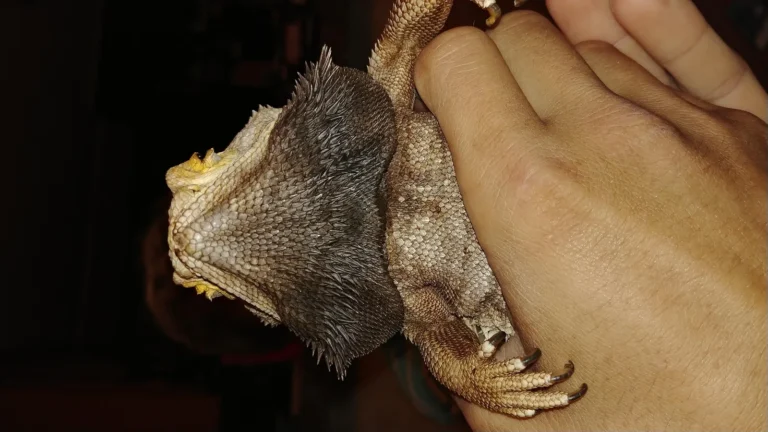
Hand-feeding is the most effective bonding tool you have. Offer a favorite feeder insect from your fingers or tweezers. Progress in stages: treat placed in the enclosure while your hand is near → treat closer to your hand → treat resting in your open palm. If the dragon hisses, puffs its beard, or darkens at your hand, it’s telling you it’s intimidated — back up a stage and repeat until the signs stop. Talk softly while you feed; your voice becomes part of the food ritual, and dragons learn to recognize familiar voices.
A worn t-shirt draped near (not in a way that risks tangling) the enclosure helps the dragon learn your scent. Keep treats modest — they add calories, so trim the regular meals slightly to compensate.
| Phase | Your job | Signs it’s working |
|---|---|---|
| Days 1–3 | Leave the dragon alone; be nearby | Eating, basking in the open |
| Days 4–10 | Hand in tank, hand-feeding | Approaches your hand, eats near you |
| Weeks 2–3 | Short confident lifts | No black beard on pickup |
| Week 4+ | Longer sessions, new experiences | Climbs onto your hand voluntarily |
Weeks 2–3: The first lifts
When the dragon takes food from your hand calmly and doesn’t flee your resting hand, you’re ready for the first pickups. Technique matters more than courage here:
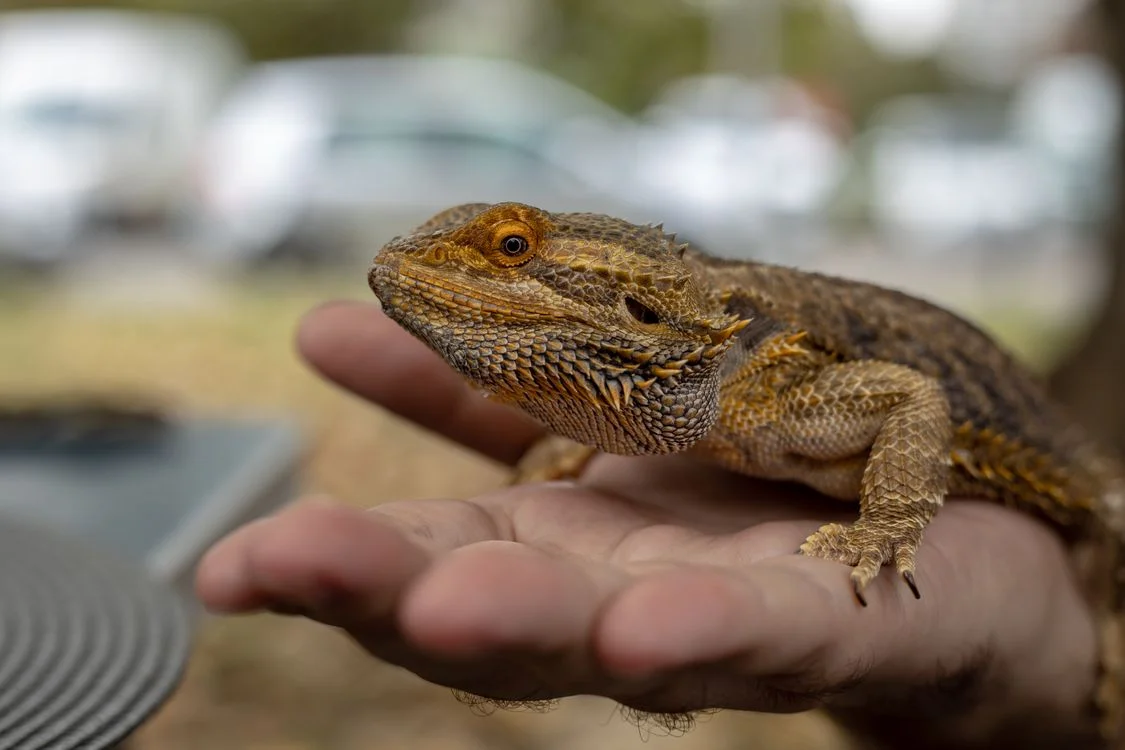
- Approach from the side or front, never from above. Slide your hand in at the dragon’s eye level, then scoop from underneath — one hand under the belly, the other supporting the tail base.
- Never grab the tail or legs, and never squeeze. A tight grip can injure ribs or limbs; support, don’t restrain.
- Don’t pick up a dragon with a puffed-out beard. That’s a “not now” signal. Try again later.
- Sit down. Handle a new or skittish dragon while seated, low over a soft surface, so a startle can’t become a fall.
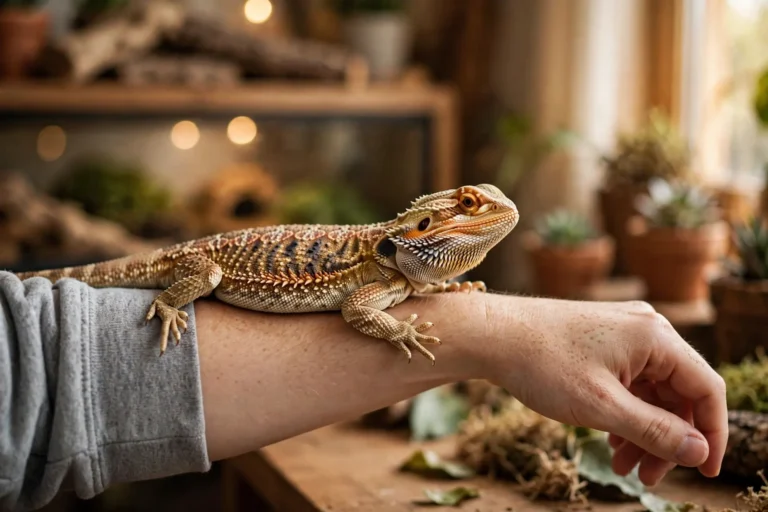
Keep the first sessions to about five minutes, once or twice a day. Babies under three months get only a few minutes at a time. End every session on a good note — put the dragon back before it gets squirmy, so the lasting memory of handling is calm, not stressful. Let all four feet rest on your palm or forearm; dragons panic when their feet dangle with nothing to grip.
📊 Stat: A good handling target for an accustomed adult dragon is about 20–30 minutes of total handling per day. But that’s a ceiling to grow into, not a starting point — jumping from zero to half an hour is how tame dragons become hand-shy dragons. Build up by a few minutes per week.
Week 4 and beyond: Real bonding
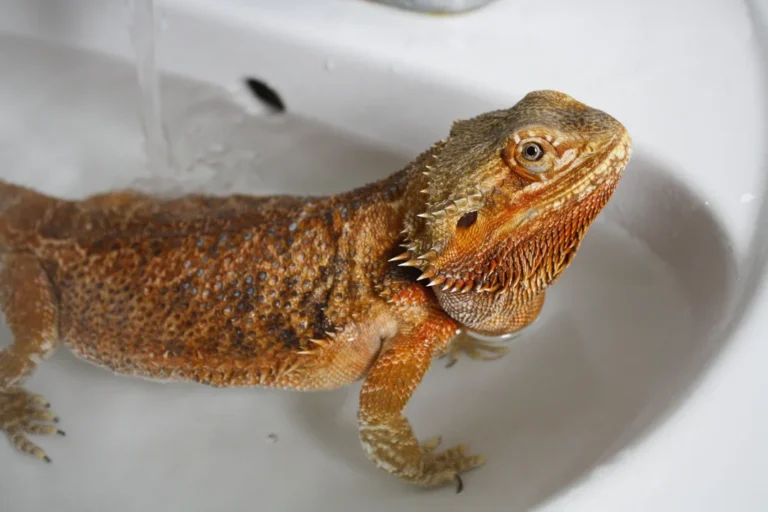
By now handling should feel routine — for both of you. Extend sessions gradually toward that 10–15 minute range and start adding variety: shoulder time while you watch TV, supervised exploration on the couch, a shallow warm bath. Novelty, kept safe and voluntary, deepens the bond because the dragon learns that new experiences with you end well.
Keep hand-feeding treats even after the dragon is tame. It’s the maintenance dose of the original association. And keep learning the individual: every dragon has a “done” point. Squirming, a darkening beard, sudden restlessness, or attempts to leap are the polite requests to go home. Honor them promptly and the dragon will be willing to come out again tomorrow. Ignore them and handling becomes something to endure rather than enjoy.
When NOT to handle
Taming is a long game, and part of playing it well is knowing when to skip a session. Don’t handle right after feeding (wait at least an hour or two so the meal settles), during shedding (the skin is tight and uncomfortable, and most dragons want to be left alone), or when the dragon is showing stress or aggression. If a session starts going badly — black beard, frantic squirming, hissing — end it calmly and try again tomorrow. One bad session undoes several good ones.
Hygiene is non-negotiable both directions: wash your hands before handling (lotions, food smells, and other animals’ scents all matter to a scent-driven animal) and after (bearded dragons can carry salmonella like all reptiles). Make it a ritual and it becomes automatic.
🔍 Fact check: “Bearded dragons recognize their owners and love them.” Half true. Dragons do learn to recognize familiar voices and scents, and they show measurably more comfort with familiar people — but that’s familiarity and food association, not mammalian love, and they don’t learn their name the way a dog does. (If your dragon comes when called, it’s responding to your tone plus the expectation of food.) None of this makes the bond less real. It just makes it reptile.
Your 4-week taming plan, interactive
The full plan with tap-to-complete checklists is below. Work through it at your dragon’s pace — the calendar is a guide, not a deadline. If a phase takes two weeks instead of one, that’s not failure; that’s a dragon with a personality.
Your 4-Week Taming Plan
Tap checklist items as you complete them. Go at your dragon’s pace — not the calendar’s.
Hands off, eyes on
- Leave the new dragon completely alone except for feeding and spot-cleaning
- Sit near the tank daily so it learns you’re not a predator
- Keep handling, loud noise, and other pets away from the tank
- Confirm basking spot, UVB, and temperatures are correct
Associate yourself with good things
- Rest your hand flat inside the tank for 5–10 minutes daily — no grabbing
- Offer a favorite feeder insect from your fingers or tweezers
- Talk softly during feeding so your voice means food
- Stroke the back gently only if the dragon stays calm
Short, confident handling
- Slide a hand under the belly from the side — never swoop from above
- Support all four feet; let the dragon sit on your palm or forearm
- Keep sessions to 5 minutes at first, near the ground or over a soft surface
- End on a good note — put the dragon back before it gets squirmy
Longer sessions, new experiences
- Extend handling to 10–15 minutes as confidence grows
- Try shoulder time, supervised couch exploration, or a warm bath
- Hand-feed treats regularly to keep the positive association
- Learn your dragon’s ‘done’ signals: squirming, darkening beard, trying to leap
Taming questions, answered
My new dragon hasn't eaten in 3 days. Is that normal?
For the first two to three days in a new home, yes — that's standard relocation stress. Keep offering food daily. But young dragons shouldn't go more than about three days without eating, so if it stretches past that, double-check your temperatures and UVB, and call a reptile vet if appetite doesn't return. Persistent hiding plus appetite loss past two weeks always deserves a vet visit.
My dragon runs from my hand but eats fine. What am I doing wrong?
Probably nothing — you're just early in the process. Eating well is actually the best sign; it means the dragon is settling. Stay at the hand-in-tank and hand-feeding stage until the dragon approaches voluntarily. Rushing to pickups before the dragon is ready is the most common taming mistake.
Can I tame an older rescue or rehomed dragon?
Yes, but budget more time. Rehomed adults with bad past experiences can take a month or longer to settle, compared to two to four weeks for a typical new dragon. The process is identical — presence, food association, short sessions — just run on the dragon's schedule. The payoff is the same.
Should I handle my dragon every day?
Short daily sessions (or twice daily) build familiarity fastest during the taming period. Once the dragon is comfortable, a few good sessions a week maintain the bond fine. Watch the individual: a dragon that brightens up when the tank opens wants more; one that hides wants less.