Do Bearded Dragons Bite? (And What to Do If One Does)
Do Bearded Dragons Bite? (And What to Do If One Does)
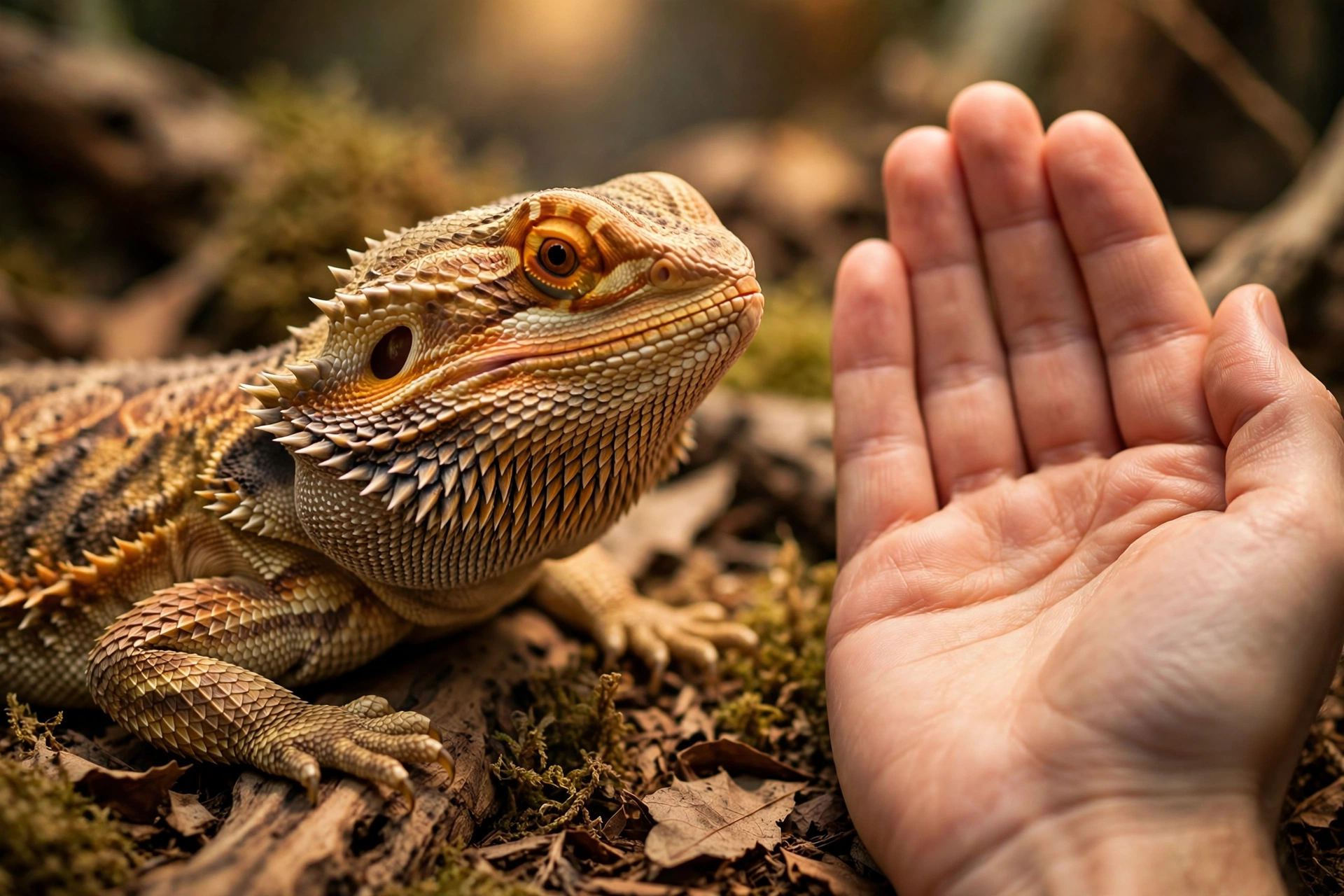
Yes — bearded dragons can bite. But that short answer is more alarming than the truth deserves. The fuller answer is reassuring: bearded dragons are among the most docile reptiles in the pet trade, real bites are uncommon, and a bite almost never arrives unannounced. Your dragon will warn you first — a puffed beard, a hiss, a gaping mouth — and only uses its teeth when those warnings go unheeded.
Most bites are not even aimed at you. The classic bearded dragon bite is a case of mistaken identity: a food-excited dragon grabbing a finger it mistook for a worm. Below you will find the five reasons bites happen, how much one actually hurts, the warning signs to respect, the habits that prevent them, and exactly what to do on the rare day teeth meet skin.
Why bearded dragons bite: the five triggers
1. Fear. The number-one trigger. A new dragon, a rescue still learning that hands are safe, or any dragon startled by a hand swooping from above may bite the way any cornered animal does — as a last resort. Overhead approaches are the worst offender: to a bearded dragon, something descending from above looks like a hawk.
2. Food confusion. The most common bite of all is not defensive — it is dinner gone wrong. Fingers that smell like the crickets you just handled, a worm dangled between two fingertips, a hand waving near a feeding-frenzied dragon: the dragon’s eyes and tongue report “food,” and it strikes before its brain catches up.
3. Feeding excitement. A dragon in full feeding mode is a less careful dragon. Hand-feeding mid-frenzy, when the animal lunges at anything that moves, invites an accidental nip.
4. Stress, pain, or illness. A dragon that is hurting may bite when touched. If a normally placid dragon suddenly gets nippy, check husbandry and health before blaming temperament — and learn the signs your dragon is stressed.
5. Poor socialization or a territorial mood. Dragons that were never gently handled, pet-store juveniles, and males in breeding season can be quicker to bite. The fix is patience: steady, gentle taming reduces bites over weeks, not days.
How much does it actually hurt?
Ask ten owners and you will hear the same word: a pinch. Baby dragons have needle-sharp teeth but jaws too weak to do more than scrape the skin — most baby “bites” do not even leave a mark. Adults hit harder and can break the skin and draw a little blood, especially on a fingertip. It stings, it may bruise, and then it is over. Serious injuries are vanishingly rare.
The part worth taking seriously is not the puncture but the bacteria. Like all reptiles, bearded dragons can carry Salmonella, so every bite — even a graze — gets washed thoroughly. That is the real reason bite first aid matters, not the pain.
The warning signs: read them and you will rarely get bitten
Biting is the last rung on an escalation ladder, and every rung below it is a message you can read:
- Beard puffing — inflating the throat to look bigger
- Black beard — darkening the throat pouch, a serious “back off”
- Hissing — the clearest audible warning in the vocabulary
- Open-mouth display — gaping at you, not at the heat lamp
- Rapid head bobbing — fast, vigorous pumping, usually a male
- Flattening the body — going wide and still, bracing for trouble
- Tail twitching or lashing — agitation building toward action
- Backing away or freezing — the polite exit; take the hint
A dragon that has to bite you has been ignored through several earlier, clearer messages. The goal is to never get that far — start with the warning signals in our body-language guide, including arm waving and other submission signals.
What’s your bite risk? Take the 60-second quiz
Most bites come down to handling habits, not dragon temperament. Answer these six everyday scenarios honestly — each answer explains the risk and gives you the fix — then get your score.
Bite prevention is just good handling
The habits below prevent the vast majority of bites — and they make handling more pleasant for the dragon, too.
- Scoop from the side, never swoop from above. Let the dragon see your hand coming, slide it underneath, and support the full body — one hand under the chest, one under the hips.
- Wash your hands before and after. Food scent on fingers is the top cause of accidental bites. Twenty seconds at the sink, every time.
- Respect the warning signs. Black beard, hissing, gaping at you — that is a “not now.” Back off and try again later instead of pushing through.
- Keep sessions short and positive. Especially with a new dragon: brief, calm handling that ends before stress starts builds trust far faster than long forced sessions.
- Use tongs at feeding time. Fingers stay out of the strike zone entirely when the dragon is at its most food-focused.
- Skip handling during sheds and stress. A shedding, ill, or rattled dragon has a shorter fuse — give it space, and fix whatever is stressing it.
What to do if you get bitten
It happens — even to careful keepers:
- Stay calm and do not yank. A startled pull tears skin against teeth built to grip. Most dragons let go within seconds on their own; if one latches on, stay still and gently ease the jaws apart rather than ripping your hand away.
- Wash the wound thoroughly with soap and warm water. This is the single most important step — it is about bacteria, not pain.
- Apply antiseptic, then a thin layer of antibiotic ointment, and cover with a clean bandage.
- Watch for infection — spreading redness, swelling, pus, or fever — and see a doctor if the bite is deep, bleeds heavily, or shows any of those signs. Mention it was a reptile bite.
- Be ready next time. Keep a stocked first aid kit near the tank so you are not hunting for supplies mid-incident.
Quick answers
Do baby bearded dragons bite?
They can, but it barely registers — sharp little teeth, weak little jaws. Most baby “bites” are tooth scrapes that do not break the skin.
Can a bearded dragon bite your finger off?
No. Their jaws are built for crunching insects, not severing digits. The worst realistic outcome is a nip that draws blood.
Will my dragon hold a grudge after biting?
Dragons do not do grudges. A bite is a moment of fear or confusion, not a personality verdict. Fix the cause — usually handling technique or stress — and normal service resumes.
The long-term fix for a nippy dragon is trust. If biting keeps happening, the answer is almost never “handle less” — it is “handle better.” Start the 4-week taming program and turn a defensive dragon into a calm one.