Your Bearded Dragon’s Third Eye Is Watching the Light
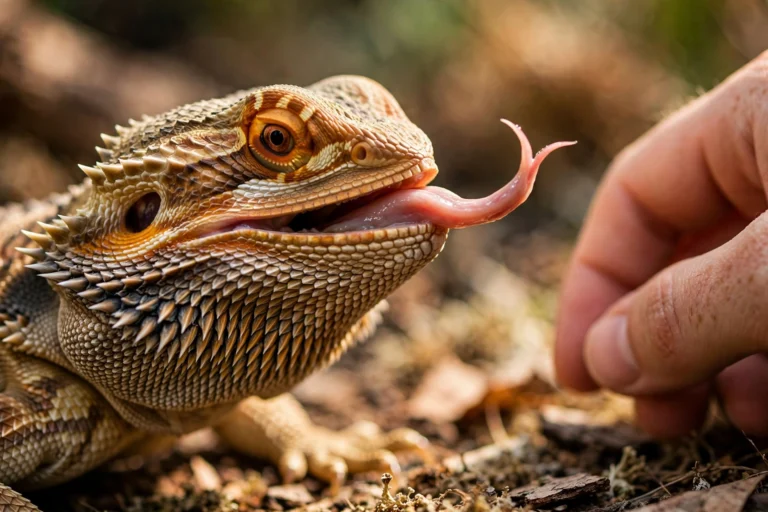
Reach toward your bearded dragon from directly above and you will often get the same reaction: a flinch, a freeze, sometimes a frantic scramble. Reach from the side at eye level and the same animal stays calm. Owners usually read this as a handling problem. It is actually an anatomy lesson — your dragon just saw you coming with an eye you cannot see.
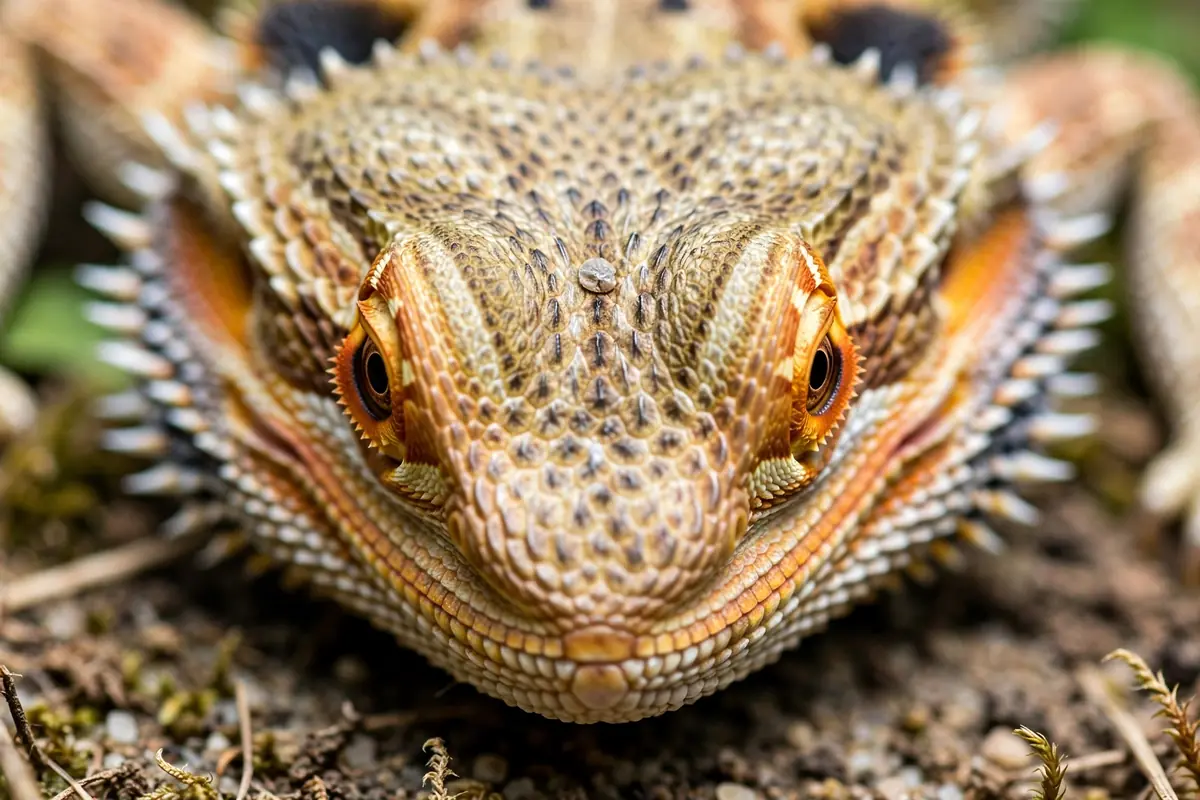
On top of your bearded dragon’s head sits a small, pale, scale-covered spot: the parietal eye, better known as the third eye. It does not form images, but it senses light and shadow from above — and it quietly runs your dragon’s entire body clock. This guide explains what the third eye does, why it makes overhead approaches scary, the lighting mistakes that fight it, and includes a planner that builds a proper day-night light schedule around it.
What the Third Eye Actually Is
The parietal eye is a light-sensitive organ on the top of the head, wired to the pineal gland in the brain. It has a lens and photoreceptor cells, but it cannot form images the way the main eyes do — think of it as a sophisticated light meter pointed at the sky. It detects light intensity, direction, and changes in illumination: dawn arriving, dusk falling, a cloud passing, or a shadow sweeping overhead.
That skyward gaze has two jobs. The first is timekeeping: the parietal-pineal complex measures the photoperiod — how long the light lasts each day — and uses it to set circadian rhythms. Darkness triggers melatonin release from the pineal gland, running the sleep-wake cycle; lengthening and shortening days cue seasonal hormonal shifts, including the wind-down into brumation. The second job is older and simpler: a sudden shadow from above means a predator, most likely a bird. The third eye is an early-warning system that has been saving lizards for millions of years.
The parietal eye talks directly to the pineal gland, which releases melatonin in darkness to run the sleep-wake cycle. Seasonal changes in day length, read through this tiny organ, help cue the hormonal wind-down into brumation — your dragon’s calendar is written in light.
Why Your Dragon Flinches When You Reach From Above
Now the flinch makes sense. To the third eye, your descending hand is a fast-growing shadow sweeping across the sky — the exact signature of a hawk stooping. The freeze-or-flee response is not distrust of you personally; it is a reflex older than mammals. Babies and new dragons flinch hardest because everything is still a potential predator; habituated adults flinch less, but the wiring never goes away.
Work with the wiring instead of against it. Approach from the side at eye level, hand low and visible, moving slowly — let the main eyes, which do form images, identify you as the familiar food-bringer. Slide your hand under the chest and support the body rather than grabbing from above. Within a few weeks of consistent side approaches, most dragons stop flinching entirely — not because the third eye stopped working, but because experience reclassified your hand as safe. (Our guide to arm-waving covers another behavior new owners routinely misread.)
Lighting Mistakes That Fight the Third Eye
Because the parietal eye reads ambient light around the clock, your lighting schedule is your dragon’s time zone — and several common setups scramble it.
Colored “night” bulbs. The big one. Red and blue bulbs are marketed as invisible night heat, but bearded dragons have photoreceptors sensitive to red wavelengths — a red bulb does not create night, it creates a dim, confusing dusk that never ends. Chronic night light suppresses melatonin, fragments sleep, and the resulting stress can suppress appetite, growth, and immunity. Night should be true darkness. If your room gets genuinely cold overnight, a ceramic heat emitter gives heat with zero light.
Chaotic schedules. Lights flipped on at 7 AM one day and noon the next are the equivalent of weekly jet lag. The circadian system can only synchronize to a consistent rhythm — pick times and hold them within about half an hour. A simple outlet timer removes human forgetfulness from the equation entirely.
Light pollution. A basking lamp glowing in a bedroom with the TV on until 1 AM is not darkness. If the enclosure lives in an active room, drape the enclosure at night or move the “lights out” earlier than your own bedtime. And during the day, make sure UVB is actually reaching the animal — a mesh screen between the bulb and the basking spot can filter out a large share of usable UVB, leaving the day half as bright as the third eye expects.
Myth: The third eye is a useless leftover of evolution. Reality: It is an active, working organ that sets circadian rhythms, times melatonin release, cues seasonal hormone shifts, and watches for aerial predators. A dragon’s whole daily rhythm runs through it.
What a Third-Eye-Friendly Day Looks Like
Put it together and the ideal looks like the Australian rhythm the organ evolved for: a gradual dawn rather than a slammed-on floodlight, a long bright day with strong UVB and a proper basking gradient, a dimming dusk, and then genuine darkness. Seasonal variation is a feature, not a bug — longer summer days and shorter winter days are the cues the pineal system uses to run the annual cycle, so let winter days run a few hours shorter rather than forcing 14-hour days year-round.
Use the planner above to pin your exact times, then automate it and stop thinking about it. Consistency matters more than perfection: a steady 12-hour day the dragon can set its clock by beats a “perfect” schedule that shifts every weekend. Pair the schedule with the other basics — correct UVB, correct temperatures, and the once-over in our healthy bearded dragon checklist — and the third eye will do the rest quietly, the way it has for millions of years.
Automation is the whole trick: once a timer holds the rhythm, the parietal eye synchronizes within days. You will notice the difference — a dragon that wakes with the lights, basks on schedule, and settles at lights-out is a dragon whose clock is working exactly as evolution designed it.
Claim: “Red night bulbs are invisible to bearded dragons.” Verdict: false. Their eyes contain photoreceptors sensitive to red wavelengths, so a red bulb still illuminates the enclosure and disrupts the night cycle. True darkness — or a lightless ceramic heat emitter for warmth — is the only correct night.