Why Is My Bearded Dragon Digging? 7 Reasons Your Dragon Is Excavating
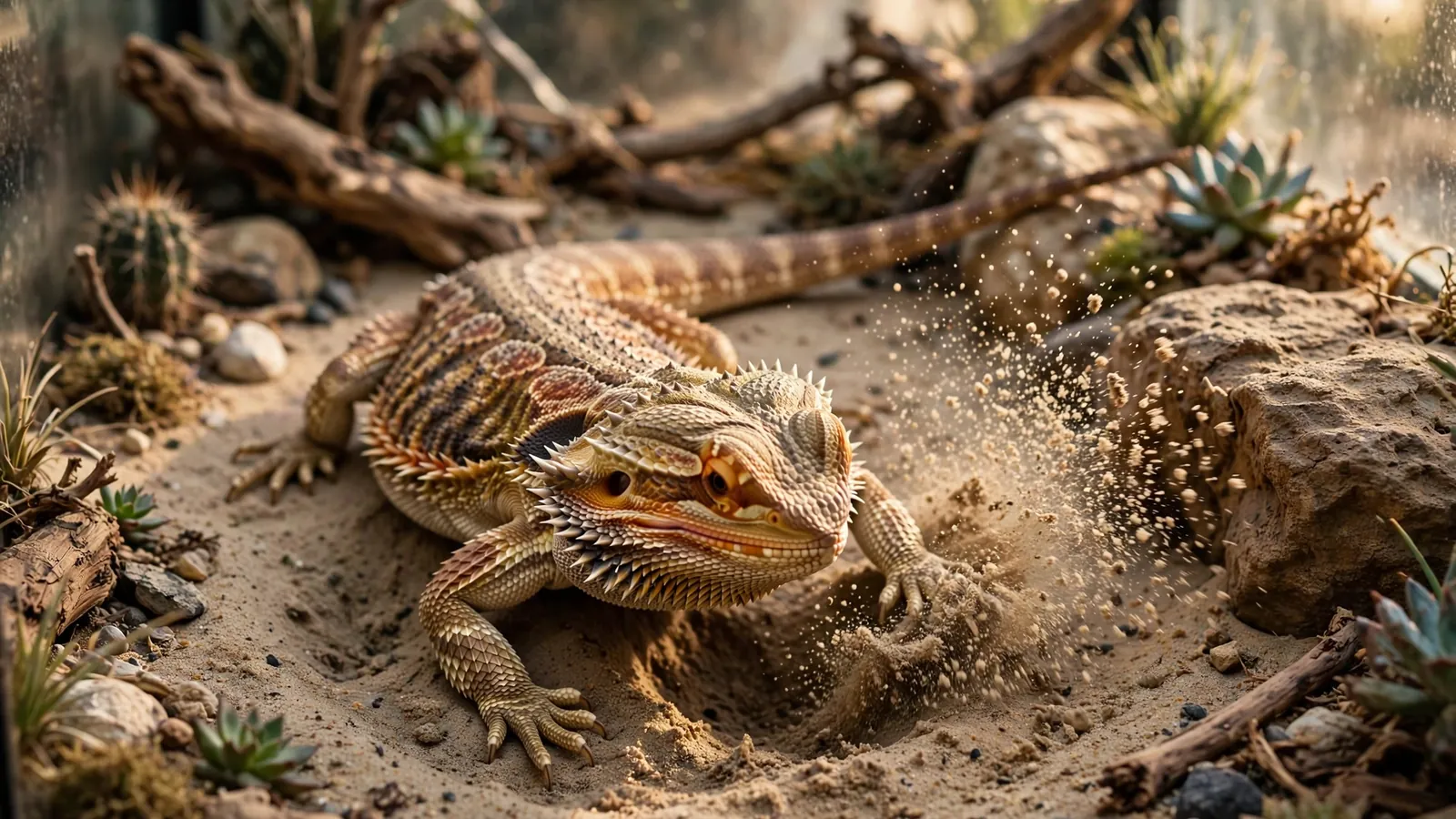
Digging is one of the most misunderstood bearded dragon behaviors. A dragon scratching at the substrate looks alarming the first time you see it — but in most cases, it is a completely natural instinct. Wild bearded dragons dig burrows to sleep in, to escape the midday heat, and to lay eggs. Your dragon is doing the same thing, just inside a glass box.
The catch: where your dragon digs tells you why they are digging. A dragon excavating the cool corner at bedtime is sending a very different message than one frantically clawing at the glass wall. This guide decodes digging by location, so you can tell a happy instinct from a husbandry problem that needs fixing.
Where is your dragon digging? Tap a hotspot.
Tap each numbered marker on the tank diagram to see what digging in that spot usually signals — and what to do about it.
Tap a numbered marker
Each corner of the tank tells a different story. Tap 1–4 above to decode what digging in that spot means.
What digging means in the wild
Bearded dragons are native to the arid woodlands and deserts of Australia, where the ground is both a thermostat and a bedroom. In the wild, they dig shallow burrows to sleep in overnight, to escape the worst of the midday heat, and — for females — to deposit eggs in warm, sheltered soil. Digging is not a quirk of captivity. It is a survival behavior that is millions of years old.
That instinct does not switch off in a terrarium. When your dragon scratches at the substrate, they are trying to do one of three wild jobs: regulate their body temperature, make a sleeping burrow, or nest. Your job is to figure out which one — and whether the tank is letting them do it properly.
Wild bearded dragons are diurnal burrow-sleepers: field observations in Australia describe them retreating into self-dug burrows and rock crevices at dusk, emerging to bask once the morning sun warms the ground. A dragon digging at lights-out is running this exact program.
The 7 reasons decoded
Digging almost always comes down to one of these seven causes. Read through them and match the pattern to your dragon:
Digging right under or beside the basking spot often means the surface temperature is too high. The dragon is trying to reach cooler layers below the surface. Check the basking surface with an infrared temp gun — it should read roughly 105–110°F, with a clear gradient down to the cool side.
Digging in the cool corner or inside the hide in the evening is the classic sleep routine. The dragon is fluffing up a comfortable spot to settle into for the night. This is the single most common — and most harmless — reason for digging.
In fall and early winter, increased digging paired with a fading appetite and longer naps often signals brumation prep. The dragon is instinctively making a burrow to ride out the cool season. If the pattern fits, review the brumation guide before changing anything.
A mature female digging restlessly — especially in spring and early summer — may be searching for a laying site. Gravid digging is persistent, focused, and often paired with a swollen belly and reduced appetite. This is the one digging cause with a deadline: she needs a proper lay box, covered in our laying-eggs guide.
Dragons in bare tanks with nothing to do will dig out of sheer restlessness. If the tank is a flat, empty box, digging becomes the only available activity. Rotating decor, adding climbing branches, and offering a dedicated enrichment dig box usually redirects the energy within days.
Frantic digging combined with glass surfing — scratching and pacing at the walls — is the hallmark of a dragon that feels trapped. Adults need a 4×2×2-foot enclosure (120 gallons) at minimum; anything smaller turns natural roaming and digging instincts into stress behaviors. Measure your setup against the tank-size guide.
Some dragons dig into damp substrate when a shed is coming, because the buried layers hold more moisture than the surface. If the digging clusters around shed time and the dragon looks dull or ashy, a warm soak and a humid hide usually resolve it.
Myth: “If my dragon is digging, she must be gravid.” Reality: males dig just as enthusiastically as females — for burrows, cooling, brumation, and boredom. Gravid digging has a specific signature (restless, repetitive, seasonal, paired with belly swelling). Never assume eggs from digging alone.
When digging is a red flag
Most digging is fine. Digging becomes a concern when it changes character: frantic, nonstop scratching at the glass for hours, digging paired with a sudden appetite crash, lethargy, or weight loss, or a female showing gravid signs with no lay site available. In those cases, the digging is a symptom, not the problem — check temperatures, tank size, and (for females) egg-laying readiness first, and see a reptile vet if the behavior comes with other warning signs.
Bearded dragons thermoregulate partly through the ground. In the wild they shuttle between sun-warmed surfaces and cool burrows all day. A dragon digging under the basking lamp may literally be trying to build the cool burrow its instincts expect to find beneath the hot surface.
How to respond to digging
Match your response to the cause:
- Verify temperatures first. A temp gun reading of the basking surface and both ends of the gradient rules out the most common fixable cause in under a minute.
- Give digging a legal outlet. A dig box — a shallow container of damp play sand and topsoil mix — lets the instinct run its course without the dragon excavating the whole tank. Most enthusiastic diggers calm down dramatically once they have one.
- Enrich the tank. Climbing branches, a second hide, and rearranged decor a few times a year turn a boring box into explorable territory.
- Watch the calendar. Fall digging plus sleepiness points to brumation; spring digging in an adult female points to eggs. Season plus sex narrows the diagnosis fast.
- Upgrade space if needed. No enrichment fixes a tank that is simply too small. Chronic glass surfing plus digging is a space complaint.
Is it normal for a bearded dragon to dig every day?
Daily digging at bedtime is completely normal — it is the burrow-sleep routine. Daily frantic digging at the glass is not; that signals stress, heat, or a too-small enclosure.
My male bearded dragon is digging — is that normal?
Absolutely. Digging is not a female-only behavior. Males dig for burrows, cooling, brumation prep, and boredom. Only persistent, restless, seasonal digging in an adult female points toward eggs.
Should I stop my bearded dragon from digging?
No — suppressing a natural instinct just creates stress. Instead, give the behavior a proper outlet (a dig box, deeper substrate in one corner) and fix whatever the digging is telling you about the setup.