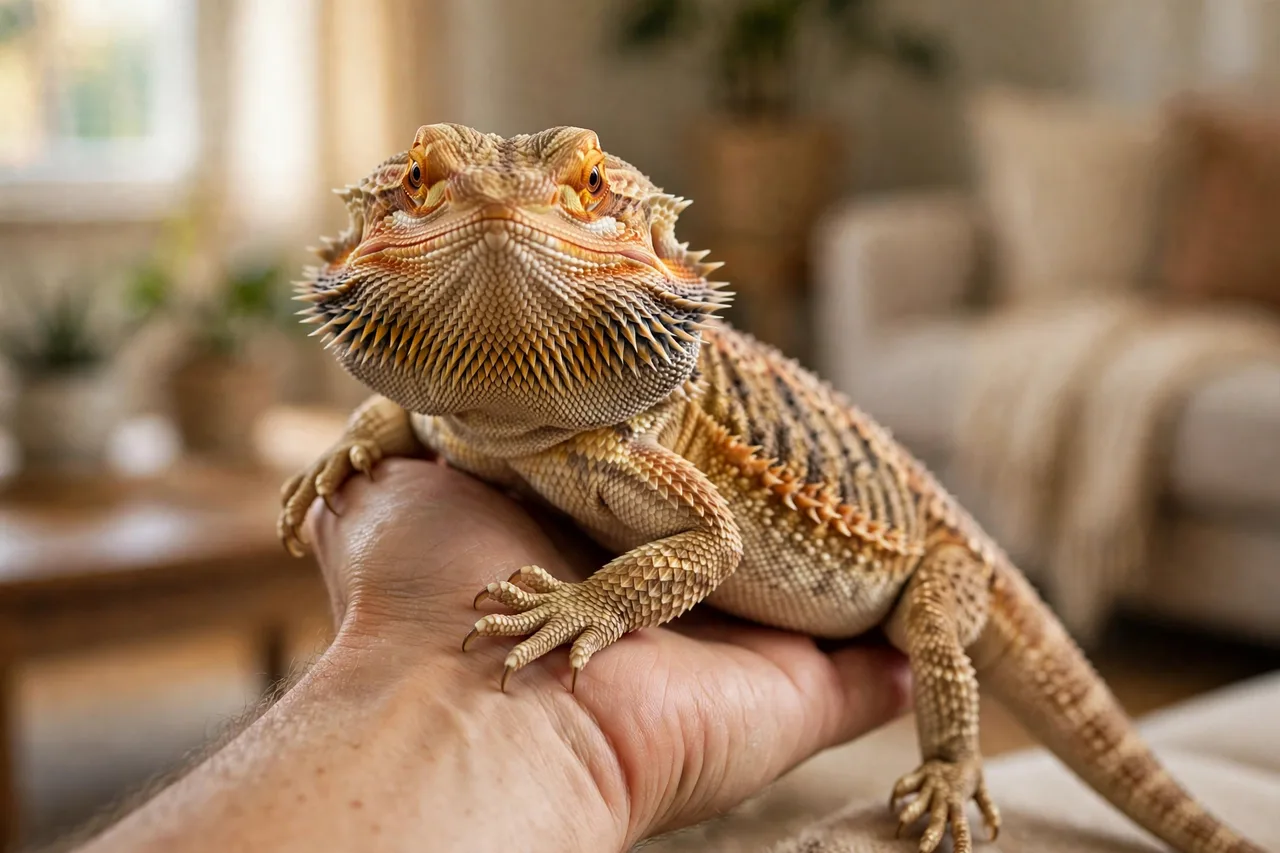
Do Bearded Dragons Recognize Their Owners?
The first time it happened, I nearly missed it. I had been away for a long weekend, and when I walked into the living room, my bearded dragon lifted his head off his basking rock, tracked me all the way across the room, and started scratching at the glass — urgent and unmistakably aimed at me.
My partner walked in five minutes later. He did not even blink. Same room, same lighting, same everything — except the person. That was the afternoon I stopped wondering whether bearded dragons recognize their owners and started wondering how.
The honest answer is yes — with one asterisk. Your dragon absolutely knows who you are. It just does not know you the way a dog does. Take the sixty-second quiz below to see where your bond stands, then read on for what goes on inside that little triangular head.
The Science: Sight, Scent, and Sound
Let us clear up the asterisk first. When scientists talk about recognition in reptiles, they mean something specific: associative learning. Your bearded dragon is not feeling sentimental about you. It is running a very practical calculation, refined over hundreds of repetitions: this particular big warm shape predicts food, safety, and good basking spots — the others do not.
That sounds less romantic than devotion, but functionally it is the same thing you want: an animal that can tell you apart from every other human and behaves accordingly. Bearded dragons pull this off with three senses working together.
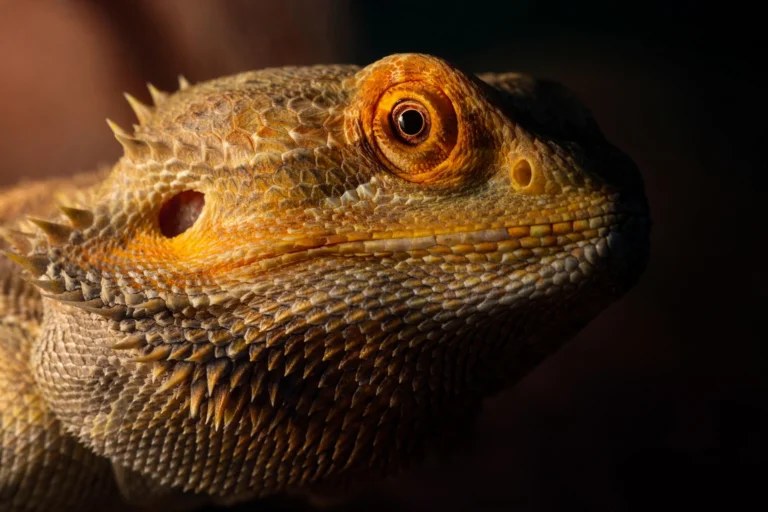
Sight comes first. Bearded dragons have excellent color vision and a wide field of view from their laterally placed eyes. Keepers consistently report the same pattern: the dragon tracks its owner moving across the room, head swiveling, while ignoring other people doing the same thing. They are not reading your face like a portrait — they are recognizing your overall shape, movement pattern, and context. After enough repetitions, “that silhouette means the good stuff” is a learned fact.
Scent seals the deal. Watch your dragon flick its tongue when your hand goes in the tank. That flick is a smell test: the tongue collects airborne scent particles and presses them against the Jacobson’s organ on the roof of the mouth, which analyzes the chemistry. This is how scent-gathering works, and it is one reason the old keeper trick of leaving a worn T-shirt near a new dragon’s tank actually helps — your scent becomes familiar background, not a strange new chemical event.
Sound is the shortcut. Bearded dragons can distinguish their owner’s voice from a stranger’s, and they are noticeably calmer being handled when they hear the familiar voice first. Pairing your voice with gentle handling, feeding, and calm energy — talking or even reading aloud near the tank — turns your voice into a safety cue. Over time, that cue alone can settle a nervous dragon before you have even opened the tank doors.
Memory ties it all together. Dragons remember where food appears, which basking spot is warmest, and what time of day the routine happens. Owners who feed on a schedule often find their dragon waiting at the front glass at the usual hour — not because it checked a clock, but because the pattern is stored. You are part of that pattern now.
2–4 weeks — that is the settling window in which most new bearded dragons start showing recognition behaviors: tracking you across the room, coming to the glass, relaxing in your hands. Trust has a timeline, and patience is the whole method. If you are still in week one, nothing is wrong; the file is still being written.
7 Signs Your Bearded Dragon Knows Exactly Who You Are
Recognition is not one behavior — it is a pattern. If you are seeing several of these, your dragon has you filed under “my human.”
The head-swivel follow is the classic first sign. Your dragon watches you move while ignoring other people in the same space. That selective attention is recognition in its purest form.
Glass-surfing toward you when you enter, while staying put when a guest walks past, means your arrival has been categorized as interesting and safe. Nobody else gets the greeting committee.
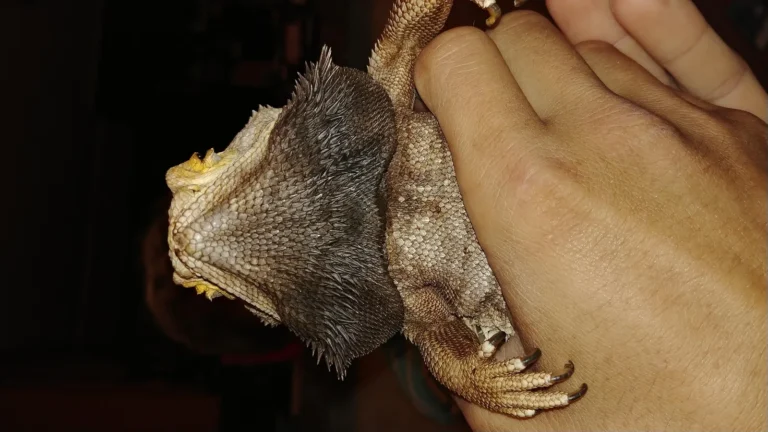
The same dragon that melts onto your forearm may go rigid, dark-bearded, or squirmy when a stranger picks them up. The contrast is the tell: calm with you is a choice, and they made it. If you are still learning the difference between relaxed and uneasy body language, spend time learning to read your dragon’s body language — it makes every interaction better.
Perking up, turning toward you, or visibly settling when you start talking — especially before handling — means your voice has become a predictor of good things. Many owners find that a few soft words before opening the tank turns a skittish pickup into a calm one.
A bearded dragon’s tongue has no taste buds like ours. Every flick collects scent particles from the air and delivers them to the Jacobson’s organ on the roof of the mouth for analysis. So when your dragon tongue-flicks your hand and then relaxes — it just read your scent signature and confirmed: that’s my human.
A new person’s hand gets repeated cautious flicks, maybe a lean-back. Your hand gets a flick or two, then the dragon climbs on, closes its eyes, or simply stays put. The scent check passed, so the investigation ends early.
This is the big one. Sleep is the most vulnerable state there is, and a prey animal does not doze off on something it does not trust completely. A dragon napping on your chest has given you the highest compliment in its behavioral repertoire.
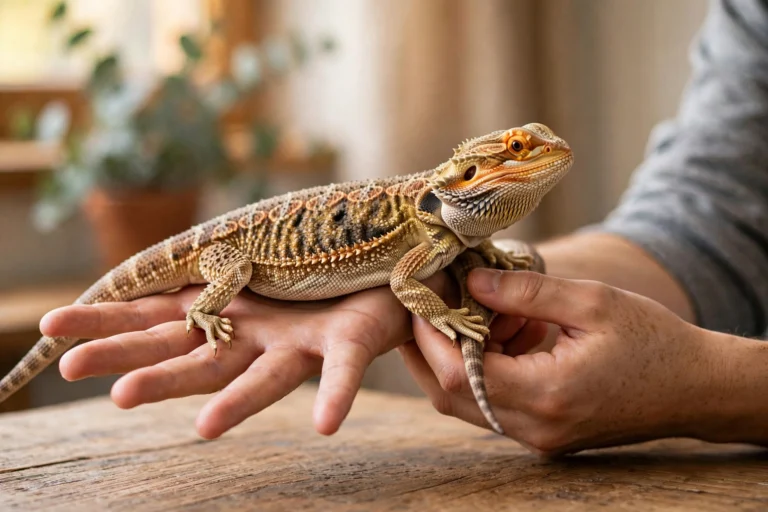
Given the option, a bonded dragon will walk toward your hand rather than away from it — sometimes climbing out voluntarily. Voluntary approach is the opposite of tolerance; it is preference.
From “That Human” to “My Human”: Building the Bond
Recognition is earned, not granted — and the currency is boring, beautiful consistency. If your quiz score came back lower than you hoped, here is the playbook that actually moves it.
Be predictable. Feed, handle, and do tank maintenance on a rough schedule. A dragon that can predict your behavior stops budgeting energy for surprise — and that freed-up energy becomes curiosity instead of caution. New arrivals benefit most from this: a patient four-week taming routine beats a weekend of intense handling every time.
Be the bringer of good things. Hand-feed favorite treats so your scent and your hands predict rewards. You do not need to overdo it — a single blueberry or a hornworm offered from your fingers a few times a week writes a powerful association.
Let them come to you. Rest your open hand in the tank and wait. The first voluntary step onto your palm is worth ten forced pickups. Scoop from below and in front when you do lift — a hand descending from above is predator-shaped, no matter how much they like you.
Learn their “no” and respect it. A dragon that discovers its warnings work — darkening beard, leaning away, the flatten-and-freeze — trusts you more, not less, because you proved you listen. Memorize the signs your dragon is stressed and back off when you see them. Trust compounds; so does the opposite.
Keep sessions short and warm. Ten calm minutes daily beats an hour once a week. Warm hands, slow movements, low voices. And remember what you are building toward: with good care these animals share your home for a decade or more — a decade-plus bond is worth building slowly.
Claim: “My bearded dragon loves me.” Verdict: partly true, with a translation note. Your dragon does not love you the way a dog does — reptile brains simply are not wired for mammalian attachment. What you are seeing is trust built on positive association: your presence predicts warmth, food, and safety, and your dragon has learned the pattern. Biologists call it associative learning. Keepers call it a bond. Both descriptions are honest — it is just reptile-shaped instead of mammal-shaped.
🤝 Next step: Turn recognition into playtime — these bonding activities that deepen trust give your dragon new reasons to associate you with the good stuff.