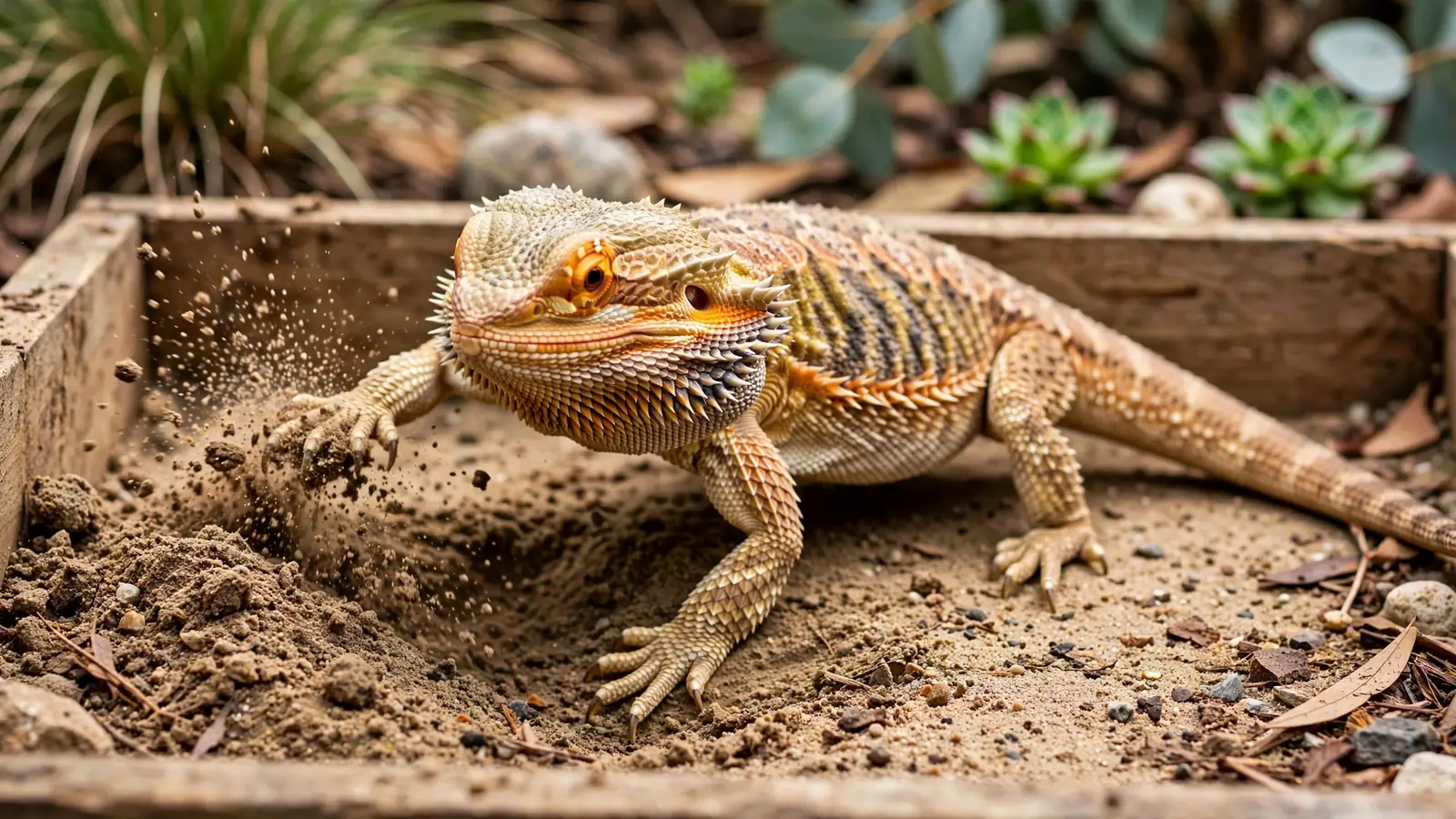
DIY Bearded Dragon Dig Box: Build One in 30 Minutes
A dig box is exactly what it sounds like: a container of diggable substrate inside (or next to) the tank, giving your bearded dragon a legal outlet for one of its strongest natural instincts. Wild beardies dig burrows to sleep in, cool down in, and lay eggs in — and captive dragons that can’t dig often redirect the urge into glass surfing, restless pacing, or excavating their water dish.
A good dig box takes about 30 minutes to build and costs almost nothing. A bad one, though, can irritate eyes, scrape bellies, or overheat. Before the build guide, try the game below — this illustrated scene contains 4 common dig-box mistakes. Tap each red marker to find them.
Tap the mistake: spot the 4 dig-box errors
This stylized scene hides four setup mistakes. Tap each pulsing red marker — every one you find turns green and reveals why it’s wrong and how to fix it.
Tap a red marker to inspect it
Each marker hides a real setup error. Find all four.
Build it right: the 30-minute dig box
A shallow plastic storage tote or a large cat litter tray (new, never used with chemicals) works perfectly. It should be big enough for the dragon to turn around in — roughly 18 × 12 inches for an adult. Check every edge with your finger: if it feels sharp to you, it will scrape a dragging belly. Sand down rough spots or choose a tote with a rolled rim.
The classic recipe is washed play sand mixed with organic, fertilizer-free topsoil — roughly half and half. Rinse the play sand in a bucket until the water runs clear to remove the fine dust, then mix and dampen the blend until it holds its shape when squeezed, like sand for a sandcastle. Never use calcium sand, walnut shell, or dusty unwashed sand. Our substrate guide covers the safety rules in full.
This is the step most people skimp on. An inch of substrate is decoration, not a dig box — the dragon needs enough depth to actually excavate and burrow into. Fill the container at least 3–4 inches deep so digging feels rewarding instead of frustrating.
Park the dig box on the cool end of the tank, away from the basking lamp. Under the lamp the substrate bakes dry, the box overheats, and the dragon gets no thermal relief from digging. The cool side keeps the mix lightly moist and makes the box a genuine retreat.
Spot-clean droppings and soiled substrate daily, stir and re-dampen the mix weekly, and do a full substrate swap every 2–4 weeks. A neglected dig box becomes a bacteria farm — the same tank-cleaning routine applies, just on a smaller scale.
Loose substrate for digging should be at least 3–4 inches deep — enough for an adult bearded dragon to fully bury its snout and forelimbs. Anything under 2 inches reads as a flat surface to the dragon, not a digging medium.
Dig box vs. lay box: don’t confuse them
A dig box is enrichment — a playground for a natural instinct, usable by any dragon, any time. A lay box is a medical necessity: a deep, humid container a gravid female needs for depositing eggs, covered in detail in the laying-eggs guide. The two look similar but serve different jobs. If your adult female starts digging restlessly in spring, she may have graduated from wanting a dig box to needing a lay box — learn the difference before you assume.
Wild bearded dragons dig burrows up to several feet long in the Australian outback, using them as overnight shelters and midday heat refuges. A dig box is a tiny apartment-block version of that burrow system — and part of a proper enrichment setup, not a luxury extra.
What if my dragon ignores the dig box?
Give it a week. Some dragons dive in within minutes; others need to discover it on their own terms. Try burying a favorite treat insect just under the surface — nothing motivates excavation like a half-buried dubia. Keep the substrate lightly damp (dry substrate is far less interesting to dig in), and make sure the box is on the cool side where the dragon actually hangs out. If the dragon prefers digging in the tank’s loose-substrate corner instead, that’s a win too — the instinct found its outlet.
Myth: “All loose substrate causes impaction, so dig boxes are dangerous.” Reality: impaction risk comes from the wrong substrates (calcium sand, walnut shell, gravel) combined with poor husbandry — not from a proper washed sand-and-soil mix in a healthy, well-heated dragon. A correctly built dig box is one of the safest enrichments you can offer.
Materials checklist
Everything you need is available at a hardware store and a garden center:
- Container: a shallow plastic storage tote or new cat litter tray, roughly 18 × 12 inches for an adult — smooth edges only.
- Play sand: one bag of washed play sand (hardware-store grade is fine once rinsed).
- Organic topsoil: fertilizer-free, pesticide-free, with no perlite or vermiculite. Read the bag — “organic” alone doesn’t guarantee additive-free.
- A bucket and a hose: for rinsing the sand until the runoff is clear.
- A spray bottle: for keeping the mix lightly damp week to week.
Total cost is usually under $20, and the sand and soil bags will refill the box several times over. Compared with most reptile products, the dig box is the best enrichment-per-dollar in the hobby.
Can the dig box go inside the tank?
Yes — inside the tank on the cool side is ideal, since the dragon can use it whenever the urge strikes. For small tanks where a box won’t fit, supervised dig sessions in a box outside the tank work as a backup.
What substrate is safe for a dig box?
Washed play sand mixed with organic, fertilizer-free topsoil (about 50/50), dampened to sandcastle consistency. Avoid calcium sand, walnut shells, wood chips, and dusty unwashed sand.
How often do I replace the dig box substrate?
Spot-clean daily, stir and re-dampen weekly, and replace the whole batch every 2–4 weeks — sooner if it smells off or stays soggy.
Can baby bearded dragons use a dig box?
Yes, with a shallower fill (2–3 inches) and close supervision at first. Babies take to digging just like adults, and early enrichment pays off in calmer, more confident juveniles.
Will my dragon eat the dig box substrate?
A curious taste now and then is normal and harmless with a proper sand-and-soil mix. If the dragon is eating mouthfuls deliberately, check that basking temperatures and calcium supplementation are correct — persistent substrate-eating can signal a deficiency worth discussing with a reptile vet.
Can I use the dig box as a lay box in an emergency?
A deep, damp dig box can work as a stopgap if a gravid female starts laying unexpectedly — depth and moisture are what matter most in the moment. But build a proper lay box as soon as you know she’s gravid; the full requirements are in the laying-eggs guide.