Yellow Fungus in Bearded Dragons Is a Race Against Time
In a published veterinary case, clearing yellow fungus from a single bearded dragon took 80 days of treatment — and that dragon was a success story. Most owners never get the success story, because by the time the first yellow crust becomes visible, the fungus has usually been spreading beneath the skin for weeks. Yellow fungus disease, caused by the fungus Nannizziopsis guarroi, is the most feared skin infection in bearded dragon keeping: aggressive, contagious between reptiles, and brutally hard to beat once it advances.
This guide walks the disease on a timeline — the first weeks, the look-alikes, what your reptile vet will actually do, and how to keep it out of your home. If you just spotted a suspicious patch, jump to the spotter below, then keep reading.
In a documented case report, a bearded dragon with confirmed Nannizziopsis guarroi needed 80 days of systemic antifungal treatment plus weekly enclosure disinfection before tests finally came back clear — and stayed healthy for more than two years afterward. Early, aggressive vet care is the entire game with this disease.
Background
What yellow fungus actually is
Yellow fungus disease (sometimes still called CANV, short for the Chrysosporium anamorph of Nannizziopsis vriesii) is a deep fungal infection of the skin. The organism most often responsible in bearded dragons is Nannizziopsis guarroi. It is not a surface nuisance like a mild shed problem — it starts in the outer skin layer and pushes downward into the dermis, the muscle beneath it, and in severe cases the bone. Dissemination to internal organs such as the liver has been documented.
Two things make it especially dangerous. First, it is genuinely contagious: it spreads between reptiles through direct contact and airborne spores, and it can hitch a ride on shared décor, food moved between enclosures, or unwashed hands. Second, it is not an opportunist — studies of healthy reptile skin find this fungal group in fewer than 1% of samples, so when it takes hold, it means business.
Bearded dragons are among the most commonly affected reptiles, and infections in this species tend to run an aggressive course. Risk climbs with substandard husbandry, poor nutrition, chronic stress, skin trauma, and cohabitation — one more reason dragons should live alone. The good news: caught in the first weeks, before it goes deep, treatment has a real chance. Everything below is organized around that window.
Stage 1 · The first weeks
Small crusts, loud warning
Yellow fungus announces itself quietly. The earliest visible sign is usually a small patch of brown-to-yellow crust on just a few scales — easy to miss, easy to dismiss. These first crusts often show up on the toes, feet, or tail tip, though they can appear anywhere on the body.
What makes the early stage treacherous is how ordinary it looks. The disease interferes with shedding, so you may notice more frequent or prolonged shed cycles, with dull scales and rough skin revealed underneath instead of the smooth, fresh layer a normal shed leaves behind. Superficially, early yellow fungus can resemble a patch of abnormal shedding — and “it’s just a stubborn shed” is the assumption that costs dragons their treatment window.
If you spot a suspicious patch, photograph it next to a coin for scale, note the date, and do not pick at it. Compare what you are seeing against the look-alikes below — and if the patch is crusty, raised, or spreading to new scales, treat it as urgent.
Spot the difference: four look-alikes, one urgent
Yellow is a normal color on many bearded dragons, and several harmless conditions can look alarming at first glance. Tap each card to compare look, feel, and progression — then answer the questions for your next step.
The Yellow-Patch Spotter
Educational only — only a reptile vet with a skin biopsy can confirm yellow fungus.
Your next step
1. Is the patch crusty, raised, or spreading to new scales?
2. Any change in appetite, energy, or weight lately?
3. Is the yellow area smooth, symmetrical, and unchanged for weeks?
An educational comparison only — not a diagnosis. Crusty, spreading, or ulcerated skin always deserves a reptile vet’s eyes, promptly.
Stage 2 · When it advances
The infection goes deeper
Left alone, yellow fungus does not stay a surface problem. The patches enlarge and merge into irregular, thickened areas; the crusts crack and ulcerate; sloughing skin exposes raw sores. In severe cases tissue blackens and dies — toes, tail tips, and limbs are the classic casualties. Remember that the visible damage lags behind the real damage: by the time you see ulceration, the fungus has typically been working deeper for some time.
This is also the stage where the whole dragon starts to tell the story. Appetite fades, weight drops, energy collapses into lethargy, eyes sink, and every minor wound heals in slow motion. If the tail tip is where you first noticed darkening, read our guide to spotting tail rot early too — tail-tip discoloration has more than one serious explanation. Crusting around the vent deserves special attention: it can also signal parasite infections that mimic skin disease, which need a completely different workup. And if your dragon has stopped eating and drinking, review the dehydration warning signs while you arrange the vet visit.
Be blunt with yourself at this stage: a dragon with spreading crusts plus appetite or weight loss is a veterinary emergency. Home remedies and waiting for the next shed have no place here — every day of delay is depth the fungus gains.
Myth: "It's just a stubborn shed — it'll come off on its own."RealityVeterinary texts note that yellow fungus famously mimics stuck shed early on — but a real shed resolves within a cycle and reveals smooth, fresh scales. Fungus does the opposite: it crusts, thickens, and spreads. Waiting "a few more sheds" is how early, treatable cases become advanced ones.
Stage 3 · Diagnosis and treatment
What the vet does
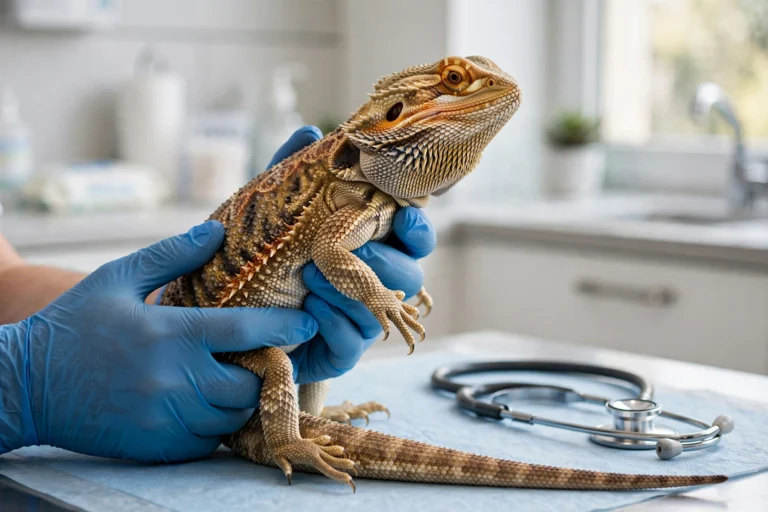
Your vet's first job is to confirm what you are looking at, because several conditions can mimic yellow fungus. Expect a physical exam, then a small skin biopsy — a sample examined under the microscope — plus a fungal culture, PCR test, or both. Culture is the gold standard for confirming this fungus, and this step matters: treating the wrong condition wastes the window early treatment needs.
Confirmed cases are treated with antifungal medication prescribed by the veterinarian — given orally, applied topically, or both — alongside debridement, the careful removal of dead and infected tissue, and a hard look at husbandry. Heat, UVB, humidity, and nutrition all get corrected, because a dragon fighting a deep fungal infection needs every system working. In mild cases confined to an extremity, surgical removal of the affected tissue is sometimes an option. Treatment runs weeks to months with recheck cultures to confirm the fungus is truly gone. Antifungal therapy is powerful medicine, which is precisely why it is never a do-it-yourself project.
Ask your vet what to watch for between visits: which changes mean "call us today" versus "mention it at the recheck." Keep every follow-up even if the skin looks better — looking better and testing clear are different milestones, and stopping early is how infections come back.
Stage 4 · Prevention
Keeping it out of your home
Yellow fungus is contagious, so prevention is really about barriers. Every new dragon should be quarantined for at least 30 to 60 days in a completely separate setup — separate enclosure, décor, and feeding tools — before it ever meets your existing reptiles. Watch the newcomer closely during that window: new arrivals are the most common way this fungus enters a collection.
Make hand-washing between reptiles non-negotiable, and never move décor, dishes, or leftover feeders from one enclosure to another without disinfecting first. A sick or quarantined dragon does best in a simple hospital setup — paper towel substrate, minimal furniture, easy to clean daily — backed by a thorough disinfecting the enclosure routine with a reptile-safe veterinary disinfectant, rinsed completely afterward.
Finally, keep the immune system on your side. Correct basking temperatures, solid UVB, and genuinely nutritious food do not make a dragon invincible, but chronic stress, low temperatures, and poor nutrition are documented risk factors for this infection. Good husbandry is not a cure — it is the ground the cure stands on.
Next step: run the 12-point health checklist on your dragon this week. The habit of looking closely catches the next problem while it is still small enough to beat.