How to Keep Your Bearded Dragon Hydrated During Brumation
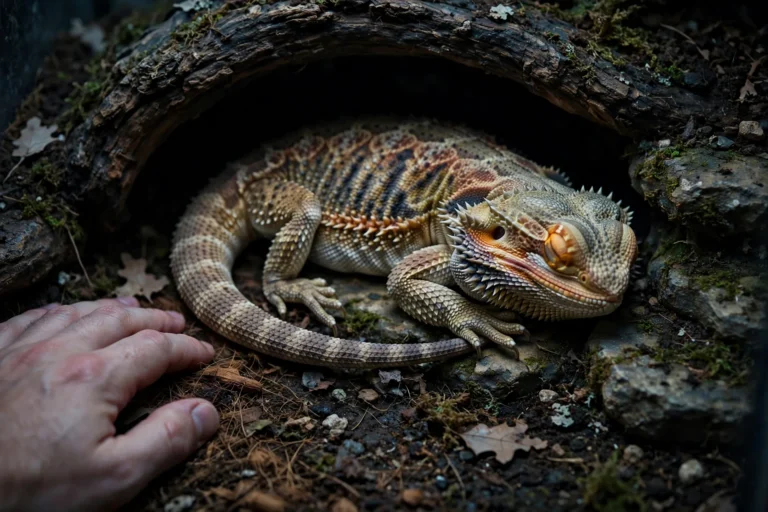
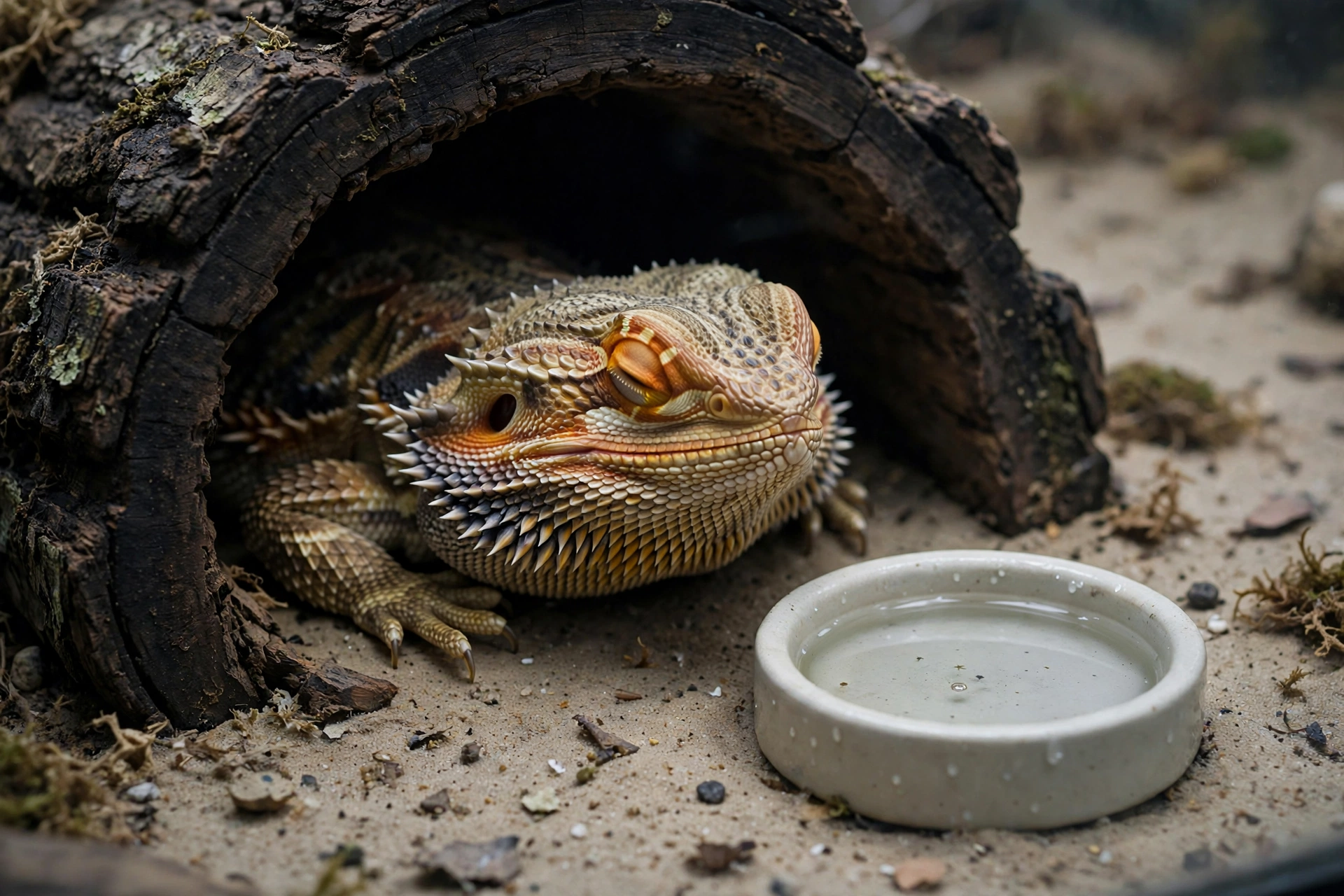
It’s the middle of January. You lift the corner of the blanket covering the tank for your weekly check, and there she is — wedged into her hide, eyes shut, in exactly the same position as last week. She hasn’t eaten in over a month. And then the thought lands like a stone: when did she last drink anything? You can’t remember the last time you saw her touch the water dish. Is she slowly drying out in there while she sleeps?
Here’s the short answer: a brumating dragon still loses water every single day, just more slowly than an active one — and hydration is one of the few things worth actively managing while everything else stays hands-off. The good news is that the plan is simple, and it shifts depending on which stage of brumation she’s in. If you haven’t read the full brumation care guide yet, start there for the big picture; this is the hydration-only deep dive.
Why a sleeping dragon still needs water
Brumation slows metabolism dramatically, but it doesn’t stop it. Your dragon keeps breathing, keeps producing small amounts of waste, and keeps losing moisture through her skin and respiration all winter. In the wild, bearded dragons brumate by burrowing into soil that holds ambient moisture, which buffers that slow water loss. A glass tank with dry substrate offers no such buffer — so in captivity, the keeper has to supply what the burrow used to.
That makes dehydration the quiet risk of brumation. It rarely announces itself the way hunger does. A dragon can look peacefully asleep while her fluid reserves slide downward week after week, which is exactly why water access is treated as non-negotiable by experienced keepers: the dish stays, the baths stay on a schedule, and you check hydration the same way you check weight — routinely, not anxiously.
A persistent myth claims bearded dragons absorb water through their vent or skin while soaking. It isn’t true — they hydrate only by drinking. A bath helps because a soaking dragon usually laps at the water around her, not because moisture seeps in through her scales. That’s also why a bath never replaces a filled water dish.
Build your brumation hydration schedule
Pick the stage your dragon is in right now. The builder below returns a personalized plan — bath frequency, water-dish protocol, monitoring routine, and how to offer water — plus a stage-by-stage frequency table you can screenshot and stick on the fridge.
Early brumation: the first two to three weeks
This is the drowsy transition. She’s sleeping more each day but may still surface to bask briefly or shift hides — and she may still drink on her own. Offer one lukewarm bath per week, ten to fifteen minutes in shallow water, supporting her body and keeping her head above the surface the whole time. She’ll likely be groggy, so don’t leave her unattended for even a minute.
Place a shallow water dish right by the hide entrance and refresh it daily, even if the level never seems to drop. This is also the moment to record her starting weight on a gram-accurate kitchen scale; that number is your baseline for the entire winter. For the finer points of technique, see our guide to bathing during brumation and how bearded dragons drink — many dragons prefer lapping droplets off their snout to drinking from a bowl.
Deep brumation: fully asleep
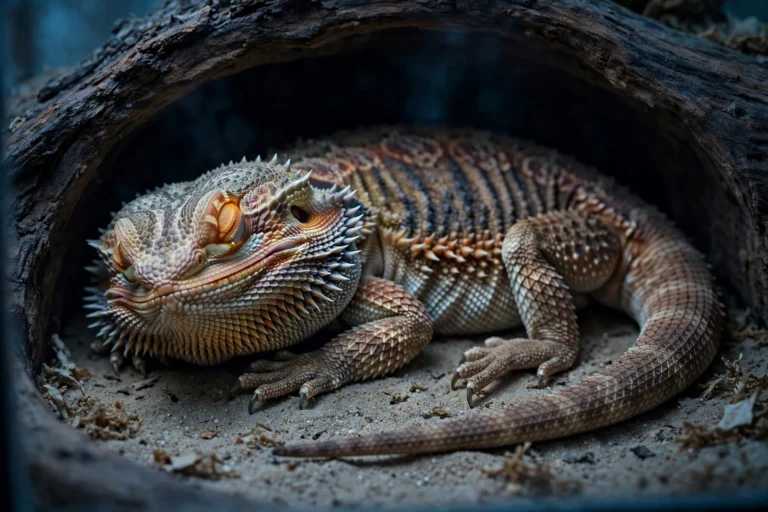
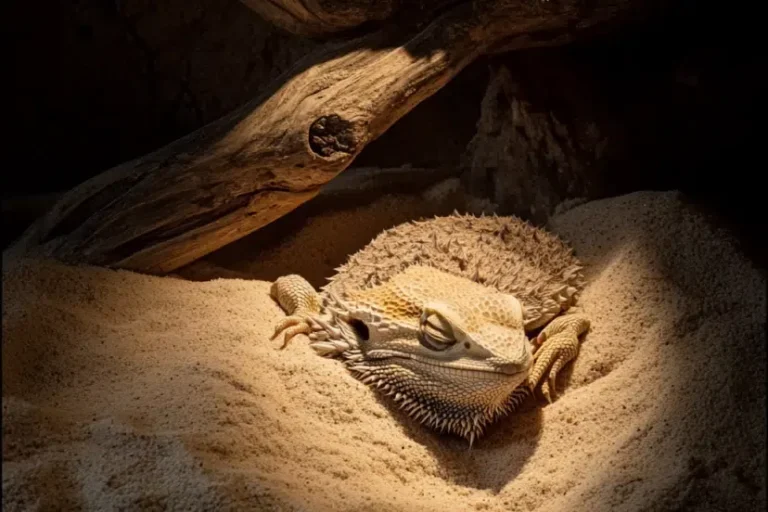
Now she’s down for real — eyes shut, unmoving for days or weeks at a time. Your job shifts from doing to not doing. Keep the water dish full and fresh, but check it without disturbing her. Stretch baths to every two or three weeks at most, and only bathe her if she’s already awake or looking mildly dry; routine soaking isn’t required for a deeply sleeping dragon, and waking her just for a bath costs more in stress than it gains in hydration.
Do a weekly eyes-only check: steady breathing, eyes not sunken, skin not wrinkled or papery. No handling, no nudging. Weigh her every week or two — a quick lift onto the scale and straight back. If you do bathe her, dry her thoroughly before she goes back in; a damp dragon on cool substrate is an invitation to skin problems.
5–10% of body weight is the normal total weight loss across a full brumation. Losing more than 10% is a see-the-vet flag — and rapid or steady loss usually points to dehydration or illness rather than normal winter sleep. That’s why the scale is your best hydration monitor: it catches what your eyes can’t.
Late brumation: she’s stirring
The signs are unmistakable once you know them: she emerges for longer stretches, basks briefly, tracks movement with her eyes. Bring baths back to once a week — drinking during the bath is often the very first wake-up behavior you’ll see. Refresh the dish daily now, because she may start drinking on her own, and keep the weekly weigh-ins going.
Don’t rush the rest of the wake-up. Let appetite and activity return on her schedule; water comes first, food follows. Our post-brumation hydration notes cover the transition in detail, including when to resume the normal feeding routine.
How to offer water without stressing a half-asleep dragon
A groggy dragon and a water bowl can be a clumsy combination, so offer water the low-stress way. Drip a few drops of clean water onto her snout with a dropper or your fingertip and let her lap at her own pace — never squirt water into her mouth. Forced syringing risks aspiration, and the spillover dampens the substrate around a sleeping dragon, which invites scale and respiratory problems.
Keep the dish itself shallow — an inch or two of water is plenty — and use lukewarm water for baths, never warm. No soap, ever; a plain-water soak is all she needs. And if she consistently refuses every offer for weeks while otherwise looking like a textbook brumating dragon, that alone isn’t an emergency. The emergency signs are below.
Should you mist the tank to add humidity?
It’s a tempting shortcut: if the air is dry, why not mist the enclosure? Resist it. Misting raises humidity across the whole tank, and a brumating dragon sitting in persistently damp air is more vulnerable to respiratory issues than a slightly dry one. Bearded dragons are desert animals — even asleep, they do best in dry air with drinking water available, not humid air with no water source.
The one exception is a brief, targeted mist of drinking water onto the snout area if she’s awake and lapping — which is really just another way of offering a drink, not humidifying the tank. Keep the enclosure dry, keep the water dish full, and let drinking do the hydrating.
Dehydration warning signs — call a reptile vet: sunken or dull eyes, skin that stays tented when gently pinched, wrinkled or papery skin, and rapid or ongoing weight loss beyond the normal range. Don’t try to rehydrate a severely dehydrated dragon at home with marathon soaks — learn the full list of dehydration warning signs and let a reptile vet take it from there.
Next step: a water dish only helps if it’s clean. Stagnant dishes grow bacteria fast in a warm tank — follow our How to Clean and Disinfect a Bearded Dragon Tank guide for a dish-cleaning routine that keeps her water safe all winter.